🐙 Best Macro Diving in Southeast Asia: Where to Find the Weird Stuff
When most people imagine scuba diving, they picture sharks slicing through the blue, manta rays gliding effortlessly overhead, or sprawling coral reefs stretching as far as the eye can see. But for many divers, the most addictive and memorable part of the underwater world isn’t the big stuff at all — it’s the bizarre, beautiful, and often alien life hiding just inches from the sand.
Welcome to macro diving — a slower, more deliberate style of diving where patience is rewarded and the smallest creatures steal the spotlight. This is the world of camouflage and behaviour, where a frogfish no bigger than your fist becomes the highlight of the dive, octopuses change shape and colour to survive, and what looks like an empty seabed suddenly reveals itself as a living mosaic of movement.
Nowhere on Earth does macro diving quite like Southeast Asia. Shaped by volcanic coastlines, nutrient-rich currents, and an extraordinary range of habitats, the region has become the global epicentre of macro and muck diving. Black sand slopes, silty bays, rubble fields, and sheltered reefs create the perfect conditions for strange, highly specialised marine life to thrive. Many of the world’s most sought-after critters — flamboyant cuttlefish, mimic octopus, hairy frogfish, blue-ring octopus, pygmy seahorses — are found here, often in astonishing diversity and density.
But macro diving doesn’t just change what you see — it changes how you dive. Everything slows down. You stop chasing distance and start observing behaviour. You learn to hover, to look closer, and to notice details most divers swim straight past. A single dive might cover only a small patch of sand or reef, yet the discoveries can be just as thrilling — and often more intimate — than any big-animal encounter.
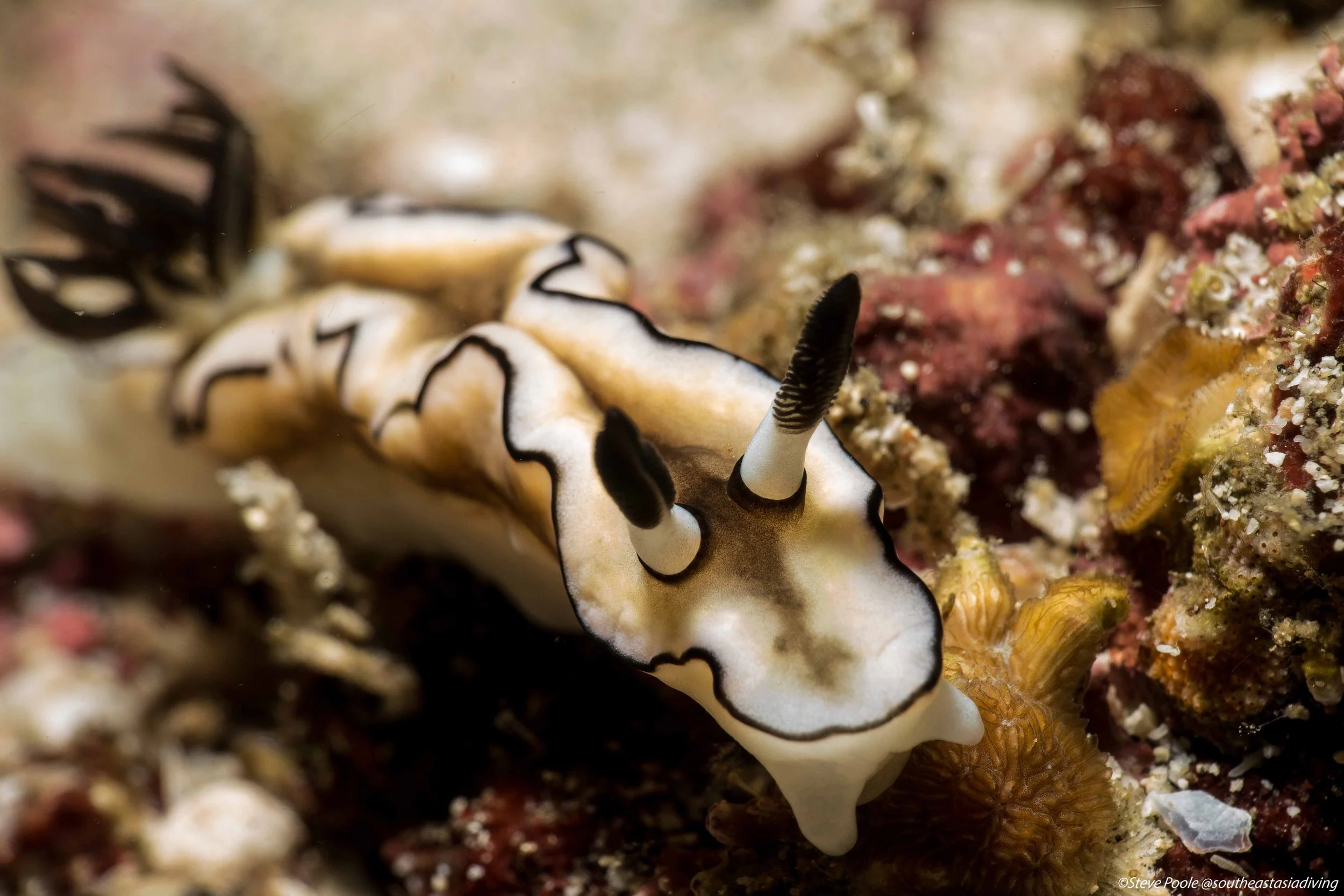
A Nudibranch in Anilao, Philippines
In this guide, we’ll explore the best macro diving destinations in Southeast Asia, highlight the weird and wonderful critters you can expect to find, share when and where to go, and offer practical tips for getting the most out of your macro dives. Whether you’re an underwater photographer, a dedicated critter hunter, or simply curious about the stranger side of the ocean, this is your gateway into one of the most fascinating styles of diving there is.
Sometimes, the smallest things make the biggest impression.
🔍 What Is Macro and Muck Diving?
Macro diving is all about the small stuff. Instead of focusing on large animals or dramatic reefscapes, macro divers slow down and search for tiny, often well-camouflaged marine life hiding in sand, rubble, coral heads, and seagrass. The stars of these dives are creatures that many divers never notice — frogfish, nudibranchs, shrimp, seahorses, and octopus species no bigger than a hand.
Muck diving is a specific type of macro diving that takes place over environments that may look unappealing at first glance: black volcanic sand, silty slopes, rubble fields, or debris-strewn seabeds. These “mucky” environments are perfect camouflage for rare and highly specialised animals, which is why they are often packed with some of the weirdest marine life on the planet.
At first, muck dives can feel counterintuitive. There are no colourful coral walls or obvious landmarks — just sand and scattered debris. But with the help of a skilled guide, these sites quickly reveal themselves as underwater treasure hunts. What looks empty suddenly becomes alive with movement, eyes, tentacles, and textures.
🧠 Why Southeast Asia Excels at Macro and Muck Diving
Southeast Asia offers a unique combination of conditions that make it the world’s premier region for macro diving:
• Volcanic geology creates nutrient-rich black sand and rubble slopes
• Sheltered bays allow fine sediment to settle, ideal for camouflage
• Warm water supports year-round critter populations
• High biodiversity leads to rapid evolution and specialised species
• Expert local guides trained to spot life others miss
These factors combine to create environments where rare animals don’t just exist — they thrive.
🐛 Macro vs Big-Animal Diving
Macro diving isn’t about covering distance or chasing sightings. It’s about observation and behaviour. You might spend ten minutes watching a cuttlefish lay eggs, a shrimp clean a fish, or an octopus hunt across the sand. The rewards are subtle, intimate, and often unforgettable.
Many divers discover that macro diving completely reshapes how they experience the underwater world. It teaches patience, improves buoyancy, and opens your eyes to the complexity of marine ecosystems — even in places that initially appear lifeless.
In short:
Macro diving reveals the ocean’s details
Muck diving reveals its weirdest secrets
And Southeast Asia is where both truly shine.
For divers new to macro or muck diving, this style of diving can sound intimidating — but in reality, it’s often one of the most accessible and rewarding ways to explore the underwater world. Many macro sites are shallow, calm, and slow-paced, making them suitable for a wide range of experience levels. With good buoyancy, a patient mindset, and a skilled guide, macro diving quickly becomes less about difficulty and more about discovery.
So where should you go to experience the very best of it?
🐛 What Weird Critters Can You See?
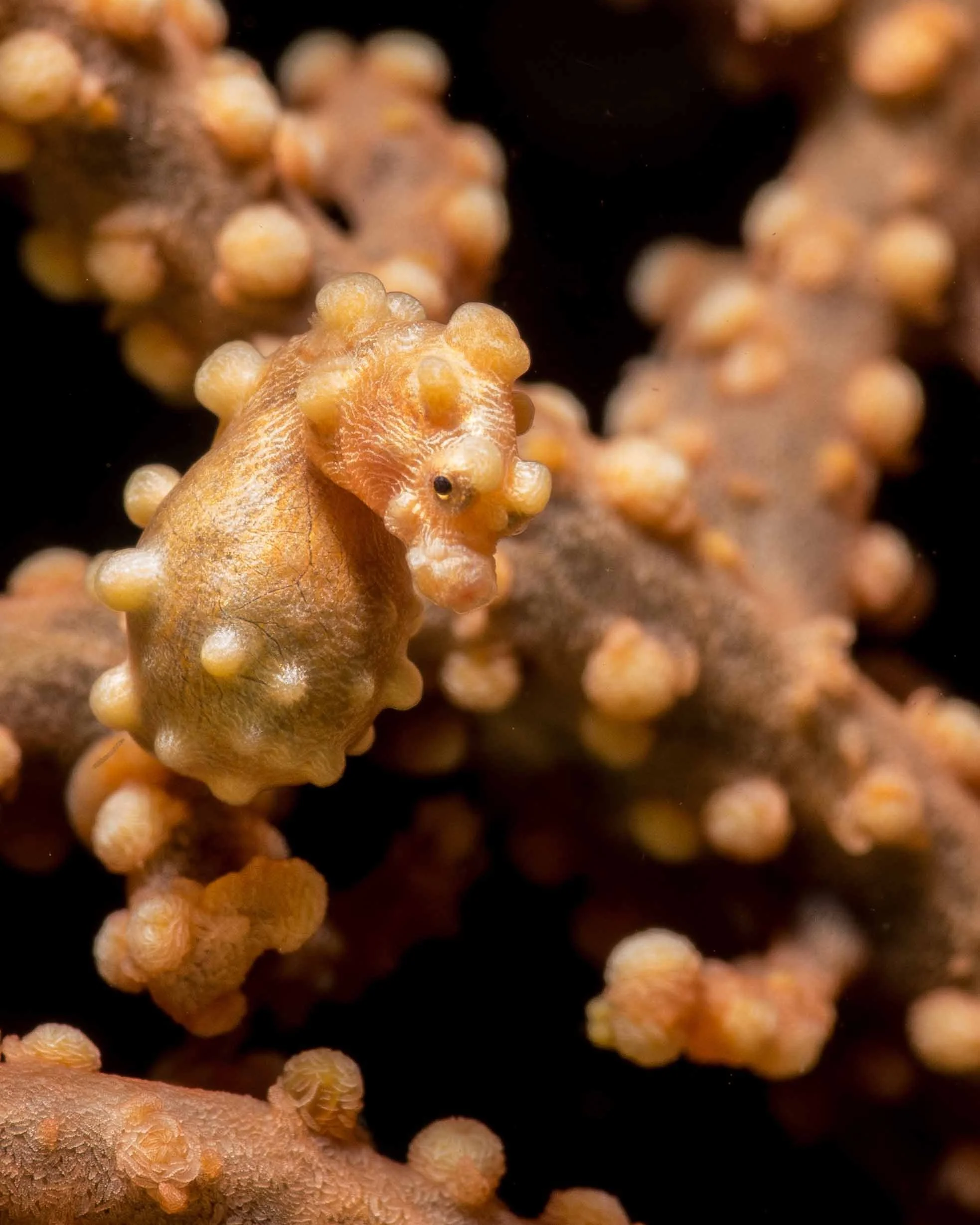
A Pygmy Seahorse
Macro diving in Southeast Asia reveals an astonishing cast of characters — many of which look more like science-fiction creatures than real animals. This region is home to some of the ocean’s most unusual adaptations, extreme camouflage, and fascinating behaviours, and it’s why every macro dive feels like a scavenger hunt with endless surprises.
🐸 Frogfish (Painted, Hairy, Giant & Psychedelic)
Masters of disguise, frogfish come in a staggering range of shapes, colours, and textures. From fluffy, algae-covered hairy frogfish to the ultra-rare psychedelic frogfish of Ambon, these ambush predators sit motionless for hours before striking with lightning speed.
🐌 Nudibranchs (Sea Slugs)
Southeast Asia is a nudibranch hotspot, with hundreds of species documented — and new ones still being discovered. These soft-bodied sea slugs display neon colours, intricate patterns, and bizarre shapes, making them a favourite subject for photographers.
🦑 Flamboyant Cuttlefish
One of the most iconic macro critters in the world, flamboyant cuttlefish are known for their dramatic colour displays and unusual “walking” movement across the seabed. Despite their small size, they are packed with personality and behaviour.
🐙 Mimic & Wunderpus Octopus
Few animals capture the imagination like these shape-shifting octopuses. The mimic octopus can imitate lionfish, sea snakes, and flatfish, while the wunderpus uses bold striping and expressive movement to confuse predators. Seeing either in action is a highlight for many divers.
🐴 Seahorses & Pygmy Seahorses
From larger, free-swimming seahorses to tiny pygmy seahorses clinging to sea fans, these delicate creatures are a testament to the patience required in macro diving. Spotting them often relies on expert guides and a trained eye.
🐟 Ghost Pipefish
Often mistaken for drifting debris, ghost pipefish float vertically or hover near hydroids and crinoids, perfectly camouflaged. They can be surprisingly difficult to spot until they move.
🔵 Blue-Ring Octopus
Small, stunning, and highly venomous, blue-ring octopus are one of the most sought-after macro sightings in Southeast Asia. Divers admire them from a respectful distance, especially during night dives when they are more active.
🦐 Hairy Shrimp & Rare Crustaceans
Hairy shrimp, skeleton shrimp, and other tiny crustaceans hide among algae, sponges, and rubble. These minute creatures are often overlooked, but they add another layer of discovery to every dive.
One of the greatest joys of macro diving is that you never know what you’ll find next. A single dive might reveal half a dozen rare species, each with its own strange behaviour and survival strategy. It’s this constant sense of discovery that keeps macro divers coming back again and again.
Below, we explore the top macro diving destinations in Southeast Asia, from world-famous muck diving capitals to quieter, critter-rich locations that consistently deliver unforgettable encounters with the weird and wonderful
🌏 Best Macro Diving Destinations in Southeast Asia
Lembeh Strait, Indonesia
Often called the best muck diving destination on Earth
If macro diving had a capital city, Lembeh Strait would be it. This narrow stretch of water in North Sulawesi, separating Lembeh Island from the mainland, has earned legendary status among divers, photographers, and marine biologists alike. On the surface, the sites look deceptively plain — gently sloping black sand, scattered rubble, and the occasional artificial structure. Underwater, however, Lembeh is one of the most biologically fascinating places on the planet.
The volcanic black sand provides perfect camouflage for rare and highly specialised species, while the calm, sheltered conditions allow critters to thrive undisturbed. Dives here are slow, shallow, and methodical — the kind where you might cover only a small area, yet surface having seen more unique species than on an entire week of reef diving elsewhere.
🐙 Signature Critters
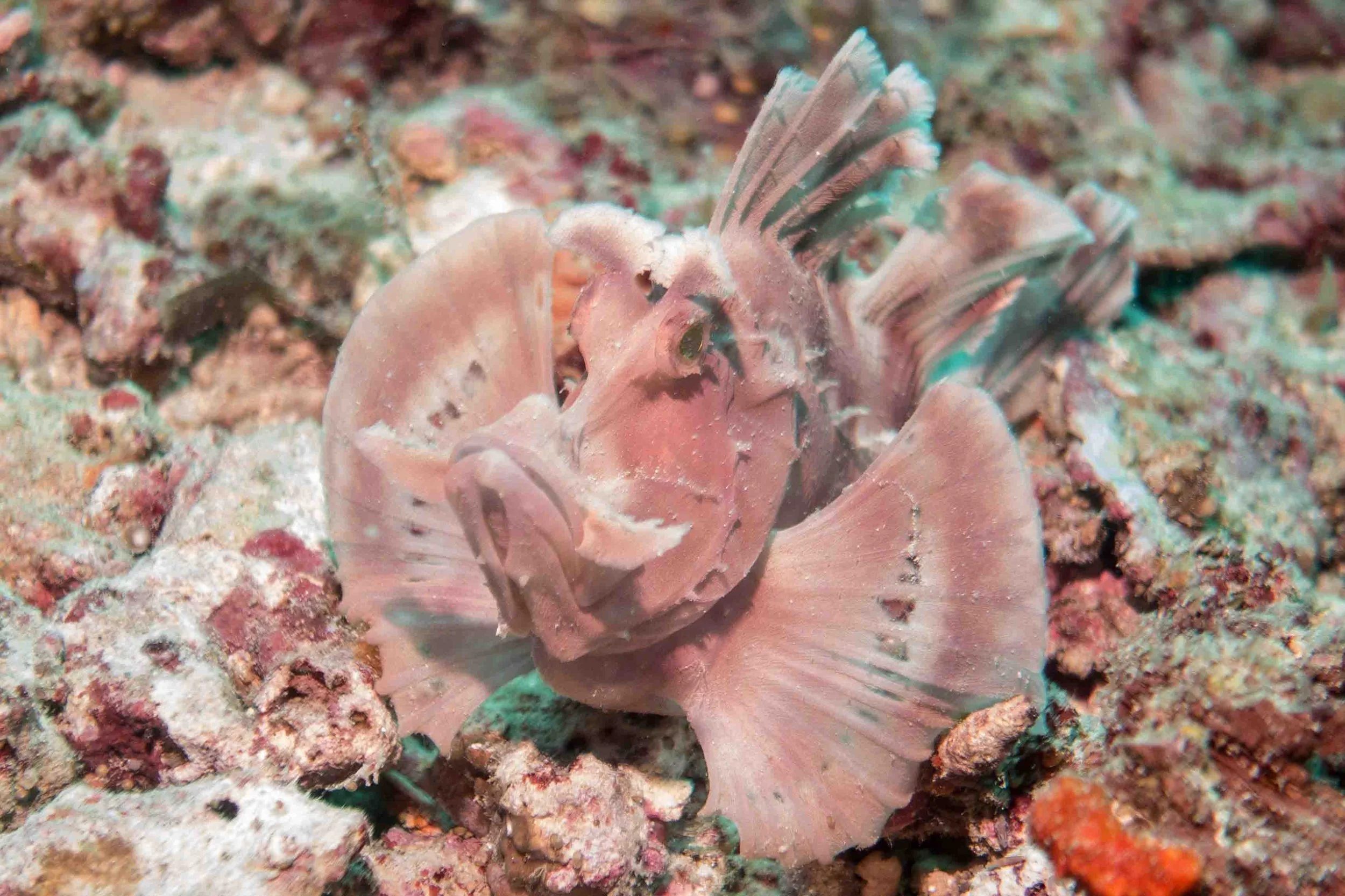
A Rhinopias, one of the most sought after macro subjects
Lembeh is famous for producing bucket-list sightings dive after dive. Signature encounters include:
• Flamboyant cuttlefish, often seen walking across the sand in full display
• Mimic octopus and wunderpus, changing shape and behaviour to imitate other animals
• Hairy frogfish, blending perfectly into algae and debris
• Rhinopias, the holy grail for many macro photographers
• Blue-ring octopus, small, stunning, and highly venomous
• Ghost pipefish, drifting effortlessly among hydroids and debris
Beyond these icons, divers regularly encounter bobtail squid, stargazers, seahorses, juvenile fish in bizarre larval stages, and an endless variety of nudibranchs.
👀 Why Lembeh Is So Special
What truly elevates Lembeh isn’t just the critters — it’s the guiding. Local Lembeh guides are world-renowned for their ability to spot life that most divers would swim straight past. Years of experience, intimate knowledge of individual dive sites, and a deep understanding of animal behaviour turn each dive into a guided safari.
It’s not uncommon to see guides gently signal something invisible to the untrained eye — only for it to resolve into a perfectly camouflaged frogfish or a tiny octopus buried in the sand.
🤿 Diving Conditions
Macro diving in Lembeh is refreshingly accessible:
Best for: Serious macro lovers, underwater photographers, rare species hunters
Skill level: Beginner-friendly (excellent buoyancy still recommended)
Depth: Mostly shallow (often 5–20 m)
Currents: Minimal
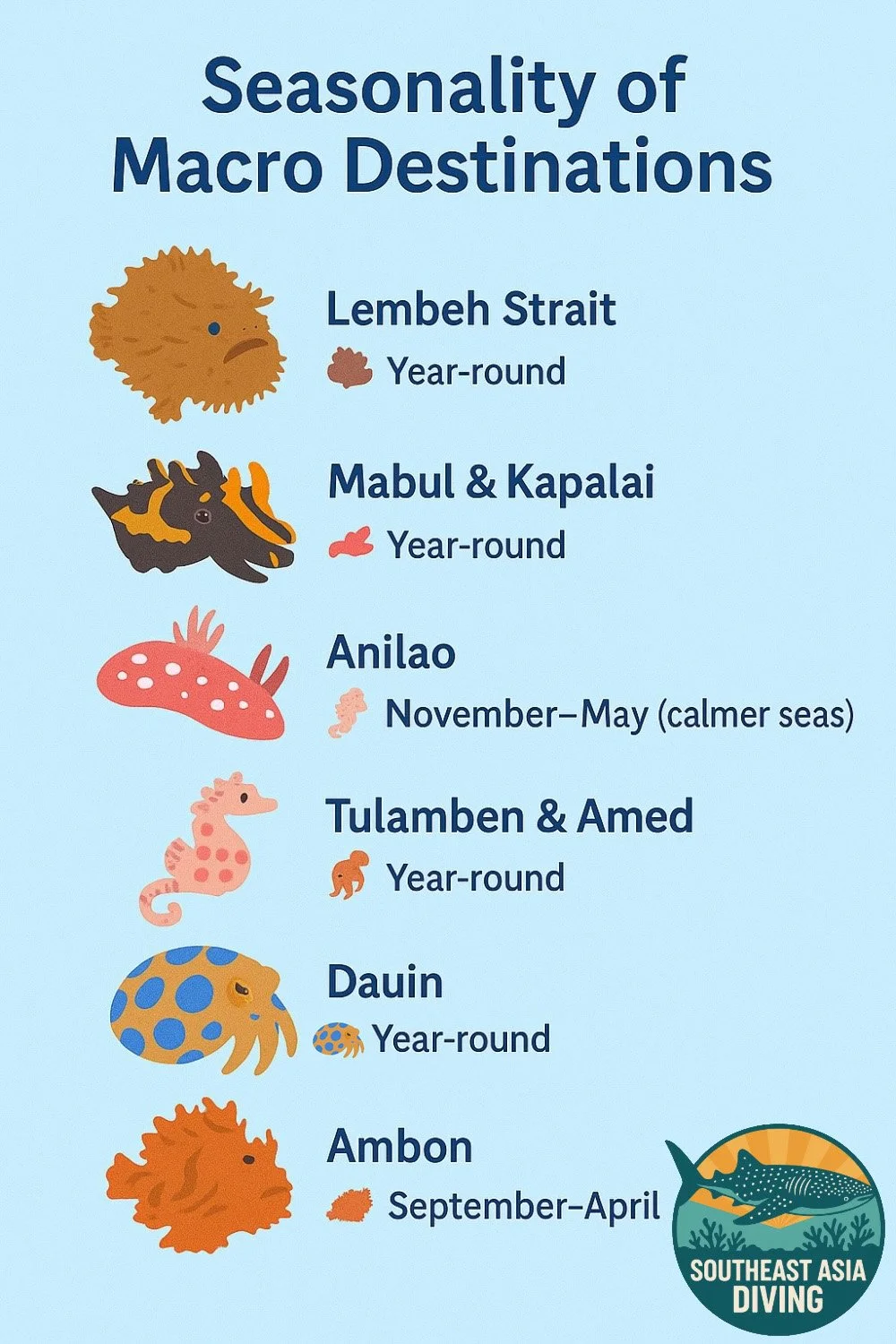
Best time to dive: Year-round
Because dives are shallow and slow, Lembeh offers long bottom times and is ideal for photographers, new macro divers, and anyone wanting to truly slow their diving pace.
For many divers, Lembeh isn’t just a destination — it’s a turning point. It’s the place where they stop chasing the big stuff and fall in love with the strange, subtle, and endlessly fascinating details of the underwater world.
🥈 Mabul & Kapalai, Malaysia
Macro heaven with world-class reefs nearby
Just off the east coast of Sabah, Malaysian Borneo, the islands of Mabul and Kapalai sit in the shadow of legendary Sipadan — but for macro lovers, these two sites often steal the show. While Sipadan delivers turtles, sharks, and schooling fish, Mabul and Kapalai offer something equally special at a much slower pace: critter-rich sand slopes and shallow macro playgrounds.
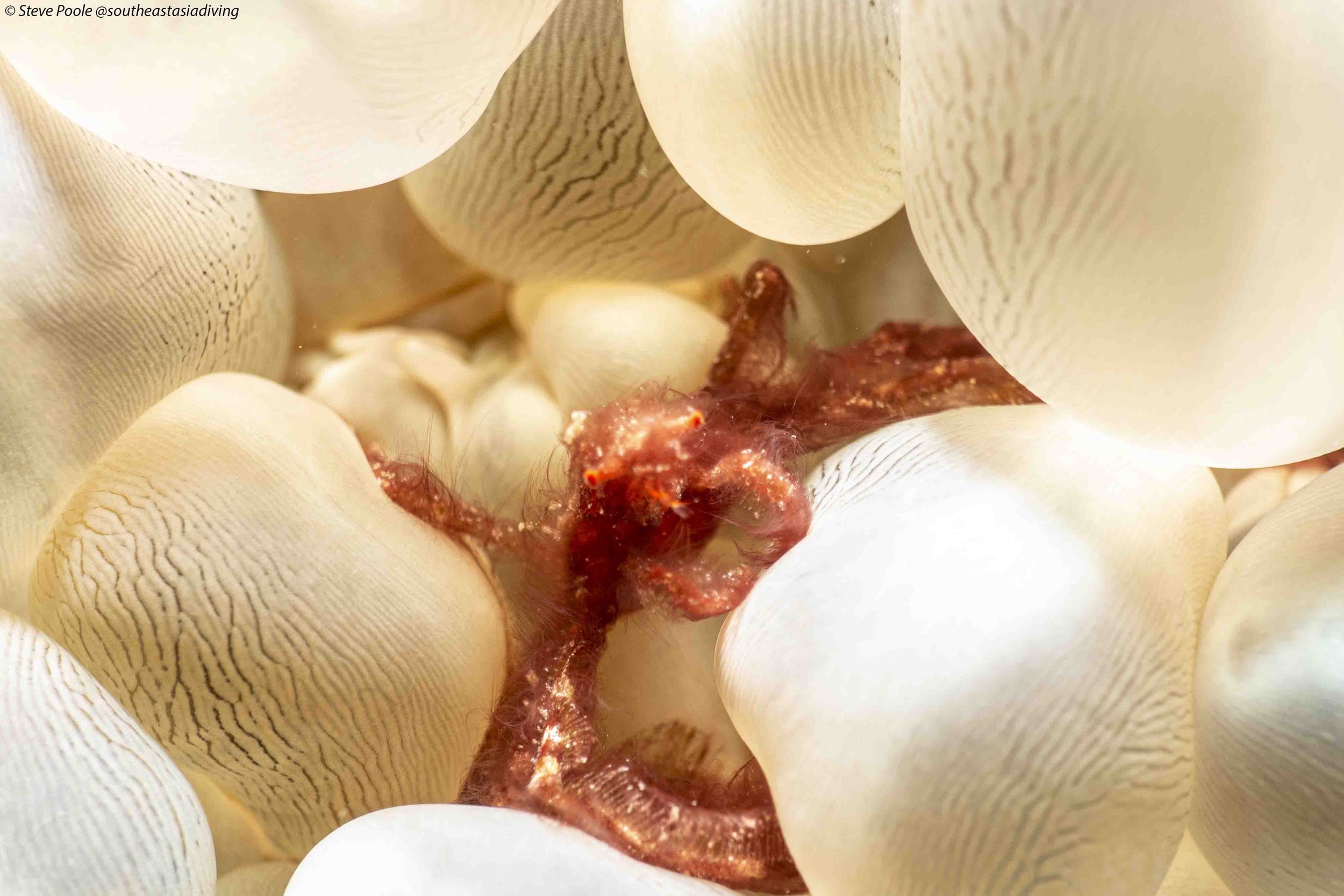
A tiny orangutan crab hiding in bubble coral
The diving here is gentle and accessible. Sandy bottoms, patch reefs, and man-made structures such as pylons, jetties, and discarded debris create ideal hiding places for small, camouflaged marine life. What looks unremarkable at first glance quickly reveals itself as a dense network of movement, colour, and behaviour.
🐛 What You’ll Find
Macro life around Mabul and Kapalai is diverse and reliable, with many sites producing repeat sightings dive after dive.
Common encounters include:
• Frogfish in multiple varieties, often sitting in plain sight
• Mandarinfish, especially at dusk around rubble patches
• Flamboyant cuttlefish, particularly in sandy areas
• Blue-ring octopus, usually spotted during night dives
• Ghost pipefish drifting near hydroids and soft structures
In addition to these highlights, divers frequently see seahorses, nudibranchs, juvenile fish, shrimp, and octopus species — making every dive feel like a scavenger hunt.
🌊 Why Mabul & Kapalai Stand Out
What makes Mabul and Kapalai truly special is the combination they offer. Few places in Southeast Asia allow you to enjoy relaxed, shallow macro dives and then, on the same trip, dive one of the world’s most famous big-animal sites.
It’s entirely possible to:
• Spend the morning photographing frogfish and cuttlefish
• Dive Sipadan in the afternoon to see turtles, barracuda, and sharks
• Return for a slow, critter-focused night dive
This balance makes Mabul and Kapalai ideal for mixed-interest dive groups and photographers travelling with non-macro-obsessed buddies.
🤿 Diving Conditions
Macro diving here is comfortable and forgiving:
Best for: Macro + reef combination trips
Skill level: Beginner-friendly
Depth: Mostly shallow (often 5–18 m)
Currents: Minimal to mild
Best time to dive: Year-round
With calm conditions, warm water, and long bottom times, Mabul and Kapalai are excellent places to discover macro diving for the first time — or to refine photography skills without pressure.
For divers who want the weird stuff without giving up big-animal encounters, Mabul and Kapalai offer one of the best-balanced dive experiences in Southeast Asia.
🥉 Anilao, Philippines
The nudibranch capital of the world
If nudibranchs are your obsession, Anilao belongs at the very top of your dive list. Located just a few hours south of Manila, this compact dive region has earned a global reputation among underwater photographers for its astonishing diversity of macro life — particularly sea slugs. Few places on Earth can rival Anilao’s sheer variety of nudibranch species, both in colour and form.
The coastline around Anilao features a mix of volcanic sand, rubble slopes, patch reefs, and gentle coral gardens. These varied habitats create ideal conditions for macro life to thrive, while calm seas and protected bays allow divers to slow down and explore without pressure. Dives here are often shallow, deliberate, and incredibly productive.
🐌 Macro Highlights
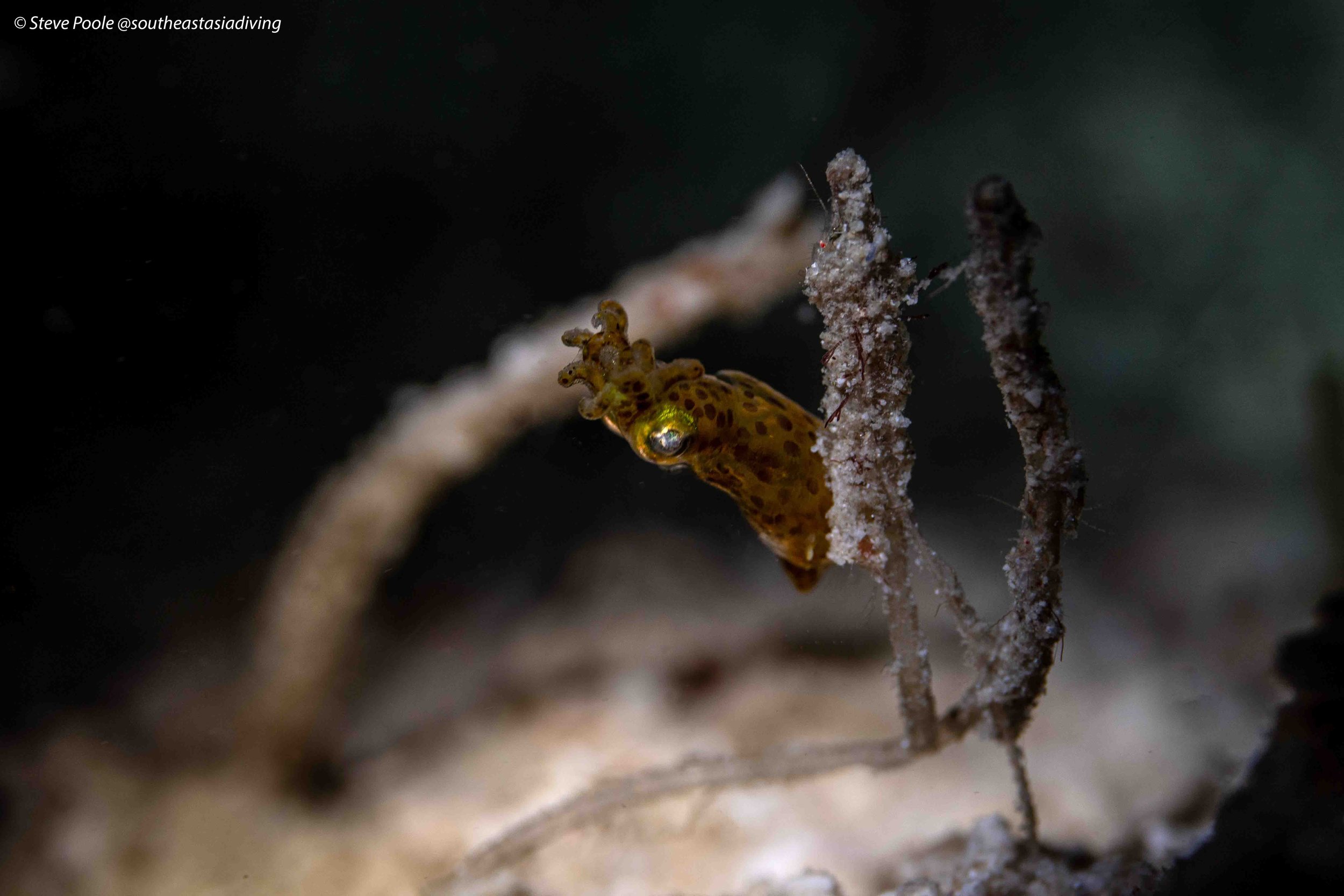
A tiny Bobtail squid
Anilao’s critter list is long and constantly evolving, with new species sightings reported regularly.
Highlights include:
• Hundreds of nudibranch species, ranging from tiny translucent slugs to bold, neon-coloured varieties
• Hairy shrimp, often perfectly camouflaged against algae
• Seahorses, both common and pygmy species
• Bobtail squid, especially during night dives
• Multiple octopus species, including coconut and mimic octopus
In addition to these staples, divers frequently encounter shrimp, crabs, juvenile fish, and unusual larval forms that make every dive feel fresh and unpredictable.
📸 Why Photographers Love Anilao
Anilao is designed for macro photography. Calm conditions, easy entries, and minimal current allow photographers to spend time perfecting composition and lighting. Many dive sites sit between 5–20 metres, making them ideal for long bottom times and repeated dives.
Night diving is particularly exceptional here. As the sun sets, the reef transforms — octopus emerge to hunt, bobtail squid hover over the sand, and countless crustaceans appear from hiding. For many photographers, Anilao’s night dives are the highlight of the trip.
🤿 Diving Conditions
Anilao is one of the most accessible macro destinations in Southeast Asia:
Best for: Nudibranch lovers, macro photography, night diving
Skill level: All levels
Depth: Mostly shallow
Currents: Minimal
Best time to dive: November–May
Its proximity to Manila, combined with reliable macro sightings and photographer-friendly conditions, makes Anilao a favourite for both short trips and dedicated photo workshops.
For divers who want endless variety, long bottom times, and a never-ending search for tiny details, Anilao delivers — dive after dive.
⭐ Tulamben & Amed, Bali (Indonesia)
Accessible macro diving with incredible variety
On Bali’s quiet northeast coast, Tulamben and Amed offer some of the most accessible and rewarding macro diving in Southeast Asia. Known globally for the USAT Liberty Wreck, this stretch of coastline also hides a thriving macro scene along its black sand slopes, coral patches, and rubble fields.
The volcanic sand provides excellent contrast for camouflaged critters, while calm conditions and easy shore entries make Tulamben and Amed ideal for slow, methodical diving. Many sites sit just a short swim from shore, allowing divers to spend maximum time underwater without boat schedules or current concerns.
🐛 Macro Highlights
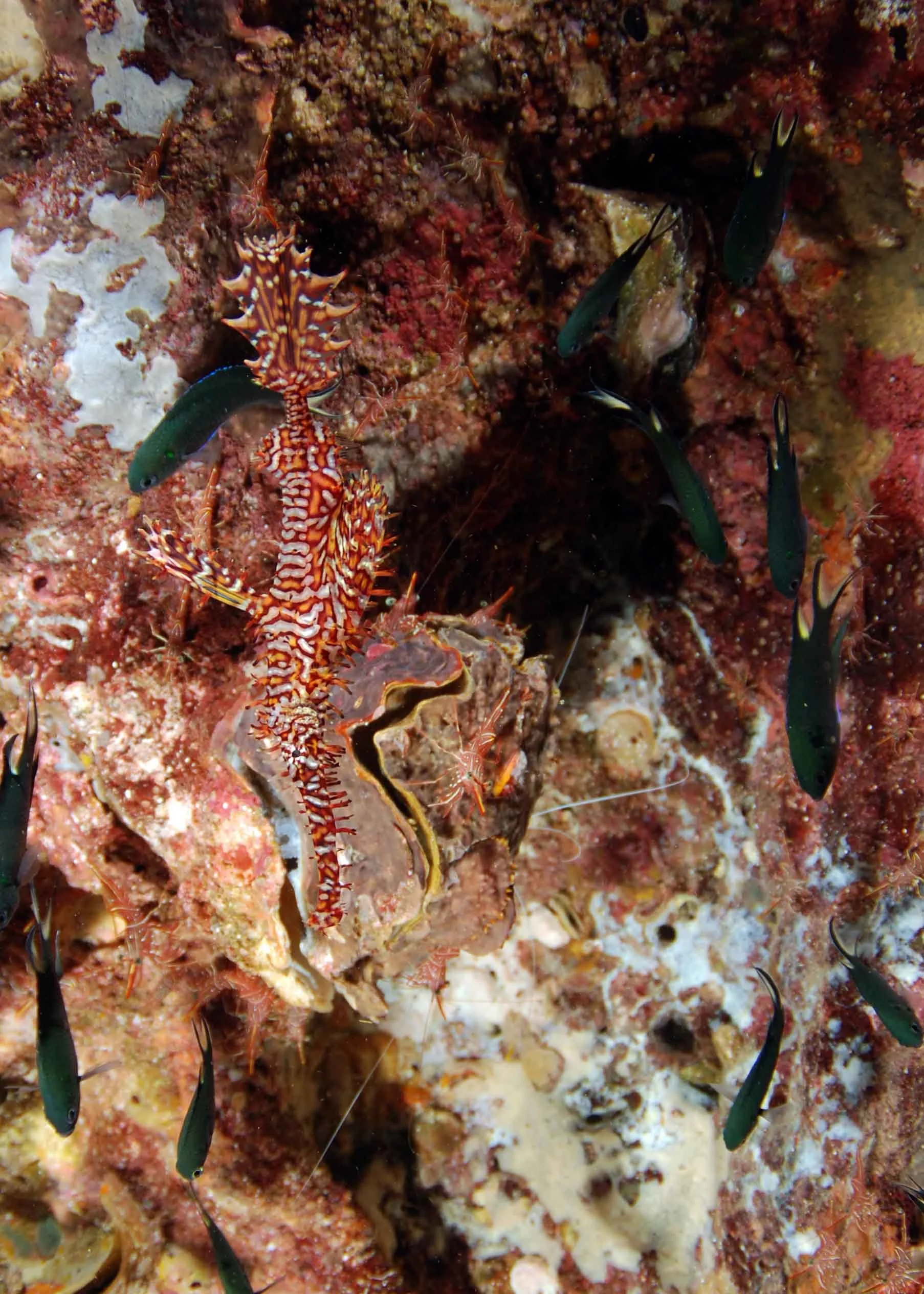
An Orante Ghost Pipefish
Expect a reliable and diverse critter list, including:
• Harlequin shrimp, often found in pairs feeding on starfish
• Pygmy seahorses clinging to sea fans
• Ghost pipefish hovering near soft corals and hydroids
• Leaf scorpionfish blending seamlessly into the reef
• Mimic octopus and other octopus species on sandy slopes
The Liberty Wreck itself is also a macro playground, with nudibranchs, shrimp, and juvenile fish tucked into every crevice.
🤿 Diving Conditions
Best for: Easy-access macro diving, beginners, mixed-interest trips
Skill level: All levels
Depth: Shallow to moderate
Currents: Usually mild
Best time to dive: Year-round
Tulamben and Amed are perfect for divers who want excellent macro opportunities without sacrificing comfort, convenience, or variety — and for those who want to combine critter hunting with iconic wreck and reef dives.
⭐ Dauin, Philippines
Quiet, uncrowded, and packed with critters
Often overshadowed by nearby Apo Island’s coral reefs, Dauin is one of the Philippines’ most underrated macro and muck diving destinations. Stretching along the coast near Dumaguete, Dauin’s dark sand slopes and gentle seabeds are rich with rare and fascinating marine life.
Diving here is calm, shallow, and unhurried. The lack of strong currents makes it easy to slow down, hover, and observe behaviour — perfect conditions for photographers and divers new to macro.
🐙 What You’ll Find
Dauin is known for consistent, high-quality macro encounters, including:
• Blue-ring octopus, especially on night dives
• Frogfish in multiple species and colours
• Seahorses hiding among debris and algae
• Stargazers buried beneath the sand
• Flamboyant cuttlefish, often seen walking across the seabed
Night dives in Dauin are particularly special, revealing octopus, cuttlefish, and crustaceans rarely seen during the day.
🤿 Diving Conditions
Best for: Peaceful muck diving, night dives, macro photography
Skill level: Beginner-friendly
Depth: Mostly shallow
Currents: Minimal
Best time to dive: Year-round
For divers seeking a relaxed atmosphere, uncrowded sites, and consistently excellent critter encounters, Dauin quietly delivers dive after dive.
⭐ Ambon, Indonesia
Home of the psychedelic frogfish
For serious macro enthusiasts, Ambon needs little introduction. This small island in eastern Indonesia shot to fame as the only known location for one of the world’s most iconic macro subjects: the psychedelic frogfish.
Ambon’s muck diving takes place primarily in sheltered bays with silty sand, rubble, and debris — environments that may look unremarkable, but are packed with rare and unusual life. Dives here reward patience and careful observation, often revealing species found in very few other places.
🐠 Signature Sightings
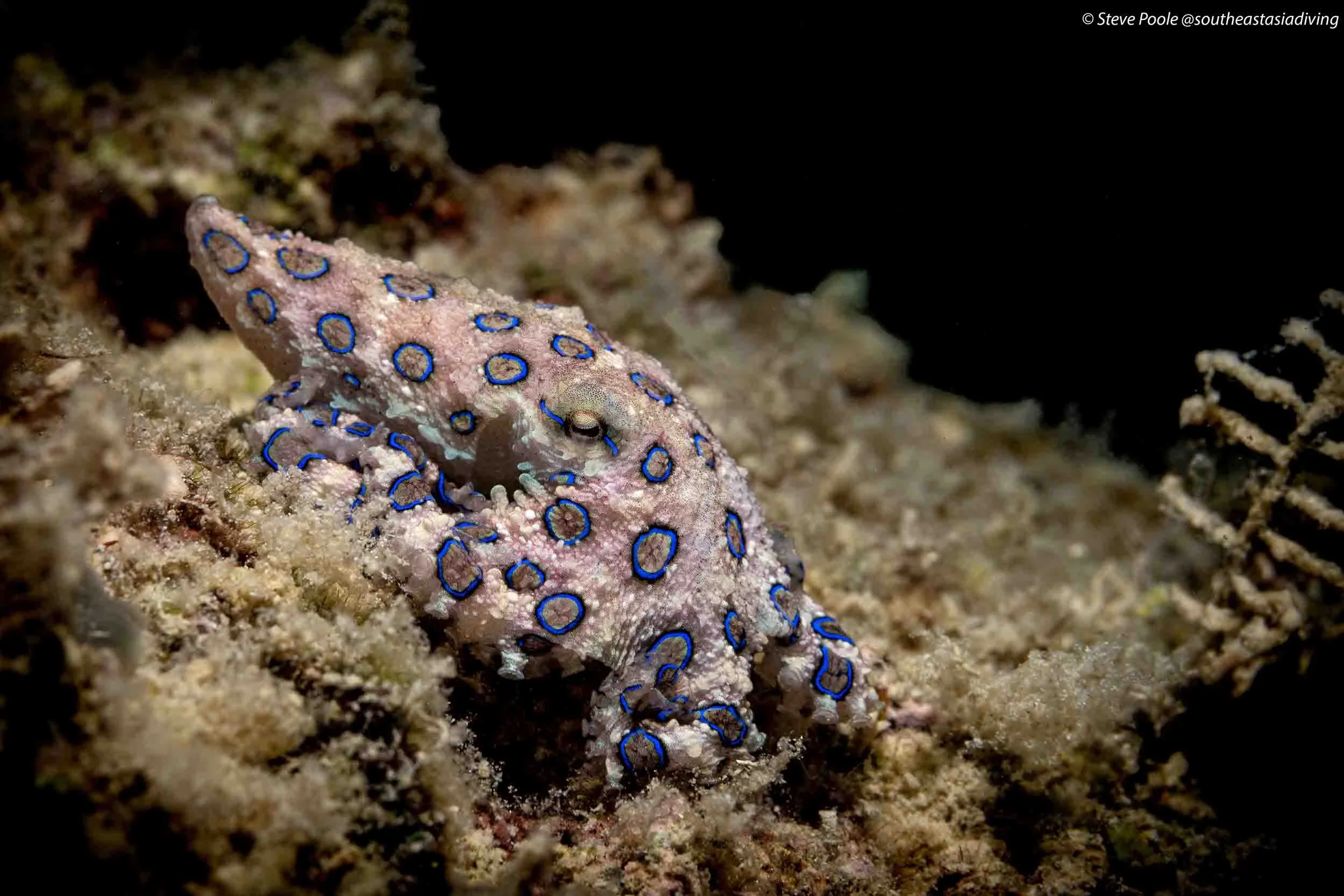
A deadly Blue Ringed Octopus
Ambon’s critter list reads like a macro diver’s wish list:
• Psychedelic frogfish, unique to the region
• Rhinopias, beautifully camouflaged against the sand
• Hairy frogfish and other frogfish species
• Rare octopus species
• Unusual shrimp and juvenile fish
While visibility can be lower than at reef sites, the trade-off is access to some of the rarest macro life in Southeast Asia.
🤿 Diving Conditions
Best for: Rare species hunters, advanced macro photographers
Skill level: Intermediate
Depth: Shallow to moderate
Currents: Minimal
Best time to dive: September–April
Ambon is not about pretty reefs or wide-angle scenes — it’s about finding the extraordinary in the ordinary. For divers chasing once-in-a-lifetime macro encounters, few places compare.
📅 Best Time of Year for Macro Diving in Southeast Asia
One of the greatest advantages of macro diving is that it’s excellent year-round. Unlike pelagic species that migrate seasonally, most macro critters are resident, meaning they stay in the same general areas regardless of the time of year. This makes macro diving far more flexible when planning a trip.
That said, certain seasons can influence visibility, behaviour, and photographic opportunities.
🌡️ Year-Round Macro Diving
In most Southeast Asian destinations, macro diving can be enjoyed throughout the year because:
Warm water temperatures support constant critter activity
Sheltered bays and muck sites are protected from heavy swell
Small creatures don’t migrate long distances
This means you’re rarely “out of season” for macro diving.
🐣 Seasonal Behaviour & Highlights
While critters are always present, seasonal changes can affect what you see:
• Breeding and egg-laying often peak during warmer months
• Juvenile fish and larval stages appear more frequently after plankton blooms
• Flamboyant cuttlefish displays are more common during mating periods
• Octopus activity can increase at certain times of year
These behaviours make macro diving especially rewarding for photographers and repeat visitors.
🌙 Why Night Dives Matter
Night dives are one of the best ways to enhance macro encounters — regardless of season.
At night:
Octopus, cuttlefish, and shrimp become more active
Rare crustaceans emerge from hiding
Sand-dwelling species reveal themselves
Many of Southeast Asia’s most famous macro sightings — including blue-ring octopus and bobtail squid — are more likely after dark.
🌧️ Rainy Seasons Can Be a Bonus
While rainy seasons may affect reef visibility, they can actually improve muck diving:
• Rain increases nutrient runoff
• Plankton blooms support more juvenile life
• Silty conditions favour camouflaged species
For macro divers, “bad weather” often means better critter action.
✅ Bottom Line
If you’re planning a trip specifically for macro diving, timing is forgiving. You don’t need to chase narrow seasonal windows — instead, focus on choosing the right destination, guide, and dive style.
In macro diving, patience and observation matter far more than the calendar.
🤿 Macro Diving Tips for Beginners
Macro diving is less about experience level and more about mindset and technique. You don’t need advanced training or expensive gear to enjoy it — but a few simple habits will dramatically improve what you see and how much you enjoy each dive.
⚖️ Perfect Your Buoyancy
Good buoyancy is the single most important skill in macro diving. You’ll spend much of the dive hovering in place, sometimes for several minutes at a time. Being able to stay still without touching the bottom protects fragile habitats and keeps sand from being kicked up, which can ruin visibility for everyone.
Focus on slow, controlled breathing and small fin movements — hovering matters far more than depth.
🐢 Slow Down
Macro diving rewards patience. Many critters remain hidden until they feel calm, then slowly emerge or begin to move. If you rush, you’ll miss them.
Move slowly, scan carefully, and give yourself time to observe behaviour. Some of the best moments happen when you stop completely and simply watch.
👀 Trust Your Guide
Macro guides are specialists. They know where specific critters like to hide, how animals behave, and even which individuals live on certain sites. If your guide signals something you can’t see at first, stay calm and let your eyes adjust — it’s usually worth it.
Following your guide closely also helps you learn how to spot critters on your own.
🌱 Never Touch or Harass Marine Life
Macro creatures are often delicate and easily stressed. Never touch, move, poke, or manipulate animals to get a better look or photo. Ethical macro diving means observing natural behaviour without interference.
Responsible diving protects these unique environments and ensures future divers can enjoy them too.
Macro diving teaches patience, control, and awareness — skills that improve all types of diving. Once you slow down and learn to see the small stuff, you’ll start noticing extraordinary life everywhere you dive.
📸 Macro Photography Tips
Macro diving and underwater photography go hand in hand, but capturing small subjects underwater requires a slightly different approach than wide-angle shooting. The good news is that macro photography is often more forgiving in terms of conditions — shallow depths, minimal current, and long bottom times work in your favour.
🔍 Get Close — Then Get Closer
Water reduces sharpness and contrast. The closer you are to your subject (without touching), the better your images will be. Macro lenses and wet diopters allow you to fill the frame with even the smallest critters.
🔦 Use a Focus Light
A focus light helps your camera lock onto tiny subjects and makes details pop, especially in low-light or silty environments. Position the light gently and avoid shining it directly into an animal’s eyes for long periods.
💡 Control Your Lighting
Good lighting makes all the difference:
Strobes help freeze motion and bring out colour
Video lights are excellent for continuous lighting and filming behaviour
Snoots allow you to isolate subjects and create dramatic backgrounds
You don’t need the most powerful gear — controlled, thoughtful lighting matters more.
⏳ Be Patient
Some of the best macro shots come from waiting. Give animals time to settle, observe their behaviour, and anticipate movement. Rushing almost always leads to missed shots.
🌱 Respect the Subject
Never move animals, break substrate, or manipulate the environment for a photo. Ethical photography protects fragile ecosystems and often results in more natural, compelling images.
💬 Final Thoughts
Macro diving opens the door to an entirely different underwater world — one that many divers never fully explore. Southeast Asia stands unrivalled as the global epicentre of macro and muck diving, offering unmatched diversity, rare species, and environments where the strange and wonderful thrive.
From the black sands of Lembeh to the critter-rich slopes of Mabul, Anilao, Dauin, Bali, and Ambon, macro diving rewards those willing to slow down and look closer. It’s a style of diving that sharpens skills, deepens appreciation for marine life, and turns even the simplest dive site into a place of discovery.
Once you start noticing the small stuff, it’s hard to stop. Many divers find that macro diving doesn’t replace big-animal encounters — it complements them, revealing just how complex and extraordinary the underwater world really is.
Slow down.
Hover.
Look closer.
The weird stuff is waiting.
❓ FAQ — Macro Diving in Southeast Asia
What is macro diving?
Macro diving focuses on finding and observing small marine life, often just a few centimetres in size. Instead of covering distance, divers move slowly and search for critters like frogfish, nudibranchs, seahorses, and octopus species hiding in sand, rubble, or coral.
What is muck diving? Is it the same as macro diving?
Muck diving is a type of macro diving that takes place over sandy, silty, or volcanic seabeds that appear barren at first glance. These environments are ideal for rare and unusual creatures that rely on camouflage.
All muck diving is macro diving — but not all macro diving is muck diving.
Is macro diving suitable for beginners?
Yes. Many of the best macro diving destinations in Southeast Asia are beginner-friendly. Dives are often shallow, calm, and slow-paced, making them ideal for new divers who want long bottom times and minimal current.
Popular beginner-friendly macro destinations include Anilao, Dauin, Mabul, and Tulamben.
Where is the best macro diving in the world?
Southeast Asia is widely considered the best macro diving region in the world. Within the region, Lembeh Strait (Indonesia) is often ranked number one due to its unmatched density of rare and bizarre critters.
What critters can I expect to see while macro diving?
Macro diving in Southeast Asia offers incredible variety. Common sightings include:
• Frogfish (painted, hairy, giant, psychedelic)
• Nudibranchs (hundreds of species)
• Flamboyant cuttlefish
• Mimic octopus & wunderpus
• Seahorses and pygmy seahorses
• Ghost pipefish
• Blue-ring octopus
• Hairy shrimp
Do I need special training for macro diving?
No special certification is required, but good buoyancy control is essential. Many divers benefit from a Peak Performance Buoyancy course or underwater photography specialty before focusing heavily on macro.
What camera or gear is best for macro diving?
A compact camera or mirrorless system with a macro lens works well. Focus lights are more important than powerful strobes, and many divers use snoots to isolate subjects. For beginners, even action cameras with macro wet lenses can be effective in shallow water.
Is macro diving good year-round?
Yes. One of the biggest advantages of macro diving is that it’s excellent year-round. Macro critters don’t migrate far, and seasonal changes often bring different behaviours such as mating, eggs, or juvenile species.
Are night dives better for macro?
Often, yes. Many macro species are nocturnal or become more active at night. Night dives frequently reveal octopus, cuttlefish, shrimp, and rare critters not seen during daytime dives.
Is macro diving bad for the reef?
Macro diving is very low impact when done responsibly. Divers should maintain perfect buoyancy, never touch or move animals, avoid resting on the seabed, and use lights respectfully. Ethical guiding makes a huge difference.
Can I combine macro diving with big-animal diving?
Absolutely. Destinations like Mabul, Tulamben, and Bali offer excellent macro diving alongside reefs, turtles, and pelagic encounters — perfect for mixed-interest dive trips.