🌊 Sipadan vs Komodo vs Raja Ampat: Choosing the Right World-Class Dive Experience in Southeast Asia
📝 Editor’s Note
This article builds on our earlier head-to-head comparisons of Komodo vs Sipadan and Komodo vs Raja Ampat.
Rather than revisiting those matchups individually, this piece brings all three destinations together to offer a broader, experience-led perspective for divers choosing a single standout destination in Southeast Asia.
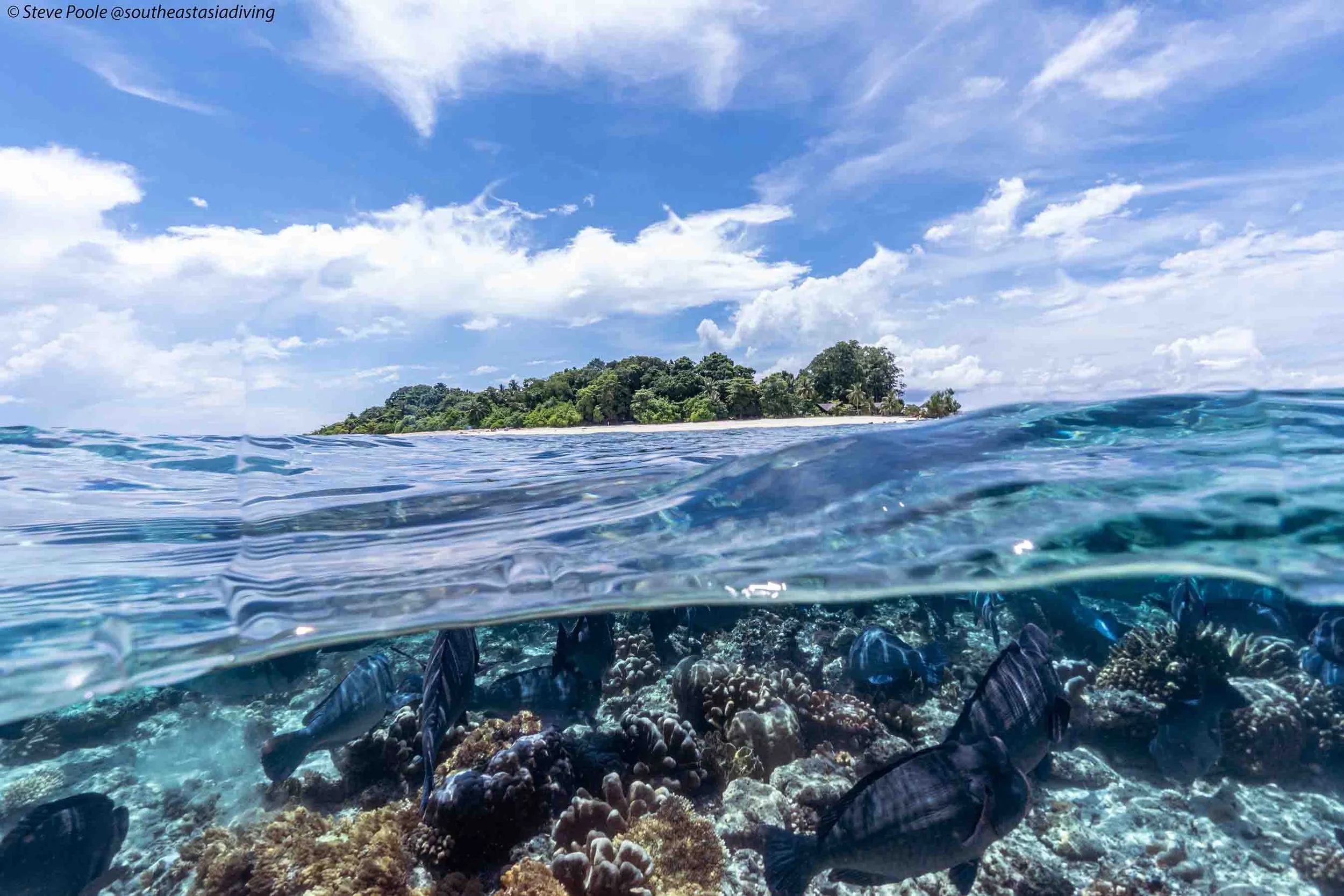
Split shot of Sipadan showing the famous Bumphead Parrotfish
🧭 Introduction: Three Destinations, Three Very Different Experiences
Choosing between Sipadan, Komodo, and Raja Ampat isn’t really about which destination is better — it’s about which experience you want to have underwater, and what kind of diving will feel rewarding over the course of an entire trip.
All three are routinely described as world-class, yet they earn that reputation in fundamentally different ways. One is defined by vertical walls and dense schooling fish compressed into a small, intense footprint. Another is shaped by movement — currents, channels, and changing conditions that create variety and demand engagement. The third reveals its strength more quietly, through consistency, biodiversity, and reefs that feel complete rather than performative.
For divers planning a once-in-a-lifetime trip, these distinctions matter. The wrong choice isn’t a bad destination — it’s a mismatch between expectations and reality. A diver seeking calm, immersive reef exploration may feel fatigued by constant current. Someone chasing big, iconic moments may feel underwhelmed by subtlety and balance. Understanding how these places dive, not just how they photograph, is the difference between a good trip and a deeply satisfying one.
This article brings together Sipadan, Komodo, and Raja Ampat in a single comparison — expanding beyond our earlier head-to-head pieces to offer a broader, experience-driven perspective. Rather than revisiting individual matchups, the goal here is to help divers step back and ask a more useful question: Which of these destinations aligns best with how I like to dive right now?
Instead of ranking these sites outright, we’ll examine what each does exceptionally well, where each can feel limiting, and how factors like conditions, variety, logistics, and reef character shape the overall experience. The aim isn’t to crown a winner, but to help you choose the destination most likely to leave you feeling fulfilled — not rushed, overwhelmed, or quietly disappointed once the highlights fade.
🔍 How to Read the Comparison
The table below isn’t meant to declare a winner. Instead, it highlights how Sipadan, Komodo, and Raja Ampat differ in character, conditions, and overall diving experience.
Each row reflects a factor that meaningfully shapes a dive trip — from the type of marine life you’re most likely to encounter, to how predictable conditions tend to be, to whether a destination rewards intensity, adaptability, or immersion over time.
Read across rather than down. No single destination dominates every category, but clear patterns emerge. Those patterns are what matter most when choosing a destination that aligns with how you prefer to dive, photograph, and experience the underwater world.
At a Glance: Sipadan vs Komodo vs Raja Ampat
| Category | Sipadan | Komodo | Raja Ampat |
|---|---|---|---|
| Overall Diving Style | Focused & high-impact | Dynamic & current-driven | Immersive & reef-balanced |
| Defining Strength | Vertical walls & schooling fish | Movement, variety & energy | Biodiversity & reef health |
| Signature Dives | Steep walls, drop-offs | Drifts, pinnacles, channels | Slopes, seamounts, lagoons |
| Marine Life Highlights | Barracuda, turtles, jacks, sharks | Mantas, sharks, reef fish, macro | Reef fish diversity, sharks, mantas |
| Reef Condition | Excellent, tightly protected | Very good, site-dependent | Outstanding, consistently pristine |
| Typical Conditions | Generally calm, structured | Variable; often strong currents | Mostly moderate, rarely extreme |
| Recommended Skill Level | Intermediate to advanced | Confident intermediate to advanced | Intermediate and above |
| Underwater Photography | Wide-angle, schooling action | Wide-angle and macro | Wide-angle and macro flexibility |
| Dive Site Variety | Limited sites, repeat dives | Very high within one trip | High, with consistent quality |
| Crowding & Access | Permit-limited, controlled numbers | Increasing pressure at popular sites | Remote, fewer boats |
| Best Choice If… | You want iconic, high-intensity dives | You enjoy dynamic conditions and varied dives | You value biodiversity & reef health |
🧱 Sipadan: Intensity, Structure, and Big Moments
Sipadan is often described as dramatic, and that description holds up — not because of extreme currents or vast scale, but because of how abruptly the reef drops away and how tightly marine life concentrates along that structure.
Rising from deep water, Sipadan’s walls create a vertical stage where action unfolds quickly and decisively. Barracuda tornadoes spiral in open water, dense schools of jacks stack along the drop-off, and turtles appear in near-constant rotation along the wall. Encounters are immediate and unmistakable. You don’t ease into a Sipadan dive — you arrive in the middle of it.
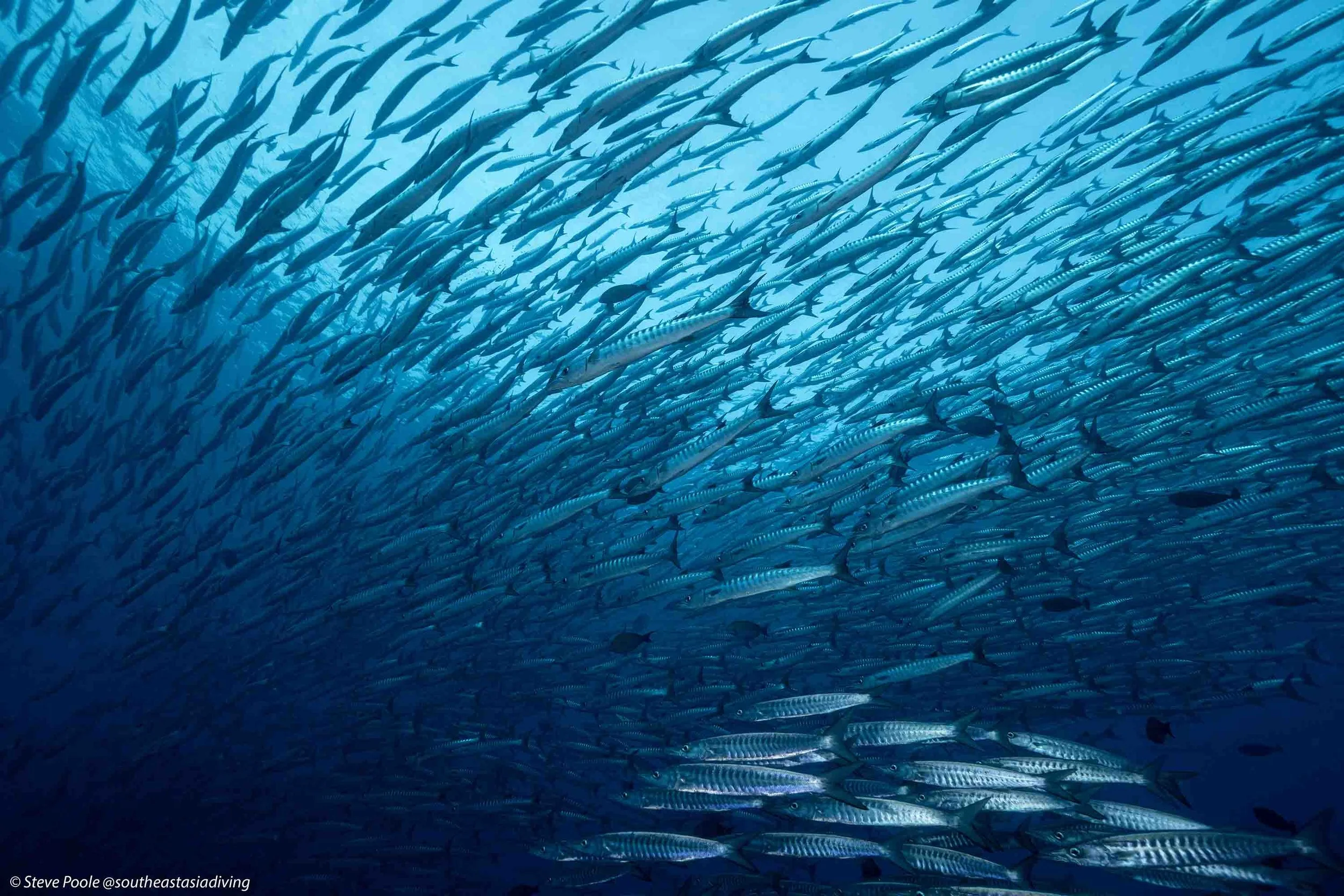
Few sites can match the intensity of Sipadan - this photo shows the huge school of Chevron Barracuda
Dives here tend to be compact and focused. Much of the most memorable action occurs within a relatively small geographic footprint, often along the same sections of wall dive after dive. That concentration is part of Sipadan’s appeal: when conditions align, a single dive can deliver more iconic moments than several days elsewhere.
Where Sipadan excels is intensity per dive. Few places in Southeast Asia offer such a high return in such a short window. Where it can feel limiting is variety. You are diving the same island repeatedly, under a tightly controlled permit system that caps daily diver numbers. That protection is essential to the reef’s long-term health, but it does shape the experience. For some divers, repetition enhances familiarity and anticipation; for others, it can feel restrictive, especially over longer stays.
Sipadan rewards divers who value impact over exploration. It is less about roaming widely and more about positioning yourself well, reading the water, and letting the marine life come to you. The diving is rarely subtle, but it is also rarely gentle — not in difficulty, but in how directly it presents itself.
Sipadan suits divers who:
want high-impact encounters and unmistakable “big moments”
enjoy wall diving and vertical structure
are comfortable with focused, repeat dives
don’t need constant site variety to feel fulfilled
For the right diver, Sipadan delivers some of the most memorable single dives in the region. For others, its strengths can feel narrow rather than expansive — a trade-off worth understanding before committing to the journey.
🌊 Komodo: Movement, Power, and Variety
Komodo is defined by movement. Water flows through narrow channels, spills over submerged ridges, and wraps around pinnacles in ways that shape every dive. That movement fuels biodiversity, but it also sets the tone for the experience: Komodo is a place where conditions matter, timing matters, and awareness is rewarded.
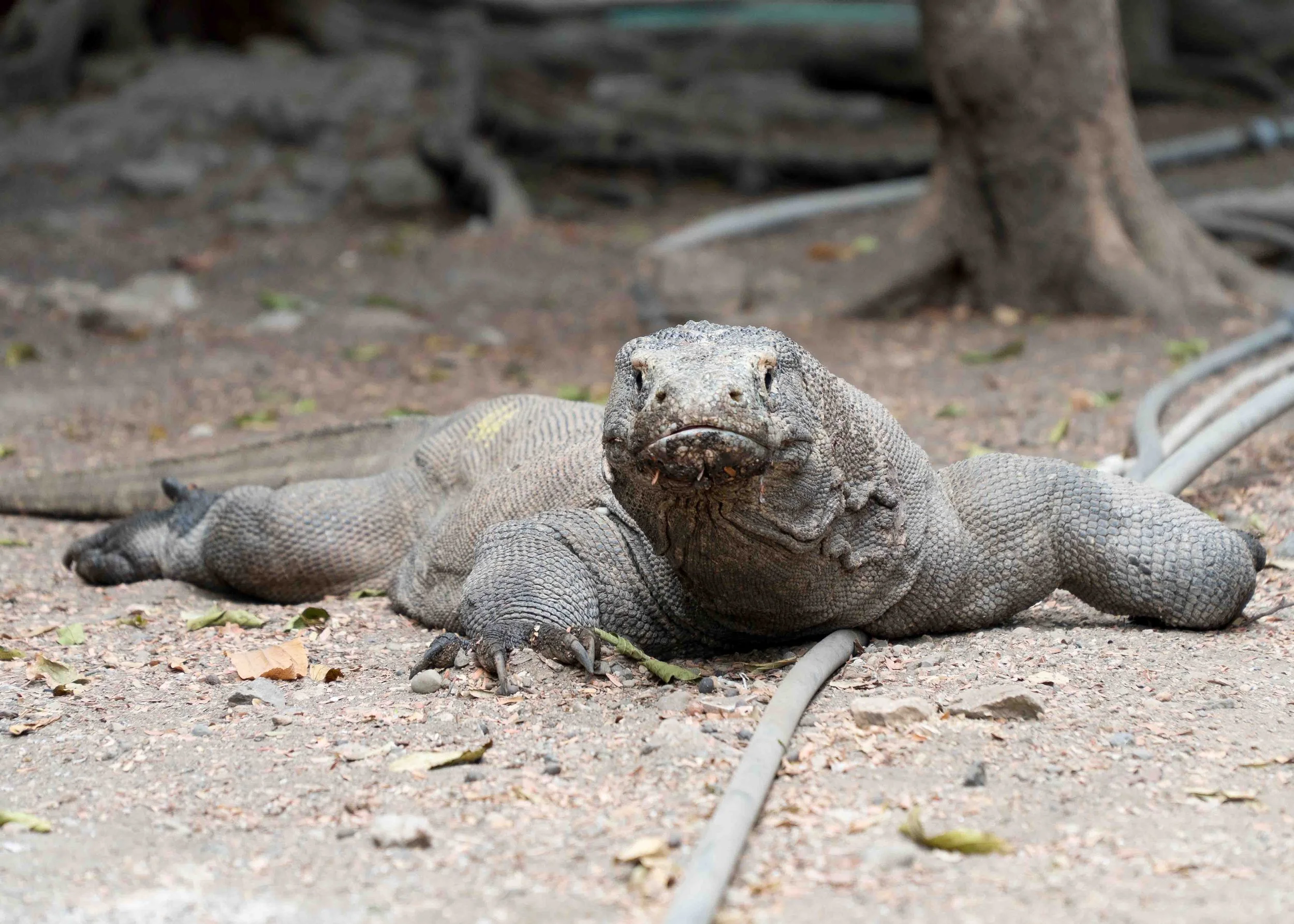
Komodo is famous for Scuba Diving…. and Dragons!
Currents here are not constant, but they are influential. One dive may unfold as a relaxed drift over vibrant coral gardens; the next may require a negative entry, careful positioning, and a strong understanding of how water moves around structure. Komodo doesn’t demand advanced skills on every dive, but it does expect divers to be attentive and adaptable.
What truly sets Komodo apart is range. Over the course of a single itinerary, divers can encounter manta rays at cleaning stations, sharks patrolling current-swept points, densely populated reef slopes, and unexpectedly rich macro life tucked into calmer corners. The diversity isn’t just biological — it’s experiential. No two dives feel quite the same, even when sites are geographically close.
Not every dive in Komodo delivers spectacle. Some are subtle, some are challenging, and some are simply beautiful. But taken together, the variety creates a sense of momentum. Komodo rarely feels repetitive, and for many divers, that constant shift in conditions and environments is its greatest strength.
Komodo rewards those who enjoy engagement over predictability. It’s a destination where reading the water, adjusting expectations, and staying flexible often leads to the most satisfying dives.
Komodo suits divers who:
enjoy dynamic, current-influenced conditions
want significant variety within a single trip
are confident managing changing environments
appreciate ecosystems shaped by movement and flow
For divers who thrive on energy and diversity, Komodo offers one of the most engaging underwater experiences in Southeast Asia — not because every dive is dramatic, but because the destination never feels static.
🌿 Raja Ampat: Completeness, Scale, and Balance
Raja Ampat doesn’t overwhelm through force or spectacle. Instead, it impresses through consistency, scale, and completeness — qualities that reveal themselves gradually over the course of a trip rather than in a single defining moment.
Reefs here are densely populated from shallow water to depth. Fish life is abundant without being frantic. Coral cover is exceptional, often stretching uninterrupted across entire reef systems. Encounters feel unforced: sharks cruise rather than rush, schools assemble without urgency, and reef life behaves as if divers are simply passing through rather than triggering an event.
This is biodiversity at scale. Raja Ampat consistently ranks among the most species-rich marine regions on the planet, and that richness is evident not just in checklists, but in how complete the ecosystem feels. Predators, prey, and reef builders all appear in balance. You’re less likely to surface buzzing from a single dramatic encounter, and more likely to surface quietly impressed by how much life was present everywhere you looked.
Not every dive in Raja Ampat delivers a headline moment, but nearly every dive feels whole. Over the course of a trip, that steadiness becomes its defining strength. Rather than chasing peaks, the experience accumulates — dive after dive reinforcing a sense of immersion and continuity.
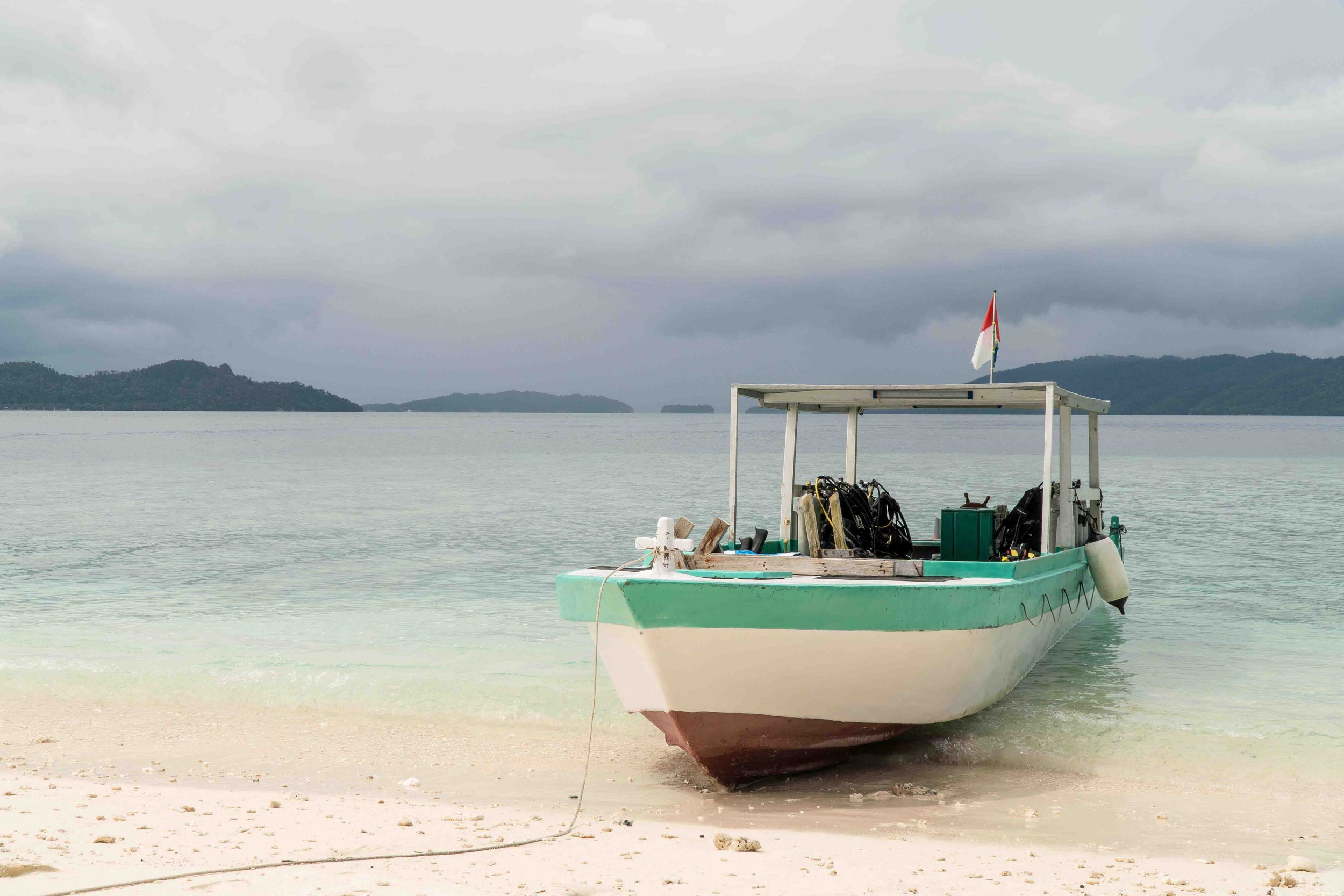
Few sites can match Raja Ampat’s sheer biodiversity and serenity
Raja Ampat rewards patience and curiosity. Longer bottom times, careful observation, and an unhurried approach reveal layers that can be missed by divers focused solely on spectacle. For underwater photographers, this translates into exceptional flexibility: wide-angle reef scenes, fish behavior, and macro subjects can all be found without forcing the issue.
Raja Ampat suits divers who:
value reef health and biodiversity above single encounters
enjoy long, immersive dives
prefer consistency and balance over adrenaline
want flexibility for both wide-angle and macro photography
For divers seeking a destination that feels less like a highlight reel and more like a functioning ocean ecosystem, Raja Ampat offers one of the most complete underwater experiences anywhere in the world.
🧭 Which Destination Is Best — and for Whom?
Rather than declaring a single winner, the more useful question is: what kind of diver are you right now?
Not the diver you were years ago, or the one you aspire to be — but the diver whose expectations, energy, and interests will shape how satisfying a trip actually feels. Each of these destinations is exceptional, but each rewards a different mindset.
Choose Sipadan if you want intensity and unmistakable moments
Sipadan is best for divers who measure a trip by the impact of individual dives rather than by variety. If dramatic walls, dense schooling fish, and iconic encounters are what excite you most, Sipadan delivers those moments with remarkable consistency.
Highlights from a trip to Raja Ampat in 2018
It suits divers who are happy repeating sites in exchange for high-intensity dives, and who value structure and immediacy over exploration. If you want to surface buzzing from what you just saw — and don’t mind that the experience is tightly focused — Sipadan is hard to beat.
Choose Komodo if you thrive on movement, variety, and engagement
Komodo appeals to divers who enjoy participation. Reading the water, adjusting plans, and responding to changing conditions are part of the experience rather than obstacles to it.
If you like trips where no two dives feel the same — where mantas, sharks, reefs, and macro all appear across a single itinerary — Komodo offers a sense of momentum that keeps dives engaging. It rewards confidence, awareness, and flexibility, and is especially satisfying for divers who enjoy dynamic environments rather than predictable ones.
Choose Raja Ampat if you want immersion, balance, and reef-first diving
Raja Ampat is best for divers who value consistency over peaks. If long, unhurried dives, healthy reefs, and biodiversity at scale are more important to you than chasing singular moments, this is where Raja Ampat excels.
It suits divers who enjoy slowing down, observing behavior, and letting the experience build over time. Rather than delivering constant adrenaline, Raja Ampat offers something rarer: the feeling of diving within a fully functioning ecosystem, dive after dive.
There’s no wrong choice — only mismatched expectations
All three destinations deserve their reputations. Where trips fall short is not in the quality of the diving, but in choosing a destination that doesn’t align with how you actually like to dive.
Comparing availability across Sipadan, Komodo and Raja Ampat?
Once you’ve narrowed down your preferred destination, reviewing liveaboard itineraries and resort availability side-by-side can simplify the decision process — especially during peak season.
You can browse operators, itineraries and pricing below:
Disclosure: The booking tool above is an affiliate integration. If you choose to book through it, we may earn a commission at no additional cost to you. This helps support independent dive site guides like this one.
Understanding whether you’re seeking intensity, engagement, or immersion is the key to making the right choice — and to returning home feeling fulfilled rather than quietly disappointed once the highlights fade.
🌏 Can You Do All Three? Designing One Epic Southeast Asia Dive Trip
For divers with the time, budget, and flexibility, it is possible to experience Sipadan, Komodo, and Raja Ampat within a broader Southeast Asia itinerary. Done thoughtfully, the three destinations don’t compete — they complement one another.
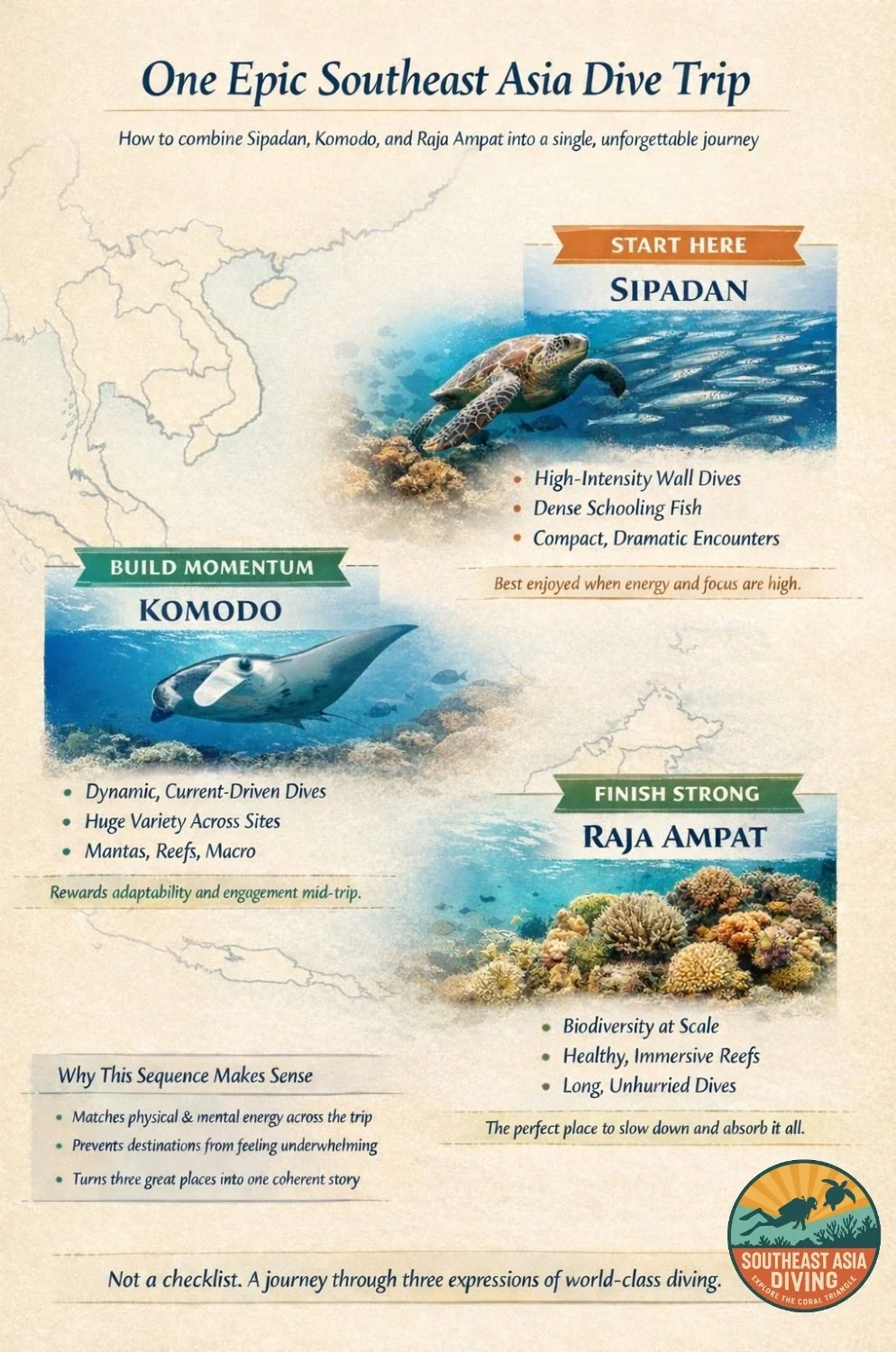
The key is understanding that these sites place different demands on your body, your attention, and your expectations. Sequence matters.
A Smart Order: Intensity → Energy → Immersion
1. Start with Sipadan
Sipadan works best at the beginning of a trip, when energy levels are high and focus is sharp. The diving is intense, compact, and emotionally charged — a series of high-impact dives that deliver iconic moments quickly.
Starting here lets you fully appreciate the drama without fatigue setting in, and it avoids the risk of Sipadan feeling narrow after broader, more immersive destinations later on.
2. Move on to Komodo
Komodo fits naturally in the middle of an extended trip. After Sipadan’s concentrated intensity, Komodo opens things up — more sites, more variability, more movement.
This is where engagement matters most. Your awareness is sharper after diving Sipadan, but you still have the energy to manage currents, adapt to changing conditions, and enjoy the variety Komodo offers. The contrast feels energising rather than overwhelming.
3. Finish in Raja Ampat
Raja Ampat is the ideal place to slow down and settle in. After the intensity of Sipadan and the dynamism of Komodo, Raja Ampat’s consistency and balance feel restorative rather than understated.
Longer dives, healthier reefs, and a sense of ecological completeness make it a perfect final chapter — a destination where the experience accumulates rather than spikes. Ending here allows the trip to resolve rather than crescendo.
A note of realism
This kind of trip isn’t necessary to appreciate Southeast Asia’s diving — and it’s not the right choice for everyone. Each of these destinations easily justifies a standalone journey. But for divers looking to understand the full spectrum of what the region offers, experiencing all three in sequence provides rare context.
You don’t just see great diving. You understand why it’s great — and how different expressions of excellence can coexist in the same region.
🌅 Final Thoughts: Choosing the Right Kind of “World-Class” Diving
Southeast Asia’s top dive destinations aren’t interchangeable, even when they’re all labeled world-class. Sipadan, Komodo, and Raja Ampat each represent a different expression of what exceptional diving can look like — intensity, energy, or balance.
Sipadan compresses drama into a small, powerful space, delivering some of the most memorable single dives in the region. Komodo thrives on movement and variability, rewarding engagement and adaptability with a constantly changing underwater landscape. Raja Ampat offers something quieter but deeper: consistency, biodiversity, and the rare experience of diving within a largely intact ecosystem.
The mistake many divers make isn’t choosing a “lesser” destination — it’s choosing the wrong destination for how they actually like to dive. A place that feels exhilarating to one diver may feel exhausting or narrow to another. Understanding how these destinations differ in character, not just reputation, is the key to making a choice you won’t second-guess once you’re back on land.
There’s no hierarchy here, only alignment. When expectations and experience match, any one of these destinations can feel extraordinary. When they don’t, even the most famous sites can fall short of their promise.
In a region as rich and varied as Southeast Asia, the most rewarding dive trips aren’t defined by chasing superlatives, but by choosing places that allow the ocean to meet you where you are — and, sometimes, to change how you see what “world-class” really means.
All three destinations are remote — in different ways.
Sipadan requires offshore boat transfers from Semporna. Komodo involves current-driven diving in a national park setting. Raja Ampat combines long-haul travel with liveaboards or island-based logistics far from major medical infrastructure.
For remote dive destinations like these, comprehensive travel insurance is strongly advisable. On previous trips across Southeast Asia, we’ve used World Nomads , as their policies are designed with adventure travel and scuba diving activities in mind.
Disclosure: The link above is an affiliate link, meaning we may earn a small commission if you choose to purchase — at no additional cost to you. We only recommend services we have personally used or researched carefully.
Always review policy wording carefully to confirm depth limits, evacuation provisions, and liveaboard coverage where relevant.
❓ Frequently Asked Questions
Which is better: Sipadan, Komodo, or Raja Ampat?
There’s no single “best” destination — each excels in different ways. Sipadan delivers intensity and iconic schooling action in a very focused setting. Komodo offers variety and dynamic conditions shaped by currents and movement. Raja Ampat stands out for biodiversity, reef health, and consistency. The right choice depends on what kind of diving experience you find most rewarding.
Is Raja Ampat better than Sipadan?
Highlights from a prior trip to Sipadan
Raja Ampat isn’t better so much as broader. It offers greater biodiversity, healthier reefs across a wide area, and more consistent diving over the course of a trip. Sipadan, by contrast, delivers high-impact dives with dramatic walls and dense schooling fish, but within a smaller, more repetitive footprint. Divers choosing between the two should consider whether they value intensity or immersion more.
Is Komodo more challenging to dive than Sipadan or Raja Ampat?
Komodo can be more demanding due to currents, tidal exchanges, and rapidly changing conditions. While many dives are suitable for confident intermediate divers, others require advanced skills, precise timing, and careful positioning. Sipadan and Raja Ampat tend to be more predictable overall, though solid buoyancy control and situational awareness are still essential.
Which destination is best for underwater photography?
Each destination offers distinct strengths:
Sipadan is best for wide-angle photography featuring walls, turtles, and dense schooling fish.
Komodo offers strong flexibility, with opportunities for wide-angle and macro photography on the same trip.
Raja Ampat provides the greatest overall photographic range, with exceptional reef scenes, fish behavior, and macro subjects spread across many sites.
Which destination has the healthiest reefs?
Raja Ampat consistently stands out for reef health and coral cover across a large geographic area. Sipadan’s reefs are well protected and remain in excellent condition, but are limited in size. Komodo’s reef health is very good overall, though it varies by site depending on exposure, currents, and visitation pressure.
Are these destinations suitable for intermediate divers?
Yes — with important caveats. Sipadan and Raja Ampat are generally suitable for intermediate divers who have good buoyancy control and situational awareness. Komodo is best suited to confident intermediate or advanced divers who are comfortable in current-driven environments and can adapt to changing conditions.
Which destination is best if I can only choose one?
Choose Sipadan if you want iconic, high-intensity dives and dramatic schooling action.
Choose Komodo if you value variety, movement, and dynamic diving within a single trip.
Choose Raja Ampat if you prioritize biodiversity, reef health, and immersive, balanced diving over adrenaline.
Are these destinations crowded?
Sipadan strictly limits diver numbers through a permit system, which protects the reef but restricts access. Komodo has become increasingly popular, particularly at well-known sites during peak season. Raja Ampat remains comparatively uncrowded due to its remoteness, though interest and visitation continue to grow steadily.