Your guide to the region’s most magical, reliable turtle encounters.
🌊 Introduction: Why Southeast Asia Is a Turtle-Lover’s Paradise
Few underwater encounters compare to drifting alongside a sea turtle. Calm, ancient, and effortlessly graceful, turtles seem to move through the water with a kind of quiet wisdom. They’re often wonderfully unbothered by divers, gliding past with slow, steady wingbeats — a reminder of just how peaceful the ocean can be. For many divers, that simple moment of swimming next to a turtle becomes one of the most memorable experiences of their entire trip.
Southeast Asia is one of the best places in the world to experience that magic. Stretching across the heart of the Coral Triangle, this region holds some of the planet’s highest marine biodiversity, with warm tropical waters, healthy reefs, and thriving turtle populations. Here, sea turtle encounters aren’t a rare surprise — they’re woven into the everyday rhythm of the reefs.
From the dramatic, current-swept walls of Sipadan, to the shallow turtle-filled grass beds of Apo Island, to the colourful hard-coral slopes of Nusa Penida and the tranquil reefs of the Gili Islands, Southeast Asia offers an extraordinary range of turtle habitats. You can dive with resting green turtles, watch hawksbills nibble on sponges, and even witness nesting beaches and protected reserves that support conservation efforts.
Whether you're a brand-new diver searching for your first wildlife encounter or an experienced explorer collecting unforgettable moments for your logbook, this region delivers some of the most reliable and ethical turtle encountersanywhere in the world.
In this guide, we’ll explore the best places to dive with sea turtles in Southeast Asia, the species you’re most likely to see, what makes each destination unique, and the top dive sites not to miss.
With so many incredible turtle habitats spread across Southeast Asia, each destination has its own personality — some are peaceful coral gardens, others are wild drift dives or towering walls. To help you choose, here are the places where turtle sightings are not just common, but part of the everyday rhythm of the reef. And there’s no better place to begin than one of the world’s most famous turtle sanctuaries.
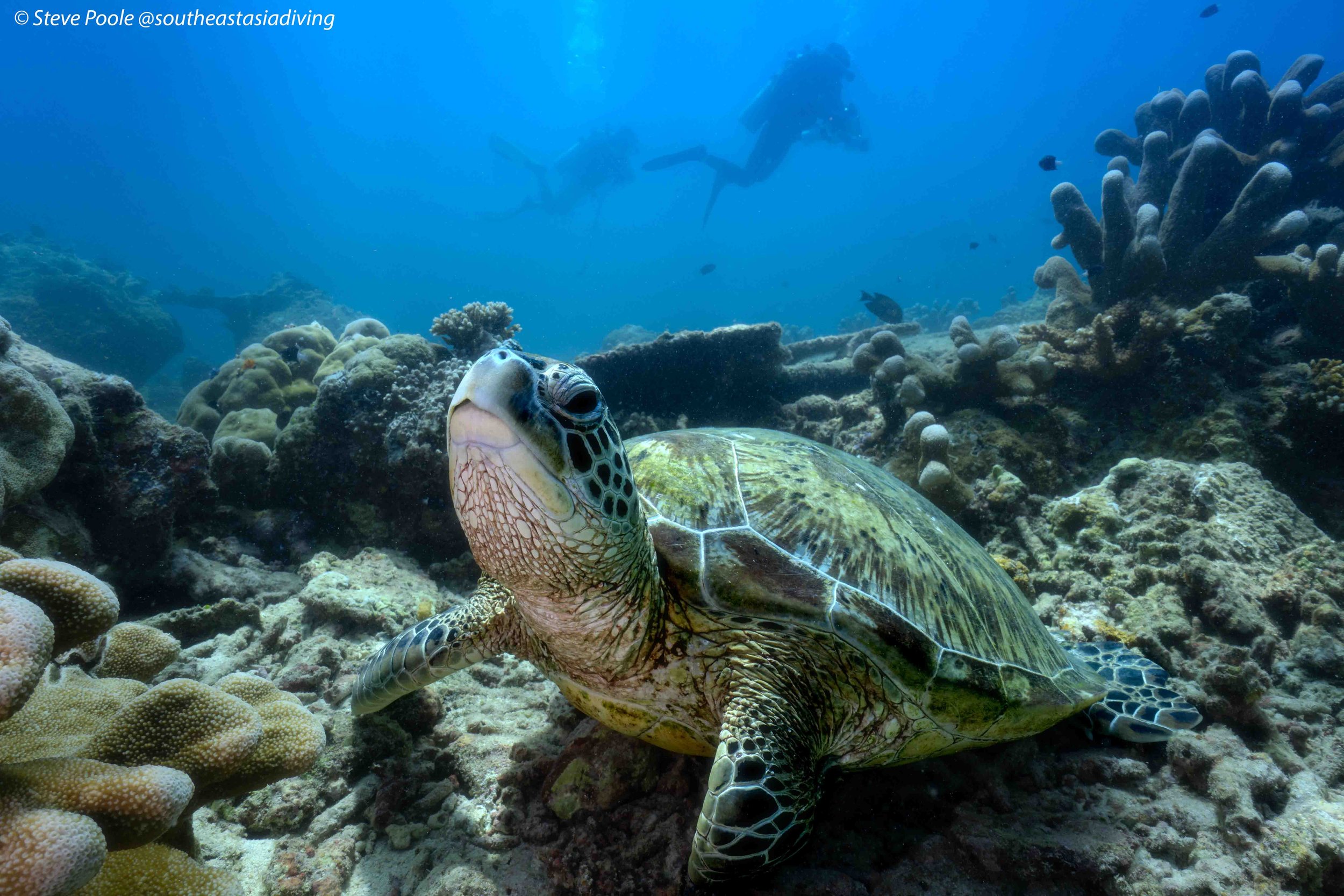
A turtle resting in the coral gardens at Sipadan
1️⃣ Sipadan, Malaysia — The Turtle Capital of Southeast Asia
Sipadan is legendary in the diving world, and for turtle lovers, it’s nothing short of extraordinary. Rising from the depths of the Celebes Sea, this tiny oceanic island is surrounded by plunging walls, swirling currents, and some of the richest marine life anywhere on the planet. But among its sharks, schools of barracuda, and enormous coral formations, the most iconic residents are the green and hawksbill turtles that glide effortlessly along its reefs.
🐢 Why Sipadan Is Exceptional for Turtle Encounters
Sipadan’s reefs are a protected marine sanctuary, which means both fishing and overnight stays on the island are prohibited. As a result, turtle populations have flourished here for decades. On a single dive, it’s not unusual to see dozens of turtles — resting on ledges, swimming calmly along the wall, or surfacing between dives.
What makes Sipadan so special is the consistency. Every dive site offers reliable turtle sightings, and the animals here are relaxed, accustomed to divers, and often incredibly photogenic.
🌊 Turtle Species at Sipadan
Green turtles — large, slow-moving, often napping on coral shelves
Hawksbill turtles — more active, frequently seen feeding on sponges
Seeing both species on the same dive is completely normal.
⭐ Best Dive Sites for Turtles
Barracuda Point: Famous for schooling fish, but also home to resting greens along the wall.
The Drop-Off: A vertical wall buzzing with life — turtles cruise past constantly.
Turtle Cavern: An eerie limestone cave system where turtle skeletons have been found (you don’t enter the cave, but turtles are common around the entrance).
👌 Experience Level
Intermediate (comfortable with currents + buoyancy)
While Sipadan isn't extremely difficult, some sites have mild-to-strong currents and require good situational awareness.
📸 Photography Notes
Greens often rest in shallow light, perfect for wide-angle shots.
Look for hawksbills feeding — this creates dynamic behavior-focused photos.
Great visibility + vertical walls = stunning silhouette opportunities.
📝 Why It Belongs on Your Turtle Bucket List
Sipadan offers one of the highest turtle encounter rates in the world. If swimming through clear blue water surrounded by peaceful, ancient sea turtles sounds like the ideal dive day, this is the place.
2️⃣ Gili Islands, Indonesia — Calm Reefs & Endless Turtle Encounters
If you’re dreaming of relaxed dives with warm water, easy conditions, and turtles on almost every site, the Gili Islands are exactly the place. Located just off the coast of Lombok, this trio of small islands — Gili Trawangan, Gili Air, and Gili Meno — is famous for its incredibly high turtle density, consistent visibility, and laid-back diving atmosphere.
For many divers, the Gilis are where they experience their first magical turtle encounter. For others, they’re the place they return to again and again because the reefs here make turtle sightings feel almost effortless.
🐢 Why the Gili Islands Are Perfect for Turtle Diving
The Gilis are home to thriving populations of both green turtles and hawksbill turtles, thanks in part to long-standing local conservation efforts and nesting beaches around Gili Meno. It’s not an exaggeration to say that seeing 10–20 turtles on a single dive is completely normal — sometimes more on calm days.
The gentle conditions make the Gilis ideal for:
new divers
snorkelers
families
photographers wanting long, slow, shallow dives
anyone who prefers warm, low-stress diving with guaranteed wildlife encounters
The reefs aren’t as dramatic or deep as Sipadan or Komodo, but the turtle experience here is one of the best in all of Southeast Asia.
🌊 Turtle Species in the Gilis
Green turtles — abundant, often resting, feeding, or cruising the sandy slopes
Hawksbill turtles — common on hard-coral and sponge-covered areas
Many turtles here are extremely relaxed around divers, making for calm, close encounters.
⭐ Best Turtle Dive Sites
Turtle Heaven: The name says everything — shallow, bright, and packed with resting greens.
Turtle City: Another high-density turtle site with calm conditions and soft light.
Shark Point: Known for sharks, but also one of the best drift routes for spotting turtles.
👌 Experience Level
Beginner–Intermediate
Calm, warm waters and mostly gentle currents make these islands accessible to all certification levels.
📸 Photography Notes
Slow, steady turtles allow beautiful, close-range shots.
Early-morning dives offer the softest light for wide-angle images.
Shooting upward toward the surface gives lovely silhouettes of greens surfacing for air.
📝 Why This Should Be on Your Turtle List
Few places in the world offer turtle encounters that are this easy, this frequent, and this enjoyable. Combine that with stunning sunsets, relaxed island life, and warm, clear water, and you have one of Southeast Asia’s most dependable and rewarding turtle diving destinations.
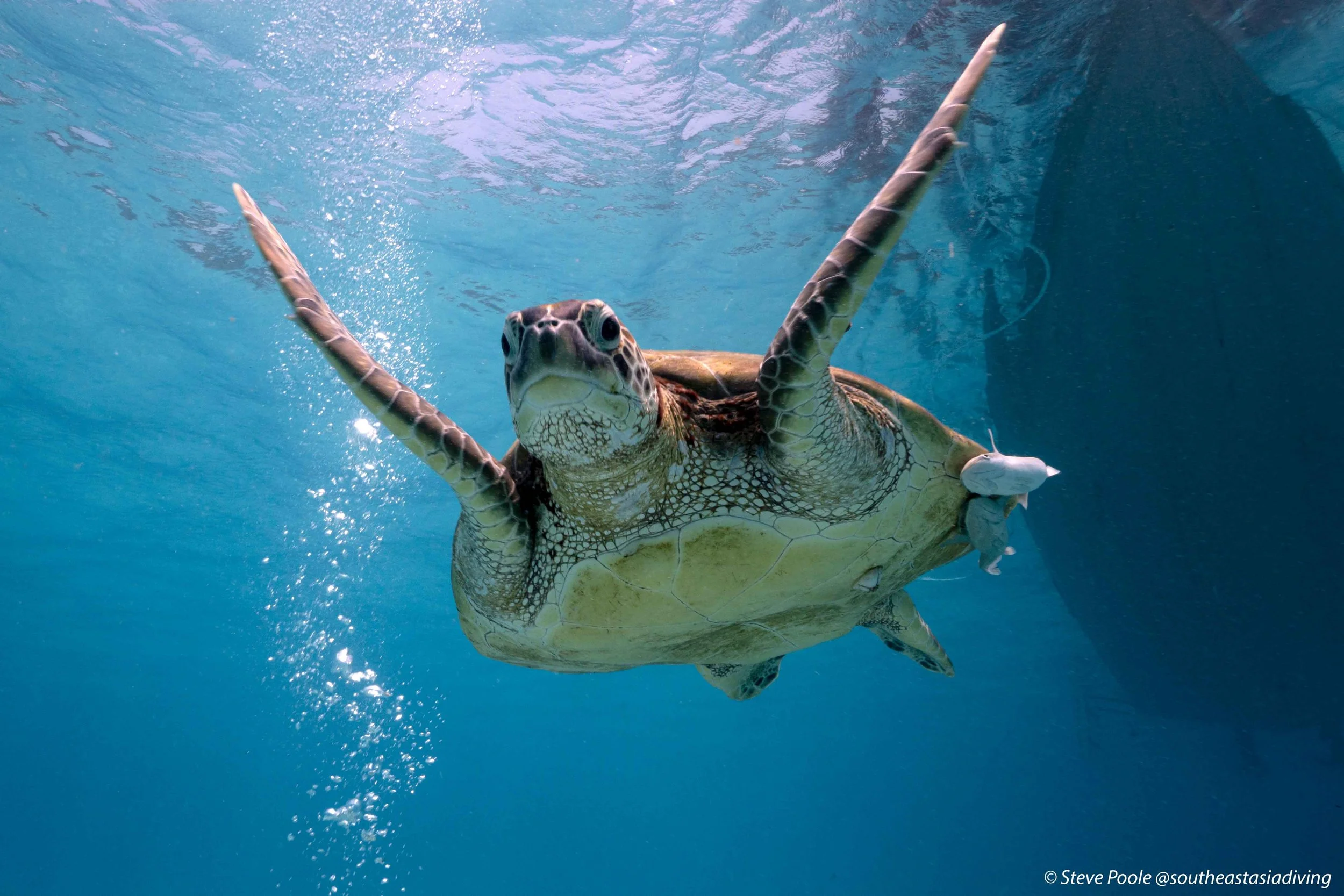
A Turtle swimming towards the camera
3️⃣ Nusa Penida, Bali — Colorful Reefs & Graceful Hawksbills
Just a short boat ride from Bali, Nusa Penida is one of Indonesia’s most exciting dive destinations — best known for manta rays and seasonal mola mola, but equally rewarding for beautiful, consistent turtle encounters. The island’s long, sloping reefs and sponge-covered ledges are home to healthy populations of both hawksbill and green turtles, often seen cruising over the coral gardens or resting peacefully between bommies.
Nusa Penida combines thrilling drift dives with vibrant coral ecosystems, offering a turtle experience that feels both dynamic and scenic. For divers who love a bit of movement, wide-angle photography, and reef exploration, Penida checks every box.
🐢 Why Nusa Penida Is Great for Turtle Diving
While mantas often steal the spotlight, turtles are a regular highlight on Penida’s more sheltered sites. The reefs here are rich in sponges and hard corals — perfect feeding grounds for hawksbills. Green turtles tend to appear on the deeper, calmer slopes, effortlessly gliding in the blue or resting on large coral plates.
You’re likely to see:
Hawksbill turtles feeding on sponges
Green turtles cruising or resting on sandy patches
Turtles surfacing between dives, especially at quieter sites
🌊 Turtle Species Around Nusa Penida
Hawksbill turtles — the main species, often actively feeding
Green turtles — seen on deeper slopes and sandy rests
The contrast of bright reefs, blue water, and a slowly paddling turtle makes Penida a dream for underwater photographers.
⭐ Best Turtle Dive Sites
SD Point: A long, beautiful drift over coral slopes with regular hawksbill sightings.
Ped: Excellent hard-coral terrain where turtles pause to feed or rest.
Crystal Bay: Known for mola mola, but also home to green turtles cruising the edge of the bay.
👌 Experience Level
Intermediate (currents + drift awareness)
Penida is known for fast-moving water, so comfort in drift conditions is essential. Most dives are guided, making it manageable for confident open-water divers.
📸 Photography Notes
Hawksbills feeding on sponges create natural “action shots.”
Wide-angle lenses shine here thanks to vibrant coral and clear visibility.
Use reef structure for depth — bommies, ledges, and coral towers make great backdrops.
📝 Why Nusa Penida Belongs on Your Turtle Diving List
Penida gives you the best of both worlds: action-packed drift dives combined with calm, peaceful turtle encounters. With colorful reefs, big-animal potential, and dependable turtles year-round, it’s one of Bali’s most rewarding underwater destinations.
4️⃣ Apo Island, Philippines — A Peaceful Turtle Sanctuary With Bright Coral Gardens
Apo Island is one of those rare places where turtles feel like part of the scenery — grazing calmly in the shallows, resting on coral heads, and drifting above some of the most vibrant reef systems in the Philippines. Located off the coast of Negros Oriental, Apo Island is a small volcanic island surrounded by a community-managed marine sanctuary that has helped its reefs become some of the healthiest in Southeast Asia.
For divers and snorkelers alike, Apo Island offers incredibly reliable turtle encounters in calm, clear water — making it a paradise for beginners, macro enthusiasts, and underwater photographers looking for relaxed, colorful dives.
🐢 Why Apo Island Is So Good for Turtle Diving
Apo’s Marine Sanctuary is famous for its abundant green turtles, which graze openly on seagrass beds and cruise over shallow coral gardens. Hawksbill turtles are also common, especially around deeper bommies and sponge-rich ledges.
Many divers report seeing multiple turtles on every dive, often within the first few minutes of descending. The combination of shallow depths, bright sunlight, and friendly turtles makes the island feel like a living aquarium.
You’ll often see:
Greens feeding just meters below the surface
Hawksbills exploring coral outcrops
Turtles resting calmly in sun-dappled sandy patches
🌊 Turtle Species at Apo Island
Green turtles — highly abundant, often feeding or resting
Hawksbill turtles — seen frequently on deeper or more rugged sections
⭐ Best Turtle Dive Sites
Chapel: One of the most famous sites, with consistently relaxed green turtles.
Marine Sanctuary: Calm, shallow, and bursting with color — ideal for photography.
Rock Point (East & West): Rugged coral formations with hawksbills cruising between bommies.
👌 Experience Level
Beginner–Intermediate
Most sites are shallow, bright, and calm — though Rock Point can have stronger currents.
📸 Photography Notes
Bright natural light creates stunning shallow-water turtle shots.
Green turtles feeding in the shallows offer long, gentle encounters.
This is one of the best places in Southeast Asia for turtle portraits and close-ups.
📝 Why Apo Island Should Be on Your Turtle Bucket List
If you’re looking for long, peaceful dives surrounded by relaxed turtles and lively coral gardens, Apo Island delivers every time. It’s one of the easiest and most rewarding turtle destinations in the Philippines, and a must-visit for travelers exploring the Visayas.
5️⃣ Moalboal, Philippines — Easy Diving With Sleepy Green Turtles & Sardines
Moalboal is famous worldwide for its year-round sardine run — but its turtle population is just as impressive. Located on the west coast of Cebu, this laid-back dive town offers effortless, accessible turtle encounters along its house reef and nearby dive sites. With calm water, good visibility, and greens resting just meters from shore, Moalboal is one of the easiest places in Southeast Asia to dive (or snorkel!) with turtles.
🐢 Why Moalboal Is Perfect for Turtle Lovers
Moalboal’s coast is lined with seagrass beds, soft coral slopes, and gentle drop-offs — exactly the habitat green turtles love. Many individuals are famously relaxed, often found dozing in the shallows, sheltering under ledges, or swimming slowly over the reef.
What makes Moalboal special is how easy everything feels:
No boats required for turtle encounters
Great for snorkelers and beginners
Excellent for relaxed, long-bottom-time dives
Fantastic combination of turtles and sardines
Turtles here are used to divers, making encounters calm and intimate.
🌊 Turtle Species in Moalboal
Green turtles — extremely abundant, especially around Panagsama
Hawksbills are possible, but less common than greens
⭐ Best Turtle Dive Sites
Panagsama House Reef: Shore-entry dives with turtles almost guaranteed.
Pescador Island: A short boat ride away — dramatic walls with turtles cruising the blue.
Talisay: Gentle reef slope with regular green turtle encounters.
👌 Experience Level
Beginner
Calm conditions and shore-accessible diving make Moalboal perfect for new divers and snorkelers.
📸 Photography Notes
Greens resting in the shallows = dreamy natural light.
Sardines create stunning backdrops behind cruising turtles.
Excellent spot for capturing relaxed, slow-moving behaviour.
📝 Why Moalboal Should Be on Your Turtle List
If you want effortless turtle encounters, Moalboal is hard to beat. Easy access, consistent sightings, and the bonus of the sardine run make this one of the most rewarding and beginner-friendly turtle diving destinations in Southeast Asia.

A Turtle resting in soft coral
6️⃣ Perhentian & Tioman Islands, Malaysia — Gentle, Scenic Reefs With Reliable Turtles
Malaysia’s east coast islands — the Perhentians and Tioman — offer warm, easygoing diving with beautiful coral gardens, sandy bays, and protected shallows where sea turtles thrive. These islands are especially popular with beginners and underwater photographers thanks to their calm conditions, shallow depths, and slow-moving green and hawksbill turtles.
If you’re looking for a mellow, friendly turtle destination with excellent entry-level diving, these islands are perfect.
🐢 Perhentian Islands — A Haven for Green Turtles
The Perhentians (Perhentian Besar & Perhentian Kecil) are well known for their large population of green turtles, often found grazing on seagrass beds or resting on coral bommies close to shore. Several beaches are also important nesting sites, adding to the magic of the area.
Why it's great:
Calm conditions ideal for beginners
Accessible turtle encounters on shallow reefs
Beautiful coral gardens and sandy patches
Occasional hawksbill sightings too
Best sites for turtles:
Turtle Bay
Teluk Dalam
Coral Garden
🐢 Tioman Island — Clear Reefs & Curious Hawksbills
Tioman offers a slightly wilder feel than the Perhentians, with rugged coral landscapes and excellent visibility. It’s one of the best places in Peninsular Malaysia to see hawksbill turtles, especially around sponge-rich reefs and sloping coral platforms.
Why it’s great:
Excellent visibility, perfect for wide-angle shots
Higher chance of encountering hawksbills
Healthy hard-coral structures
Great mix of beginner and intermediate sites
Best sites for turtles:
Renggis Island
Chebeh
Coral Island
👌 Experience Level
Beginner–Intermediate
These islands are perfect for new divers, though Tioman has some deeper or driftier sites suitable for more confident divers.
📸 Photography Notes
Greens in the Perhentians are often found in shallow sunlight — excellent for portrait shots.
Tioman’s clear water creates clean, crisp wide-angle images of hawksbills.
Both islands are great for slow, extended dives with plenty of time to observe behaviour.
📝 Why These Islands Belong on Your Turtle List
Easy diving, warm waters, and consistent encounters make the Perhentians and Tioman two of the most approachable and rewarding turtle destinations in the region. Whether you're learning to dive or just looking for peaceful, colorful reef dives with a high chance of meeting turtles, these islands deliver.
7️⃣ Lankayan Island, Borneo — Pristine Reefs & Peaceful Turtle Encounters
Tucked away in the Sulu Sea off Sabah’s northeast coast, Lankayan Island is a tiny, remote paradise surrounded by turquoise water and bright white sand. As part of the Sugud Islands Marine Conservation Area (SIMCA), Lankayan enjoys strong protection — and the result is an underwater world filled with life, clarity, and tranquility.
For turtle lovers, it’s one of the most magical places in Southeast Asia. Lankayan is not just home to abundant green and hawksbill turtles — it’s also an active nesting site, meaning you may see turtles on the beach at night or watch hatchlings being released into the ocean.
🐢 Why Lankayan Is Exceptional for Turtle Diving
The reefs around Lankayan are peaceful, healthy, and lightly trafficked, with very few divers compared to more famous destinations. This creates an intimate, unhurried atmosphere where turtle encounters feel personal and special.
You’ll often see:
Greens grazing near the lagoon or resting on coral ledges
Hawksbills gliding across sponge-covered slopes
Turtles cruising slowly in clear blue water with minimal current
It’s the perfect place for divers who want quiet, relaxed dives with wildlife — far from the crowds.
🌊 Turtle Species at Lankayan
Green turtles — very common, especially in the shallows
Hawksbill turtles — frequently sighted on deeper, sponge-rich sites
⭐ Best Turtle Dive Sites
Froggie’s Garden: Soft corals, rubble patches, and greens resting under coral outcrops.
Jawfish Lair: Excellent visibility with frequent hawksbill and green sightings.
Coral Gardens: Smooth slopes covered in hard corals — a favorite feeding area.
👌 Experience Level
Beginner–Intermediate
Conditions are generally calm with low currents, making Lankayan accessible to most divers.
📸 Photography Notes
Lankayan’s crystal-clear water makes it fantastic for wide-angle turtle shots.
The combination of white sand and blue water creates a bright, dreamy aesthetic.
Early morning dives give the softest, most flattering light on turtle shells.
📝 Why Lankayan Should Be on Your Turtle Bucket List
Lankayan offers some of the most peaceful turtle encounters in Southeast Asia — with the added bonus of witnessing conservation in action. If you’re looking for a quiet island escape where turtles glide past almost every dive, this remote gem is absolutely worth the journey.
8️⃣ Atauro Island, Timor-Leste — Crystal-Clear Water & Untouched Turtle Habitat
Just north of Dili, the tiny island of Atauro sits atop some of the deepest, clearest water in the world. With dramatic volcanic walls, almost no crowds, and visibility that often exceeds 40–50 meters, Atauro offers a turtle diving experience unlike anywhere else in Southeast Asia. This is a place where the reefs feel pristine, the wildlife feels abundant, and every dive feels like discovering a secret.
For turtle lovers, Atauro’s quiet reefs and sheltered bays provide excellent chances to see both green and hawksbill turtles, often in conditions so clear it feels like flying through open space.
🐢 Why Atauro Is an Amazing Turtle Destination
Atauro’s low population and limited tourism mean its reefs are incredibly healthy — no pollution, no overfishing, and very few divers. Turtles thrive in this calm, nutrient-rich environment and are commonly seen cruising along the walls, resting on coral ledges, or feeding in shallow sunlit patches.
Expect to encounter:
Green turtles gliding along vertical drop-offs
Hawksbill turtles exploring sponge gardens
Slow, peaceful encounters with almost no other dive groups around
This solitude makes turtle encounters here feel especially serene and intimate.
🌊 Turtle Species Around Atauro
Green turtles — frequently seen on sloping reefs and sandy terraces
Hawksbill turtles — common in deeper, sponge-dominated areas
⭐ Best Turtle Dive Sites
Akrema: Calm shallows perfect for greens feeding or resting.
Table Reef: Clear water + impressive coral structures + frequent turtles.
Manta Cove: Rugged slopes and bright plate corals — excellent hawksbill habitat.
👌 Experience Level
Intermediate
Most dives are easy, but some sites have deep walls or mild currents. Good buoyancy control is recommended due to incredible visibility and sheer drop-offs.
📸 Photography Notes
Atauro’s visibility makes it ideal for dramatic wide-angle turtle shots with blue-water backgrounds.
Wall dives create striking silhouettes of turtles gliding overhead.
Early morning sunlight produces stunning contrast and clarity.
📝 Why Atauro Deserves a Spot on Your Turtle List
Atauro offers some of the clearest water and most untouched reefs in Southeast Asia — and its consistent turtle sightings make it a dream destination for divers seeking peace, space, and unspoiled marine life. If you love remote destinations and quiet, meaningful encounters with wildlife, Atauro is truly unforgettable.
🐢 Sea Turtle Species You Can See in Southeast Asia
Southeast Asia sits within the Coral Triangle — a marine region famous for having some of the world’s highest biodiversity, including several species of sea turtles. While green and hawksbill turtles are the most common and reliable sightings for divers, there are a few other species that occasionally make appearances in deeper or offshore waters.
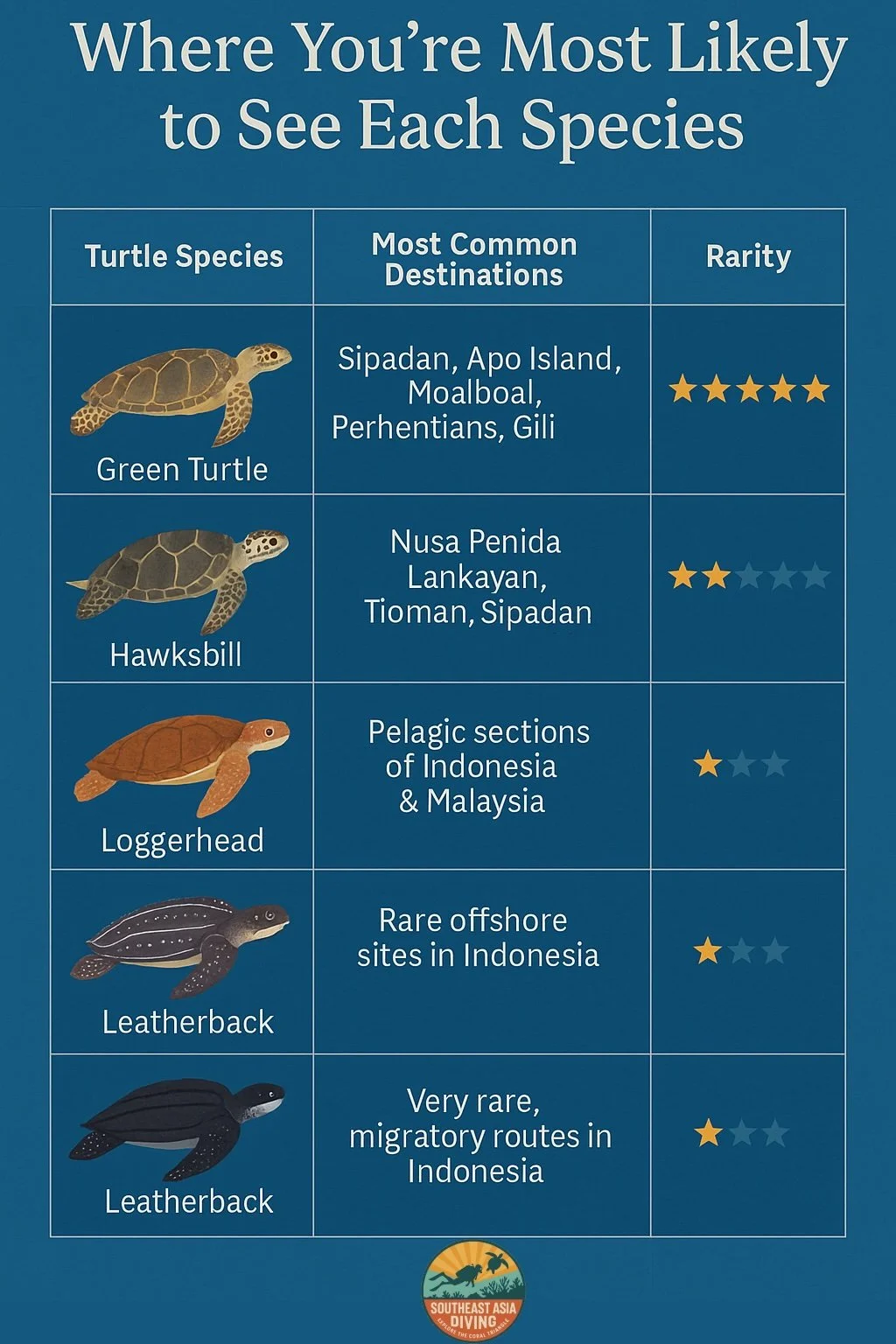
Here’s a closer look at each species you may encounter, how to identify them, and where you’re most likely to find them.
🟩 Green Sea Turtle (Chelonia mydas)
Most common in: Sipadan, Apo Island, Moalboal, Perhentians, Gili Islands
Green turtles are by far the most frequently spotted species in Southeast Asia, known for their calm behavior and gentle presence. They get their name not from their shell color but from the greenish fat under their skin, which comes from their seagrass-heavy diet.
How to identify them:
Smooth, oval-shaped shell (usually brown or olive with light streaking)
Rounder face with a small, curved beak
Large size — adults can reach over 150 kg
Typical behavior:
Resting on coral ledges
Grazing on seagrass beds
Slowly surfacing for air
Unbothered by divers, allowing long, peaceful encounters
Why you’ll love them:
Green turtles are relaxed, photogenic, and abundant — they are often the first turtle species new divers ever meet.
🟧 Hawksbill Turtle (Eretmochelys imbricata)
Most common in: Nusa Penida, Tioman, Sipadan, Lankayan
Hawksbill turtles are charismatic, active, and beautifully patterned — often considered the “model” turtle for photography. They play an important ecological role by feeding on sponges, which helps keep coral reefs healthy.
How to identify them:
Narrow, pointed beak (like a hawk)
Distinctive overlapping (imbricated) scutes on the shell
Bright, intricate shell patterns with amber, yellow, and brown tones
Typical behavior:
Pecking at sponges and corals
Gliding along hard-coral reefs
Swimming with more energy than green turtles
Occasionally seen resting in shaded crevices
Why you’ll love them:
Hawksbills offer the most dynamic encounters — watching them feed is a highlight for photographers and marine-life lovers.
🟦 Olive Ridley Turtle (Lepidochelys olivacea)
Occasionally seen in: deeper or pelagic sites across Indonesia & Malaysia
Olive ridleys are small, pelagic turtles that prefer open water. They are much rarer sightings for divers in Southeast Asia, though encounters do happen, especially during offshore or deep-water dives.
How to identify them:
Smooth, heart-shaped shell
Uniform olive-grey color
Smaller size (often under 40 kg)
Typical behavior:
Seen passing through blue water
Occasionally resting on deep sandy bottoms
Never seen in large numbers — typically solo encounters
Why they’re special:
Spotting an olive ridley is a unique treat — usually unexpected and always memorable.
🟫 Loggerhead Turtle (Caretta caretta)
Possible but very rare: Mostly in deeper sections of Indonesia
Loggerheads are not common in Southeast Asia, but there have been occasional sightings, particularly in the Banda Sea and around deep offshore reefs. They prefer temperate waters but occasionally travel through tropical zones.
How to identify them:
Large head and strong jaws
Reddish-brown shell
Thick, robust body shape
Typical behavior:
Long-distance ocean travelers
Often seen in deeper blue water
Rare encounters near reefs
Why they’re special:
Seeing a loggerhead here is genuinely rare — it’s a bucket-list encounter for dedicated turtle enthusiasts.
🟨 Leatherback Turtle (Dermochelys coriacea)
Very rare but historically present: West Papua, Banda Sea, and the Bird’s Head region
While leatherback turtles primarily inhabit deeper and cooler waters, Southeast Asia does have historical nesting beaches and migratory routes — particularly in Indonesia. Divers almost never encounter them, but ocean-going dive expeditions have documented occasional sightings.
How to identify them:
Enormous size (up to 2 m long)
No hard shell — covered in dark, leathery skin with white speckles
Long, powerful flippers
Why they’re special:
Leatherbacks are the world’s largest sea turtles. Encountering one is incredibly rare and unforgettable.
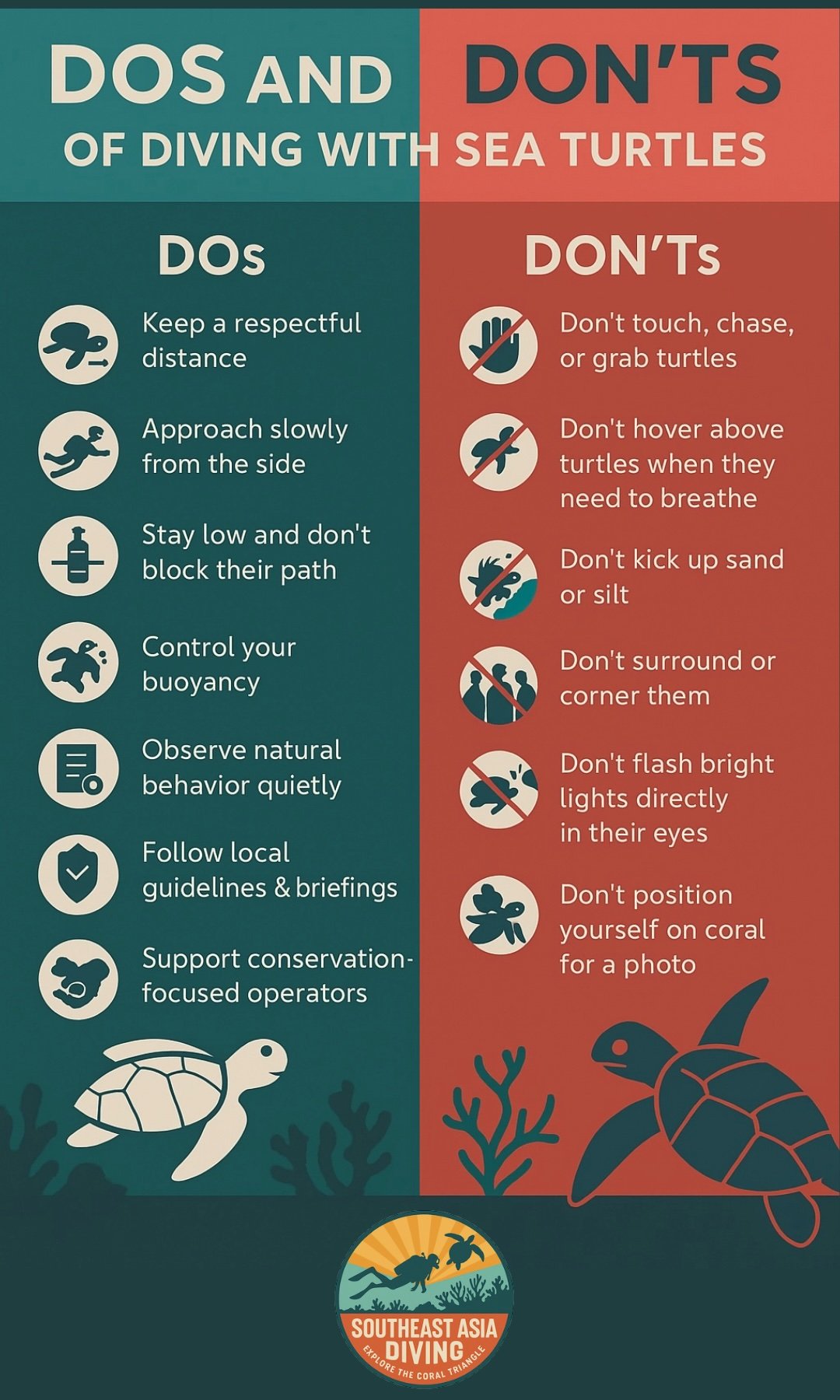
🐢 The Dos & Don’ts of Diving With Sea Turtles
Diving with turtles is one of the ocean’s great joys — but it’s also a privilege. These animals are protected, sensitive to stress, and rely on healthy reefs to survive. Following good etiquette ensures your encounter is safe for both you and the turtle, and helps keep Southeast Asia’s turtle populations thriving.
✅ DOs — How to Enjoy Turtle Encounters Responsibly
✔ Keep a respectful distance
Give turtles at least 3–4 meters of space. If they choose to approach you, that’s fine — but let them set the distance.
✔ Approach slowly from the side
Never swim directly above or behind a turtle. Slow, calm movements help them feel safe.
✔ Stay low and don't block their path
Always keep clear routes for turtles to reach the surface — they need air, and blocking their ascent can cause stress.
✔ Control your buoyancy
Good buoyancy prevents accidental contact with coral and keeps sediment from clouding the water.
✔ Observe natural behavior quietly
The best encounters happen when you let turtles be themselves — grazing, gliding, or resting.
✔ Follow local guidelines & briefings
Each region may have turtle-specific rules, especially around nesting beaches or national parks.
✔ Support conservation-focused operators
Choose dive centers that respect wildlife, avoid baiting, and participate in reef protection or monitoring.
❌ DON’Ts — Behaviours That Harm Turtles (Even If They Seem Small)
✘ Don’t touch, chase, or grab turtles
Touching or chasing can cause extreme stress — and is illegal in many protected areas.
✘ Don’t feed turtles
Feeding disrupts natural behaviour, encourages aggression, and can introduce harmful bacteria.
✘ Don’t hover above turtles when they need to breathe
Blocking their access to the surface can cause panic and even drowning.
✘ Don’t kick up sand or silt
Fin carefully — turtles rely on sight, and stirred-up sediment reduces visibility and stresses them.
✘ Don’t surround or corner them
Group pressure can trap a turtle. Give them space to swim freely.
✘ Don’t flash bright lights directly in their eyes
Use strobes and video lights responsibly, and avoid continuous “face lighting” that can overwhelm them.
✘ Don’t position yourself on coral for a photo
Standing, kneeling, or bracing on coral causes long-lasting damage to their habitat.
📝 Why These Guidelines Matter
Turtles are long-lived, slow-reproducing animals that depend heavily on safe, healthy reefs. Every diver who practices good etiquette helps protect these species for future generations — and ensures that turtle encounters remain natural, peaceful, and unforgettable.
🌅 Final Thoughts
Southeast Asia offers some of the world’s most magical and reliable sea turtle encounters — the kind that stay with you long after you’ve dried off your gear. Whether you’re drifting past the sweeping walls of Sipadan, exploring the bright coral slopes of Bali, or gliding over Apo Island’s shallow gardens, turtles are woven into the fabric of these reefs. With warm tropical waters, thriving ecosystems, and an incredible variety of habitats, this region gives divers the rare chance to meet sea turtles as they truly are: calm, curious, and completely at home in the blue.
Every destination in this guide offers its own kind of turtle magic. Some reward you with dozens of gentle green turtles resting on the reef, while others give you intimate moments with hawksbills feeding in sunlit coral bommies. Whether you’re a new diver ticking off your first wildlife encounter or an experienced traveler returning for more, Southeast Asia delivers encounters that feel peaceful, natural, and deeply memorable.
If you’re planning your next underwater adventure, these destinations are the perfect places to slow down, breathe, and glide alongside one of the ocean’s most beloved creatures. With thoughtful diving practices and respect for the reefs, these turtle-filled waters will continue inspiring divers for generations to come — and your next magical encounter may be just a giant stride away.
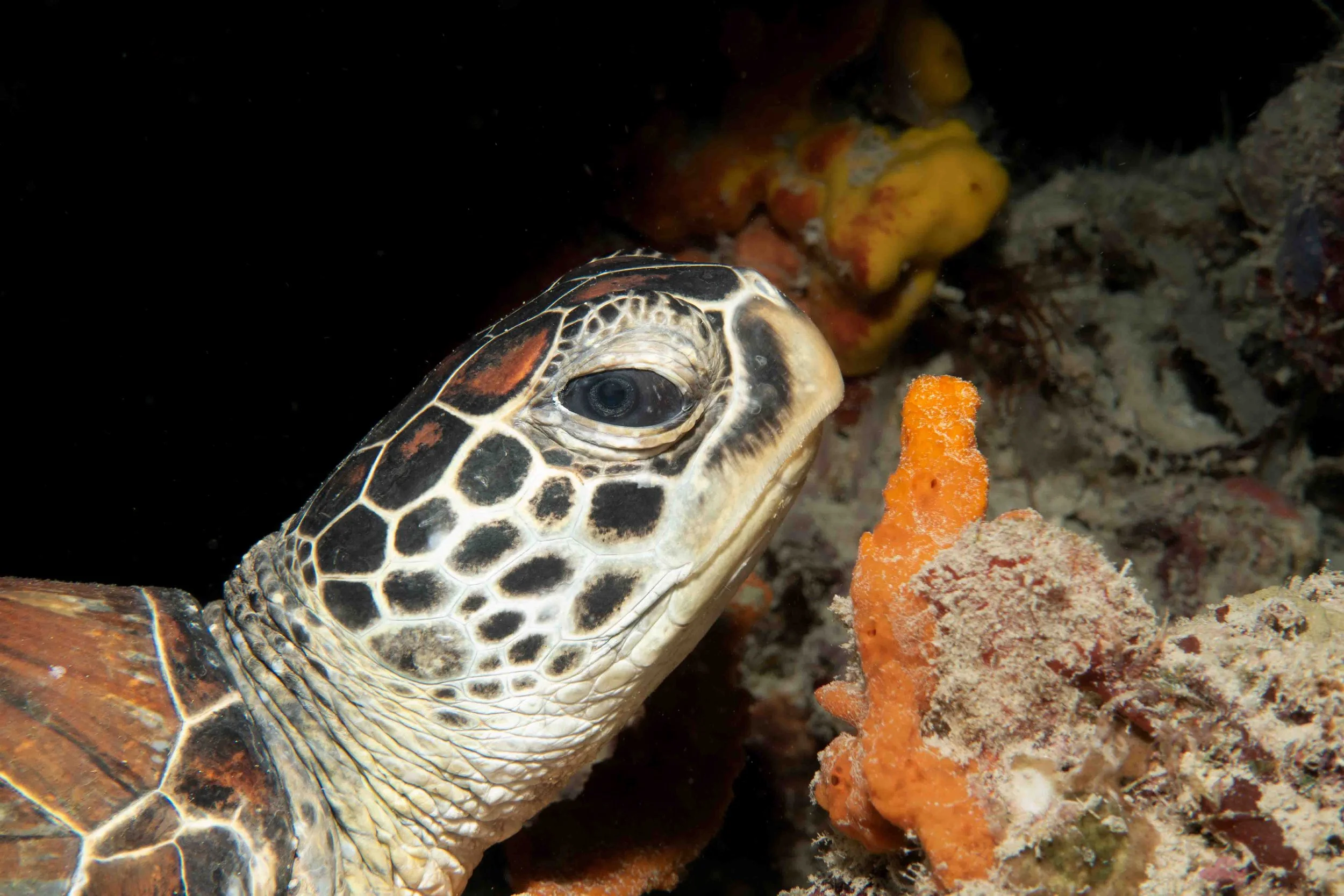
Close up of a Turtle in Sipadan, Malaysia - one of the best sites to see turtles in the world
🐢 FAQ: Diving With Sea Turtles in Southeast Asia
1. What is the best place to dive with sea turtles in Southeast Asia?
Sipadan (Malaysia) and Apo Island (Philippines) are considered two of the most reliable places to see turtles year-round. The Gili Islands are also famous for extremely frequent turtle sightings in calm, beginner-friendly conditions.
2. What types of sea turtles can I see in Southeast Asia?
The most common species are Green turtles and Hawksbill turtles. Rarer species include Olive Ridley, Loggerhead, and Leatherback turtles — usually spotted in deep or offshore waters.
3. When is the best time of year to see sea turtles?
Turtles can be seen year-round in most of Southeast Asia. However, the best visibility and calmest conditions often fall between March and October, depending on the destination’s monsoon cycle.
4. Is it safe to dive or snorkel with turtles?
Yes — turtles are calm, gentle animals and usually unbothered by divers. The key is to maintain respectful distance, stay relaxed, and avoid blocking their path to the surface.
5. Can I touch or swim next to a turtle?
No. Touching, chasing, or blocking turtles is harmful and illegal in many protected areas. If a turtle approaches you, stay still and let it pass.
6. Do I need to be an advanced diver to see turtles?
Not at all. Many of the best turtle destinations — like the Gili Islands, Moalboal, and Apo Island — are perfect for beginner divers and snorkelers. More advanced sites like Sipadan or Nusa Penida offer turtles but may require drift or current experience.
7. Can I see turtles while snorkeling, or only while diving?
You can absolutely see turtles while snorkeling. Destinations like Moalboal, Apo Island, the Perhentians, and the Gili Islands offer shallow, clear water where turtles frequently graze or rest.
8. Are turtle encounters guaranteed?
While wildlife is never 100% predictable, turtle sightings in places like Sipadan, the Gilis, Apo Island, and Moalboal are so reliable that many divers see multiple turtles on every dive.
9. How close should I get to a turtle?
Maintain about 3–4 meters (10–12 feet) of distance. Always keep their path to the surface clear, and never surround or trap a turtle.
10. Are underwater lights or camera flashes safe for turtles?
Used responsibly, yes. Avoid shining strong video lights directly into a turtle’s eyes or using repeated flash bursts at close range. Allow natural behaviour to guide your approach.
11. Can I see turtle hatchlings or nesting turtles?
Yes — places like Lankayan Island (Malaysia) have active nesting beaches and conservation programs. Always follow ranger guidelines and avoid using bright lights at night.
12. Do turtles bite or pose any danger?
Turtle behavior is typically peaceful. They may nip at food or defend themselves if provoked, but calmly observing from a distance is completely safe.