One of the world’s most accessible and iconic wreck dives.
🌊 Introduction: Why the USAT Liberty Wreck Is One of Southeast Asia’s Most Iconic Dives
Few dive sites in Southeast Asia are as instantly recognisable — or as universally loved — as the USAT Liberty Wreckin Tulamben, Bali. Resting just meters from shore on a gentle black-sand slope, this enormous WWII-era cargo ship lies between 5 and 30 meters of water, making it one of the rare wrecks in the world that offers true beginner-friendly access with the richness and scale of an advanced dive experience.
What makes the Liberty so special is not only its accessibility, but the incredible atmosphere that surrounds it. As you descend, the shape of the wreck slowly emerges through the blue, its steel beams softened by decades of coral growth and marine life. Sunlight filters through its open ribs, casting dramatic patterns across the sand, while schools of fish weave in and out of the structure like they’ve inherited the ship as their own.
Covered in vibrant hard corals, soft corals, barrel sponges, and sea fans, the Liberty Wreck has evolved into a thriving artificial reef. It’s a site that offers something for every diver:
Wreck enthusiasts can explore its vast hull and open swim-throughs
Photographers will find endless wide-angle and macro opportunities
Critter hunters can search for ghost pipefish, nudibranchs, and leaf scorpionfish
Snorkelers can admire the shallow bow from the surface
Whether you drift above its coral-covered ribs or venture through its midship corridors, the USAT Liberty delivers a unique blend of history, biodiversity, and atmosphere that few dive sites can match. It’s a wreck that feels alive — not a relic, but a fully integrated part of Bali’s underwater world.
🇺🇸 A Deeper Look at the History of the USAT Liberty
The story of the USAT Liberty is one of the most fascinating elements of the Tulamben dive experience — a blend of wartime drama, natural forces, and unlikely transformation.
Originally built in 1918, the Liberty served as a U.S. Army cargo vessel, transporting materials and military supplies across the Pacific. For decades, it operated as a hardworking transport ship, carrying everything from rubber and railway parts to equipment used throughout the American war effort.
Torpedoed in 1942
In January 1942, as World War II intensified in the Pacific, the Liberty was en route from Australia to the Philippines. Off the coast of Lombok, it was struck by a torpedo fired from the Japanese submarine I-166. The blast severely damaged the ship, leaving it unable to continue its mission.
Two U.S. Navy ships — the USS Paul Jones and the USS Dutch — attempted to tow the Liberty to Singaraja for repairs, but the ship began taking on too much water. Unable to save the vessel, the crew made the decision to beach the Liberty on the shoreline at Tulamben, ensuring the cargo could be salvaged and preventing the ship from sinking into deep water.
For over two decades, the Liberty remained stranded on Tulamben’s rocky beach, a hulking steel reminder of the war. Locals lived alongside it. Children played around its rusted hull. It was a landmark, not yet a dive site.
1963: The Volcano That Changed Everything
The turning point came in 1963, when Bali’s sacred volcano, Mount Agung, erupted violently. The eruption triggered a series of powerful earthquakes that shook northeast Bali for months. During this period of seismic activity, the tremors destabilised the grounded Liberty, causing it to slip down the beach and slide into the sea.
Bit by bit, gravity and tremor-driven movement pulled the entire ship into the ocean, where it eventually settled on its starboard side along the sloping seabed. Over the following decades, waves, storms, and time helped the wreck break apart, exposing beams, ribs, and open sections that divers now explore.
Nature Takes Over
Once submerged, the wreck quickly became colonised by marine life. Hard corals, soft corals, sea fans, sponges, and hundreds of species of fish transformed the ship from wartime casualty into a vibrant artificial reef — arguably one of the most successful in Indonesia.
Today, the Liberty is more than just a shipwreck; it’s a thriving ecosystem and a living monument. Its steel bones remain visible, but they are wrapped in a tapestry of marine growth. It is adored by divers, studied by biologists, and photographed by underwater artists from around the world.
What began as a wartime tragedy has evolved into one of Bali’s greatest underwater treasures.

🐠 Marine Life at the USAT Liberty — A Wreck Bursting With Life
One of the biggest reasons the USAT Liberty Wreck is so beloved is the sheer amount of marine life that surrounds it. Over the decades since it slipped beneath the waves, the wreck has become a thriving artificial reef, attracting everything from enormous schooling fish to some of Bali’s most iconic macro species. Whether you’re a wide-angle shooter, a critter hunter, or a casual diver who just loves watching life unfold around you, the Liberty delivers an extraordinary mix of biodiversity.
🌈 A Living Reef Wrapped Around Steel
Almost every part of the wreck is covered in coral growth — a testament to Bali’s rich waters and the decades the Liberty has spent underwater. You’ll find:
Hard corals encrusting the ribs and beams
Soft corals swaying along exposed edges
Barrel sponges the size of bathtubs
Sea fans and gorgonians on deeper edges
This lush coral coverage turns the wreck into a multi-layered habitat, sheltering both large schools and tiny camouflaged creatures.
🐟 Wide-Angle Highlights
The Liberty is one of Bali’s best all-round sites because it offers big visual moments without requiring deep or technical diving.
🌅 Giant Bumphead Parrotfish (Sunrise Signature)
At first light, a large school of giant bumphead parrotfish often sleeps or gathers around the shallow bow section. Seeing these prehistoric-looking fish — some nearly a meter long — waking up and starting their day is a breathtaking experience and a photographer’s dream.
🐢 Green Turtles
Green turtles are frequent visitors, gliding calmly across the deck or resting on coral heads along the midship. They are used to divers and often allow close, respectful observation.
🐟 Schools of Trevally and Jackfish
Large, fast-moving schools circle the wreck, especially around the midsection. On calm days, the silhouette of hundreds of fish against the wreck’s ribs is unforgettable.
🐠 Reef Fish Everywhere
The entire structure pulses with life:
Snappers
Anthias clouds
Fusiliers
Sweetlips
Batfish
Damselfish
Surgeonfish
The density makes even a relaxed drift around the exterior feel like swimming through a living aquarium.
🔍 Macro & Critter Paradise
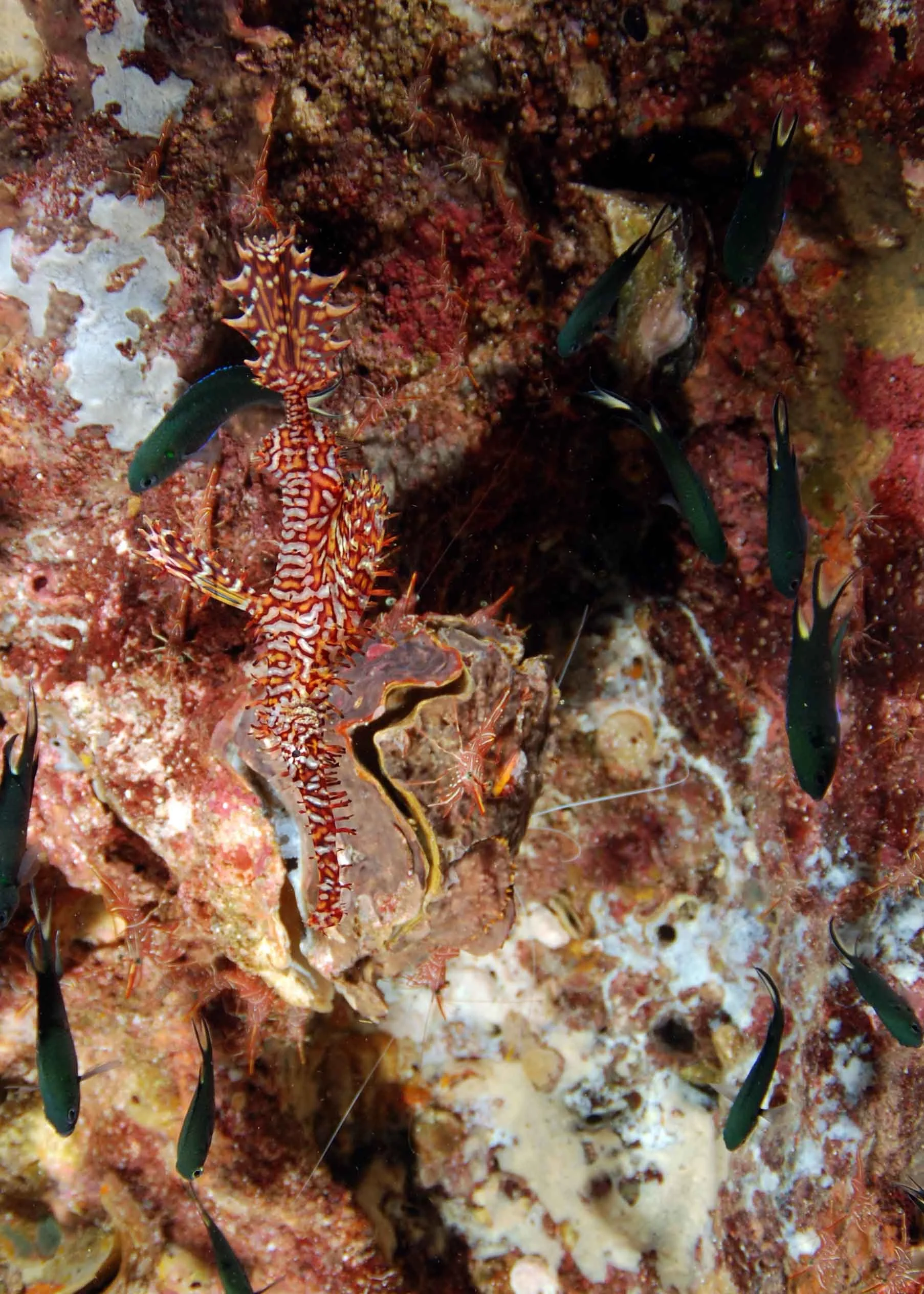
It is possible to spot the beautiful ornate ghost pipefish
While the Liberty is famous for its wide-angle scenes, it’s equally celebrated by macro enthusiasts. Slow down, get close to the beams and rubble, and you’ll uncover a treasure trove of small marine life.
✨ Ghost Pipefish
Ornate and robust ghost pipefish hide among soft corals, feather stars, and debris. Guides often know exactly where to look.
✨ Leaf Scorpionfish
These beautifully camouflaged fish perch on coral ledges, rocking gently in the surge.
✨ Frogfish
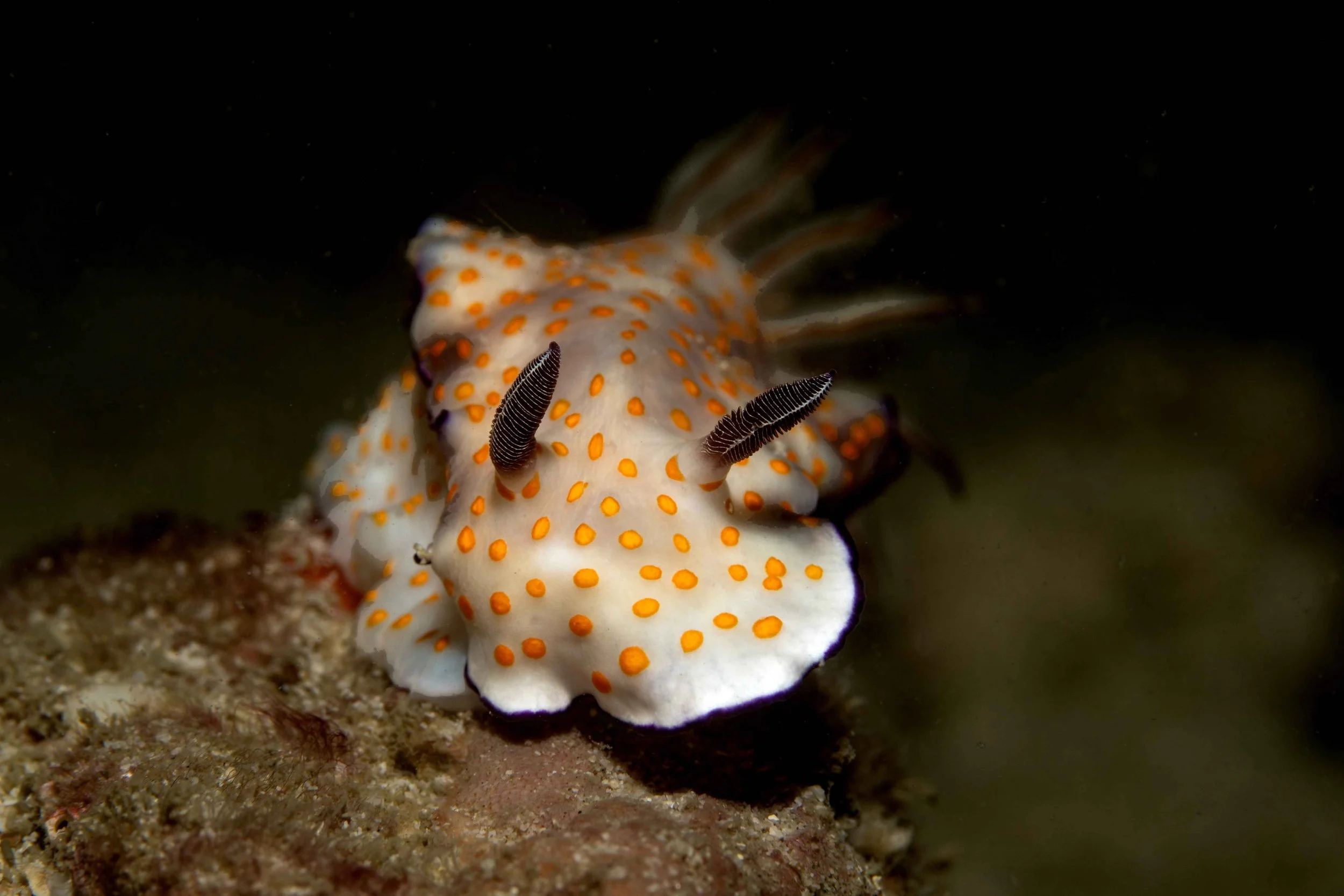
You can spot lots of Nudibranchs in and around the Liberty Wreck in Bali
Large and small frogfish are regularly seen, especially in the rubble and collapsed sections of the wreck.
✨ Nudibranch Heaven
The Liberty is one of Bali’s top nudi sites, hosting:
Chromodorids
Hypselodoris
Phyllidia
The occasional Spanish dancer (at night)
✨ Crustaceans
Harlequin shrimp (seasonal)
Coleman shrimp (rare but possible)
Cleaner shrimp
Coral hermits
Spider crabs
Night dives here become a showcase of crustacean activity.
🦑 Night Dive Magic
At night, the Liberty transforms again. Under torchlight, new creatures emerge:
Octopus hunting between beams
Sleeping parrotfish nestled in coral pockets
Decorator crabs crawling across the wreck
Hunting lionfish sweeping the sand
Pajama cardinalfish and nocturnal species rising into the water column
It’s one of Bali’s most beloved night dive spots — a must-do for macro lovers.
🌊 Why the Marine Life Here Is So Exceptional
Three factors make the Liberty such a hotspot:
Decades underwater → a mature artificial reef
Nutrient-rich water from Bali’s currents
Protected status & light fishing pressure in Tulamben
The combination creates a marine ecosystem with impressive density and diversity, all wrapped around one of the most accessible wrecks on earth.
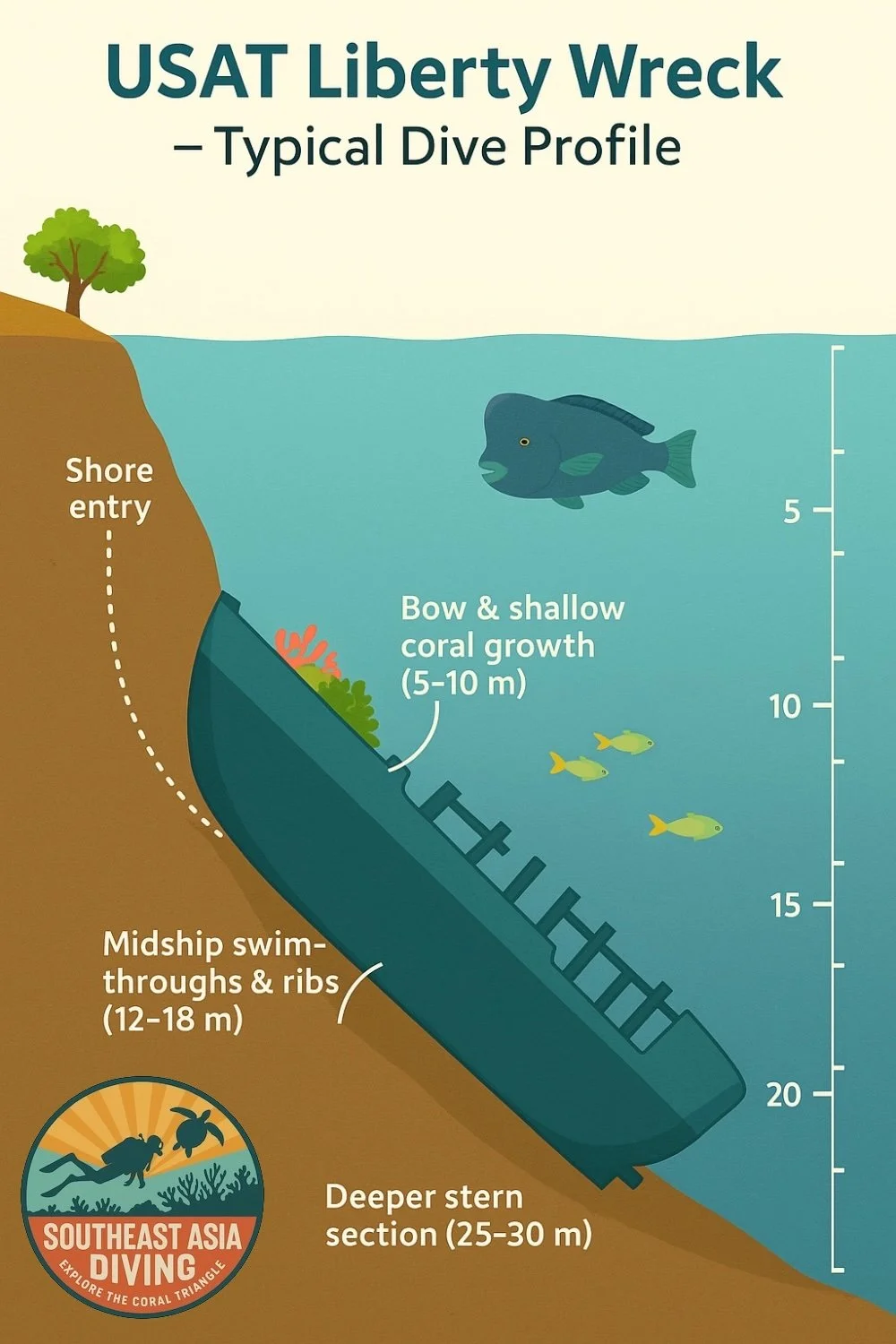
🤿 The Dive Experience — Exploring the Liberty From Shore to Stern
One of the most memorable things about diving the USAT Liberty is how effortless the entire experience feels. There’s no long boat ride, no choppy seas, and no complex logistics. You kit up on the beach, take a few steady steps over the smooth volcanic pebbles, and within minutes you’re descending onto one of the most iconic wrecks in Southeast Asia.
From the very beginning, the Liberty feels accessible, atmospheric, and alive — a truly distinctive dive that blends convenience with world-class underwater scenery.
🌊 Shore Entry: A Simple Start to a Big Dive
Dives begin on Tulamben’s famous black-pebble beach. Local guides often carry your tank or give you a steadying hand as you navigate the round stones. Once you’re waist-deep, you put your regulator in, lean back, and the slope beneath you begins the descent straight toward the wreck.
No boats. No surf entries. Just a calm wade and a slow glide down into the blue.
Within just 30–60 seconds, the shadow of the wreck begins to appear.
🛳️ First Glimpse: The Shallow Bow (5–10 m)
Your first view of the Liberty is unforgettable. The bow section sits shallow — sometimes only five meters below the surface — making it visible to snorkelers and perfect for beginners.
Here, you’ll find:
Bright natural light
Busy schools of reef fish
Beautiful coral coverage
Sleeping bumpheads at sunrise
A calm, easy place to settle into the dive
For many divers, the bow becomes the favourite part of the dive — a place to return to at the end for long, comfortable safety stops full of life.
🏛️ Midship Exploration: Ribs, Beams & Atmosphere (12–20 m)
Drifting deeper along the wreck, you enter the midsection, where the Liberty’s skeletal structure is most dramatic. Steel beams, broken plates, and open ribs create a series of wide, inviting swim-throughs.
These aren’t tight overhead penetrations — they’re large, airy spaces illuminated by sunlight, making them suitable for confident beginners under guidance.
This is where the wreck’s atmosphere shines:
Sunbeams slicing through broken ribs
Schools of trevally circling in the shadows
Ghost pipefish hovering near soft corals
Leaf scorpionfish perched on steel plates
Endless textures for wide-angle photography
It’s an area that invites slow exploration.
⚓ The Deep Stern: Larger Structures & Bigger Schools (25–30 m)
As you reach the deeper end of the wreck, the stern section sits around 25–30 meters. This is where the ship feels most intact and imposing.
Here you might find:
Larger schools of jacks
Turtles gliding across the structure
Impressive coral-carpeted overhangs
Pockets of macro life hiding in beams
Many divers choose to dip briefly into this region before looping back up toward the shallower bow to maximize bottom time.
🌀 Movement & Conditions: Gentle, With the Occasional Surge
The Liberty generally offers calm, predictable diving:
Currents: Mild to none
Surge: Light, especially above 10 m
Visibility: 10–20 m, occasionally more in dry season
Bottom profile: A clean black-sand slope with excellent contrast
Because conditions are forgiving, divers can spend more time observing behaviour, framing photos, or simply absorbing the atmosphere.
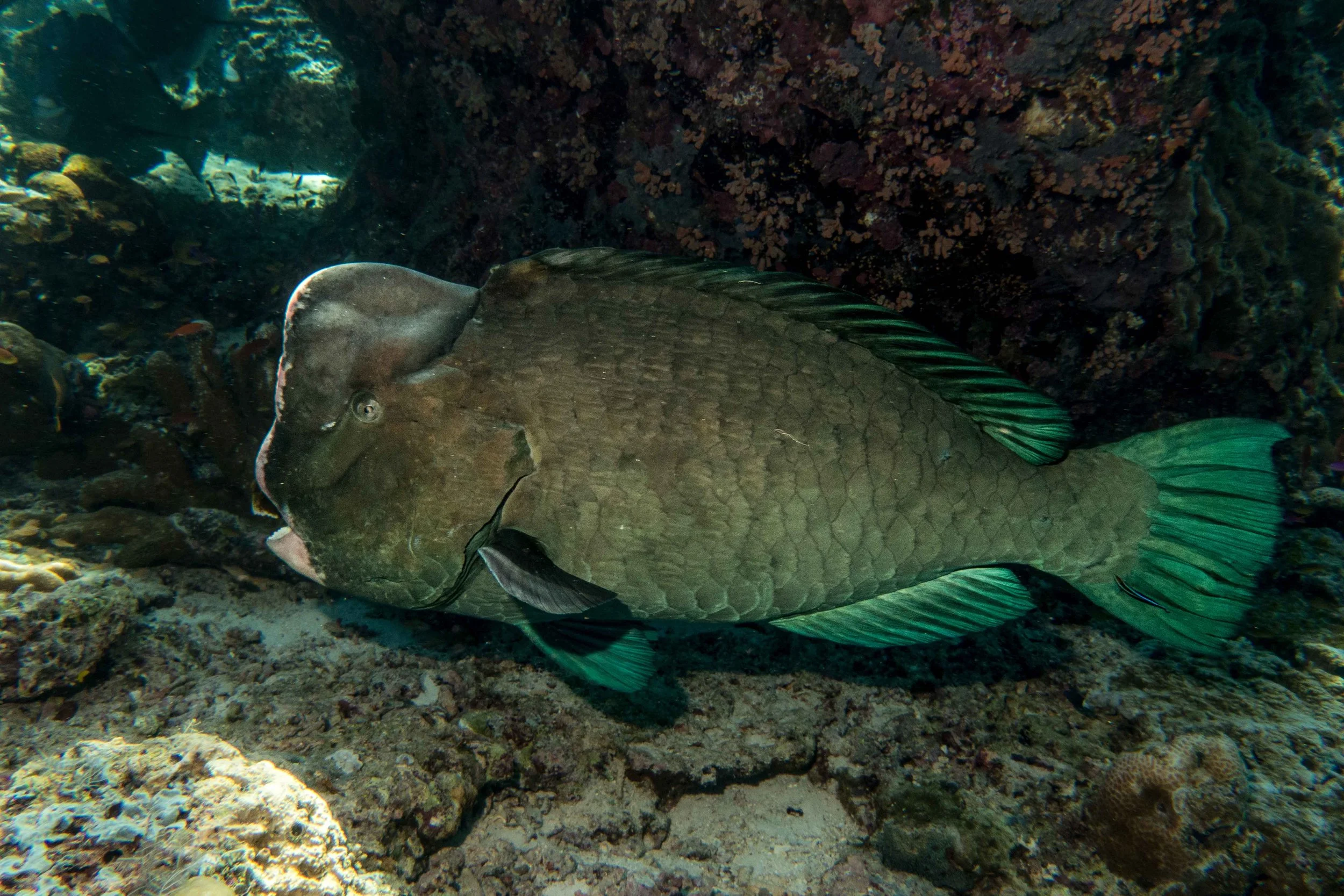
Early morning is a great time to lookout for Bumphead Parrotfish
🌅 The Magic of Early Morning
A sunrise dive at the Liberty is something special:
Giant bumphead parrotfish begin their morning migrations
Sunbeams fall directly into the open ribs
The site is quiet and uncrowded
Marine activity is at its highest
Many photographers consider early morning the absolute best time to dive the wreck.
🌙 Night Diving the Liberty
If the daytime dive feels alive, the night dive is electric:
Octopus emerge from crevices
Spanish dancers glide through torchlight
Hunting lionfish appear in formation
Crabs and shrimps creep across the beams
The atmosphere becomes moody, dramatic, and full of surprises.
✨ A Dive for Every Level
What makes the Liberty so unique is that:
Beginners can enjoy the shallow bow and bright reef
Intermediate divers can explore the midship and swim-throughs
Experienced divers can venture deeper to the stern and hunt for macro gems
It’s one of the only dive sites in the world where almost every certification level can experience the same major highlights.
📸 Photography Tips — Capturing the Magic of the Liberty Wreck
The USAT Liberty is one of Bali’s most photogenic dive sites, offering a rare combination of big scenes, rich colour, and outstanding macro all in a single, easy-access shore dive. Whether you’re shooting on a GoPro or a full-frame rig with strobes, the wreck gives you endless creative options.
Below are tips tailored specifically to its layout, lighting, and marine life.
🌅 1. Wide-Angle Photography
✨ Go at Sunrise for the Best Light
The Liberty’s shallow bow section catches early sunlight beautifully. Between 6:00–8:00 a.m., beams cut through the rib structures, creating:
dramatic silhouettes
sun rays through broken beams
soft light on coral heads
This is also when the bumphead parrotfish are active — a bucket-list shot for many divers.
✨ Use the Wreck as a Strong Foreground
The Liberty is full of textures that make superb foreground frames:
coral-encrusted beams
fallen plates
rib structures
the bow itself
Position a diver model or school of fish in the mid-background for depth.
✨ Shoot Into the Blue
Especially from the midship area (12–18 m), you can angle upward to capture:
silhouetted schools of trevally
beams against sunbursts
snorkelers above the bow
This angle also helps keep your backgrounds clean.
✨ Stay Slightly Off the Wreck
If you hover too close, you lose the sense of scale. Step back ~2–3 meters to reveal:
the wreck’s sweeping lines
its coral carpet
the slope descending into deeper water
🔍 2. Macro Photography
The Liberty is a macro wonderland — but it rewards patience.
✨ Slow Down — Every Meter Has Something
Along the beams and rubble areas, look for:
ghost pipefish
leaf scorpionfish
pygmy filefish
frogfish
nudibranchs of every variety
You could spend an entire dive in the mid-wreck and never run out of subjects.
✨ Control Your Buoyancy
Macro hotspots often sit on fragile coral or silt-covered plates. Good buoyancy:
prevents damage
keeps silt from ruining shots
lets you get close without touching anything
✨ Night Dive = Macro Heaven
At night, new subjects emerge:
hunting octopus
active crabs and shrimps
Spanish dancers
nocturnal nudibranchs
Bring a focusing light with a red beam mode if possible.
💡 3. Strobe & Lighting Tips
✨ Use Twin Strobes for Wide-Angle
The wreck is huge and dark in places — two strobes help illuminate both foreground and subject while keeping the scene balanced.
✨ Avoid “Wreck Burnout”
Don’t over-light steel surfaces — they reflect easily.
Angle strobes outward slightly to soften highlights.
✨ For Macro, Keep It Controlled
Pull strobes in close and reduce power:
to avoid harsh shadows
to maintain colour detail
to reduce backscatter in silty areas
✨ Watch for Backscatter
The black sand and fine silt around Tulamben can easily get stirred up.
Stay neutrally buoyant and keep your fin kicks slow and controlled.
🗺️ 4. Choosing the Right Lens / Setup
Wide-Angle Setup
8–15 mm fisheye
16–35 mm range on full-frame
Dome port (6–8 inches)
Ideal for:
bow silhouettes
bumphead parrotfish
divers in swim-throughs
large corrugated beams
Macro Setup
60 mm or 105 mm macro
Diopter for super-macro nudis
Focus light
Ideal for:
leaf scorpionfish
ghost pipefish
ornate nudi shots
shrimp & crabs
GoPro / Action Cameras
These work well here because of:
good natural light in shallow sections
wide views of the wreck
clear subjects like bumpheads and turtles
Use:
a red filter
video lights for deeper areas
slow, steady movements
🕒 5. Timing Your Dives for Best Photographic Results
Sunrise (Best Overall)
bumphead parrotfish
sun rays through midship ribs
calm water + fewer divers
Mid-Morning
bright, even lighting
great visibility
wide-angle shooting ideal
Afternoon
softer light
good for macro searching along beams
Night
macro explosion
dramatic moods
colourful crustaceans and nudis
👌 6. Posing and Shooting with Dive Models
If you’re photographing another diver:
Have them hover slightly above the wreck, not directly on it
Position them so their fins don’t kick silt
Face them toward open structure or beams for cleaner framing
Use a torch or video light for creative beams
A well-posed diver can transform a Liberty shot from “nice” to “epic.”
⚠️ 7. Avoiding Common Photography Mistakes at the Liberty
Getting too close to the wreck and losing the sense of scale
Kicking up silt during macro
Shooting wide-angle at midday when shadows are harsh
Missing the sunrise dive (the best one!)
Overexposing coral in shallow sections
Not looking behind — many of the best fish schools come from behind you
⚠️ Safety Notes — Staying Safe at the USAT Liberty Wreck
Although the USAT Liberty is widely considered one of Bali’s easiest and most accessible wreck dives, there are still a few important safety considerations to keep in mind. These notes will help ensure you enjoy the wreck comfortably, responsibly, and without unexpected challenges.
👣 1. Shore Entry Requires Care
The entry and exit point at Tulamben is a smooth-pebble beach.
It’s easy once you know the technique, but keep in mind:
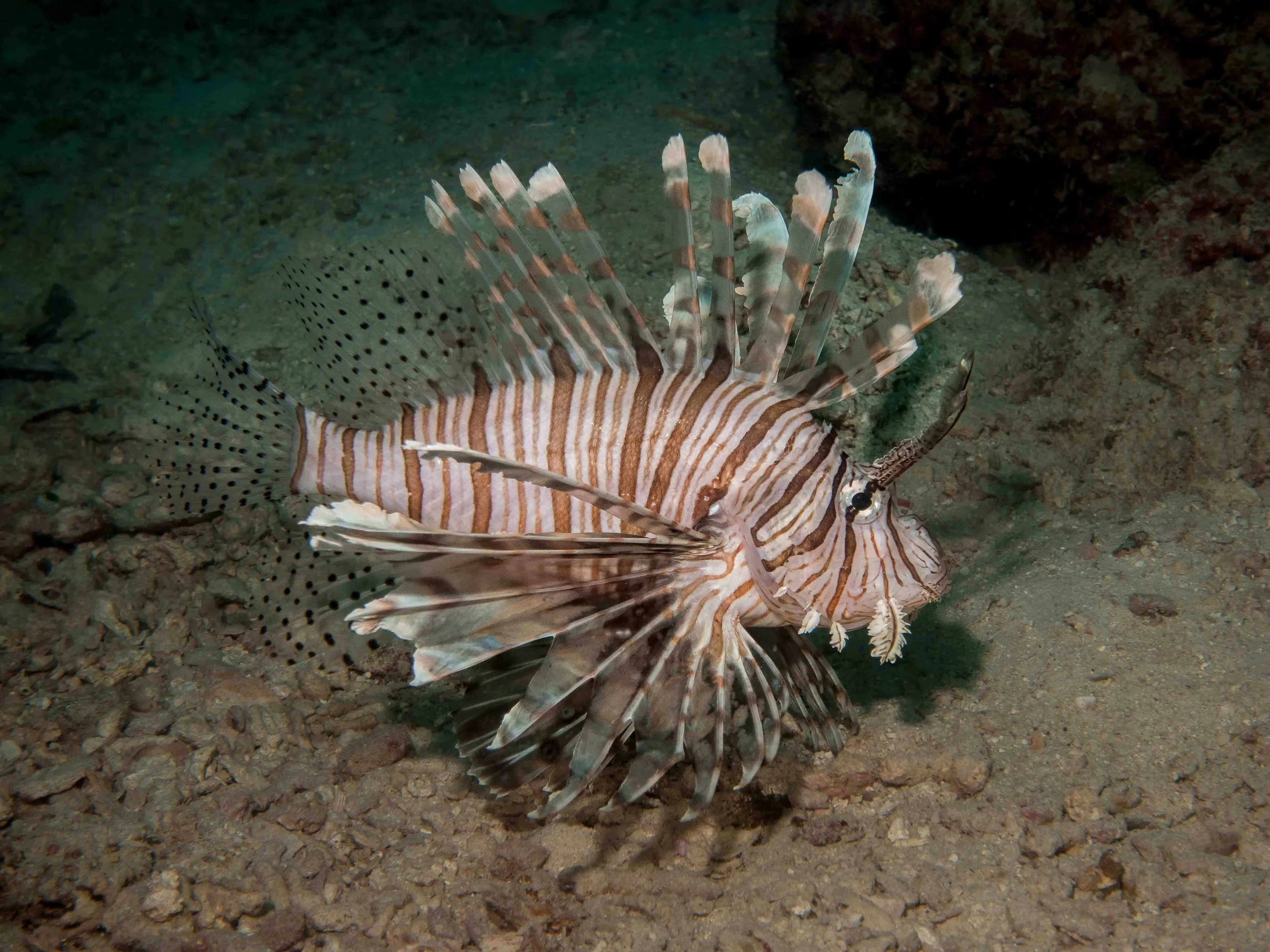
Lionfish are a common feature in and around the Liberty Wreck
The pebbles can roll under your feet
It’s best to shuffle or take short steps
Local guides often offer an arm or carry your tank
Going slowly prevents slips and keeps your balance steady under the weight of your gear.
🌊 2. Expect Mild Surge, Especially Above 10 m
While the wreck is generally calm, mild surge is common — particularly in the shallow bow area.
This can affect:
your buoyancy control
your macro photography
your stability in swim-throughs
Slow movements and good fin awareness help keep you comfortable.
💨 3. Keep an Eye on Your Depth and Bottom Time
The stern can reach 25–30 m, which is deep enough to shorten no-decompression limits, especially on repetitive dives.
Plan your dive with:
a conservative NDL
a slow ascent
a long, relaxed safety stop over the shallow bow (5–10 m)
This final shallow section is full of marine life, making it an ideal place to decompress slowly.
⚓ 4. Avoid Tight Overhead Areas
The Liberty has many large, open swim-throughs that are suitable for confident beginners — but not all openings are safe to enter.
Because the wreck continues to age, avoid:
small cracks
tight overheads
areas with loose plates or collapsing beams
Stick to the spacious, well-lit sections and always follow your guide’s advice.
🐠 5. Be Wreck-Conscious With Buoyancy
The Liberty is covered in delicate coral growth and fine volcanic sediment.
To protect the reef (and your photos):
Maintain neutral buoyancy
Avoid touching the wreck
Watch your fins near beams and sand
Stay at least 1 m above silt-heavy areas
One misplaced fin kick can create a cloud of black sand that lingers for minutes.
🚫 6. Crowd Awareness
The Liberty is one of Bali’s most visited sites, meaning diver traffic can build up during peak hours.
To avoid congestion:
Go early (sunrise is best)
Start your descent away from large groups
Keep an eye out for other divers in narrow areas
Avoid clogging popular swim-throughs
A bit of awareness keeps the dive peaceful for everyone.
🧭 7. Use a Local Guide — They Add Value & Safety
Tulamben’s guides know:
where surge is strongest
where the macro critters hide
the safest entry/exit timing
how to navigate crowds
which sections of the wreck are stable
A good guide elevates the entire experience, especially for photographers.
🔋 8. Night Dive Precautions
Night dives are spectacular, but require:
a strong primary light
a backup torch
good spatial awareness in the dark
shallow-depth attention (surge feels stronger at night)
careful finning to avoid stirring sediment
Always stay close to your buddy or guide and follow the planned route.
🐢 9. Keep Distance From Marine Life
The Liberty attracts turtles, bumpheads, and a huge range of species.
For safety and conservation:
Do not touch or chase wildlife
Give turtles room to ascend for air
Stay aware of bumpheads — they are large and can move suddenly
Respecting their space ensures natural, relaxed encounters.
✔️ Overall Safety Summary
The Liberty Wreck is safe, beginner-friendly, and easy to navigate — as long as you approach it with good buoyancy, calm movements, and respect for both the environment and other divers. Most safety considerations here are simple, predictable, and easy to manage, which is why the site is loved by both new and experienced divers.
🗓️ Best Time of Year to Dive the USAT Liberty Wreck
One of the many advantages of diving the USAT Liberty Wreck is that it’s a year-round site, offering consistent conditions throughout all seasons. Tulamben sits on the sheltered northeast coast of Bali, protected from the strongest monsoon effects, which means you can dive the wreck almost any day of the year.
Still, certain months offer clearer water, calmer seas, and better photographic conditions. Here’s what to expect.
🌤️ Dry Season (May – October) — The Best Overall Conditions
This period is widely considered the best time to dive the Liberty, especially for underwater photographers and those who want good visibility.
Expect:
Clearer water: 15–25 m visibility
Calmer surface conditions
Cooler, more stable weather
Ideal wide-angle opportunities
More consistent schooling fish behaviour
The dry season aligns perfectly with Bali’s busiest dive months, and while there may be more visitors, the wreck’s size easily accommodates multiple groups.
🌦️ Wet Season (November – April) — Still Excellent Diving
Unlike many tropical destinations, Bali’s wet season doesn’t shut down diving — especially not in Tulamben.
Expect:
Slightly reduced visibility: ~10–15 m
Warmer water temperatures
Occasional rain, but usually light
Excellent macro diving
The wet season brings nutrient-rich water closer to shore, which can enhance macro sightings around the wreck. Nudibranch lovers, shrimp enthusiasts, and critter hunters may actually prefer this time of year.
🌅 Best Time of Day — Sunrise, Without Question
Regardless of the season, the single best time to dive the Liberty Wreck is early morning.
Why?
Bumphead parrotfish gather and move across the wreck at dawn
Sunbeams shoot through the midship ribs for dramatic wide-angle shots
Water is calmest
Fewer divers
Fish behaviour is more active
Most local guides recommend a 6:00–7:00 a.m. entry for the best conditions.
🌙 Night Diving — Year-Round Macro Heaven
Night diving is spectacular in all seasons:
Octopus and crustacean activity increases
Spanish dancers appear
Hunting lionfish drift through torchlight
The wreck becomes moody and atmospheric
You can comfortably night-dive the Liberty at any time of year as long as surge is mild.
✔️ Overall Recommendation
For the clearest visibility, best lighting, and most predictable conditions:
👉 May to October
For macro photographers and fewer crowds:
👉 November to April
For the best single dive experience:
👉 Sunrise, any day of the year
🌅 Final Thoughts
The USAT Liberty Wreck isn’t just one of Southeast Asia’s most iconic dives — it’s one of the few sites in the world where history, accessibility, and marine life come together so effortlessly. What began as a wartime tragedy has become a thriving underwater ecosystem, transformed by decades of coral growth and the steady rhythms of the ocean. Today, the Liberty feels less like a wreck and more like a living reef — one shaped by time, nature, and the countless divers who visit it with respect.
What makes this site so special is how welcoming it is to every type of diver. Whether you’re taking your first steps into wreck diving, fine-tuning your photography skills, or simply looking for a relaxed shore dive filled with colour and life, the Liberty offers a uniquely rewarding experience. Few wrecks are this easy to access, this atmospheric, or this full of character.
From the shallow bow where sunlight dances across coral-covered steel, to the deeper stern where turtles glide through schools of fish, every part of the Liberty has a story to tell. And with sunrise dives, brilliant macro life, gentle conditions, and year-round accessibility, it’s the kind of site that keeps drawing people back — sometimes dozens of times.
If your Bali dive itinerary includes Tulamben, the USAT Liberty Wreck is a must-do. It’s a rare place where you can step into warm water from shore, descend just a few meters, and immediately find yourself hovering above history — wrapped in coral, teeming with life, and ready to deliver a dive you’ll remember long after you surface.
❓ FAQ: Diving the USAT Liberty Wreck, Tulamben, Bali
1. Is the USAT Liberty Wreck suitable for beginner divers?
Yes — the Liberty is one of the most beginner-friendly wreck dives in the world. The shallow bow sits at 5–10 m, there are no tight penetrations, and the site is easily accessed from shore. With good buoyancy and a guide, even newly certified divers can enjoy the main highlights.
2. Do I need a wreck diving certification to dive the Liberty?
No. The Liberty’s swim-throughs are wide, open, and well-lit, so formal wreck training isn't required. However, you should only enter sections your guide approves and avoid tight overhead areas.
3. What is the depth of the USAT Liberty Wreck?
The wreck stretches from about 5 m at the shallow bow to around 30 m at the deeper stern. Most of the best features — coral growth, schooling fish, ribs, beams — lie between 10–20 m.
4. Can snorkelers visit the Liberty Wreck?
Absolutely. The shallow section of the wreck is visible from the surface, making it one of Bali’s best snorkeling-accessible wrecks. Snorkelers can see coral, fish, and even turtles on calm days.
5. What marine life can I expect to see?
Common sightings include:
Green turtles
Giant bumphead parrotfish (especially at sunrise)
Trevally schools
Tropical reef fish
Ghost pipefish, nudibranchs, leaf scorpionfish
Frogfish and crustaceans (especially at night)
The Liberty is equally good for wide-angle and macro photography.
6. When is the best time to dive the Liberty Wreck?
The site is diveable year-round, but the best conditions occur from May to October during Bali’s dry season. Sunrise is the most rewarding time of day due to calmer conditions, better light, and bumphead sightings.
7. Is there strong current at the Liberty?
Generally no. The Liberty is known for its calm, predictable conditions. Mild surge is more common than current, especially in the shallow bow.
8. How do you enter the water?
All dives start with a shore entry from Tulamben’s pebble beach. The stones can shift underfoot, so divers usually take small steps or steady themselves with help from a guide.
9. Are there any hazards I should be aware of?
Yes, but they are easily managed:
Pebble entry can be slippery
Mild surge in shallow areas
Some wreck sections are unstable — avoid tight overheads
Volcanic sand easily kicks up and reduces visibility
A good guide helps avoid all common issues.
10. Can I shoot good photos with a GoPro here?
Definitely. The Liberty’s bright shallow section, abundant marine life, and dramatic wreck lines make it perfect for GoPro users. Add a red filter or small video light for the deeper sections.
11. How many dives should I do on the Liberty?
Most divers do 2–4 dives, including:
Sunrise dive (bumpheads + best light)
Mid-morning wide-angle dive
Macro-focused day dive
Night dive (incredible macro)
The site offers more than enough variety to fill a full day or two of diving.
12. Is the Liberty Wreck crowded?
It can be, especially mid-morning. To avoid crowds:
Plan a sunrise dive
Enter before 8 a.m.
Dive in the afternoon or at night
The wreck is large enough to spread out, and early sessions are particularly peaceful.