Night Diving Explained: What Makes It So Different From Day Diving?

There’s something completely different about descending beneath the surface after sunset.
The reef feels quieter. Your world narrows to the beam of your dive torch. Colors appear and disappear in strange ways, shadows move at the edge of your vision, and creatures that stayed hidden throughout the day suddenly emerge from the darkness.
For many divers, night diving feels intimidating at first. The idea of entering the ocean after dark naturally comes with a sense of uncertainty, especially for newer divers. But for those who try it, night diving often becomes one of the most unforgettable experiences in scuba diving.
Everything underwater changes at night.
Coral reefs that appear calm during the day become active hunting grounds filled with nocturnal marine life. Octopus leave their hiding places to hunt across the reef, moray eels swim openly through the water, basket stars unfurl their arms into the current, and bioluminescent plankton can sometimes light up the darkness around you.
In Southeast Asia especially, night diving can be extraordinary. From the macro critters of Mabul and Lembeh Strait to fluorescent coral dives in Indonesia and night manta encounters in places like Raja Ampat, some dive sites truly come alive after sunset.
Night diving also changes the way you dive. You move more slowly, pay closer attention to your surroundings, and start noticing details that are easy to miss during daytime dives. For underwater photographers, it can open up an entirely different world of creative opportunities, with dramatic black backgrounds, active marine life, and unique nocturnal behavior rarely seen during the day.
In this guide, we’ll explain:
what makes night diving different from regular scuba diving
whether night diving is safe
the marine life you’re most likely to encounter
essential night diving tips for beginners
what equipment you need
and why so many divers end up falling in love with diving after dark
Whether you’re considering your very first night dive or simply curious about what happens beneath the surface after sunset, this guide will help you understand why night diving is considered one of the most rewarding experiences in scuba diving.
🌙 Why Night Diving Feels So Different
Even on a reef you know well, everything changes after dark.
A dive site that feels familiar during the day can suddenly feel completely transformed at night. Coral formations take on new shapes in the beam of your torch, landmarks disappear into darkness, and the entire atmosphere underwater becomes quieter, slower, and far more immersive.
During daytime dives, your eyes naturally scan huge areas of reef. You notice schools of fish in the blue, coral formations stretching into the distance, and movement all around you.
Night diving completely changes that experience.
Instead of taking in the whole reef at once, your attention narrows to the focused beam of your dive light. Small movements suddenly become noticeable. Tiny critters hidden in coral rubble become the center of your attention, while reflections from fish and crustacean eyes appear unexpectedly in the darkness.
Many divers are surprised by how heightened their senses feel underwater at night.
You become much more aware of:
the sound of your breathing
the rhythm of your bubbles
movement in your peripheral vision
subtle motion in the sand and coral
the darkness beyond your torch beam
Night dives also naturally slow divers down.
Instead of covering large distances across a reef, divers usually move more carefully and spend longer observing individual subjects. That slower pace often leads to more relaxed diving, improved buoyancy control, and far more opportunities to observe unusual marine behavior.
For underwater photographers, this slower style of diving is one of the biggest attractions of night diving. Many nocturnal creatures are easier to approach after dark, while the black water surrounding the reef creates dramatic backgrounds that can make colors and textures stand out beautifully.
Psychologically, night diving can feel very different too.
For some divers, the darkness creates a mild sense of adrenaline at first. But once that initial nervousness fades, many describe night diving as surprisingly peaceful. Without crowds, bright sunlight, or visual distractions, the experience often feels calmer and more immersive than daytime diving.
Rather than simply exploring a reef, night diving can feel like stepping into an entirely different world — one where the ocean behaves differently and familiar dive sites reveal a completely new personality after sunset.
🐙 Marine Life Commonly Seen on Night Dives
One of the biggest reasons divers love night diving is the marine life.
Many underwater creatures behave completely differently after sunset, while others are rarely seen during the day at all. In Southeast Asia especially, even a shallow night dive can feel packed with life.
Here are some of the most fascinating creatures commonly seen during night dives.
🐙 Hunting Octopus
Octopus become far more active at night, moving openly across reefs and sandy bottoms searching for crabs and shrimp. Watching an octopus hunt using camouflage and rapid color changes is one of the highlights of many night dives.
💃 Spanish Dancer Nudibranchs
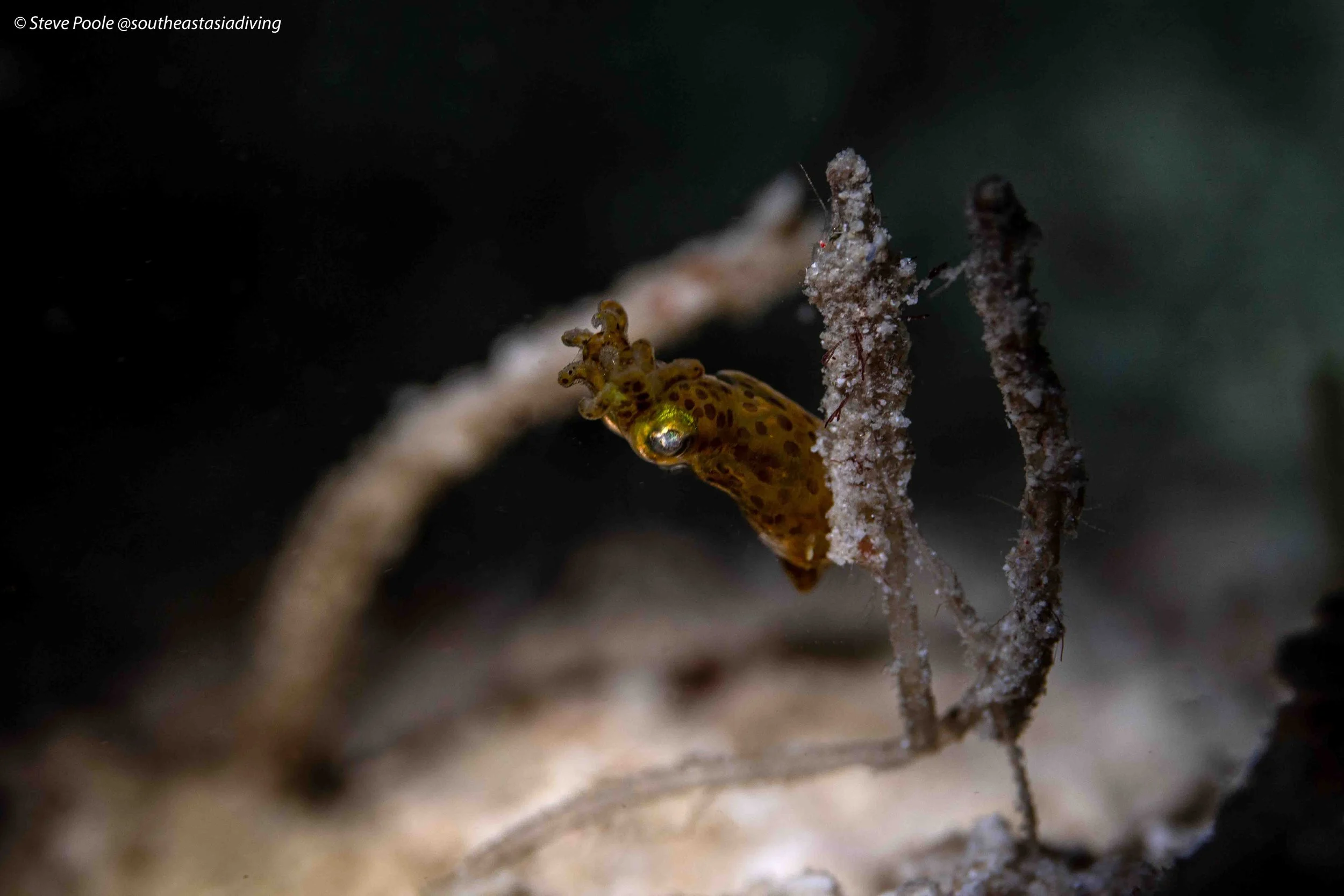
Bobtail squid can be seen when night diving
These spectacular nudibranchs are among the most iconic night dive sightings in Southeast Asia. They are especially common in macro diving destinations like Anilao, Lembeh Strait, and Mabul.
🌿 Basket Stars
During the day, basket stars remain tightly curled and hidden inside the reef. At night, they unfurl their intricate arms into the current to feed on plankton.
🐠 Sleeping Parrotfish
Many parrotfish sleep inside mucus cocoons that help disguise their scent from predators. Night dives also commonly reveal sleeping turtles, butterflyfish, and triggerfish hidden throughout the reef.
🦑 Bobtail Squid & Cuttlefish
Small cephalopods become much easier to spot after dark, especially on muck diving sites and sandy slopes.
🦁 Hunting Lionfish & Moray Eels
Many reef predators become far more active at night. Moray eels swim openly across the reef while lionfish stalk smaller fish illuminated by torchlight.
✨ Bioluminescence
One of the most magical night diving experiences happens when divers briefly switch off their torches completely. In certain conditions, glowing plankton can create flashes of blue and green light in the water around you.
⚠️ Is Night Diving Dangerous?
🌙 Planning Night Dives on Your Trip?
Night diving can be one of the most memorable experiences in scuba diving, but it’s worth making sure your travel insurance includes appropriate scuba diving coverage before you travel — especially for remote dive destinations in Southeast Asia.
World Nomads offers travel insurance for adventurous travelers, including many recreational scuba diving trips depending on certification level, depth limits, and policy terms.
Disclosure: This is a sponsored affiliate link. If you purchase through this link, we may earn a commission at no extra cost to you.
For many divers, night diving sounds intimidating at first.
The idea of entering the ocean after dark naturally creates a sense of uncertainty, especially for newer divers who are still building confidence underwater. Reduced visibility, darkness beyond your torch beam, and unfamiliar sounds can all make night diving seem more extreme than regular daytime scuba diving.
In reality, however, night diving is generally considered very safe when conducted with proper training, good dive planning, and experienced guides.
In many ways, night dives are often calmer and slower-paced than daytime dives. Divers naturally move more carefully after dark, stay closer together, and spend less time covering large distances across the reef. Most recreational night dives are also conducted on relatively shallow, familiar dive sites with simple navigation and limited current.
That said, night diving does introduce a few additional considerations compared to daytime diving.
Navigation can become more challenging because familiar reefs often look completely different after sunset. Coral formations, slopes, and landmarks that are easy to recognize during the day can suddenly feel unfamiliar in darkness, which is why most night dives are led by experienced guides who know the site well.
It’s also easier to become separated from your buddy at night. During daytime dives, divers can often spot each other from far away, but after dark your buddy may only be visible through the beam of their torch. Staying closer together and checking regularly for your buddy’s light becomes much more important.
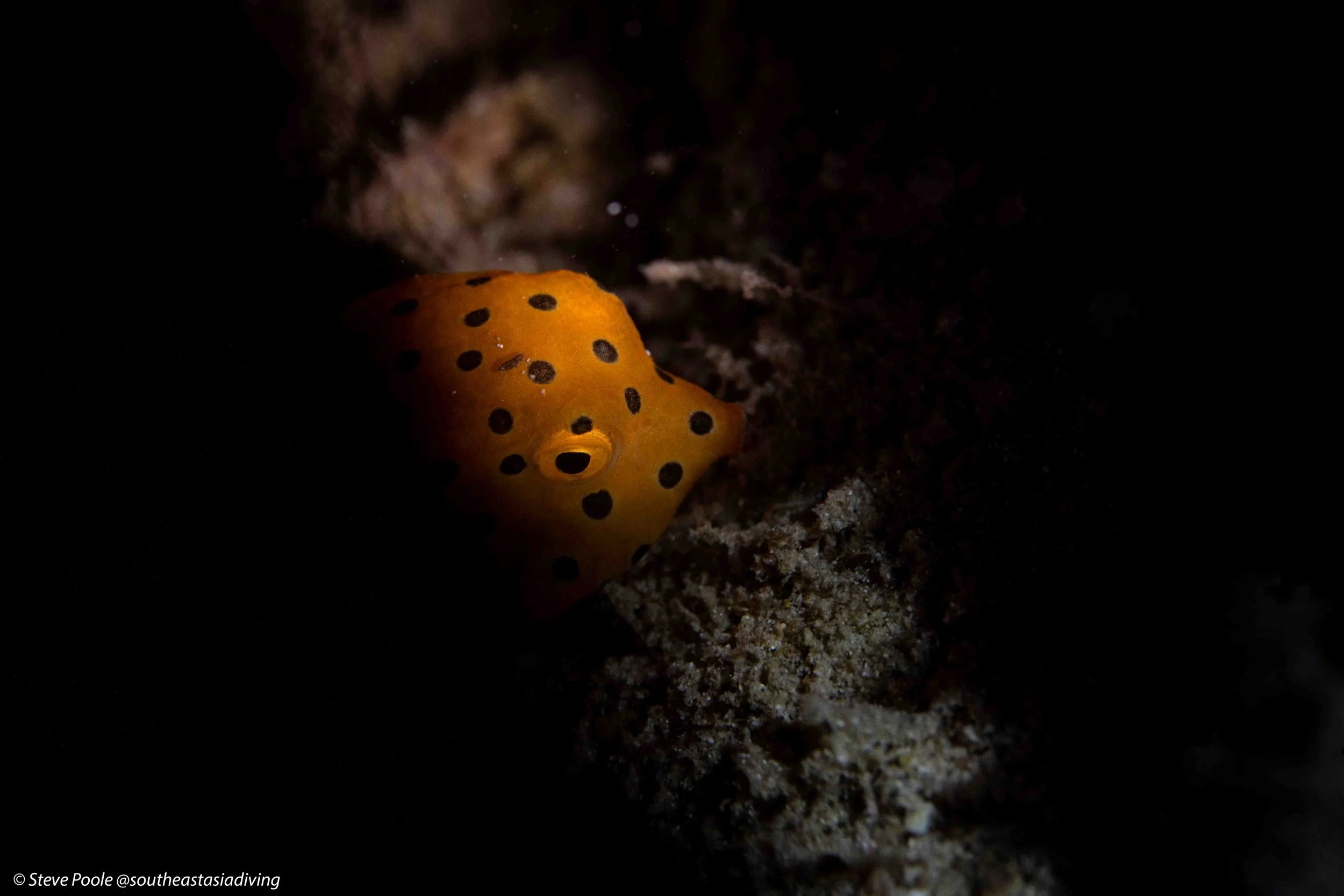
Buoyancy control also matters more during night dives. Divers often swim closer to the reef while focusing on critters illuminated by their torch beam, making it easier to accidentally contact coral or stir up sand if buoyancy slips. Fortunately, the naturally slower pace of night diving often encourages calmer movement and better control underwater.
Depth awareness becomes more important too. It’s easy to become distracted by marine life or underwater photography and stop monitoring your depth and air consumption as carefully as you would during the day. Frequent gauge checks help avoid this problem.
Reliable dive torches are another essential part of safe night diving. Most divers carry both a primary torch and a backup light in case of battery failure or equipment issues underwater. Modern dive lights are extremely reliable, but having redundancy is considered standard practice for night dives.
The good news is that most night dives are intentionally planned to be straightforward and comfortable, especially for newer divers. Dive operators typically choose sites with:
shallow depth profiles
mild conditions
limited current
easy navigation
sheltered entry and exit points
In many cases, divers may even revisit the same reef they explored earlier in the day so the environment already feels familiar before entering the water after sunset.
Ultimately, the key to safe night diving is simply to slow down, stay close to your buddy, and remain aware of your surroundings.
For many divers, the experience ends up feeling surprisingly peaceful rather than frightening — and once that initial nervousness disappears, night diving often becomes one of the most enjoyable and memorable forms of scuba diving.
🔦 Essential Night Diving Tips
🤝 Stay Close to Your Buddy
Visibility is naturally more limited at night, so buddy awareness becomes more important. Many divers use torch signals to communicate underwater after dark.
🔦 Night Diving Essentials
A reliable dive torch and marker light can make a huge difference during night dives, helping with navigation, buddy awareness, and spotting marine life after dark.
| Gear | Why It’s Useful | Recommended For | |
|---|---|---|---|
| Primary Dive Torch | Essential for visibility, navigation, signaling, and spotting nocturnal marine life during night dives. | All night divers | View on Amazon |
| Flashing Marker Light / Tank Beacon | Clips to your BCD or tank to help buddies and dive guides identify you easily in darkness. | Night dives & low visibility diving | View on Amazon |
Disclosure: As an Amazon Associate, we may earn from qualifying purchases at no extra cost to you.
🐢 Move Slowly
Night diving rewards patience. Slowing down helps improve buoyancy control and dramatically increases your chances of spotting marine life hidden in the reef.
🔦 Carry a Backup Torch
A secondary light is considered essential equipment for night diving in case your primary torch fails underwater.
⚙️ Check Your Equipment Carefully
Loose gauges, dangling accessories, and unsecured torches become far more distracting at night. Streamlined equipment setups work best.
⚖️ Watch Your Buoyancy
It’s easy to become fixated on critters illuminated by your torch and lose awareness of your depth or proximity to the reef.
👀 Don’t Shine Your Torch Into Other Divers’ Eyes
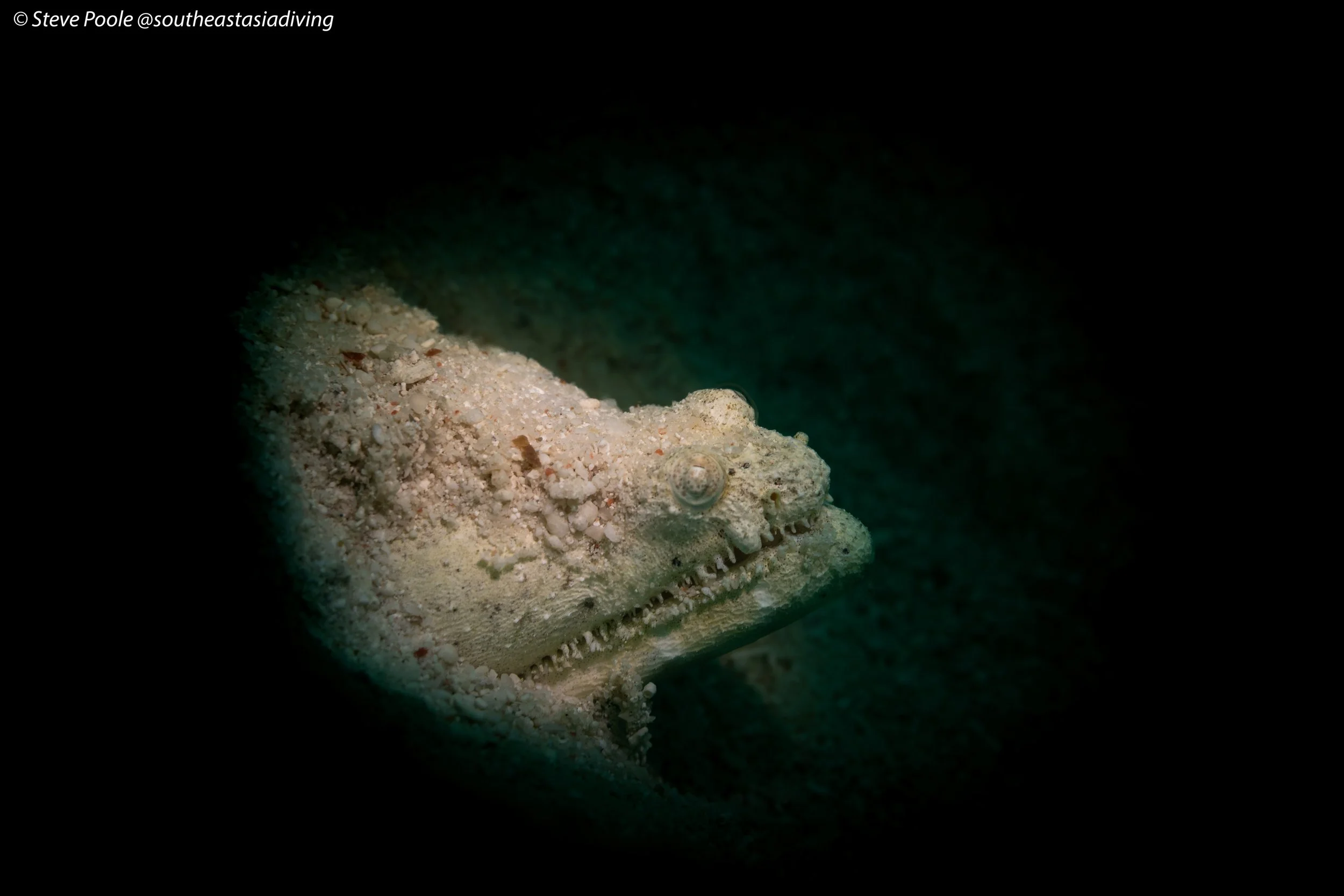
Modern dive lights are extremely powerful and can temporarily ruin another diver’s night vision underwater.
📸 Why Underwater Photographers Love Night Diving
For many underwater photographers, night diving is where underwater photography becomes truly addictive.
While daytime dives can offer beautiful reef scenes, schooling fish, and dramatic wide-angle landscapes, night diving creates an entirely different photographic environment — one focused on isolation, texture, behavior, and creative lighting.
The darkness itself becomes part of the image.
Without ambient sunlight filling the water column, marine life illuminated by strobes or dive torches naturally stands out against deep black backgrounds. Colors appear richer, textures become more pronounced, and even small critters can suddenly look dramatic and cinematic underwater.
This natural isolation is one reason why so many macro photographers love night diving.
Many nocturnal marine animals are also easier to approach after dark. Creatures that stay hidden during the day often emerge openly to feed across sandy slopes, coral rubble, and reef edges, while others become less skittish and more focused on hunting behavior.
Night dives regularly provide opportunities to photograph:
hunting octopus
bobtail squid
Spanish dancer nudibranchs
basket stars
sleeping reef fish
shrimp and crabs
hunting lionfish
unusual macro critters rarely seen during the day
Because night dives naturally slow divers down, photographers often have far more time to work carefully on composition and lighting. Instead of constantly swimming across the reef searching for subjects, photographers can spend longer observing behavior, adjusting strobe positions, and experimenting creatively with individual critters.
Night diving is especially popular for:
snoot photography
fluorescence photography
black background images
creative lighting techniques
slow shutter effects
Snoot photography in particular has become closely associated with night diving, allowing photographers to isolate tiny subjects against perfectly black water while directing light very precisely onto the critter itself.
Fluorescence night diving has also grown increasingly popular in parts of Southeast Asia. Using blue excitation lights and yellow filters, photographers can capture corals and marine organisms glowing in vivid greens, reds, and oranges that are invisible during normal daytime dives.
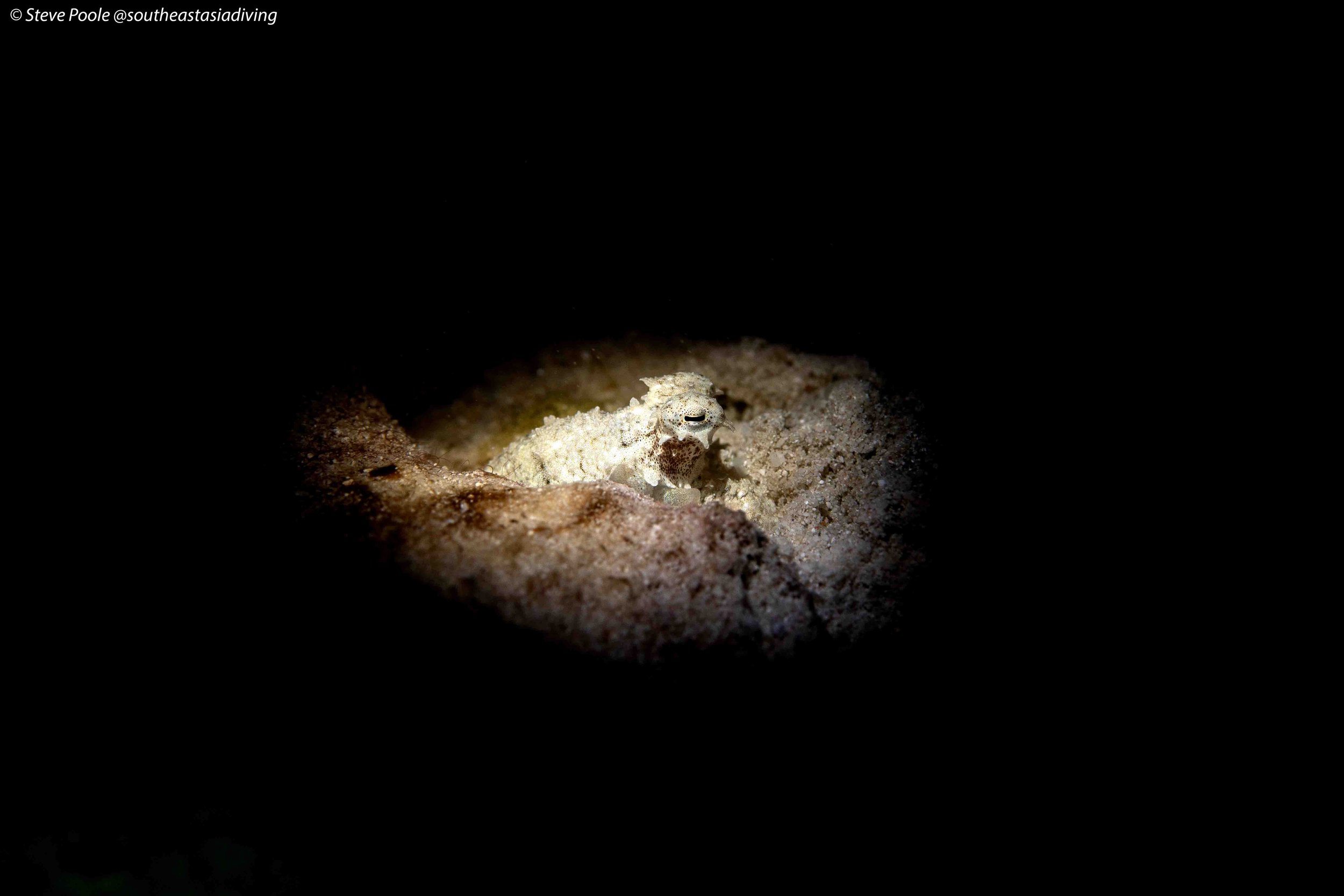
In destinations like Mabul, Anilao, Lembeh Strait, Dauin, and parts of Bali, some of the best underwater photography opportunities happen entirely after sunset. A relatively shallow night dive can reveal dozens of unusual critters within a small area of sand or reef.
For many photographers, night diving completely changes the way they approach underwater photography.
Instead of simply documenting marine life, night dives encourage patience, observation, and attention to detail. You begin noticing tiny movements, unusual behaviors, reflections, and textures that are easy to overlook during the day.
And once photographers experience that slower, more immersive style of diving, many find themselves completely hooked on diving after dark.
🌏 Best Places for Night Diving in Southeast Asia
🇲🇾Mabul, Malaysia
One of Southeast Asia’s most famous night diving destinations, known for macro critters, muck diving, and active nocturnal marine life.
🇵🇭 Anilao, Philippines
A world-class macro diving destination famous for critters, nudibranchs, and blackwater diving opportunities.
🇮🇩 Lembeh Strait, Indonesia
Legendary muck diving with bizarre nocturnal marine life and exceptional macro photography opportunities.
🇮🇩 Bali, Indonesia
Tulamben and Secret Bay offer excellent night diving with fascinating critter encounters and accessible shore diving.
🇮🇩 Raja Ampat, Indonesia
Night dives here combine vibrant coral reefs with crustaceans, hunting predators, and incredible biodiversity.
🇵🇭 Dauin, Philippines
One of the best places in Southeast Asia for slow-paced macro night dives and unusual critter encounters.
Final Thoughts on Night Diving
Most divers approach their first night dive feeling at least slightly nervous.
The idea of descending beneath the surface after dark can feel unfamiliar at first, especially if you’re used to the visibility and comfort of daytime scuba diving. The darkness beyond your torch beam, unfamiliar sounds underwater, and the thought of navigating a reef at night can all feel intimidating before you enter the water.
But once the dive begins, something surprising usually happens.
The nerves fade remarkably quickly.
And by the end of the dive, many divers are completely hooked.
There’s something unforgettable about hovering weightless in darkness while watching the reef slowly transform around you. The experience feels quieter, calmer, and far more immersive than most daytime dives. Without the distractions of bright sunlight and wide reef scenes, your attention naturally shifts toward the small details that are easy to miss during the day.
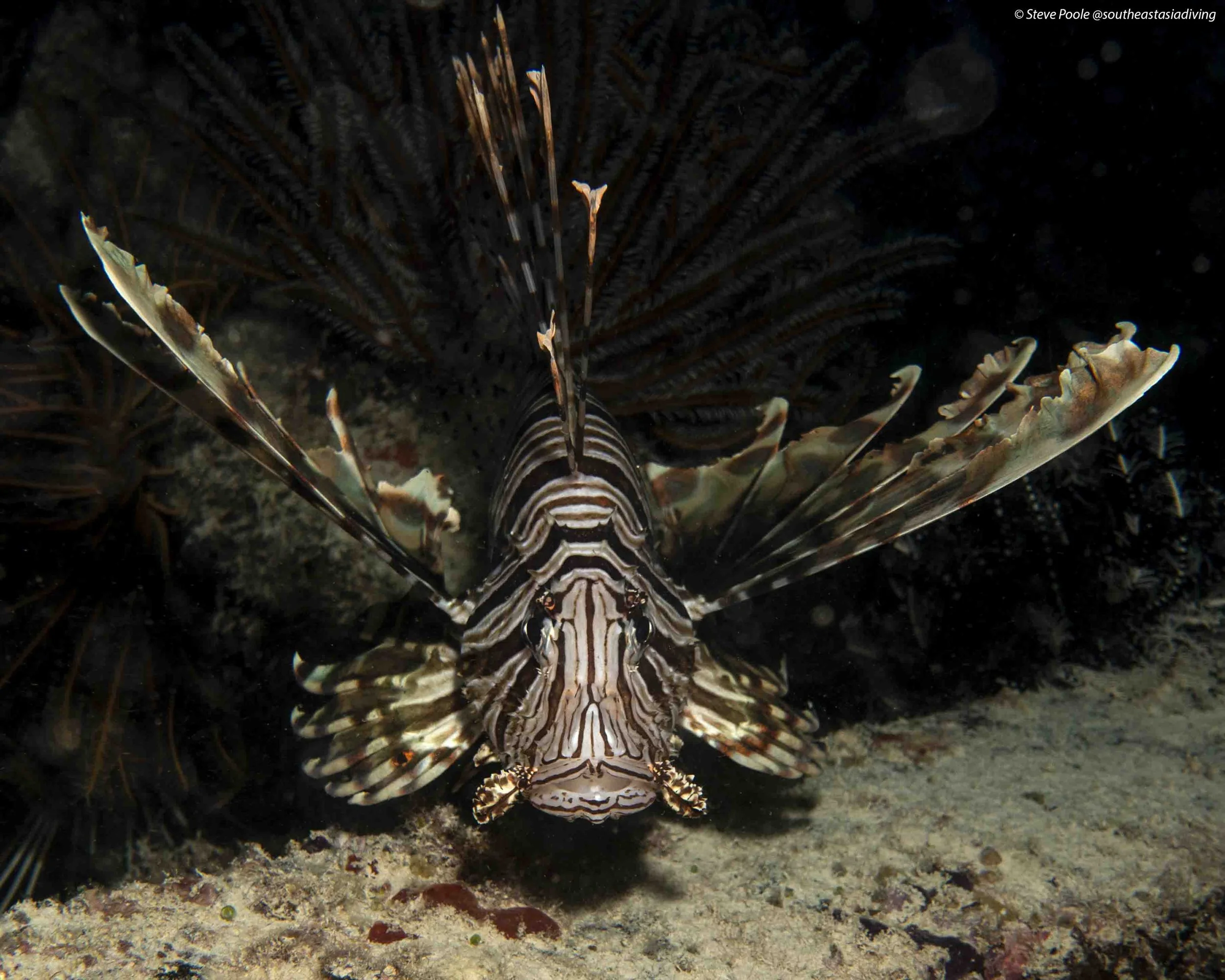
Lionfish can often be seen hunting at night
You stop trying to see everything underwater.
Instead, you begin noticing:
tiny movements in the sand
reflections glowing back from the darkness
nocturnal creatures emerging from hiding
coral textures illuminated by torchlight
hunting behavior rarely seen during daytime dives
In many ways, night diving changes how you experience the ocean entirely.
And in Southeast Asia especially, those nighttime encounters can be extraordinary. From the critter-filled muck dives of Mabul and Lembeh Strait to the vibrant coral reefs of Raja Ampat and Bali, some of the region’s most memorable marine life experiences only happen after sunset.
Whether you’re interested in underwater photography, macro critters, marine life behavior, or simply experiencing a completely different side of scuba diving, night diving is something every diver should try at least once.
Because once you experience the ocean after dark, daytime diving never quite feels the same again.
❓ Night Diving FAQ
Is night diving safe for beginners?
Yes — night diving is generally very safe when conducted with proper training, experienced guides, and good dive planning. Most beginner night dives take place on shallow, calm dive sites with simple navigation and limited current.
Many divers actually find night dives more relaxed and slower-paced than daytime dives once they enter the water.
What do you see on a night dive?
Night dives often reveal marine life and behavior that are rarely seen during the day.
Common night dive encounters include:
hunting octopus
moray eels
sleeping turtles
cuttlefish and squid
Spanish dancer nudibranchs
basket stars
bioluminescence
nocturnal reef predators
In macro diving destinations throughout Southeast Asia, night dives can feel completely different from daytime diving.
Is night diving scary?
Most divers feel nervous before their first night dive, but that feeling usually disappears quickly once underwater.
The experience is often far calmer and more peaceful than people expect. Divers naturally move more slowly, stay closer together, and focus on smaller details within the reef.
For many people, night diving becomes one of the most memorable types of scuba diving they ever experience.
What equipment do you need for night diving?
The most important piece of equipment for night diving is a reliable dive torch.
Most divers carry:
one primary dive light
one backup torch
a dive computer
standard scuba safety equipment
Many divers also use tank marker lights or small strobes to help buddies identify each other underwater after dark.
Why do underwater photographers love night diving?
Night diving creates dramatic black backgrounds that naturally isolate marine life and make colors stand out more vividly underwater.
Many nocturnal critters are also easier to approach after dark, giving photographers more time to work on composition and creative lighting.
Night dives are especially popular for:
macro photography
snoot photography
fluorescence photography
black background images
Where are the best places for night diving in Southeast Asia?
Some of the best night diving destinations in Southeast Asia include:
Mabul, Malaysia
Lembeh Strait, Indonesia
Raja Ampat, Indonesia
Anilao, Philippines
Dauin, Philippines
Bali, Indonesia
These destinations are famous for macro critters, nocturnal marine life, and exceptional underwater photography opportunities after sunset.