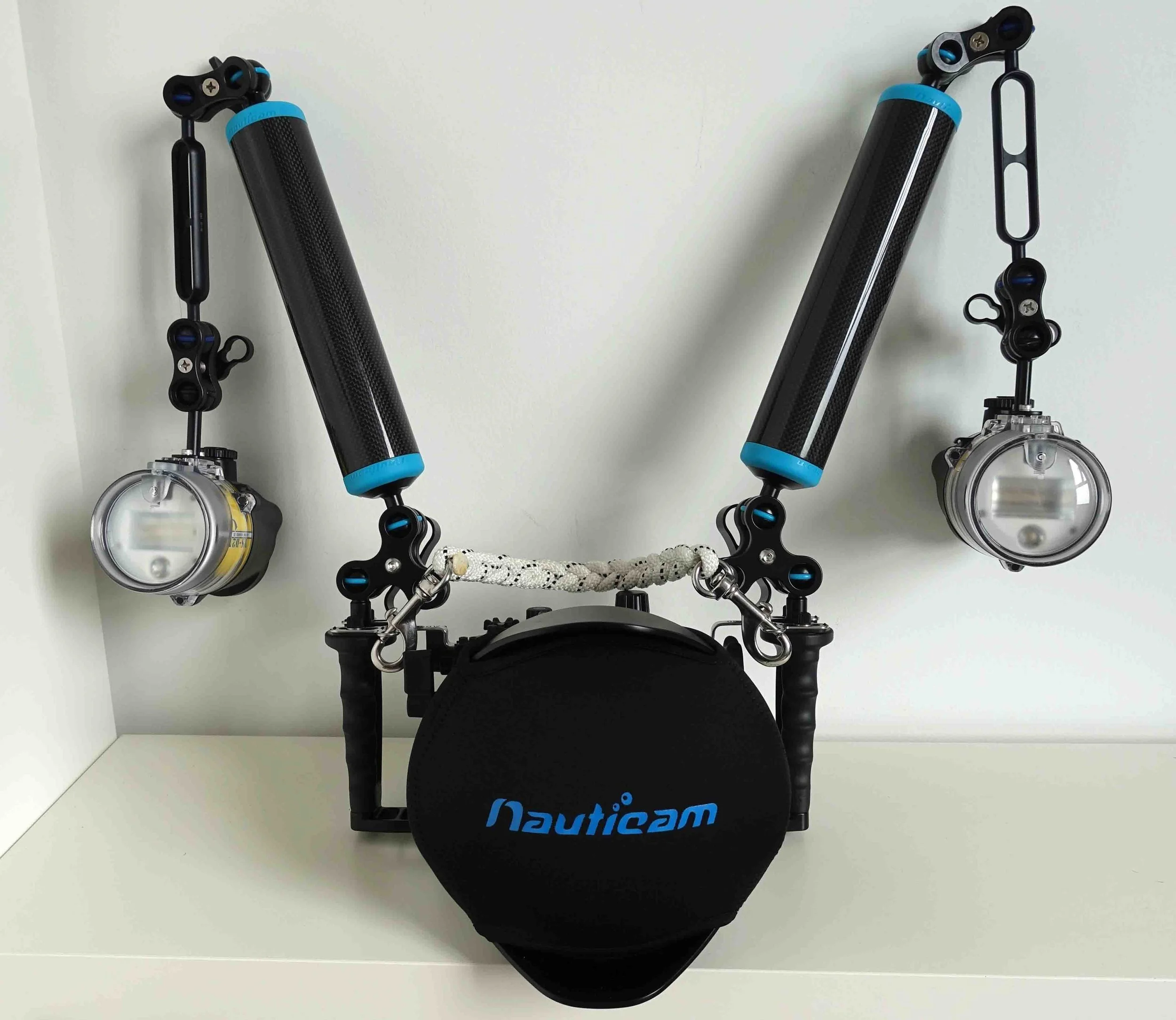
📸 Underwater Photography Gear for Southeast Asia Diving
Choosing the right underwater photography gear for Southeast Asia diving isn’t about chasing specifications or buying the newest camera body. It’s about building a scuba diving camera system that performs reliably in the real conditions you dive.
From the current-swept reefs of Raja Ampat to the critter-rich slopes of Anilao and Lembeh Strait, Southeast Asia demands versatility. One dive might involve schooling fusiliers against a deep blue wall in Dampier Strait. The next could be a 5mm nudibranch resting on black volcanic sand.
Strong currents. Expansive reefscapes. Pelagic encounters. Shy macro subjects. Liveaboard logistics. Variable visibility.
The best underwater camera for diving isn’t simply the most expensive mirrorless body. It’s the complete system — camera, lenses, underwater housing, ports, strobes, and accessories — working together to handle wide-angle reef photography, macro critter hunting, and multi-day dive itineraries.
This guide will help you choose the right underwater photography setup for Southeast Asia — intentionally, strategically, and with long-term performance in mind.
This post may contain affiliate links. As an Amazon Associate, I earn from qualifying purchases at no extra cost to you.
🧭 Start Here: What Are You Trying to Photograph?
Before choosing a mirrorless camera body, underwater housing, or lens, decide what you actually want to photograph underwater.
The best scuba diving camera gear depends entirely on your subject. Wide-angle underwater photography and macro underwater photography require completely different lenses, ports, and lighting setups. Trying to cover both without intention usually leads to compromise.
Start with the subject — then build the system around it.
🐠 Reefscapes, Sharks & Schooling Fish
Wide-Angle Underwater Photography
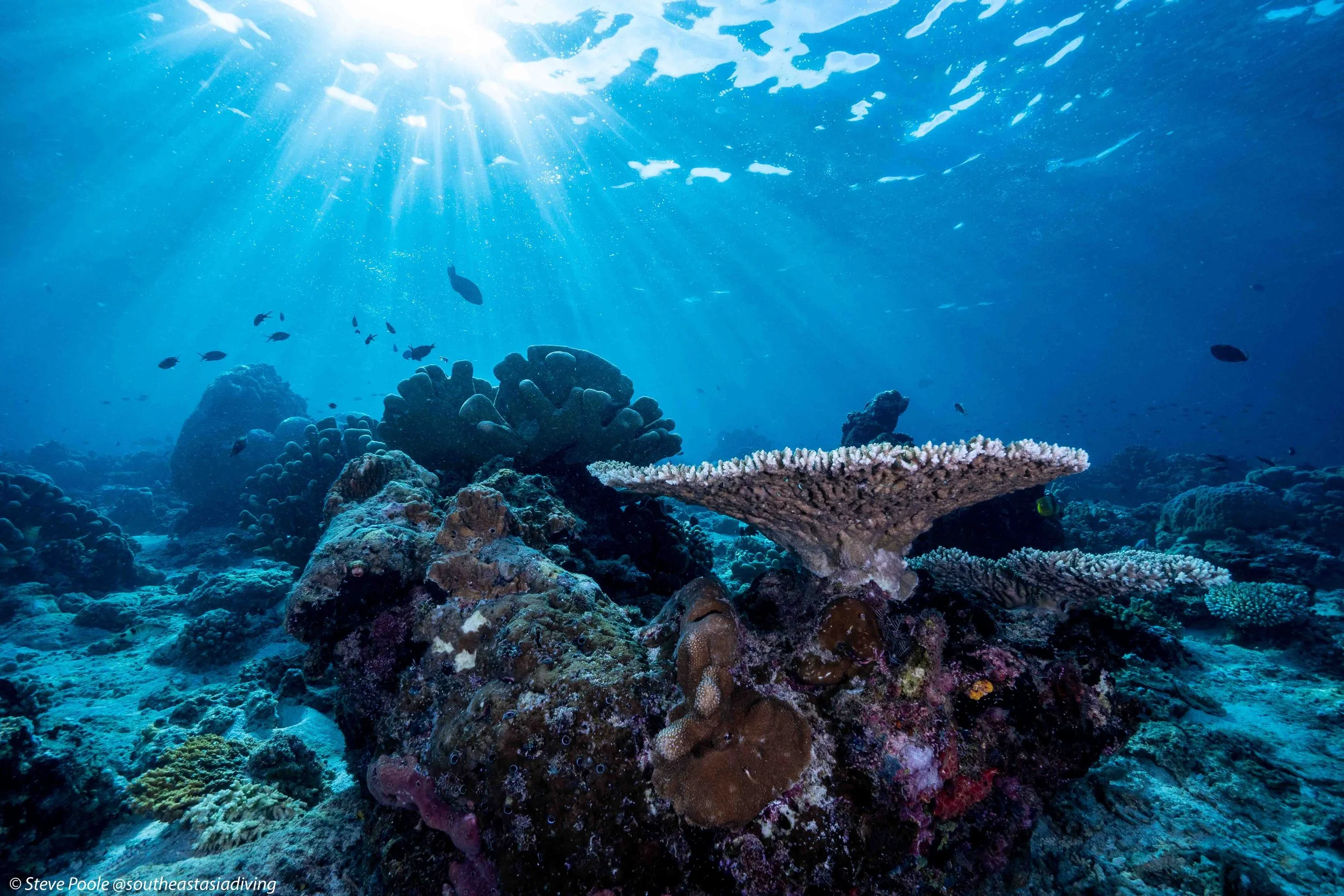
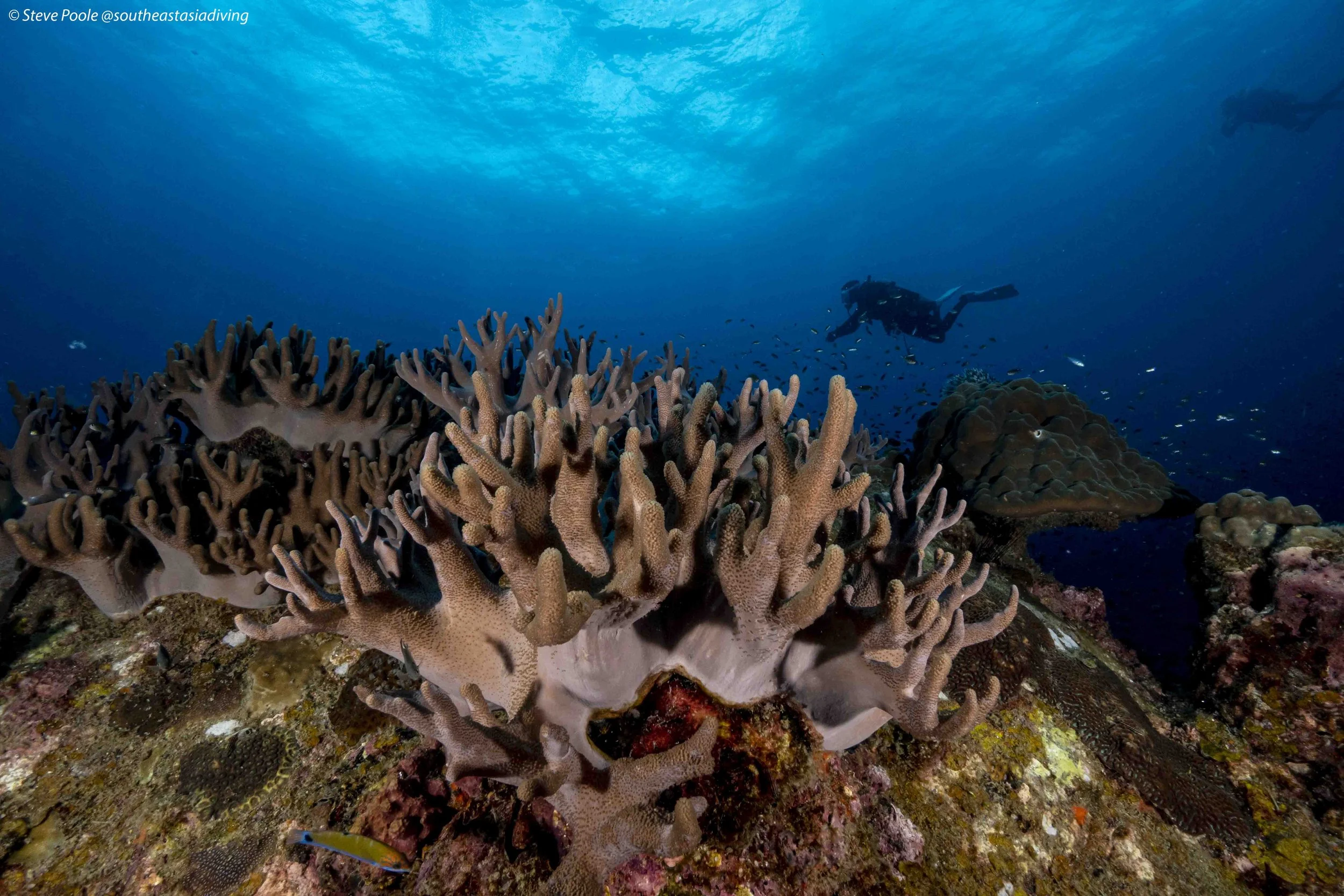
If you’re inspired by reef walls, manta cleaning stations, schooling jacks, and shark silhouettes against blue water, you need a wide-angle underwater photography setup built for scale and water clarity.
Wide-angle diving is about getting close while still capturing the environment — coral density, blue water gradients, and moving fish schools.
Priority gear typically includes:
Ultra-wide zoom or fisheye lenses
Dome ports (to preserve field of view and corner sharpness)
Dual strobes with wide beam coverage
Proper outward strobe positioning to minimise backscatter
This setup excels in destinations such as Raja Ampat, Tubbataha, Komodo, and across the Coral Triangle, where reef structure and pelagic encounters define the experience.
→ See the Wide-Angle Lens Guide
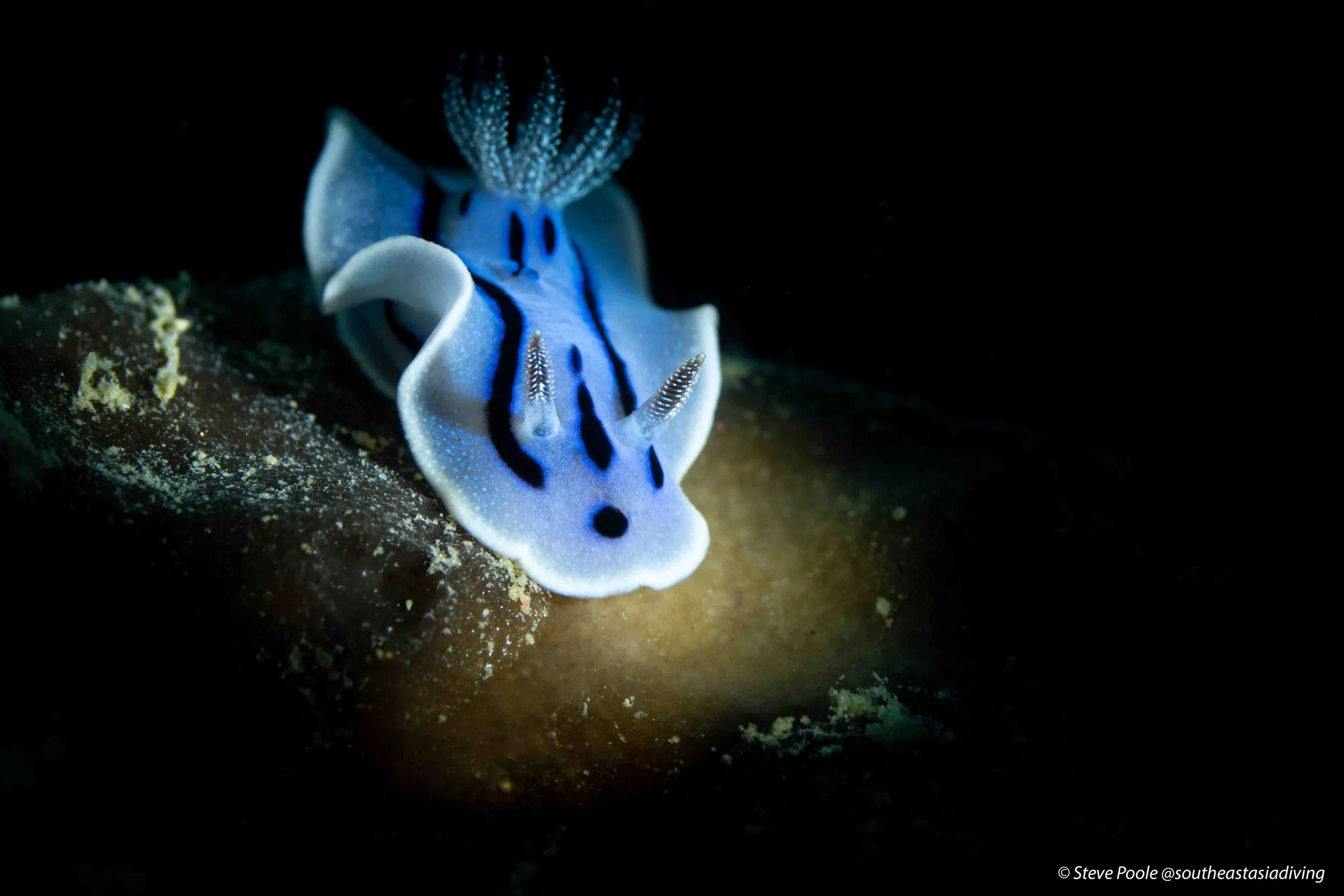
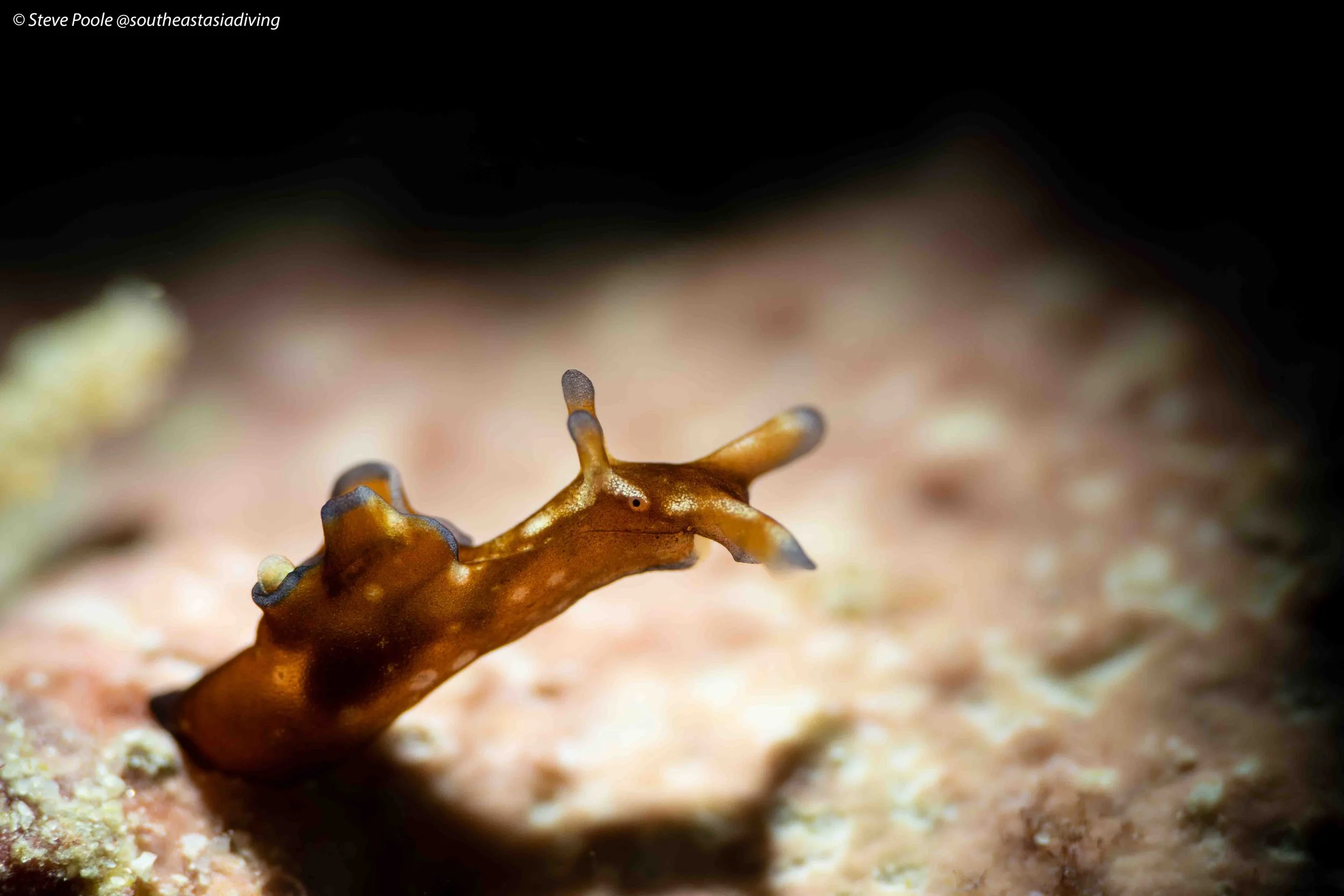
🐙 Nudibranchs, Shrimp & Pygmy Seahorses
Macro Underwater Photography
If you’re drawn to nudibranchs, gobies, blennies, shrimp, and pygmy seahorses, you need a macro underwater photography system built for precision and stability.
Macro diving focuses on detail, texture, and subject isolation rather than scale. Lighting control and working distance matter more than field of view.
Priority gear typically includes:
60mm macro lenses (versatile and forgiving)
90–105mm macro lenses (greater working distance and subject isolation)
Flat ports
Controlled strobe positioning
Optional wet diopters for super-macro photography
Macro diving dominates in Anilao, Lembeh Strait, Dauin, and Mabul, where small subjects are the main attraction.
→ See the Macro Lens Guide
🎥 Hybrid Photo + Video
If you plan to shoot both underwater stills and video, your priorities shift toward camera performance and lighting flexibility.
You’ll want:
Reliable autofocus tracking
Strong dynamic range and low-light capability
Lighting that supports both still photography (strobes) and video (continuous video lights)
Hybrid setups are increasingly common on Southeast Asia liveaboards, but they require thoughtful gear balance to avoid oversized rigs.
→ See the Best Mirrorless Cameras Guide
Most divers fall somewhere between wide-angle and macro.
The goal isn’t owning every possible lens. It’s building a coherent underwater photography system that matches your diving style, your destinations in Southeast Asia, and how often you travel.
Choose intentionally — then refine over time.
| Diving Style | Best System | Why |
|---|---|---|
| Wide-angle reef focus (Raja Ampat / Tubbataha / Komodo) | Full Frame | Maximum dynamic range, best ultra-wide performance, strongest blue-water files |
| Dedicated macro hunter (Anilao / Lembeh / Dauin) | APS-C or MFT | Macro reach + depth of field + smaller rigs that stabilise easily |
| Travel & liveaboards (weight limits, multi-leg trips) | APS-C | Best size-to-performance ratio for mixed wide + macro itineraries |
| Hybrid photo + video | Modern mirrorless (Full Frame or APS-C) | Strong autofocus + video features + flexibility for strobes and video lights |
| Mixed diving (a bit of everything) | APS-C | Most versatile overall: capable wide-angle, strong macro reach, manageable travel footprint |
🔎 Wet Lenses & Super Macro Underwater Photography
Wet lenses are one of the most flexible tools in underwater photography.
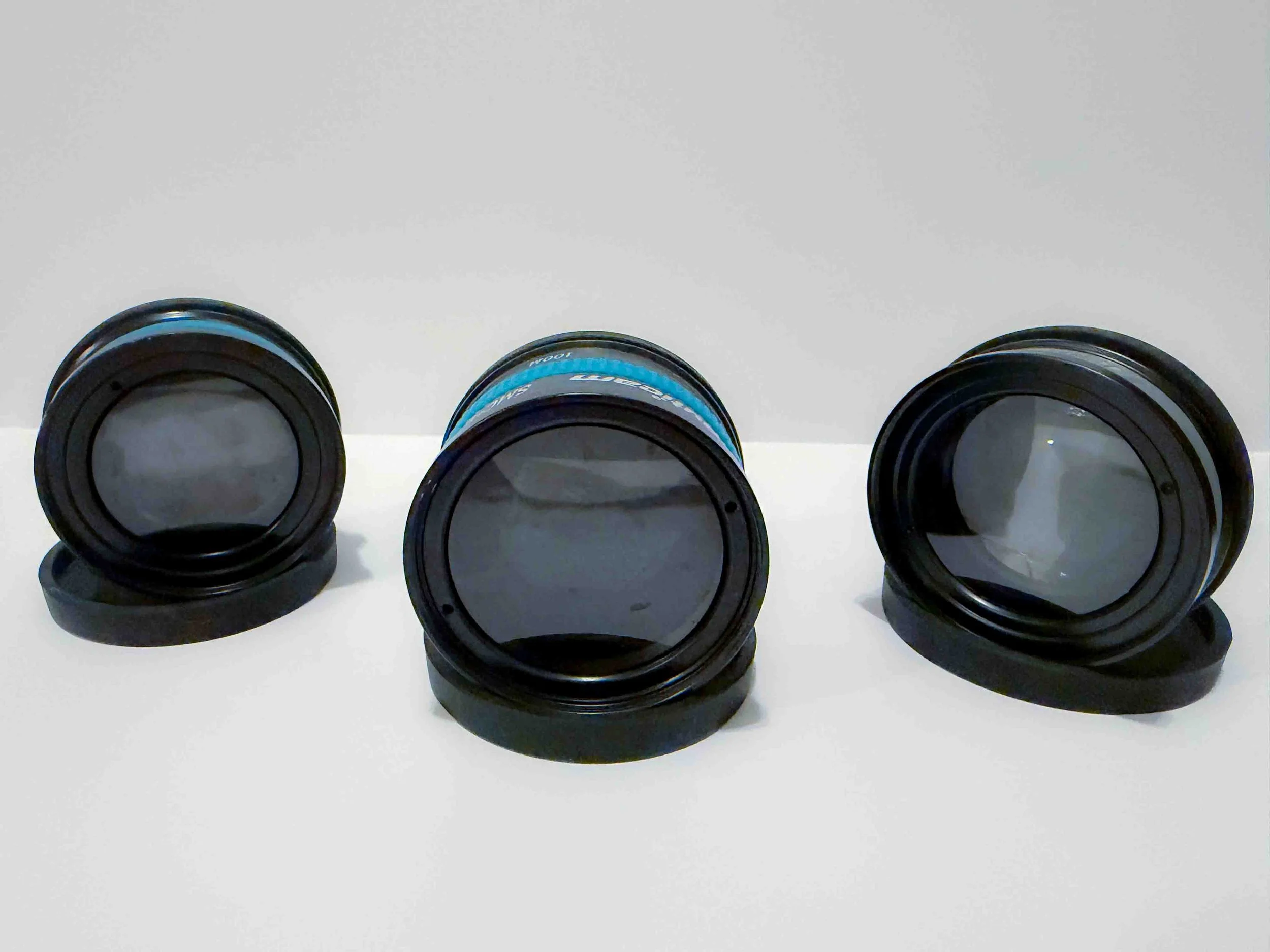
Unlike primary lenses mounted inside your housing, wet lenses attach to the front of your housing port underwater. In many systems, they can be added or removed during a dive — allowing you to adapt to changing subjects without opening the housing.
For divers in Southeast Asia, where a single dive can shift from reef scenes to unexpected critters, this flexibility can be extremely valuable.
There are two main categories of wet lenses for underwater photography:
Wide-angle wet lenses
Macro wet diopters (super-macro optics)
🌊 Wide-Angle Wet Lenses
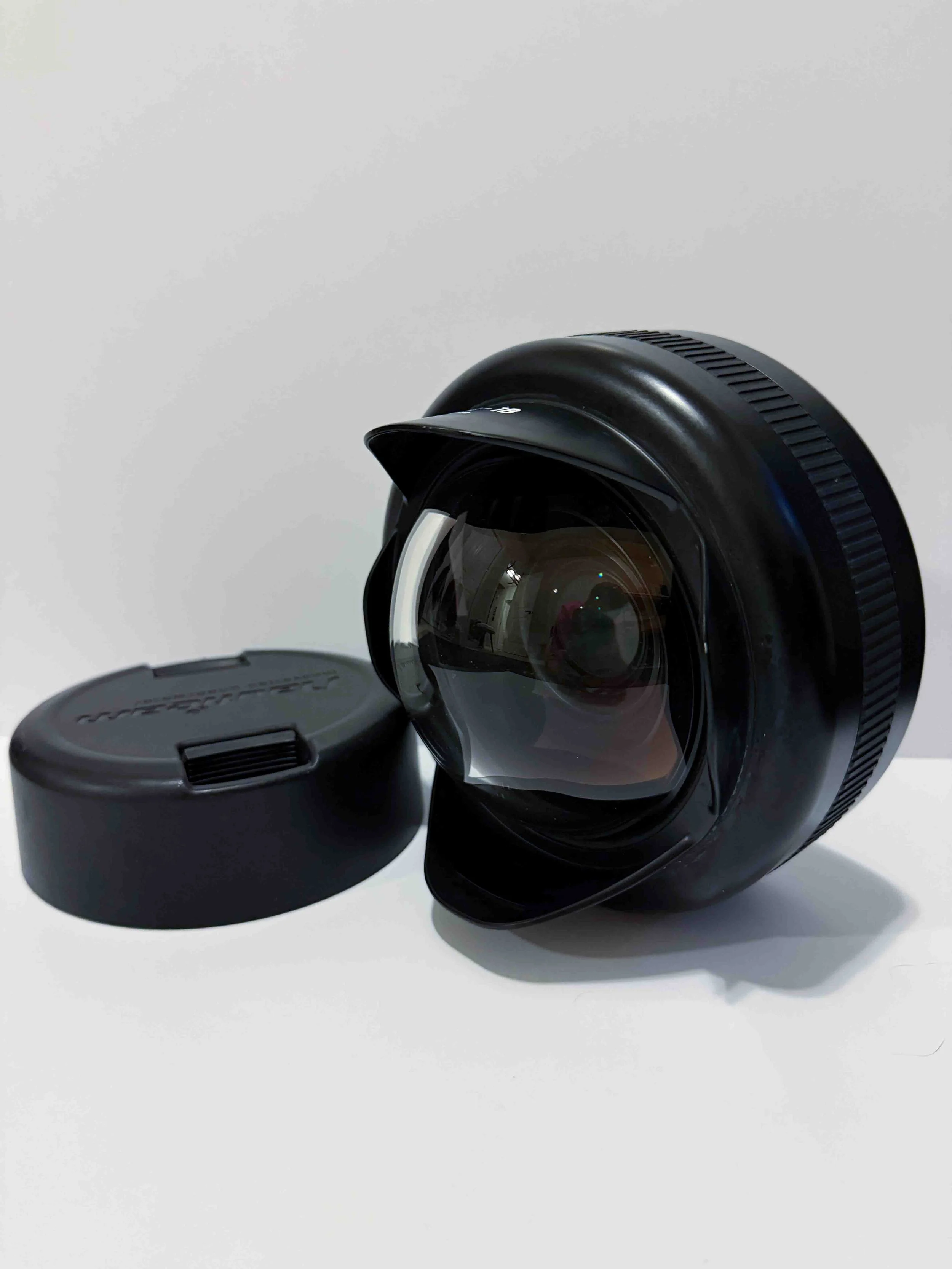
Wide-angle wet lenses expand the field of view of compatible zoom lenses, often transforming a compact or mirrorless setup into a capable ultra-wide underwater system.
They are especially useful for:
Travel-friendly rigs
Mid-dive flexibility
Close-focus wide-angle photography
For divers who want wide-angle performance without committing to large glass dome ports, wet wide lenses offer a compact alternative.
🔬 Macro Wet Diopters (Super-Macro)
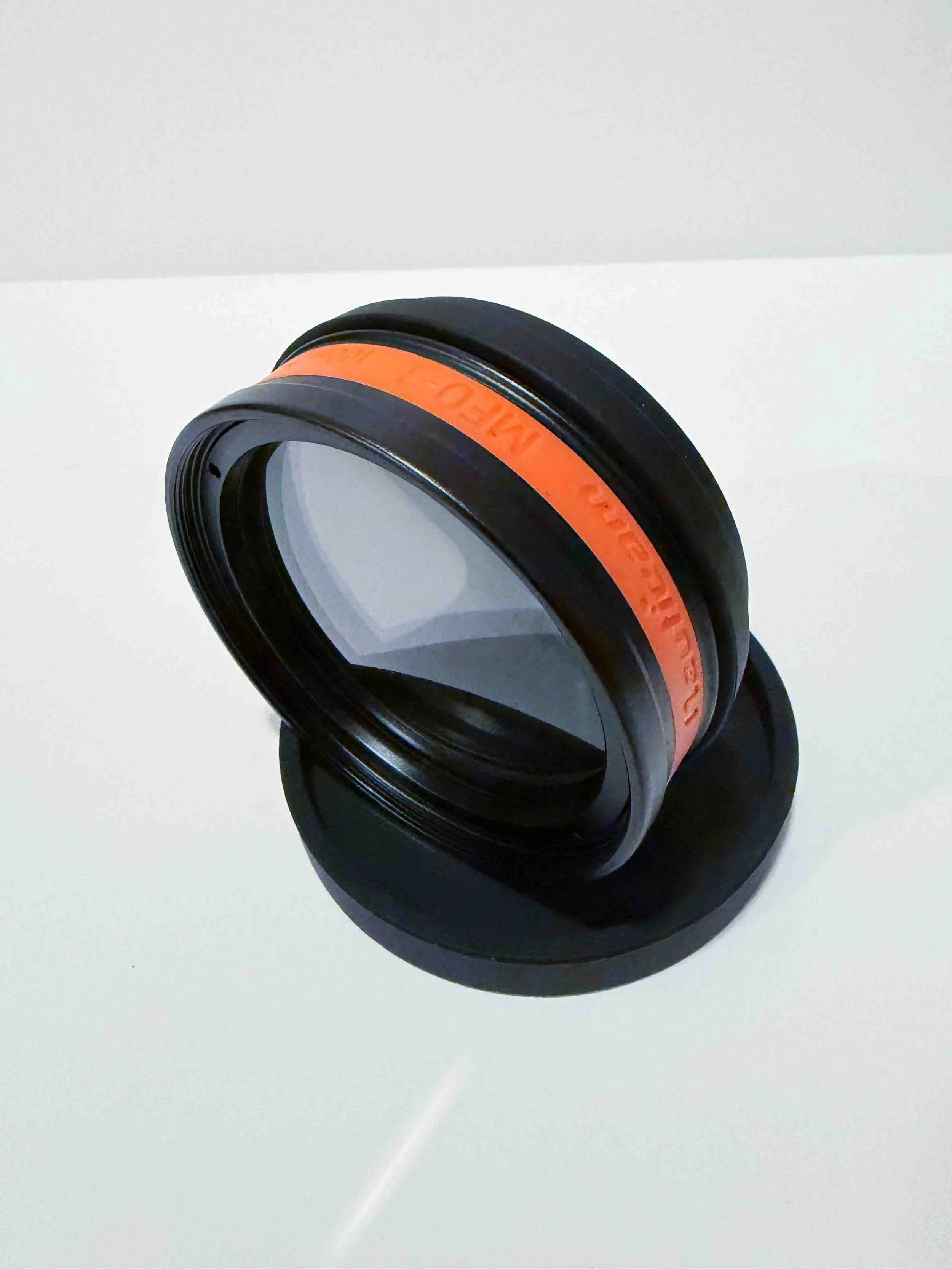
Macro wet diopters — often referred to as super-macro lenses — increase magnification beyond 1:1 reproduction.
They allow you to photograph:
Pygmy seahorses in extreme detail
Skeleton shrimp
Nudibranch rhinophores
Juvenile reef fish and fine textures
In critter-heavy destinations such as Anilao, Lembeh Strait, and Dauin, super-macro underwater photography can reveal subjects invisible to the untrained eye.
⚠️ The Reality of Super-Macro
Super-macro underwater photography is powerful — but demanding.
At higher magnification:
Depth of field becomes razor thin
Autofocus can slow
Lighting precision becomes critical
Stability and buoyancy control are essential
Wet diopters are not shortcuts. They are tools for photographers who already understand their base macro setup.
Used intentionally, they unlock an entirely different layer of underwater detail.
→ See the Super-Macro & Diopter Guide
💡 Underwater Strobes, Strobe Technique & Video Lighting
Lighting creates underwater images.
Water absorbs color rapidly — reds disappear first, then oranges, then contrast. By just a few meters below the surface, ambient light alone produces flat, blue-heavy results. That’s why underwater strobes are often the single biggest upgrade you can make to your scuba diving camera system.
A well-positioned lighting setup restores color, adds depth, and transforms an average frame into a publishable image.
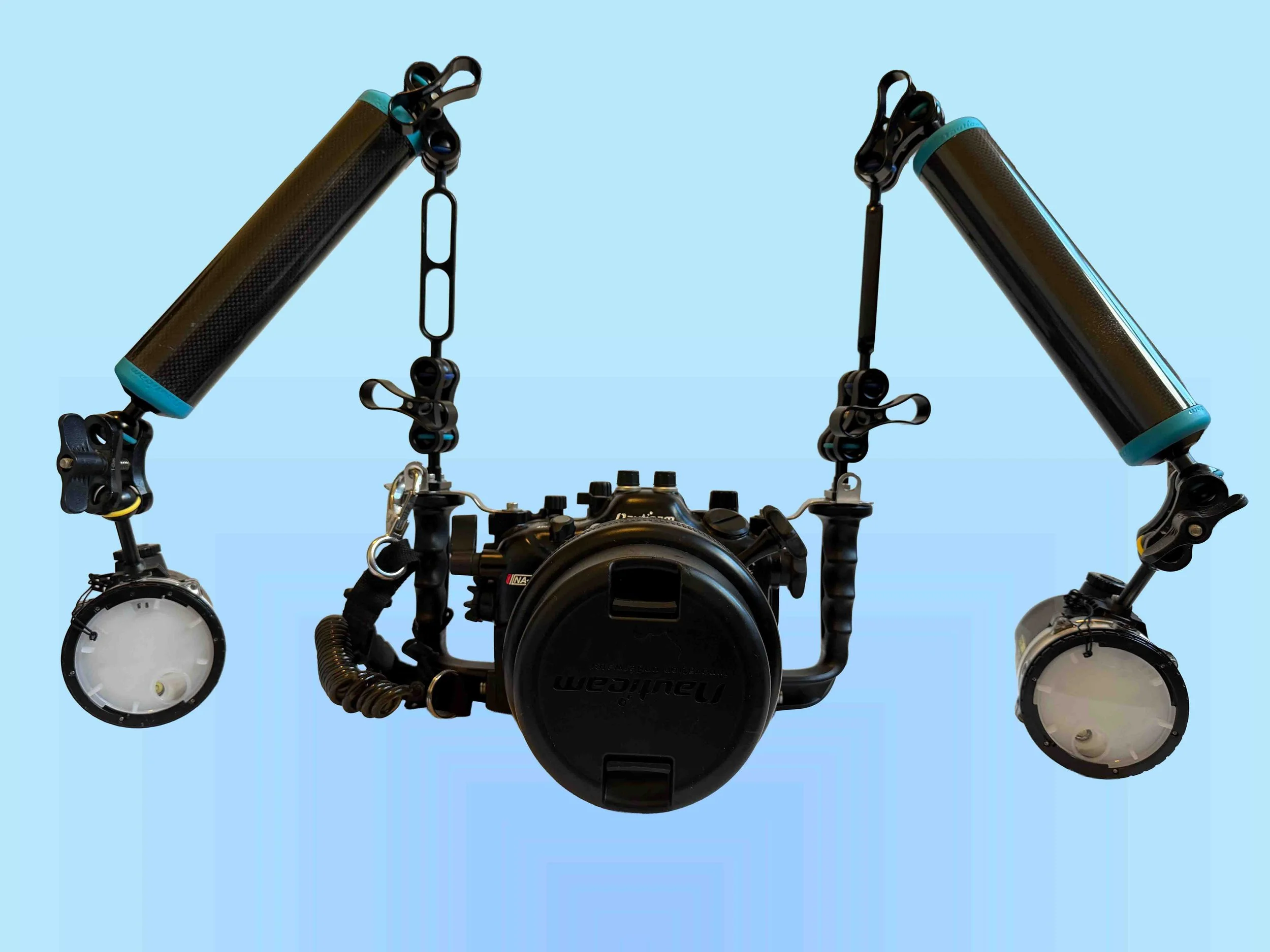
📷 My Personal Underwater Photography Setup
This is the system I use across Southeast Asia:
- Camera: Sony a7R V
- Housing: Nauticam aluminum housing
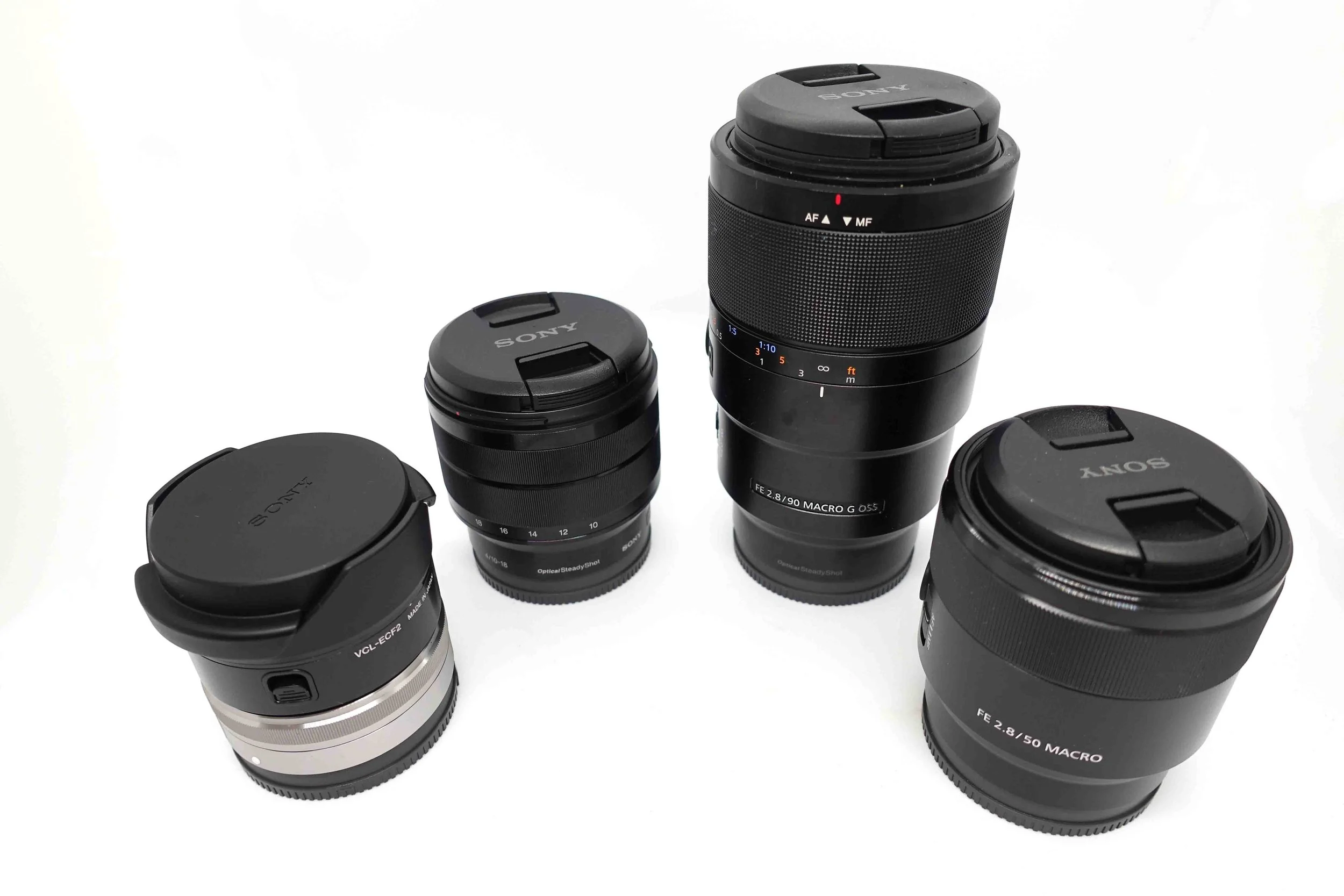
- Wide-angle: Sony 28–60mm + Nauticam WWL-1B
- Macro: Sony 90mm f/2.8 Macro + associated ports
- Super-macro: Nauticam SMC-3, MFO-1, MFO-3
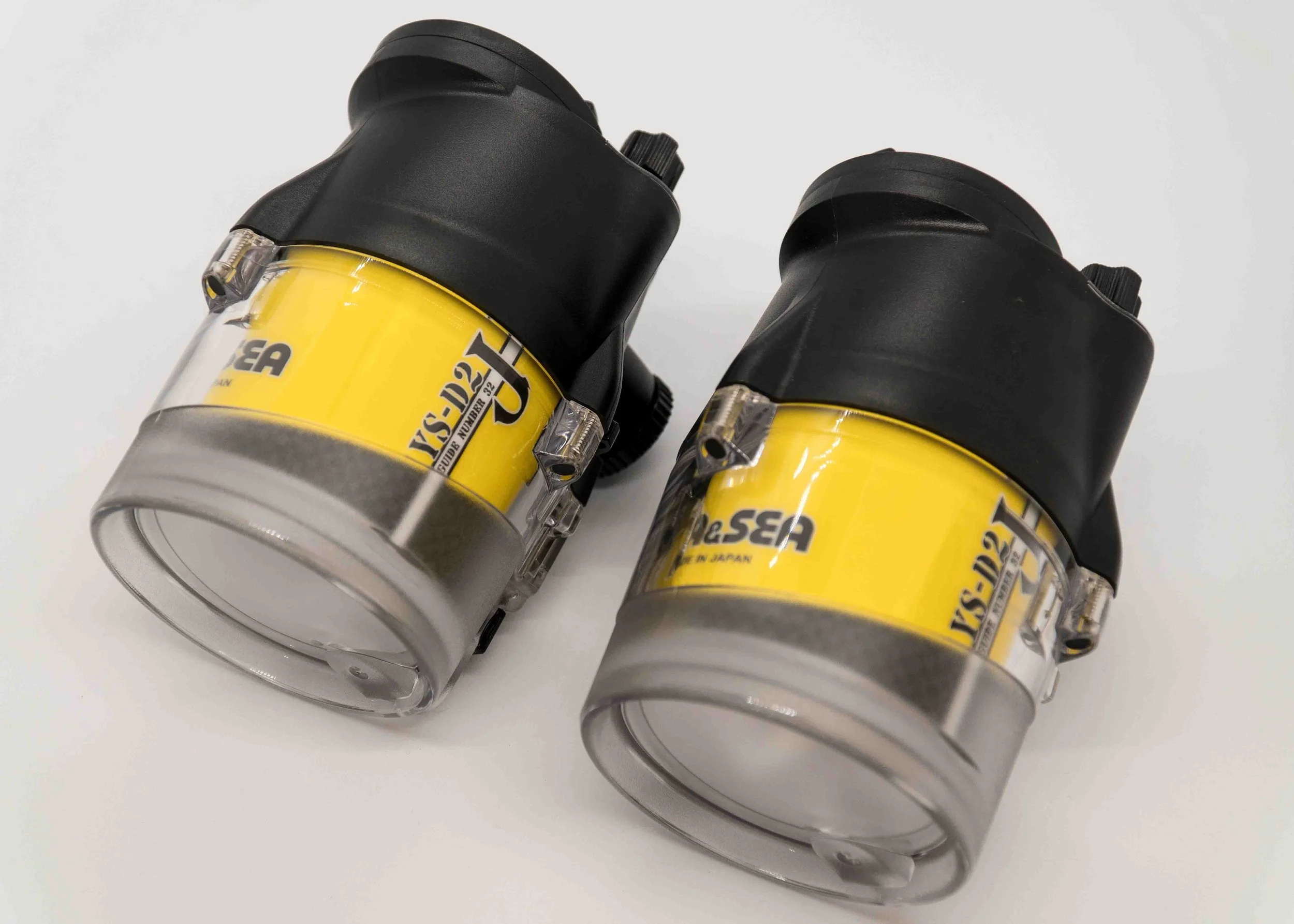
- Strobes: 2 × Sea & Sea YS-D3 Mark II
- Trigger: Nauticam optical flash trigger + fiber optic cables
- Creative lighting: Snoot (for macro isolation)
It’s intentionally built to balance image quality, wet lens flexibility, super-macro capability, and travel practicality.
| Category | Gear | Why I Use It | Link |
|---|---|---|---|
| Camera Body | Sony a7R V | High resolution, excellent autofocus, strong dynamic range for reef and macro | View on Amazon → |
| Housing | Nauticam NA-A7RV Aluminum Housing | Compact ergonomics, vacuum system, broad port ecosystem | View on Amazon → |
| Wide-Angle Lens | Sony FE 28–60mm | Compact and flexible, ideal pairing with wet wide lens | View on Amazon → |
| Wide Wet Lens | Nauticam WWL-1B | Ultra-wide field of view without a large dome port | View on Amazon → |
| Macro Lens | Sony FE 90mm f/2.8 Macro G OSS | Excellent working distance and sharp 1:1 magnification | View on Amazon → |
| Super Macro (High Power) | Nauticam SMC-3 | Extreme magnification with refined multi-element optics | View on Amazon → |
| Super Macro (Strong) | Nauticam MFO-1 | High magnification for detailed critter work | View on Amazon → |
| Super Macro (Balanced) | Nauticam MFO-3 | More forgiving super-macro option | View on Amazon → |
| Strobes (x2) | Sea & Sea YS-D3 Mark II | Strong output, fast recycle, wide coverage for reef scenes | View on Amazon → |
| Flash Trigger | Nauticam Optical Flash Trigger | Reliable fiber optic triggering with clean integration | View on Amazon → |
| Creative Lighting | Underwater Snoot | Controlled beam for dramatic macro isolation | View on Amazon → |
Disclosure: Some links above may be affiliate links. If you choose to purchase through them, I may earn a small commission at no additional cost to you. I only recommend gear I personally use and trust underwater.
🧳 Traveling Light on Liveaboards
Southeast Asia diving often involves multiple flights and strict domestic baggage limits — especially into Sorong, Manado, Labuan Bajo, and parts of the Philippines.
In these cases, system size and efficiency matter just as much as image quality.
A well-chosen APS-C or Micro Four Thirds underwater camera system can outperform a heavy full-frame rig if it allows you to:
Travel comfortably
Dive confidently in current
Manage charging and storage logistics
Maintain your system properly on liveaboards
Portability is part of performance.
→ See the Travel-Friendly Setup Guide
📷 Choosing the Right Camera for Underwater Photography
When divers search for the best underwater camera for diving, they often focus on the camera body first. But underwater photography is system-based. Your camera choice influences everything that follows — housing size, port compatibility, lens ecosystem, autofocus performance, lighting integration, and even airline weight limits.
A camera body does not operate in isolation underwater. It becomes part of a complete scuba diving camera system.
Today, most serious underwater photographers use mirrorless cameras for underwater photography. Mirrorless systems offer strong autofocus tracking, compact form factors, advanced video capabilities, and flexible lens ecosystems — all of which translate well inside an underwater housing.
The real decision isn’t brand. It’s sensor size and system strategy.
🥇 Full Frame Mirrorless Cameras
Full frame mirrorless cameras deliver the highest image quality underwater. They offer superior dynamic range, better low-light performance, and exceptional wide-angle rendering — particularly in blue-water reef environments.
Advantages of full frame for underwater photography include:
Excellent dynamic range for balancing reef foreground and blue backgrounds
Strong performance at higher ISOs in deeper or darker conditions
Greater background separation for environmental portraits
Outstanding ultra-wide lens compatibility
However, full frame systems come with trade-offs. Housings are larger. Dome ports are typically bigger. Overall system cost is higher. Travel weight increases — particularly when flying to remote Southeast Asia destinations.
Full frame is ideal for divers who prioritise wide-angle reef photography, frequent diving, and maximum file flexibility for post-processing.
🥈 APS-C Mirrorless Cameras
APS-C mirrorless cameras offer one of the strongest performance-to-practicality balances in underwater photography.
They deliver excellent image quality while keeping housing size and travel weight manageable. The crop factor can also provide an effective reach advantage for macro underwater photography — particularly useful in critter-heavy destinations like Anilao or Lembeh Strait.
Key strengths of APS-C underwater systems include:
Strong image quality for both wide and macro
Smaller housings compared to full frame
More manageable dome and port sizes
Excellent versatility across mixed itineraries
For many divers in Southeast Asia, APS-C represents the most balanced and adaptable underwater camera system.
🥉 Micro Four Thirds (MFT)
Micro Four Thirds systems are exceptionally capable underwater — especially for macro photography.
Their smaller sensor size allows for greater depth of field at comparable apertures, which can be an advantage when shooting super-macro subjects. Housings and domes are typically smaller and lighter, making MFT systems highly travel-efficient.
Advantages of Micro Four Thirds underwater include:
Compact housings and lighter travel footprint
Smaller dome port options
Excellent macro performance
Greater depth of field for detailed subjects
The primary trade-off is lower low-light performance compared to full frame. However, when using strobes effectively — which most underwater photographers do — this difference becomes far less significant.
Micro Four Thirds systems are particularly well suited to macro-focused divers, frequent liveaboard travelers, and those who prioritise compact setups without sacrificing image quality.
The Bottom Line
There is no universally “best underwater camera.”
There is only the best sensor size and mirrorless system for:
The subjects you prioritise
The destinations you dive
The frequency you travel
The lighting setup you use
In underwater photography, lens selection and lighting control often influence your final image more than sensor size alone.
Choose intentionally — then build the rest of the system around it.
| Feature | Full Frame | APS-C | Micro Four Thirds (MFT) |
|---|---|---|---|
| Image Quality | Excellent dynamic range & low-light performance | Very strong overall quality | Strong, especially with strobes |
| Low-Light Performance | Best in class | Good | Moderate |
| Wide-Angle Performance | Outstanding for reefscapes & blue water | Very good | Good |
| Macro Performance | Excellent subject isolation | Excellent reach (crop advantage) | Excellent depth of field control |
| Depth of Field (Macro) | Shallow (cinematic, less forgiving) | Balanced | Greater depth at same aperture (helpful for super-macro) |
| Housing Size | Largest | Medium | Smallest |
| Dome Port Size | Larger (often 8"+) | Medium | Smaller options available |
| Travel Friendliness | Heavier & bulkier | Good balance | Best for weight limits |
| System Cost | Highest | Mid-range | Often most affordable |
| Best For | Serious wide-angle shooters | Balanced macro + wide | Macro-focused & frequent travelers |
🔍 Lenses: Wide-Angle vs Macro Underwater Photography
If cameras capture data, lenses define perspective.
In scuba diving photography, lens choice matters more than megapixels. A mid-range mirrorless camera paired with the right underwater lens will outperform a flagship body paired with the wrong one.
Wide-angle and macro underwater photography are fundamentally different disciplines. They require different lenses, different ports, different lighting strategies, and even different diving techniques.
Before entering the water, you commit to one.
🌊 Wide-Angle Underwater Photography
Wide-angle underwater photography is about scale, environment, and blue water composition. It’s essential for capturing reef structure and pelagic encounters across Southeast Asia.
You’ll typically prioritise wide-angle when photographing:
Reefscapes and coral walls
Schooling fish and barracuda
Sharks and manta rays
Environmental diver portraits
Silhouettes against blue water
To achieve this perspective, photographers use ultra-wide zooms or fisheye lenses. On full-frame systems, this often means lenses in the 14–35mm equivalent range or dedicated fisheye optics.
Wide-angle underwater photography requires:
Dome ports (to restore correct field of view underwater)
Dual strobes with broad beam coverage
Careful outward strobe positioning to minimise backscatter
Because you are shooting through more water, lighting technique becomes critical. Backscatter control often matters more than camera body choice.
Wide-angle setups dominate in destinations like Raja Ampat, Tubbataha, and Komodo, where reef density and schooling fish are central to the experience.
→ See the Best Wide-Angle Lenses Guide
🐙 Macro Underwater Photography
Macro underwater photography is a completely different discipline.
Instead of scale, macro focuses on detail, subject isolation, and lighting precision. It rewards patience, buoyancy control, and careful positioning more than speed.
Macro is ideal for photographing:
Nudibranchs and flatworms
Shrimp and gobies
Pygmy seahorses
Behavioral details and texture
Typical macro lens choices include:
50mm macro lenses (versatile and easier to handle)
90–105mm macro lenses (greater working distance and stronger subject isolation)
Macro underwater photography requires:
Flat ports (to maintain magnification)
Controlled strobe placement
Stable buoyancy
Often a focus light for subject acquisition
Unlike wide-angle, macro is less dependent on large dome ports and more dependent on lighting discipline and subject control.
Macro setups excel in destinations such as Anilao, Lembeh Strait, Dauin, and Mabul, where small subjects define the dive.
→ See the Best Macro Lenses Guide
Choosing Between Wide and Macro
The most important decision in underwater photography often happens before you enter the water.
Are you shooting scale — or detail?
Environment — or isolation?
Wide-angle captures ecosystems.
Macro reveals the unseen.
In Southeast Asia, both are world-class. The key is committing intentionally and building your lens selection around the dives you actually plan to do.
🏠 Underwater Camera Housings & Port Systems
Your underwater camera housing is the foundation of your entire scuba diving camera system.
While camera bodies change every few years, your housing ecosystem determines long-term flexibility. It affects ergonomics, port compatibility, wet lens integration, and future upgrade paths. Choosing the right scuba diving camera housing is not just about waterproofing — it’s about building a system that evolves with your photography.
A well-designed housing influences:
Ergonomics and access to critical controls
Lens and port compatibility
Integration with wet lenses and viewfinders
Long-term system flexibility
Housing decisions are strategic, not temporary.
🧱 Aluminum vs Polycarbonate Underwater Housings
There are two primary types of underwater camera housings: polycarbonate and aluminum.
Polycarbonate housings are often more affordable and lighter. Their transparent bodies make O-ring inspection easy, which can be reassuring for newer underwater photographers. However, they tend to be bulkier and may offer a smaller port ecosystem with fewer upgrade options.
Aluminum housings are machined for durability and compactness. They typically offer superior ergonomics, better control placement, and access to a broader port system. This makes them attractive for serious underwater photographers using mirrorless or full-frame systems.
The trade-off is higher cost and increased travel weight.
If you plan to dive frequently in Southeast Asia — especially across both wide-angle and macro disciplines — aluminum housings often provide greater long-term flexibility.
🌊 Dome Ports vs Flat Ports
Understanding dome port vs flat port differences is essential in underwater photography.
Dome ports are required for wide-angle lenses. They restore field of view underwater and preserve corner sharpness. Larger domes (such as 8-inch glass domes) often improve edge performance and reduce distortion — but increase bulk and travel weight.
Flat ports are used for macro lenses and wet diopters. They maintain magnification and allow super-macro accessories such as SMC or MFO optics. Flat ports are generally smaller and more travel-friendly.
Port selection must match lens type. Using the wrong port compromises optical performance.
⚙️ Extensions, Gears & System Compatibility
Underwater housing systems are brand-specific ecosystems.
Most mirrorless underwater photography setups require:
Extension rings (to achieve correct lens-to-port distance)
Zoom or focus gears
Specific port combinations for each lens
Compatibility matters. Switching housing brands often means replacing ports, extensions, and accessories — which is why housing choice should be viewed as a long-term decision.
Plan your housing system around:
The lenses you plan to use
Whether you intend to shoot both wide-angle and macro
Future camera upgrades
Wet lens integration
Choose deliberately — your housing defines your system’s ceiling.
→ See the full Underwater Camera Housing Guide
📸 Underwater Strobes (Still Photography)
Underwater strobes are purpose-built flash units designed to function reliably at depth. They emit a short, powerful burst of light that:
Restores lost color
Increases contrast
Freezes motion
Reduces noise by allowing lower ISO settings
In both wide-angle and macro underwater photography, lighting technique often matters more than camera choice.
🌊 Wide-Angle Strobe Technique
For wide-angle reef photography, strobe positioning is critical — especially for reducing backscatter.
Effective wide-angle strobe positioning typically means:
Mounting strobes slightly behind the dome port
Extending arms wide and slightly back
Angling strobes outward so only the edges of the beam light the subject
Avoiding illumination of the water directly in front of the housing
If your strobes are lighting suspended particles in the water column, they are positioned too far forward or angled incorrectly.
Dual strobes are strongly recommended for wide-angle underwater photography. They provide even coverage, better shadow control, and significantly improved reef scene balance.
🔬 Macro Lighting
Macro underwater photography requires a different approach.
Instead of broad coverage, macro lighting focuses on control and precision. Strobes are typically positioned closer to the housing and angled more deliberately to shape light around small subjects.
Macro lighting often involves:
Lower power output
Tighter beam control
Careful shadow placement
Adjusting position per subject
In macro work, light shaping matters more than raw power. Subtle adjustments can dramatically change texture and mood.
🎥 Underwater Video Lights
Underwater video lights provide continuous illumination rather than flash output. They are essential for:
Dedicated underwater video
Hybrid photo + video shooting
Blackwater diving
Focus assistance in low visibility
Unlike strobes, video lights are measured in lumens. Higher lumen output improves scene brightness, but beam angle is equally important. Wide beam angles prevent harsh spotlight effects and create more natural-looking footage.
Other considerations include runtime, battery management, and charging logistics — particularly on multi-day liveaboards in Southeast Asia.
Hybrid shooters often carry both strobes and video lights. While this provides maximum flexibility, it also increases rig size, drag in current, and travel weight. System balance becomes even more important.
🎯 The Lighting Principle
In underwater photography:
Cameras capture data.
Lenses define perspective.
Lighting creates the image.
If you upgrade one element of your scuba diving camera gear, upgrading your underwater lighting system will often deliver the most noticeable improvement.
→ See the full Underwater Strobe & Lighting Guide
🧳 Travel & Liveaboard Considerations for Underwater photography in Southeast Asia is not just about image quality — it’s about logistics.
Many of the region’s best dive destinations require multiple flight segments, including domestic connections with stricter weight limits. Once on location, liveaboards often offer small cabins, shared charging stations, and back-to-back dive schedules that test both your organization and your equipment.
Southeast Asia dive travel is gear-intensive.
You should plan carefully for:
Dome port packing and protection during flights
Battery and charger management across multi-day itineraries
Spare O-rings and basic maintenance kits
Efficient rig handling in current-heavy sites such as Komodo and Dampier Strait
Large dome ports, extended strobe arms, and heavy aluminum housings add weight in transit and drag underwater. In strong current, oversized rigs can reduce stability and increase fatigue.
A slightly smaller, well-balanced underwater photography system often results in:
Easier airline travel
Faster setup between dives
Greater comfort in current
More stable shooting
More usable images
The best underwater camera system for Southeast Asia is not just powerful — it’s practical.
Choose a setup you can travel with confidently and dive comfortably for multiple days in a row.
🧼 Maintenance, Reliability & Flood Prevention
Underwater camera maintenance is part of responsible scuba diving photography.
Saltwater, humidity, sand, and repetitive use all place stress on your underwater camera housing. In Southeast Asia — where liveaboards may involve three or four dives per day for a week or more — small mistakes compound quickly.
Most housing floods are preventable.
Before every dive, take a deliberate pause. Clean and inspect your main O-ring carefully, checking for hair, lint, sand, or salt crystals. Confirm the vacuum seal if your housing includes a vacuum system. Ensure the port is properly seated and locked. Double-check that fiber optic cables or bulkhead connections are secure.
Rushing this process is where problems begin.
After diving, rinse your housing thoroughly in fresh water. While submerged in the rinse tank, gently operate all buttons and dials to flush salt from control shafts. Once removed, dry the exterior completely before opening the housing. Only open it in a clean, dry environment — never on a wet camera table with salt spray in the air.
Travel preparation is equally important. Always carry:
Spare housing and port O-rings
Silicone grease
A microfiber cloth
An extra fiber optic cable
On remote liveaboards in Raja Ampat, Komodo, or Tubbataha, a small spare part can save an entire trip.
Underwater photography reliability is not about luck. It is about routine, patience, and consistency.
Protect your housing, and it will protect your system.
❓ Frequently Asked Questions: Underwater Photography Gear
What is the best underwater camera for diving in Southeast Asia?
There is no single “best” underwater camera for scuba diving.
The best system depends on what you’re photographing. For wide-angle reef scenes in Raja Ampat or Tubbataha, full-frame mirrorless cameras offer excellent dynamic range and ultra-wide performance. For macro diving in Anilao or Lembeh Strait, APS-C and Micro Four Thirds systems often provide better reach and depth of field.
Lighting and lens choice typically influence image quality more than the camera body alone.
Is full frame better than APS-C for underwater photography?
Full frame offers stronger dynamic range and low-light performance, especially for wide-angle underwater photography.
However, APS-C systems are often more travel-friendly and provide effective reach advantages for macro photography. For many Southeast Asia divers, APS-C offers the best balance between image quality, size, and versatility.
Sensor size matters — but lighting and lens selection matter more.
Do I really need two strobes for underwater photography?
For macro photography, a single strobe can work.
For wide-angle underwater photography, dual strobes are strongly recommended. They provide more even coverage, better shadow control, and improved backscatter management — especially in reef environments with suspended particulate.
If upgrading, adding a second strobe is usually more impactful than upgrading your camera body.
Dome port or flat port — which should I use?
Dome ports are required for wide-angle and fisheye lenses. They preserve field of view and improve corner sharpness underwater.
Flat ports are used for macro lenses and wet diopters. They maintain magnification and allow super-macro accessories.
Port selection must match lens type — they are not interchangeable.
Are wet lenses worth it?
Wet lenses can significantly expand your system’s flexibility.
Wide-angle wet lenses allow compact setups to achieve ultra-wide fields of view. Macro wet diopters (such as Nauticam’s MFO and SMC series) enable super-macro photography beyond 1:1 magnification.
They are powerful tools — but require good technique and buoyancy control.
What is the most important upgrade for underwater photography?
In most cases:
Add a second strobe
Improve lens selection
Refine lighting technique
Upgrading your camera body should come later. Lighting and lens quality influence underwater images more than megapixels.
How do I prevent my underwater housing from flooding?
To reduce flood risk:
Clean and inspect O-rings before every dive
Use a vacuum system if available
Avoid opening the housing in humid or wet environments
Rinse thoroughly after diving
Carry spare O-rings on liveaboards
Housing floods are usually caused by small preventable mistakes.
What gear should I bring to Raja Ampat?
Raja Ampat favors wide-angle underwater photography due to reef density and schooling fish.
Recommended focus:
Ultra-wide lens or wet wide lens
Dome port
Dual strobes
Strong backscatter control technique
Macro is possible, but wide-angle is dominant.
What gear should I bring to Anilao or Lembeh?
Anilao and Lembeh Strait are macro-focused destinations.
Recommended focus:
90–105mm macro lens
Flat port
Wet diopter for super-macro
Snoot for creative lighting
Wide-angle is secondary at most sites.
Is underwater photography gear worth the investment?
If you dive frequently in Southeast Asia, yes.
A well-built scuba diving camera system can last many years if maintained properly. Housings and ports often outlast camera bodies. Strategic upgrades extend system life.
The key is building intentionally rather than impulsively.