🌊 Dive Insurance vs Travel Insurance
🤿 Why Southeast Asia Divers Often Need Both
If you’re traveling from the United States, the UK, or Europe to dive in Southeast Asia, you’ll almost certainly hear two phrases used interchangeably: travel insurance and dive insurance.
They sound similar.
They are not the same thing.
And in this region, confusing the two is one of the most common — and most expensive — mistakes divers make.
Southeast Asia offers some of the best diving on the planet. Coral Triangle biodiversity, world-class macro, dramatic currents, liveaboards, remote islands, and exceptional value draw international divers back year after year. But those same features also shape the risk profile of a trip here in ways many travelers don’t fully consider before leaving home.
🌏 Remote locations
🛥️ Liveaboards far from medical facilities
✈️ Evacuations that may involve boats, planes, and multiple countries
🏥 Recompression chambers hours — or even days — away
In this context, insurance isn’t just a formality. It’s part of responsible trip planning in the same way dive computers, surface intervals, and gas planning are.
Relying on standard travel insurance alone often feels reasonable. After all, you’re covered for flights, luggage, and medical emergencies — right? The reality is that many travel insurance policies include activity limits, certification requirements, or exclusions that matter most when something goes wrong underwater.
Understanding the difference between travel insurance and dive insurance isn’t about being overly cautious or expecting the worst. It’s about recognizing that these two types of insurance are designed to solve very different problems — and that Southeast Asia amplifies the consequences when those problems overlap.
🧳 Travel insurance protects your trip.
🤿 Dive insurance protects you when diving goes wrong.
This guide explains what each type of insurance is designed to cover, where the gaps typically appear, and why many divers traveling to Southeast Asia choose to carry both — not out of fear, but out of realism.
Insurance requirements and policy availability vary by country of residence. Always purchase coverage issued in your home country before departure and review the full policy wording carefully.
🧳 What Travel Insurance Is Designed to Cover
When planning international travel, it’s important to review travel insurance options that suit your destination, activities, and personal circumstances.
World Nomads offers travel insurance plans designed for independent and adventure-focused travelers, with coverage options that vary depending on your country of residence and chosen policy.
👉 Review policy details and get a quote
Disclosure: Southeast Asia Diving may earn a commission if you purchase through this link, at no additional cost to you. Coverage, limits, and exclusions vary by policy and country of residence. Please review the Product Disclosure Statement and full policy wording to ensure the plan is appropriate for your individual needs.
Travel insurance exists to protect the trip itself. Its primary purpose is to reduce financial loss when travel plans don’t go as expected, rather than to manage activity-specific risks.
Most travel insurance policies are built around common travel disruptions: cancelled flights, delayed connections, lost luggage, and general medical emergencies that occur during a trip. For many travelers, this coverage is entirely appropriate and often sufficient.
Typical travel insurance policies focus on:
✈️ Trip cancellation or interruption
⏱️ Flight delays and missed connections
🧳 Lost, delayed, or stolen luggage
🏥 General medical emergencies unrelated to excluded activities
For non-divers, this kind of protection usually does the job. For scuba divers — especially those traveling in Southeast Asia — it often doesn’t.
⚠️ The Problem for Divers
The challenge is not that travel insurance is “bad,” but that it isn’t designed specifically with scuba diving in mind. Many standard policies either exclude diving activities altogether or include them only under narrow, easily overlooked conditions that may not reflect how most recreational divers actually travel.
Common limitations can include policies that:
🚫 Exclude certain water-based activities depending on certification or supervision
📏 Limit coverage to relatively shallow depths (often around 10–18 metres)
🛥️ Exclude liveaboard itineraries, repetitive diving days, or multi-tank schedules
🚁 Cover hospital treatment but apply caps or separate conditions to evacuation and recompression treatment
These details matter far more when diving in destinations such as Indonesia, Malaysia, or the Philippines — particularly in places known for currents, remote reefs, or liveaboard routes operating far from major cities.
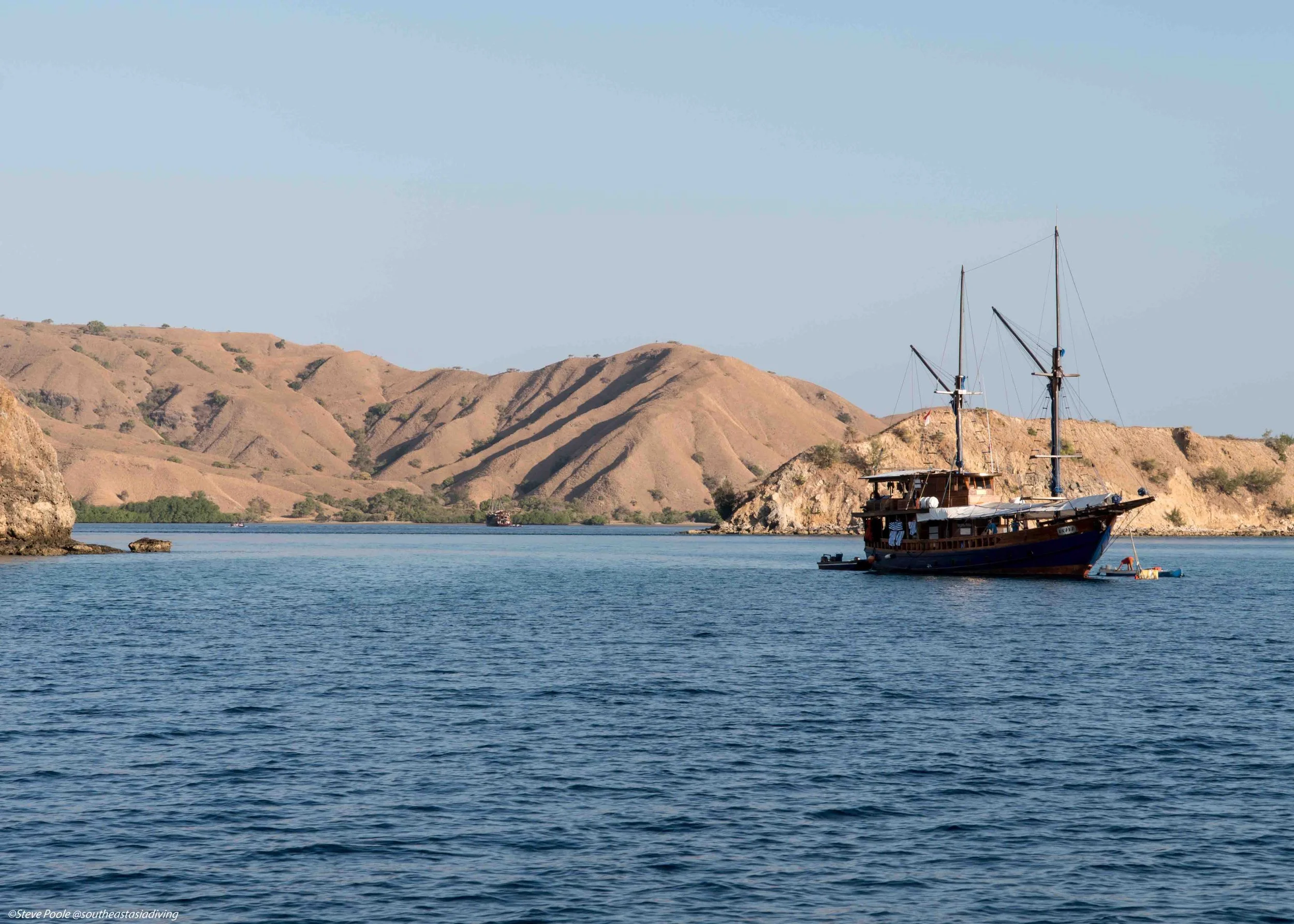
Diving in Southeast Asia can take place in remote and challenging locations such as Komodo
For example, a diver exploring Komodo’s current-swept sites, diving Sipadan’s walls, or photographing macro life in Anilao may be diving well within certification limits — yet still fall outside certain policy definitions depending on depth, supervision wording, or itinerary structure.
It’s also common for divers traveling with camera systems, technical equipment, or multi-country itineraries to assume their gear and activities are automatically covered. In practice, equipment protection, evacuation logistics, and recompression treatment are often treated separately within policy wording.
Some travel insurance policies state that “scuba diving is covered,” which can create a reassuring first impression. The more significant limitations, however, are often embedded deeper in the fine print — particularly around evacuation caps, chamber treatment definitions, certification requirements, or what qualifies as “professional supervision.”
In short, travel insurance is typically structured to protect flights, accommodation, and general medical emergencies. It may not always align with the specific medical and logistical realities of a diving incident in remote parts of Southeast Asia — where evacuation coordination, chamber access, and specialist care can become the primary cost drivers.
🤿 What Dive Insurance Is Designed to Cover
Dive insurance exists to cover diving-specific medical risks, not travel disruptions. Its purpose is narrowly focused but critically important: to respond when something goes wrong underwater, particularly in environments where access to advanced medical care is limited or delayed.
Unlike travel insurance, dive insurance is built around the realities of scuba diving physiology and logistics. It addresses the types of incidents that are unlikely to be covered adequately — or at all — by standard travel policies.
Dive insurance typically focuses on:
🧠 Decompression illness (DCI)
🏥 Hyperbaric chamber treatment
🤕 Diving-related injuries
🚁 Medical evacuation from remote dive locations
These are not fringe scenarios. They are the core risks associated with repetitive diving, multi-day dive schedules, currents, depth changes, and physical exertion — all common features of diving in Southeast Asia.
Organizations such as Divers Alert Network exist precisely because traditional insurance rarely addresses these risks in a complete or practical way. Outside major medical hubs, diving incidents often require coordination across boats, aircraft, hospitals, and chambers — sometimes spanning multiple regions or countries.

Remote locations such as Raja Ampat can be hundreds of miles away from the nearest decompression chamber
In Southeast Asia, this matters more than many divers expect. Liveaboards may operate days from the nearest chamber. Island destinations often rely on evacuation by speedboat before air transfer is even possible. A relatively mild DCI case can quickly become a complex logistical challenge rather than a simple hospital visit.
In these situations, dive insurance is often the policy that actually activates. It is designed to recognize diving injuries, approve treatment without dispute, and coordinate evacuation and chamber access — rather than debating whether the activity itself was covered.
Dive insurance doesn’t concern itself with missed flights or lost bags. Its role is singular: to ensure that when a diving-related medical emergency occurs, treatment and evacuation are handled quickly, appropriately, and without catastrophic financial exposure.
🌏 Why Southeast Asia Changes the Evacuation & Chamber Risk
Southeast Asia offers some of the best diving on the planet — from the currents of Komodo to the reefs of Sipadan, the macro life of Anilao, and the remote liveaboards of Raja Ampat — but the geography matters. The same factors that make the region so appealing to divers also shape the risk profile in ways that aren’t always obvious when trips are being planned.
Many of the region’s most celebrated dive destinations involve liveaboards operating far from hospitals, remote islands with limited medical infrastructure, and long distances between dive sites and recompression chambers. In parts of Indonesia, Malaysia, and the Philippines, chambers may be located hours away by boat, followed by additional air transfer — sometimes across provincial or international borders.
It’s also common for evacuation routes to involve multiple stages. A diver may first need to be stabilised on a boat or small island, transferred by speedboat to a regional airport, flown domestically to a larger city such as Manila or Kuala Lumpur, and then moved again to reach a suitable chamber or hospital. Each step adds time, coordination, and cost.
This matters whether you’re diving from a luxury liveaboard with a full camera setup, traveling with expensive underwater photography equipment, or packing lightweight travel gear for a multi-country itinerary. Evacuations don’t just involve medical treatment — they often affect flights, accommodation, equipment, and onward travel plans.
In this context, even a relatively mild case of decompression illness looks very different from the same incident in Europe or North America. What might involve a short ambulance ride and same-day chamber access in a major city can become a multi-day logistical process in parts of Indonesia or the Philippines, involving boats, domestic flights, specialised medical transport, and extended treatment.
Costs escalate quickly — not because care is extravagant, but because logistics are complex. Evacuation flights, medical escorts, chamber fees, and extended hospital stays add up fast, often exceeding what many standard travel insurance policies are structured to address.
This is where many divers discover the limits of relying on travel insurance alone. Policies may cover a hospital visit, but include activity limits, certification requirements, evacuation caps, or definitions of “essential treatment” that don’t always align with how diving incidents unfold in remote regions.
Southeast Asia doesn’t make diving inherently more dangerous. But it does amplify the consequences when something goes wrong — particularly in destinations where distance, infrastructure, and transport logistics shape the response. And that’s exactly why understanding the difference between travel insurance and dive insurance matters more here than almost anywhere else.
⚖️ The Core Difference (In Simple Terms)
At their core, travel insurance and dive insurance are designed to solve two very different problems.
🧳 Travel insurance protects your trip.
🤿 Dive insurance protects you when diving goes wrong.
There is some overlap between the two, but they are not substitutes for one another — particularly in a region like Southeast Asia, where diving often takes place far from immediate medical care.
Travel insurance is concerned with the logistics and financial disruptions of travel. Dive insurance is concerned with the medical and evacuation realities of scuba diving. When an incident happens underwater, the difference between these two roles becomes very clear very quickly.
Typical Coverage Focus
🧳 Travel Insurance
Travel insurance is designed to manage travel-related risk, including:
Trip cancellations and delays
Lost, delayed, or stolen luggage
Non-diving medical emergencies
Hotels, flights, and logistical disruptions
This type of insurance works well when a flight is missed, a bag doesn’t arrive, or an illness occurs that has nothing to do with scuba diving.
🤿 Dive Insurance
Dive insurance is built specifically for diving-related incidents, including:
Decompression illness (DCI)
Hyperbaric chamber treatment
Diving accident evacuation
Remote rescue and complex medical logistics
These are precisely the situations where standard travel insurance often has exclusions, limits, or delays — especially when diving, liveaboards, or evacuation across regions is involved.
Understanding this distinction is key. One policy is designed to get your holiday back on track. The other is designed to ensure you receive the right medical care when a dive doesn’t go as planned.
If you only read one section, make it this: travel insurance protects the trip — dive insurance protects you when something goes wrong underwater……
Dive Insurance vs Travel Insurance (Quick Comparison)
Same trip, different risks. This table shows what each policy is designed to cover.
| Coverage area | Travel insurance 🧳 | Dive insurance 🤿 |
|---|---|---|
| Trip cancellation / interruption | ✅ Typically covered | ❌ Not the focus |
| Flight delays / missed connections | ✅ Typically covered | ❌ Not the focus |
| Lost / delayed luggage | ✅ Typically covered | ❌ Not the focus |
| Non-diving medical emergencies | ✅ Often covered | ➖ Sometimes (policy dependent) |
| Decompression illness (DCI) | ⚠️ Often limited or excluded | ✅ Designed for this |
| Hyperbaric (chamber) treatment | ⚠️ Often limited or excluded | ✅ Designed for this |
| Evacuation from remote dive locations | ⚠️ Often capped or excluded | ✅ Core coverage |
| Liveaboard / repetitive diving | ⚠️ Varies — check fine print | ✅ Commonly included (check limits) |
| Primary purpose | Protects your itinerary and costs | Protects you when diving goes wrong |
Note: Coverage varies by provider. Always check depth limits, exclusions, and evacuation caps.
🤝 Why Many Divers Choose to Carry Both
Carrying both travel insurance and dive insurance isn’t about duplication. It’s about closing gaps.
Each policy is designed to respond to different parts of a real-world incident, and in Southeast Asia those parts often unfold in stages rather than as a single, simple event.
In practical terms, this is how coverage often splits during an actual trip:
✈️ Travel insurance may cover a missed or rescheduled flight home.
🏥 Dive insurance covers recompression chamber treatment.
🧳 Travel insurance replaces lost or delayed luggage and gear.
🚁 Dive insurance handles evacuation from a remote island or liveaboard.
Very rarely does a single policy manage all of this effectively on its own.
This layered approach becomes especially important for divers traveling through multiple countries, spending time on liveaboards, or diving repeatedly over several days. These trips increase both logistical complexity and exposure to the kinds of scenarios where exclusions, depth limits, or evacuation caps suddenly matter.
Many divers only discover these gaps after an incident, when claims are questioned or denied because the activity, depth, or evacuation route falls outside a policy’s fine print. Carrying both types of insurance reduces the risk of that moment entirely — not by expecting problems, but by acknowledging how diving trips in Southeast Asia actually work.
For most experienced divers in the region, the question eventually shifts from “Do I need both?” to “Which risks do I want fully covered?”
⚠️ Common Misunderstandings About Dive & Travel Insurance
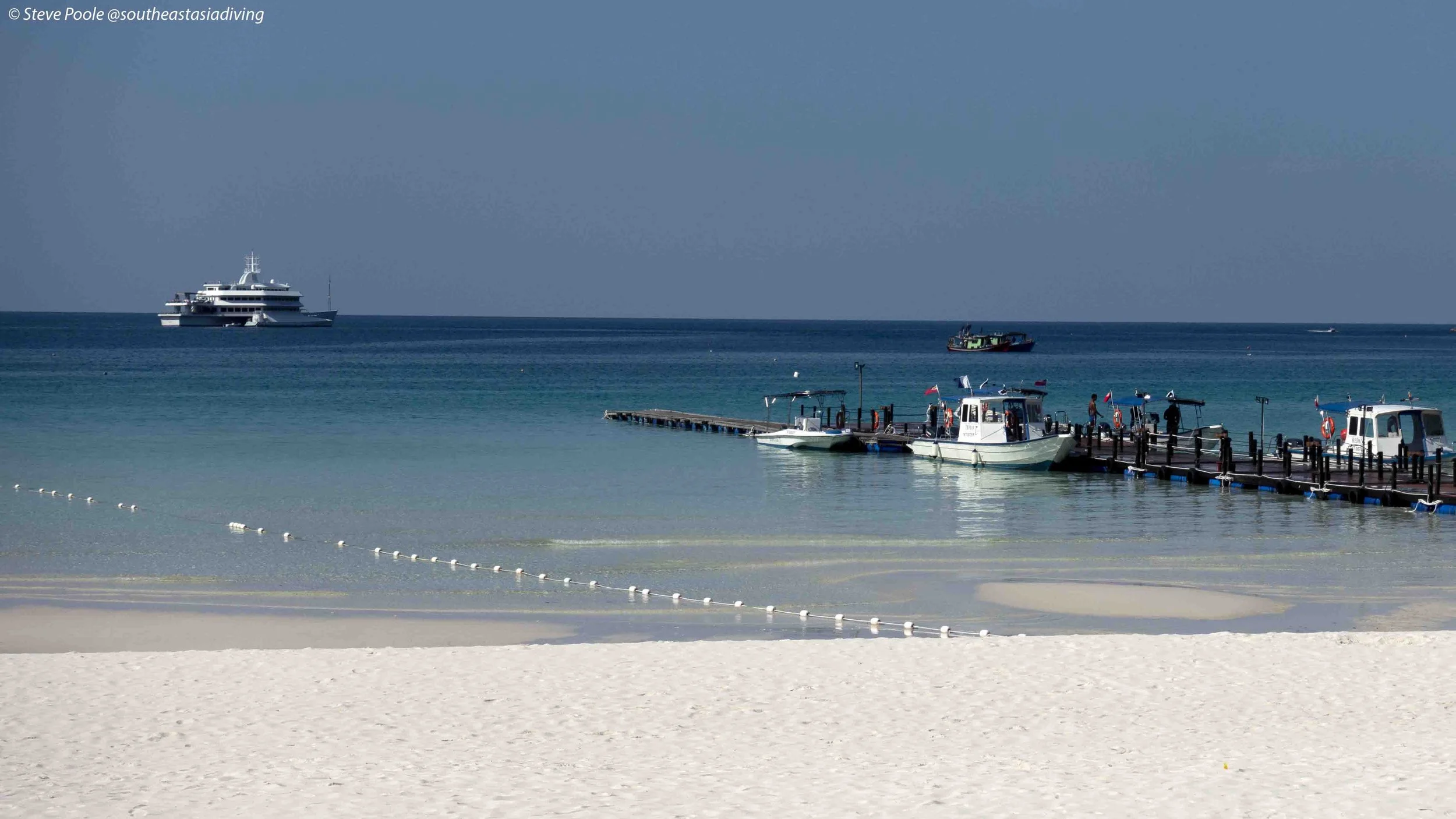
Even islands such as Redang in Malaysia are very remote
Many insurance problems don’t come from a lack of coverage — they come from assumptions. These are some of the most common misunderstandings divers have when planning trips in Southeast Asia.
“My travel insurance says scuba diving is covered.”
This is often true — but incomplete. Many policies include scuba diving only under specific conditions, such as limited depth, non-repetitive profiles, or “recreational diving under supervision.” Exclusions around liveaboards, technical profiles, or evacuation are frequently buried deeper in the policy wording.
In Southeast Asia, where dives are often repetitive and evacuation may involve boats and aircraft, these exclusions matter far more than divers expect.
“I only dive recreational depths, so I’m low risk.”
Most diving incidents occur within recreational limits. Depth alone doesn’t determine risk — repetitive dives, surface intervals, exertion, dehydration, currents, and ascent behavior all play a role.
Insurance exclusions tied solely to depth can create a false sense of security while overlooking the real drivers of diving injuries.
“I’m experienced and healthy.”
Experience reduces risk, but it doesn’t eliminate it. Decompression illness is probabilistic, not a reflection of skill or fitness. Many claims come from experienced divers who were diving conservatively and following their training.
Insurance exists to manage uncertainty, not mistakes.
“Dive insurance is only for technical divers.”
This is a common misconception. The majority of dive insurance claims come from recreational divers. Multi-day diving, liveaboards, and vacation dive schedules create exposure even at standard recreational depths.
Dive insurance is about environment and logistics, not dive complexity.
“Marine parks or reputable operators reduce my insurance needs.”
Well-run operators and protected areas reduce risk, but they don’t eliminate it. Currents, fatigue, dehydration, and individual physiology still apply. Insurance doesn’t replace good practices — it complements them.
“I’ll figure it out if something happens.”
In remote regions, decisions are made quickly. Evacuation routes, chamber access, and medical approvals often need to happen immediately. Having appropriate insurance in place ahead of time removes uncertainty during moments when clarity matters most.
Understanding these misunderstandings isn’t about being pessimistic. It’s about aligning expectations with reality — especially in a region where logistics amplify consequences when things don’t go to plan.
🔍 A Real-World Dive Incident: How Insurance Actually Activates
To understand why many Southeast Asia divers carry both travel insurance and dive insurance, it helps to look at how a real incident typically unfolds — not in theory, but in practice.
The Scenario
A diver is three days into a liveaboard trip in Indonesia. They’ve been diving conservatively, staying within recreational limits, and following the briefings. After a routine dive, they begin to experience joint pain and unusual fatigue later that evening. Nothing severe — but enough to raise concern.
The dive guide suspects a mild case of decompression illness and contacts emergency support.
Step 1: Immediate Assessment
Onboard oxygen is administered and diving is stopped. At this stage, there is no hospital, no chamber, and no definitive diagnosis — only suspicion. Time matters, and decisions need to be made quickly.
Dive insurance becomes critical here because it recognises diving-related symptoms immediately. There’s no debate about whether the activity itself is covered. Medical advice is provided, and next steps are coordinated.
Travel insurance typically does not engage at this point.
Step 2: Evacuation Logistics Begin
The nearest recompression chamber is not nearby. The diver must be transferred by speedboat to the closest island with an airstrip, then flown domestically to a larger city where chamber access is available.
This stage often involves:
Boat transfer from a remote location
Air evacuation or scheduled flights arranged urgently
Medical escorts or coordination with local facilities
Dive insurance is designed for this exact scenario. It handles approvals, coordination, and costs associated with evacuation and chamber access. This is often the most expensive part of the entire incident.
Standard travel insurance frequently excludes this stage, either because the incident occurred during scuba diving or because evacuation limits are exceeded.
Step 3: Chamber Treatment & Recovery
The diver undergoes recompression therapy over one or more days. Symptoms resolve fully, but diving is no longer an option for the remainder of the trip.
Dive insurance covers the chamber treatment and associated medical care.
At this point, travel insurance may re-enter the picture — but only for non-diving consequences.
Step 4: Trip Disruption & Return Home
Because the diver can no longer dive or continue the itinerary, flights need to be changed. Hotel nights may be added. The diver’s luggage may need to be rerouted, and additional accommodation arranged during recovery.
This is where travel insurance becomes useful:
Covering flight changes
Handling trip interruption claims
Reimbursing unused portions of the trip (depending on policy)
Dive insurance typically does not cover these travel-related losses.
The Takeaway
No single policy handled this incident from start to finish.
Dive insurance managed the medical reality: diagnosis, evacuation, and treatment.
Travel insurance managed the logistical fallout: flights, accommodation, and disruption.
In Southeast Asia, diving incidents rarely unfold as a single event. They unfold as a chain — and each link in that chain is handled by a different type of insurance.
This is why experienced divers in the region don’t think in terms of either/or. They think in terms of coverage continuity — making sure there are no gaps when timing, distance, and logistics all matter at once.
A Better Way to Think About Insurance
Instead of asking, “Which insurance should I get?”
A more useful question is, “What risks am I actually exposed to on this trip?”
If you’re:
Diving multiple days
Using liveaboards
Visiting remote locations
Traveling between countries
Carrying expensive dive or camera equipment
…then travel insurance and dive insurance are solving different problems.
A Personal Note
For what it’s worth, I carry both travel insurance and dive insurance on my own trips.
Thankfully, I’ve never had to use my dive insurance — and I hope it stays that way. But my travel insurance has come in handy more than once, particularly for cancelled trips, disrupted dive plans, and lost or delayed luggage.
Those experiences are part of what shaped how I think about insurance.
Travel insurance handled the practical realities of getting home, rebooking flights, and replacing gear. Dive insurance, meanwhile, has always been there quietly in the background — covering the scenarios I never want to experience, but don’t want to be unprepared for either.
That combination has given me peace of mind without overlap or confusion, especially when diving in regions like Southeast Asia where logistics can change quickly.
🧾 Final Thoughts: Insurance Is About Continuity, Not Caution
Planning a dive trip to Southeast Asia means thinking beyond flights and accommodation. The region’s best diving — whether along the walls of Sipadan, the currents of Komodo, or the macro-rich reefs of Anilao — often takes place far from hospitals, involves repetitive diving over multiple days, and depends on logistics that don’t fit neatly into standard travel insurance assumptions.
Travel insurance and dive insurance weren’t designed to compete with one another. They were designed to solve different problems. Travel insurance protects the structure of your trip when plans change. Dive insurance protects you when something goes wrong underwater and rapid medical coordination is required.
That distinction matters whether you’re traveling light with a simple dive setup or transporting a full underwater photography system across multiple borders. Divers investing in camera bodies, housings, strobes, and specialist equipment often plan carefully for gear protection and transport — but the medical and evacuation side of risk deserves the same level of attention.
Most divers who carry both types of coverage aren’t expecting problems. They’re planning for continuity — making sure that if an incident occurs, there’s no confusion about who coordinates evacuation, covers recompression treatment, manages medical care, or supports the practical reality of getting home afterward.
In Southeast Asia, where distance and remoteness amplify consequences, insurance becomes less about pessimism and more about realism. The goal isn’t to anticipate failure — it’s to remove uncertainty so decisions can be made quickly and correctly if needed.
The right coverage doesn’t make a trip risk-free. But it does make it manageable.
❓ Frequently Asked Questions
Do I really need dive insurance if I already have travel insurance?
In most cases, yes. Travel insurance often excludes or limits evacuation, recompression, and diving-related treatment — the most significant costs in a diving incident.
Is dive insurance enough on its own?
Usually not. Dive insurance rarely covers trip cancellation, delays, lost luggage, or unused accommodation following an incident.
What if my travel insurance says scuba diving is covered?
That wording often comes with depth limits, exclusions for liveaboards or repetitive dives, or caps on evacuation. The fine print matters.
Is dive insurance only necessary for technical divers?
No. Most claims come from recreational divers on multi-day dive trips.
What about liveaboard diving in Southeast Asia?
Liveaboards increase evacuation complexity significantly. Dive insurance becomes especially important in these settings.
Does dive insurance cover snorkeling or freediving?
Some policies do, some don’t. Coverage varies and should always be checked before travel.
Is insurance really necessary for short dive trips?
Short trips can still involve repetitive diving or remote locations. Risk isn’t defined by trip length alone.