🌊 Jacques Cousteau: The Man Who Changed How We Explore the Ocean
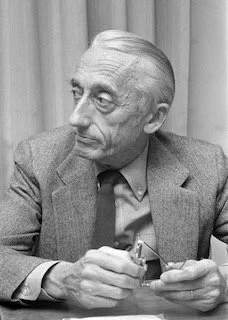
Long before underwater photography was commonplace, before dive computers and liveaboards, and before marine conservation became part of everyday diving conversations, there was Jacques Cousteau. At a time when the ocean remained largely unseen and misunderstood, he helped lift the surface veil and reveal an entirely new world beneath it.
Cousteau didn’t just explore the ocean — he introduced it to the world. Through groundbreaking technology, powerful storytelling, and an unrelenting curiosity for what lay beneath the surface, he transformed the sea from an unreachable frontier into something people could see, experience, and begin to understand. For the first time, coral reefs, sharks, and underwater landscapes were no longer abstract ideas or scientific illustrations, but living, breathing ecosystems captured on film.
For generations of divers, filmmakers, and ocean advocates, Cousteau was the first window into life underwater. His work inspired people who would later become recreational divers, marine biologists, underwater photographers, and conservationists. He shaped not only how we dive, but how we document the sea, how we talk about it, and how we frame our responsibility toward marine environments.
Today, as divers grapple with reef decline, overfishing, and the accelerating impacts of climate change, Cousteau’s legacy feels more relevant than ever. His journey — from explorer to conservationist — mirrors the evolution of modern diving itself. What began as discovery gradually became understanding, and ultimately, a call to protect what had once been taken for granted.
Looking back at Cousteau’s life and work is not an exercise in nostalgia. It is an opportunity to reflect on how far diving has come, how our relationship with the ocean has changed, and why the lessons he learned underwater still matter profoundly today.
🌍 Who Was Jacques Cousteau?
Jacques Cousteau was a French naval officer, explorer, filmmaker, inventor, and conservationist — but more than any single title, he was a storyteller of the ocean. Born in 1910 in France, Cousteau’s early life offered little indication that he would go on to redefine humanity’s relationship with the sea. He was not raised as a naturalist or scientist, nor did he initially set out to explore the underwater world.
After joining the French Navy, Cousteau’s early ambitions were focused on aviation. He trained as a pilot and envisioned a career in the air rather than beneath the waves. That path changed abruptly when a serious car accident in his early twenties left him with broken arms and a lengthy recovery. During rehabilitation, doctors encouraged swimming as part of his physical therapy — a suggestion that quietly altered the direction of his life.
Swimming soon led to free diving, and free diving led to fascination. In the water, Cousteau discovered a sense of freedom and focus that contrasted sharply with life above the surface. The ocean became both a physical refuge and an intellectual challenge, offering a world that was still largely unexplored, unseen, and undocumented.
At the time, the underwater realm was inaccessible to most people. Exploration was limited to brief breath-hold dives or restrictive surface-supplied equipment. For Cousteau, this limitation wasn’t a barrier — it was an invitation. He wasn’t simply interested in visiting this hidden environment; he wanted to understand it, observe it over time, and find ways to share it with others.
Cousteau’s curiosity extended beyond discovery alone. He believed that if people could see the ocean as he did — alive with movement, complexity, and beauty — they would care about its future. This belief would later shape every aspect of his work, from technological innovation to filmmaking and advocacy.
This rare combination of explorer, inventor, and communicator ultimately defined Jacques Cousteau’s place in history. He didn’t just go underwater — he brought the rest of the world with him, changing how we perceive the ocean and our role within it.
⚙️ The Invention That Changed Diving Forever
efore modern scuba equipment, underwater exploration was limited, restrictive, and physically demanding. Divers relied on breath-hold diving, which allowed only fleeting glimpses beneath the surface, or on heavy surface-supplied systems that tethered them to air hoses and rigid helmets. These early setups limited depth, mobility, and observation time, making sustained exploration of the underwater world nearly impossible.
In the early 1940s, Jacques Cousteau, working alongside French engineer Émile Gagnan, set out to solve a fundamental problem: how to allow a diver to breathe underwater freely, safely, and independently. The result was the Aqua-Lung — the first practical, self-contained, open-circuit scuba system.
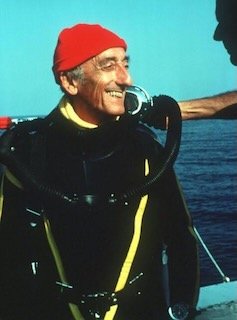
Jacques Cousteau pioneered the Aqua Lung
The breakthrough lay in the demand regulator. Rather than delivering a constant flow of air, the regulator supplied air only when the diver inhaled, responding to changes in pressure as depth increased. This made the system far more efficient and reliable, while also allowing divers to move naturally through the water without being anchored to the surface. For the first time, humans could descend, hover, explore, and observe marine life for extended periods — untethered and unencumbered.
Early versions of the Aqua-Lung were tested in real-world conditions, refined through trial and error, and adapted for deeper and longer dives. These early experiments weren’t just technical achievements; they fundamentally changed what was possible underwater. Divers could now remain at depth long enough to observe animal behavior, study reef structure, and document underwater environments as living systems rather than fleeting snapshots.
The impact was immediate and far-reaching. What had once been the domain of military, commercial, and experimental diving became accessible to explorers, scientists, and eventually recreational divers. The Aqua-Lung opened the door to underwater photography, filmmaking, biological research, and the recreational dive industry itself.
Every recreational dive today traces its roots back to this moment. The Aqua-Lung didn’t just change how people dived — it changed who could dive. By granting ordinary people access to the underwater world, Cousteau and Gagnan transformed humanity’s relationship with the ocean, turning it from a distant mystery into a place that could be visited, understood, and ultimately protected.
🎥 Bringing the Ocean to the World
Access alone wasn’t enough. Jacques Cousteau understood that people protect what they can see, understand, and emotionally connect with. Long before the internet, action cameras, or social media, he recognized the power of film to bridge the gap between the surface world and the depths below.
In 1956, that vision reached a turning point with the release of The Silent World. Shot largely underwater using pioneering filming techniques, the documentary introduced global audiences to coral reefs, sharks, and marine life in motion — not as static specimens or illustrations, but as dynamic, interconnected systems. At a time when most people had never seen a reef, the film offered an immersive window into an entirely unknown world.
The impact was immediate. The Silent World won both the Palme d’Or at the Cannes Film Festival and an Academy Award, achievements that were unprecedented for a documentary — let alone one filmed underwater. More importantly, it proved that the ocean could captivate mainstream audiences, not just scientists or explorers.
Cousteau built on this success through television. Series such as The Undersea World of Jacques Cousteau brought ocean exploration into living rooms around the world on a regular basis. Viewers followed expeditions aboard the research vessel Calypso, traveling to remote reefs, shipwrecks, polar seas, and deep-water environments that had previously existed only in imagination.
What set Cousteau’s films apart was their tone. They weren’t instructional manuals or purely scientific records — they were stories. The narration invited curiosity. The pacing encouraged wonder. And the visuals emphasized scale, beauty, and movement rather than danger or conquest. Over time, this storytelling approach began to shift how audiences perceived the ocean — from an endless resource to a fragile, living system.
As his career progressed, Cousteau’s films increasingly reflected concern as well as awe. Pollution, declining fish populations, and damaged reefs began to feature alongside discovery. Without preaching, his work gently introduced the idea that what people were seeing on screen was not guaranteed to last.
For countless divers, photographers, and conservationists, these films were a first spark — a moment of fascination that eventually turned into a lifelong connection with the sea. By making the invisible visible, Cousteau didn’t just document the ocean. He changed how humanity related to it, laying the emotional foundation for modern marine conservation long before the term became commonplace.
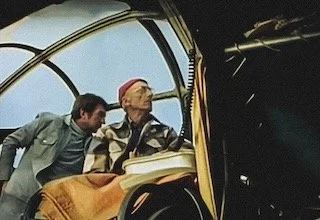
🌱 From Explorer to Conservationist
As decades passed, Jacques Cousteau began to notice troubling changes beneath the surface. Reefs that once appeared untouched showed signs of damage. Fish populations declined. Pollution, plastic, and industrial runoff became visible — even in places that had previously felt remote and resilient. The ocean he had helped reveal to the world was changing, and not for the better.
By the 1970s and 1980s, Cousteau’s perspective had shifted decisively. Exploration alone was no longer enough. He increasingly used his platform to warn about overfishing, habitat destruction, and the illusion that the ocean was too vast to be harmed. His films, lectures, and public appearances began to carry a stronger message: without protection, discovery becomes loss.
This transition was not sudden, but it was unmistakable. Later projects placed greater emphasis on environmental threats and humanity’s role in creating them. Cousteau spoke openly about the damage he was witnessing and argued that technological progress and ocean access had to be matched with restraint, responsibility, and long-term thinking.
In doing so, he helped shape some of the earliest public conversations around marine protected areas, sustainable ocean use, and the need for international cooperation in conservation. These ideas, now central to modern diving and marine science, were far from mainstream at the time.
This evolution mirrors the journey many divers experience today — moving from initial fascination, to deeper understanding, and eventually to responsibility. What begins as awe often grows into concern, and concern into a desire to protect what we value.
Cousteau’s legacy is not just that he explored the ocean, but that he changed his relationship with it as his understanding grew. His shift from explorer to conservationist serves as a reminder that caring for the ocean is not a fixed position — it is a process shaped by experience, reflection, and the willingness to adapt when the evidence demands it.
🗺️ Discoveries & Favourite Dive Sites
Throughout his career, Jacques Cousteau explored some of the world’s most iconic underwater environments, helping introduce entire types of dive sites — not just individual locations — to a global audience. His work revealed the ocean as a mosaic of interconnected ecosystems, shaped by geography, currents, and time.
Closer to home, the Mediterranean Sea played a central role in Cousteau’s story. It was here that he refined his diving and filming techniques, documenting both the sea’s natural beauty and, increasingly, the impacts of pollution and coastal development. These early observations would later shape his environmental warnings.
The Red Sea featured prominently in Cousteau’s expeditions and films, with its clear water, dramatic walls, and thriving coral reefs becoming some of the first widely seen images of tropical reef diving. For many viewers, these scenes defined what a “healthy reef” looked like.
Cousteau also spent significant time exploring the Indian and Pacific Oceans, including regions within what we now recognize as the Coral Triangle. His expeditions through Southeast Asia helped bring international attention to an area of extraordinary marine biodiversity — long before it became a focal point of modern dive tourism.
One of the most notable sites associated with Cousteau in the region is Sipadan. Cousteau visited Sipadan in the late 1980s and famously described it as an untouched work of art, helping introduce the island’s dramatic drop-offs and dense fish life to the wider world. His visit played a key role in placing Sipadan on the global diving map and later supported arguments for its protection.
Cousteau’s work also extended across Indonesia, where he explored and filmed reef systems in areas such as Komodo National Park, the Banda Sea, and parts of eastern Indonesia that are now world-renowned for biodiversity, including regions that would later become associated with Raja Ampat. These expeditions showcased reefs shaped by strong currents, complex reef structures, and abundant marine life — characteristics that define Southeast Asia’s top dive destinations today.
Rather than focusing on individual “bucket-list” sites, Cousteau revealed the ecological patterns that make places like Southeast Asia so special: nutrient-rich currents, complex reef architecture, and intact food chains that support large fish and predators. His work helped establish the idea that reefs are living systems, not isolated attractions.
Cousteau also ventured far beyond the tropics, leading expeditions into temperate and polar waters, documenting kelp forests, cold-water reefs, and ice-covered seas. By doing so, he expanded the global understanding of underwater exploration and reinforced the idea that all marine environments — warm or cold — are interconnected and worthy of protection.
Rather than being remembered for a single signature site, Cousteau’s true legacy lies in revealing the diversity of the ocean itself. Many of the Southeast Asian locations he explored are now among the world’s most celebrated dive destinations — a testament to the power of his storytelling, and a reminder of the responsibility that comes once a place is known.
🤿 Cousteau’s Legacy in Modern Diving
Modern recreational diving reflects the full arc of Jacques Cousteau’s journey. What began as exploration for the sake of discovery has evolved into a practice that increasingly values observation over extraction, responsibility over novelty, and conservation over conquest.
Today’s divers enter the water with tools and access that Cousteau helped make possible — but with a mindset that mirrors his later years. Good buoyancy, minimal contact, and situational awareness are no longer just technical skills; they are ethical standards. The goal is not to disturb or dominate the underwater world, but to move through it with respect.
Cousteau’s influence is visible throughout modern diving culture. The global expansion of marine protected areas and no-take zones reflects his belief that some places must be left largely untouched to remain healthy. Many of today’s most celebrated dive destinations — including reefs in Southeast Asia — owe their long-term survival to protection frameworks that align closely with the ideas Cousteau helped popularize.
Conservation-focused dive tourism is another clear extension of his legacy. Liveaboards and dive operators increasingly emphasize small groups, site rotation, and education alongside exploration. Divers are encouraged to understand where they are diving, why a site matters, and how their presence can either support or undermine reef health.
Cousteau also laid the foundation for ethical wildlife interaction standards. Practices such as no-touch policies, passive observation of sharks and large marine life, and maintaining respectful distance from animals reflect a shift away from staged encounters and toward authentic behavior — something Cousteau himself increasingly advocated as his understanding deepened.
Perhaps most visibly, Cousteau’s legacy lives on through storytelling. Underwater photography, film, writing, and digital media continue the tradition he pioneered: using imagery and narrative to connect people emotionally to the ocean. While technology has changed dramatically, the purpose remains the same — to inspire curiosity, empathy, and protection through shared experience.
At the heart of this legacy is the idea that divers are more than visitors. They are witnesses. People who have seen healthy reefs, functioning ecosystems, and marine life behaving naturally carry a responsibility to speak up for what they’ve experienced. This concept — that divers can act as ambassadors for the ocean — is a direct extension of Cousteau’s philosophy.
In this way, modern diving doesn’t just inherit Cousteau’s technology or techniques. It carries forward his evolution — from access, to understanding, to stewardship — shaping a diving culture that recognizes the ocean not as a frontier to conquer, but as a living system worth protecting.
⚖️ Criticism & Context
Some of Jacques Cousteau’s early practices, when viewed through a modern conservation lens, raise valid ethical questions. Handling marine life, staging interactions for film, or intervening directly in animal behavior were once common practices in exploration and early wildlife documentation — but today are widely considered unacceptable.
It’s important to place these actions within their historical context. During much of Cousteau’s early career, environmental science was still in its infancy, and the ocean was broadly perceived as vast, resilient, and effectively inexhaustible. Concepts such as long-term ecosystem impact, animal stress, and cumulative human pressure were not yet well understood.
What ultimately distinguishes Cousteau is not that his early work was flawless, but that his perspective evolved. As his experience and understanding deepened, he became increasingly vocal about the damage he was witnessing — from pollution and overfishing to habitat loss. He openly acknowledged humanity’s impact on the ocean and shifted his focus from exploration alone to protection and advocacy.
This willingness to adapt and speak out is what defines Cousteau’s legacy today. Rather than being frozen in time, his career reflects a process of learning, reflection, and change — a reminder that conservation is not about perfection, but about progression.
🌍 What Today’s Divers Can Learn
The life and work of Jacques Cousteau offer enduring lessons for modern divers — not as rigid rules, but as guiding principles shaped by experience, curiosity, and change.
🌊 Curiosity Should Lead to Understanding
Curiosity may be what draws us underwater, but understanding is what gives those experiences meaning. Cousteau’s journey shows that simply seeing marine life is only the beginning. Learning about behavior, ecosystems, and interconnections deepens every dive and transforms fleeting encounters into lasting insight.
⚖️ Access Creates Responsibility
Modern divers enjoy unprecedented access to reefs, walls, wrecks, and open ocean environments — access made possible in large part by Cousteau’s innovations. With that access comes responsibility: to dive carefully, minimize impact, respect boundaries, and recognize that presence alone can shape an environment.
📸 Storytelling Shapes Perception
Cousteau understood that images and stories influence how people feel about the ocean. Today’s divers carry that same power, whether through photography, video, writing, or conversation. What we choose to share — and how we frame it — can replace fear with understanding and indifference with appreciation.
🌱 Learning Never Stops
Cousteau’s willingness to change his views as knowledge grew is one of his most important lessons. Diving ethics, conservation science, and best practices continue to evolve, and responsible divers evolve with them. Staying curious and open to learning is as important as any certification.
🗣️ Advocacy Doesn’t Require Perfection
You don’t need to be an expert, filmmaker, or activist to advocate for the ocean. Cousteau himself was not defined by perfection, but by progression. Speaking up, asking questions, supporting responsible operators, and sharing accurate information all matter — even when done quietly.
🧘 Presence Matters More Than Performance
Perhaps the most overlooked lesson is the value of simply being present underwater. Slowing down, observing carefully, and appreciating the experience — rather than chasing encounters — leads to better diving and deeper connection. Presence fosters respect, and respect fosters protection.
Together, these lessons remind us that diving is not just about where we go, but how we show up underwater.
✨ Final Thoughts: Why Jacques Cousteau Still Matters
Jacques Cousteau didn’t just teach the world how to explore the ocean — he helped teach us why it’s worth protecting. He revealed a hidden world, inspired generations to care about it, and ultimately warned that access without responsibility comes at a cost.
His legacy lives on in every careful dive, every respectful wildlife encounter, and every story shared with intention. In a time of rapid ocean change, Cousteau’s message feels especially urgent: curiosity must be matched with care, and exploration must be balanced with stewardship.
Cousteau showed us what the ocean is capable of — vibrant, complex, and alive. He also showed us what we stand to lose if we fail to protect it. For modern divers, honoring his legacy doesn’t mean retracing his expeditions. It means carrying his evolution forward — diving thoughtfully, learning continuously, and advocating for the ocean with humility and purpose.
In that sense, every mindful dive becomes part of the story he began — one that is still being written beneath the surface.
Frequently Asked Questions (FAQ)
Why is Jacques Cousteau so important to scuba diving?
He co-developed the Aqua-Lung, which made modern, open-circuit scuba diving possible. This invention allowed divers to breathe underwater freely and safely, transforming diving from a niche, experimental activity into something accessible to explorers, scientists, and eventually recreational divers around the world.
Was Cousteau always a conservationist?
No. Cousteau began his career focused on exploration and discovery. As his experience grew and he witnessed environmental damage firsthand, his views evolved. In his later years, conservation and protection became central to his work and public messaging.
Are his early practices ethical by today’s standards?
Some of Cousteau’s early practices — such as handling marine life or staging interactions for film — would not align with modern diving ethics. However, these actions reflected the scientific norms and understanding of the time. Importantly, Cousteau later acknowledged the need for greater restraint and protection.
How did Jacques Cousteau influence underwater photography and filmmaking?
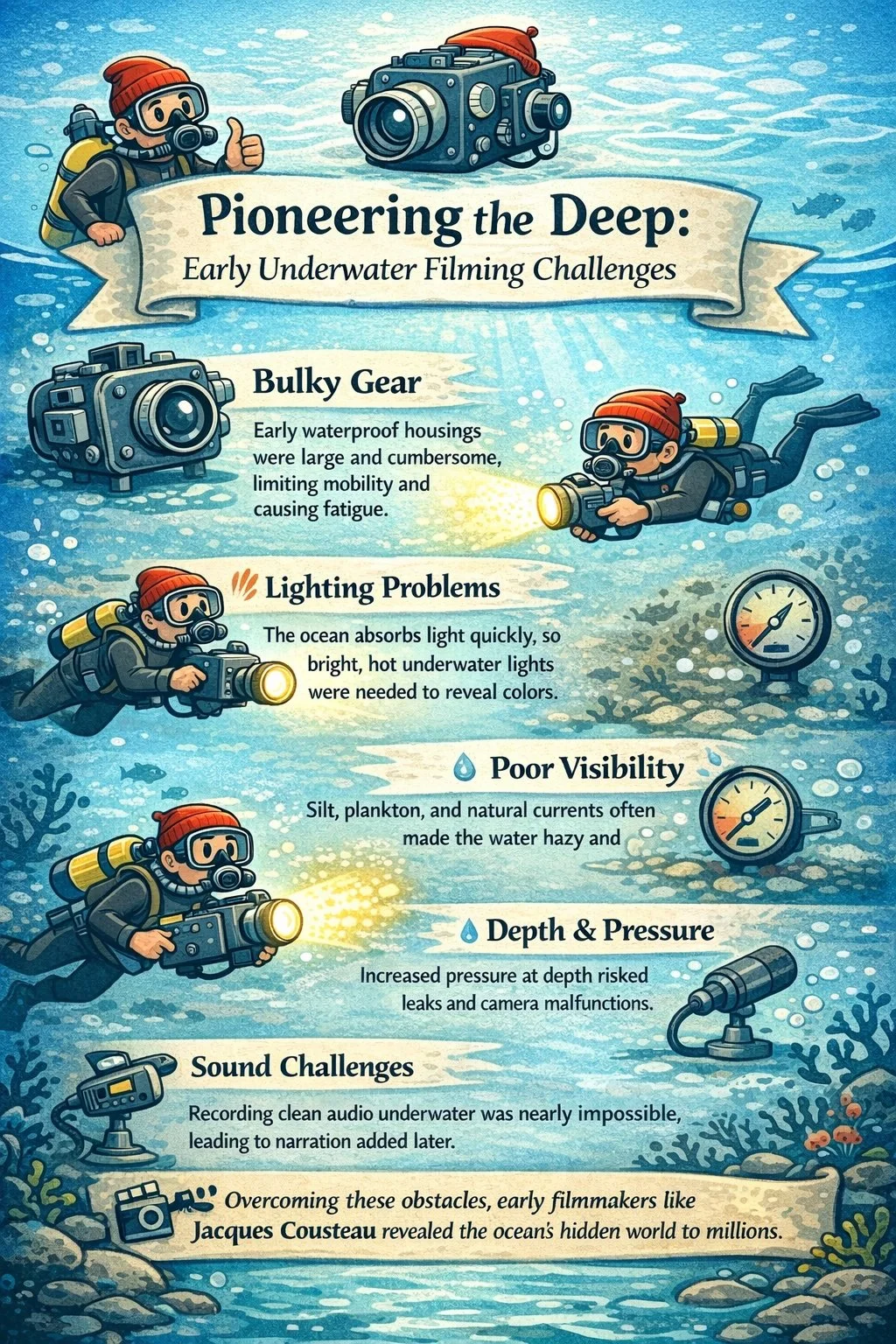
Cousteau pioneered underwater filmmaking at a time when the technology barely existed. He helped develop filming equipment, lighting techniques, and narrative styles that allowed audiences to see the ocean as a living world. His work showed that images and stories could inspire curiosity, empathy, and conservation.
Did Jacques Cousteau explore Southeast Asia?
Yes. Cousteau explored and filmed extensively in the Indian and Pacific Oceans, including parts of Southeast Asia. He famously visited Sipadan and explored reef systems in Indonesia and surrounding waters, helping bring international attention to the region’s extraordinary marine biodiversity.
What impact did Cousteau have on marine conservation?
Cousteau played a major role in shaping early public awareness of ocean pollution, overfishing, and habitat loss. His advocacy helped influence conversations around marine protected areas, sustainable ocean use, and the idea that the sea is not inexhaustible.
What can modern divers take from Cousteau’s legacy?
Dive with curiosity, respect the ocean, continue learning, and understand that access creates responsibility. Cousteau’s journey reminds divers that appreciation often leads to stewardship — and that even small actions and conversations can make a difference.
Is Jacques Cousteau still relevant today?
Very much so. Many of the challenges Cousteau warned about — reef degradation, pollution, declining fish populations — are even more pressing today. His evolution from explorer to conservationist mirrors the path many modern divers follow and remains highly relevant in today’s changing ocean.