🔍📸 Macro vs Wide-Angle Underwater Photography in Southeast Asia
What to Shoot, When to Switch, and Where Each Style Truly Shines
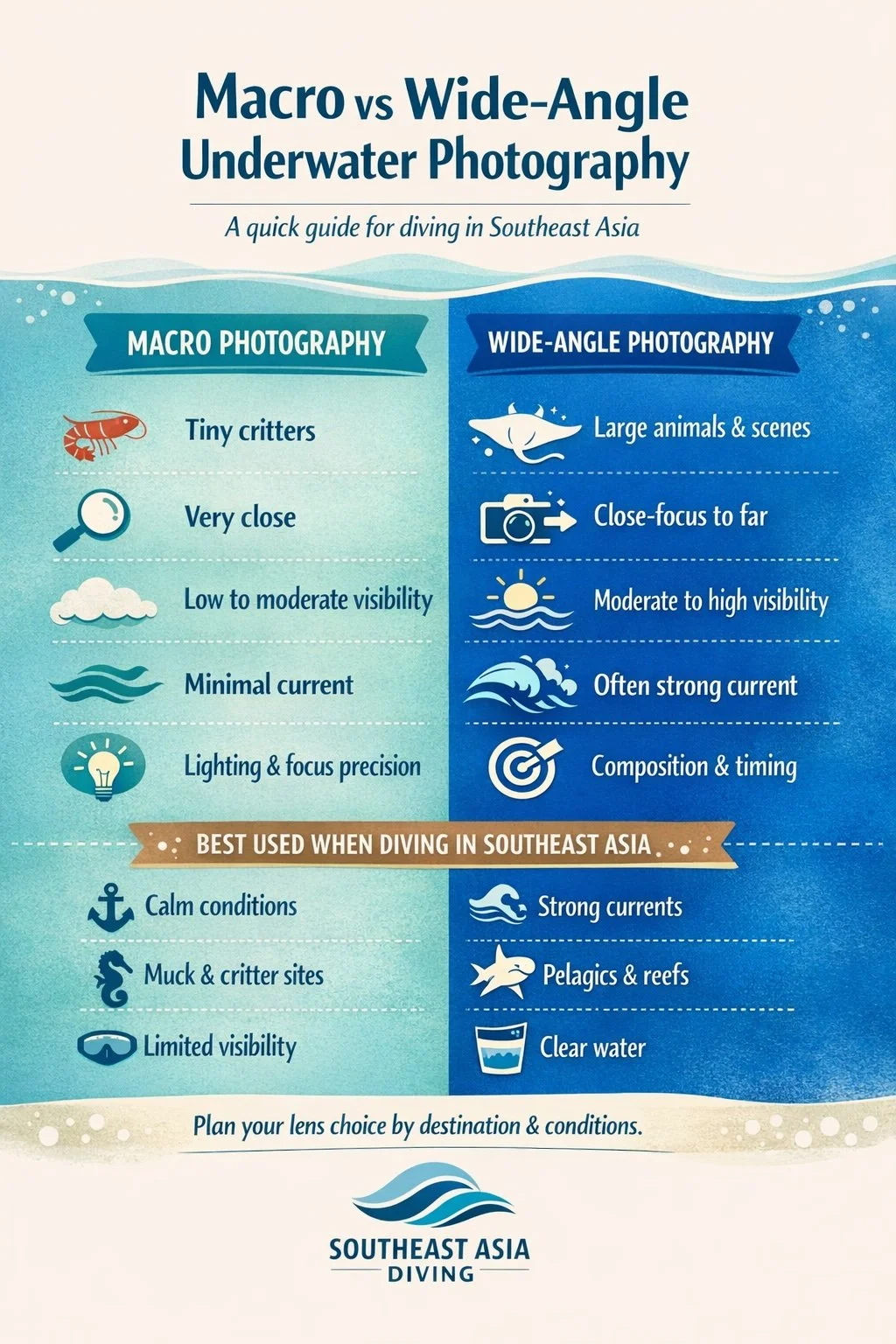
Southeast Asia is one of the most diverse underwater photography regions in the world, offering an extraordinary range of subjects for both macro and wide-angle underwater photography. In a single destination — or even on the same trip — divers can photograph tiny, intricate marine life on calm, shallow dives and large pelagic animals or expansive reefscapes on high-energy sites nearby. This unique variety is what makes Southeast Asia such a compelling place for underwater photographers, but it also makes lens selection far more challenging.
From nudibranchs camouflaged in volcanic sand to manta rays gliding above coral pinnacles, the region rewards photographers who understand how to adapt their shooting style to changing conditions. Unlike many parts of the world that clearly favor one photographic approach, Southeast Asia consistently delivers opportunities for both macro and wide-angle imagery, often within the same itinerary.
For underwater photographers, this creates a familiar question: macro or wide-angle? Choosing the right setup isn’t about which style is better, but about selecting the approach that best matches the destination, dive conditions, and expected subjects. Visibility, current strength, and site topography all play a major role in determining which lens will perform best underwater.
Understanding the strengths and limitations of macro and wide-angle photography is essential for getting consistent results in Southeast Asia. Making the right choice can mean the difference between coming home with sharply lit, well-composed images — or realizing mid-dive that the lens you packed isn’t suited to what’s in front of you.
In this guide, we’ll break down the key differences between macro and wide-angle underwater photography, explain where each style works best across Southeast Asia, and help you make smarter lens choices when planning dive trips. Whether you’re photographing rare critters on muck dives or framing large animals against dramatic reef scenery, matching your photography style to the environment is the key to stronger images and a more successful underwater photography experience.
At their core, macro and wide-angle underwater photography serve very different purposes. Macro photography is about slowing down and focusing on the smallest details — textures, patterns, and behaviors that often go unnoticed. Wide-angle photography, on the other hand, is about scale and context, capturing the relationship between marine life and the surrounding reef, wreck, or open water. In Southeast Asia, where dive conditions and subjects can change dramatically from site to site, understanding these fundamental differences is essential. Knowing when to prioritize detail over scale — and vice versa — allows photographers to adapt their approach and make the most of every dive.
🔬 What Is Macro Underwater Photography?
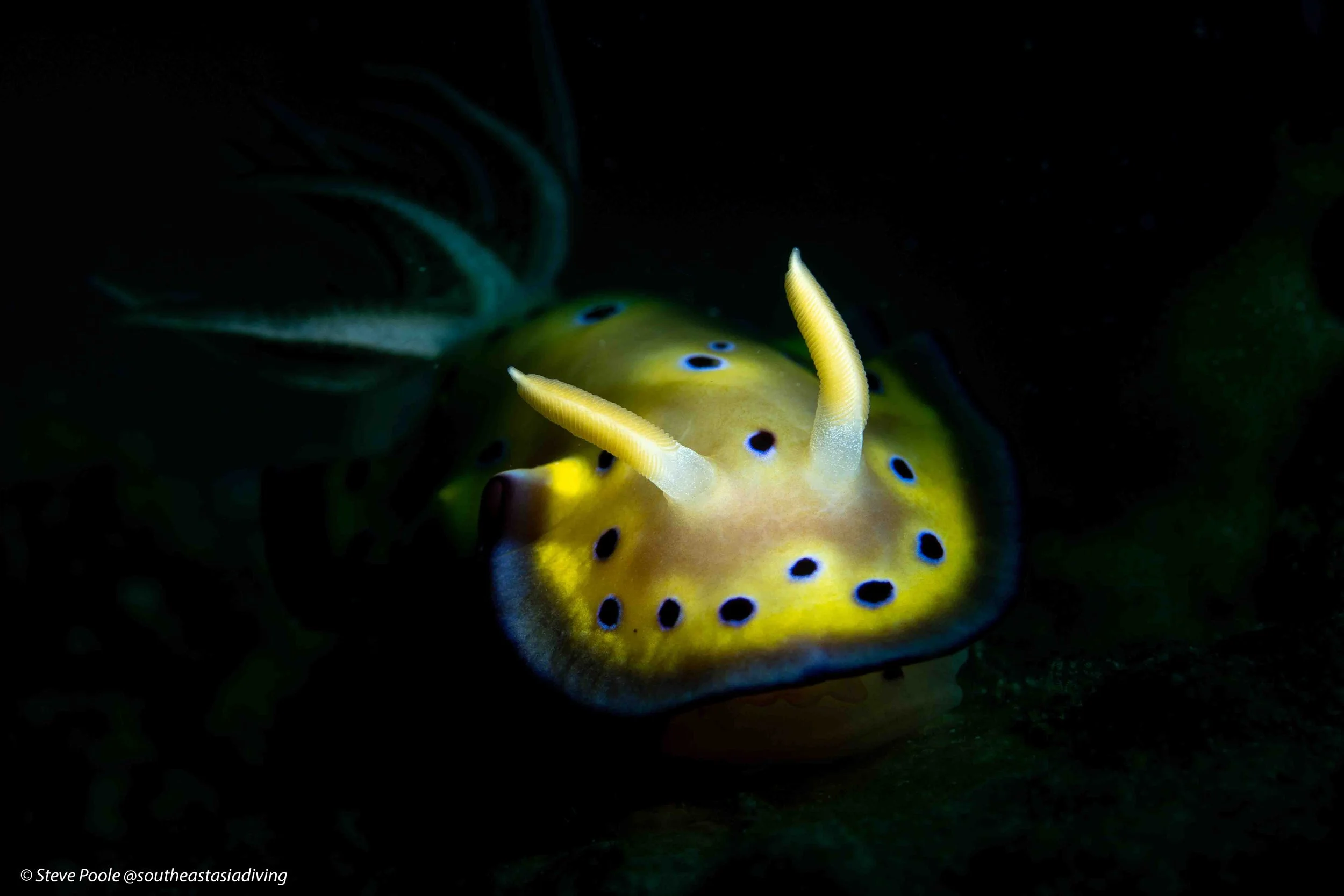
Nudibranchs are a classic macro photography subject
Macro underwater photography focuses on small subjects photographed at very close range, allowing divers to capture fine details, textures, and behaviors that are often invisible during a normal dive. Using dedicated macro lenses or wet diopters, photographers can isolate tiny marine life and create sharp, intimate images of creatures that may only be a few centimeters long — or smaller.
Unlike wide-angle photography, which emphasizes scale and scenery, macro photography is about precision and patience. Success depends on careful buoyancy control, accurate focus, and thoughtful lighting, often while hovering motionless just above the seabed. For many photographers, macro diving becomes a slower, more deliberate experience that rewards observation and attention to detail.
Why Macro Photography Thrives in Southeast Asia
Southeast Asia is widely regarded as the macro diving capital of the world, thanks to a rare combination of biodiversity, geology, and dive conditions. Volcanic sand slopes, sheltered bays, and nutrient-rich waters create ideal habitats for small, unusual marine species — many of which are found nowhere else.
Macro photography performs especially well in Southeast Asia because many sites offer calm conditions, minimal current, and manageable depths, allowing photographers to take their time with each subject. Even in areas with lower visibility, macro shooters can still produce excellent images since close focusing distances reduce the impact of water clarity.
Shallow, protected dive sites also make it easier to spend extended time with a subject, observe behavior, and refine composition without the pressure of depth or strong currents.
Typical Macro Subjects in Southeast Asia
Macro dives in Southeast Asia are defined by diversity and surprise. Common subjects include colorful nudibranchs, perfectly camouflaged frogfish, and delicate pygmy seahorses clinging to soft corals. Ghost pipefish, often mistaken for drifting debris, are another favorite, along with a wide range of shrimp, crabs, and other crustaceans hiding in the sand or reef structure.
Many of these animals rely on camouflage rather than movement, which makes macro photography as much about searching and spotting as it is about shooting.
Best Macro Diving Destinations in Southeast Asia
Some destinations have built a global reputation specifically for macro underwater photography. Anilao is known for its extraordinary critter density and year-round conditions, while Lembeh Strait is famous for muck diving and rare species. Ambon offers unique endemic critters, while Tulamben combines easy shore diving with excellent macro opportunities. Dauin rounds out the list with black-sand slopes rich in small marine life.
These destinations reward slow diving, careful observation, and refined technique, making them ideal for photographers who enjoy uncovering the hidden side of the underwater world.
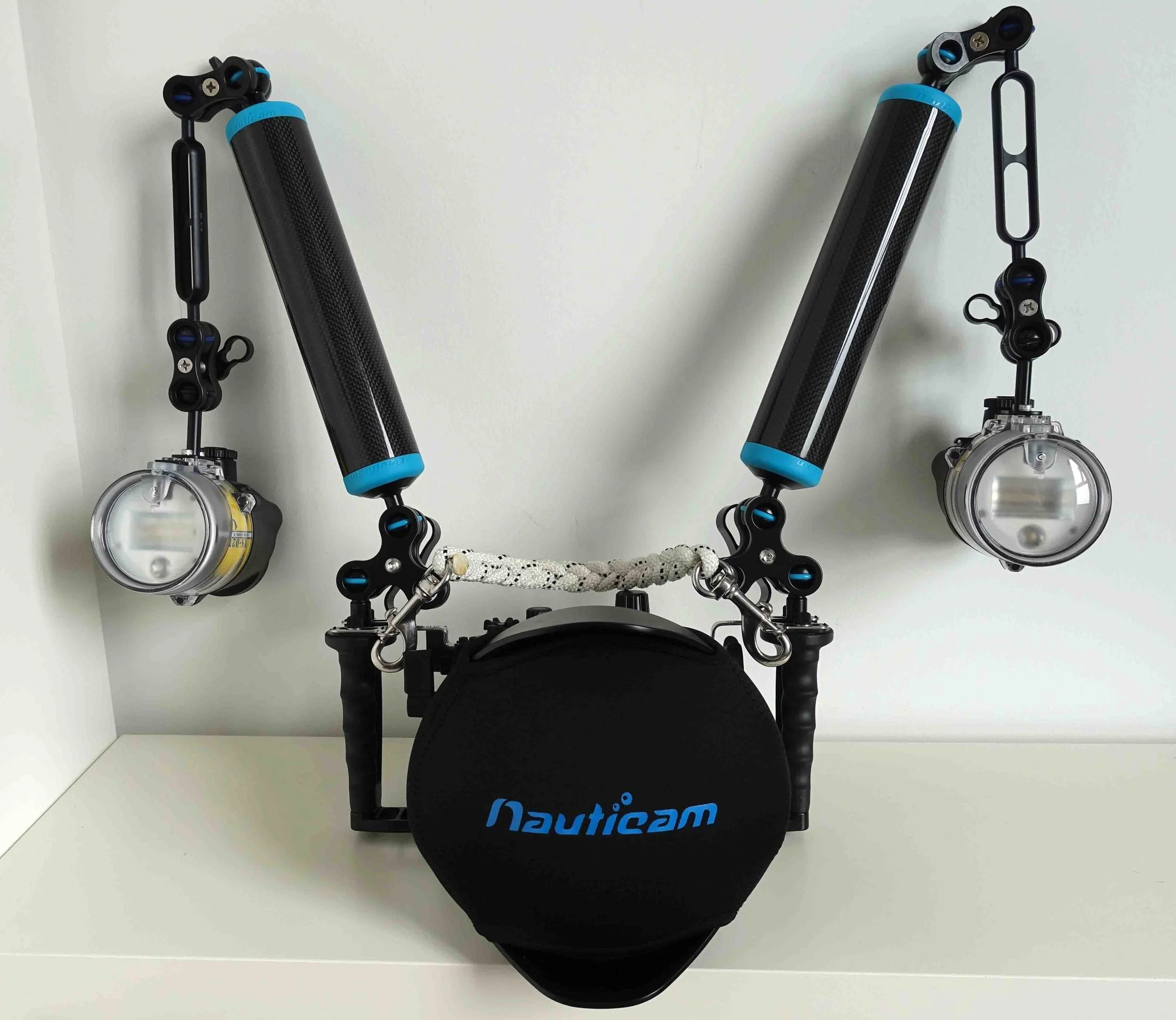
A typical Wide Angle Set Up with Dome Port and Strobes
🌊 What Is Wide-Angle Underwater Photography?
Wide-angle underwater photography is designed to capture large subjects and expansive scenes, emphasizing scale, movement, and the relationship between marine life and its environment. Using fisheye or rectilinear wide-angle lenses, photographers can include both the main subject and the surrounding reef, wreck, or open water in a single, immersive frame.
Unlike macro photography, which isolates small details, wide-angle photography tells a broader visual story. It often involves shooting from farther back, anticipating animal movement, and carefully composing the frame to balance foreground, background, and available light. Strong buoyancy control and situational awareness are essential, particularly in dynamic conditions.
Why Wide-Angle Photography Shines in Southeast Asia
Southeast Asia offers some of the most rewarding wide-angle photography opportunities in the world, thanks to its healthy coral reefs, nutrient-rich currents, and seasonal presence of large pelagic species. These conditions create dramatic underwater scenes filled with color, motion, and life.
Wide-angle photography performs best in Southeast Asia when visibility is high and currents bring nutrients — and marine life — into the reef system. While currents can make shooting more challenging, they are often responsible for the very encounters wide-angle photographers hope for, including schooling fish, manta rays, and sharks.
Many of the region’s most iconic wide-angle dive sites feature steep walls, coral pinnacles, and offshore seamounts, all of which provide natural structure and depth that enhance composition and sense of scale.
Common Wide-Angle Subjects in Southeast Asia
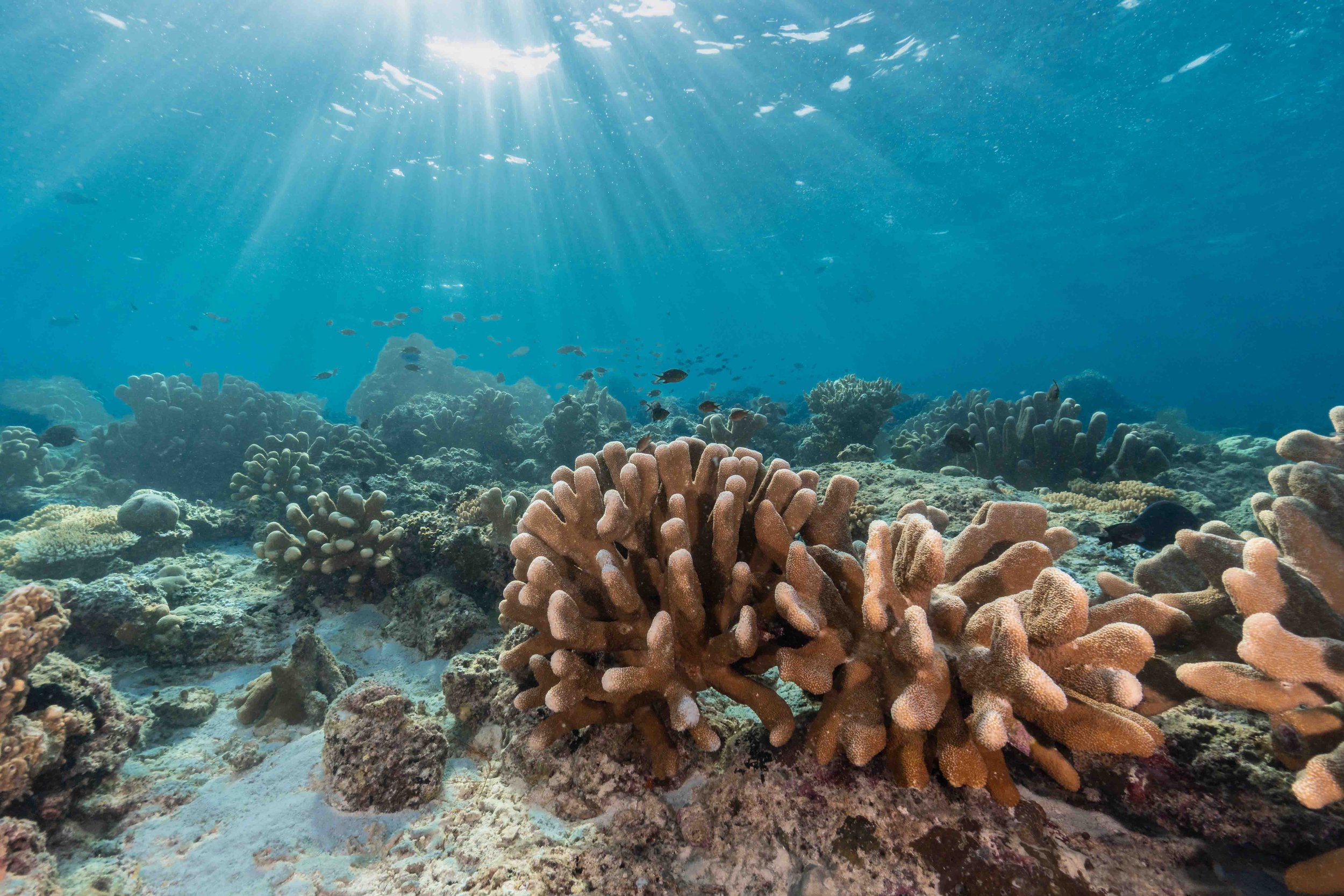
Coral reefs are great subjects for Wide Angle Photography
Wide-angle dives in Southeast Asia are often defined by movement and abundance. Manta rays and whale sharks are among the most sought-after subjects, frequently encountered at cleaning stations or along current-swept channels. Large schools of barracuda, jacks, and snapper create dynamic shapes that fill the frame, while vibrant coral reefs and dramatic walls provide colorful backdrops.
Wrecks and underwater landmarks also lend themselves well to wide-angle photography, especially when divers, fish life, or shafts of sunlight are included to give a sense of scale.
Best Wide-Angle Diving Destinations in Southeast Asia
Several destinations are consistently recognized as top-tier wide-angle photography locations. Komodo National Park is known for its powerful currents, manta rays, and fish-filled pinnacles, while Raja Ampat delivers extraordinary coral density and biodiversity. Tubbataha Reef offers pristine reefs and pelagic encounters in remote conditions, and Sipadan is famous for dramatic drop-offs and large schools of fish. The Similan Islands round out the list with granite formations, clear water, and seasonal big-animal action.
These sites provide the scale, energy, and visual impact that wide-angle underwater photography is built for, rewarding photographers who are comfortable working in dynamic environments.
🧭 Which Underwater Photography Style Should You Choose for Your Trip?
Choosing between macro and wide-angle underwater photography often comes down to where you’re diving and what conditions you’re likely to encounter. In Southeast Asia, this decision is especially important because dive sites can vary dramatically in visibility, current strength, and subject matter — sometimes within the same region.
Understanding how each photography style aligns with different environments will help you make smarter lens choices and avoid unnecessary compromises underwater.
When Macro Photography Is the Better Choice
Macro photography is best suited to critter-focused destinations and calm dive conditions, where photographers can slow down and concentrate on small subjects. If your itinerary includes locations known for muck diving or sheltered bays, macro is often the most rewarding option.
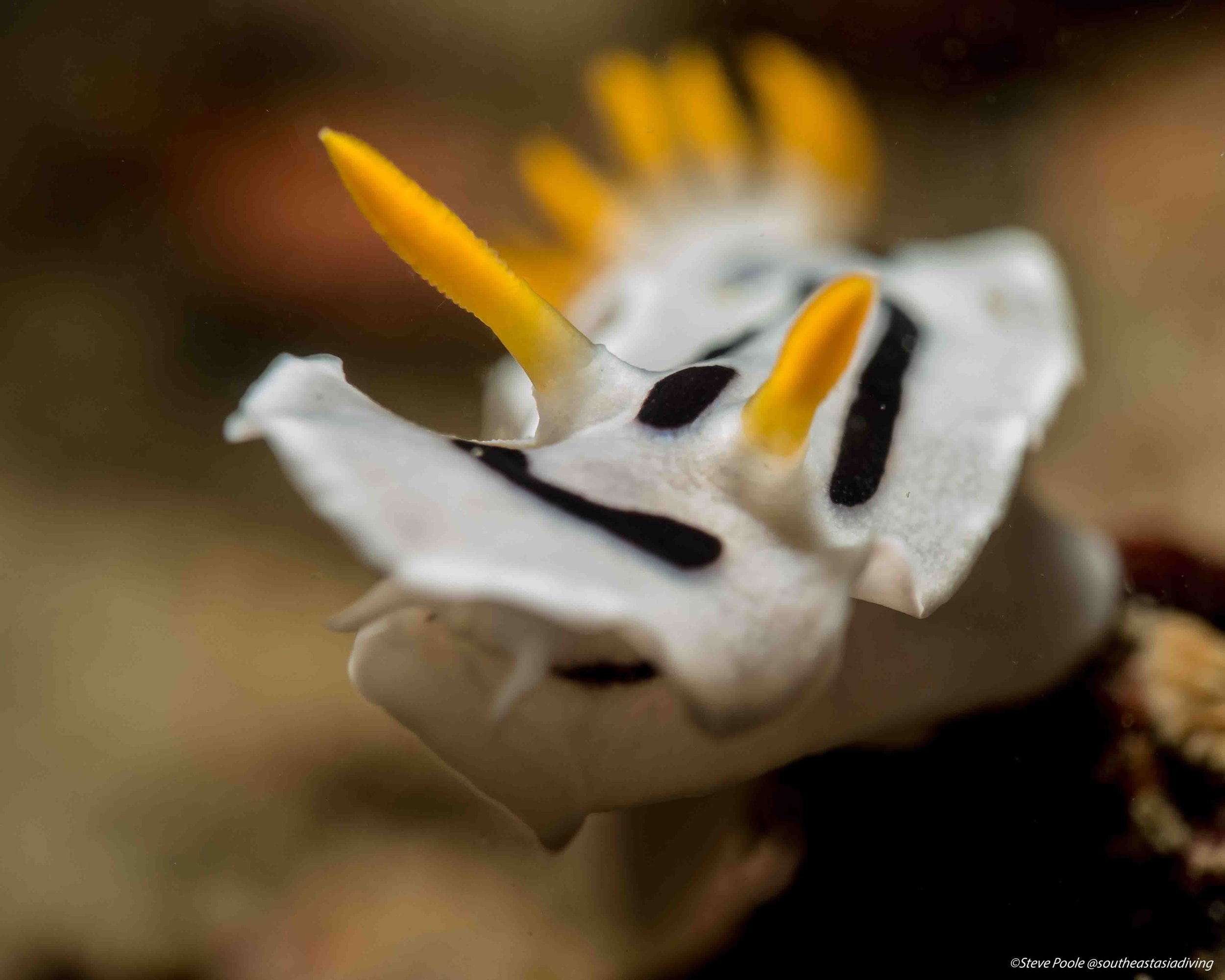
A Nudibranch in Anilao, Philippines
Macro photography is typically the better choice if:
You’re diving destinations such as Anilao or Lembeh Strait
Dive conditions are calm or visibility is limited
You enjoy patient, methodical diving and working with fine details
In these settings, macro photography allows you to create striking images regardless of water clarity, while taking advantage of Southeast Asia’s exceptional biodiversity.
When Wide-Angle Photography Makes More Sense
Wide-angle photography excels at current-rich sites and locations known for large marine life, schooling fish, and expansive reef structures. These dives are often more dynamic and require photographers to anticipate movement and changing conditions.
Wide-angle photography is usually the better option if:
You’re diving destinations such as Komodo National Park or Sipadan
Manta rays, sharks, or large fish schools are your primary targets
Visibility is good and reefs, walls, or wrecks dominate the dive
In these environments, wide-angle lenses help capture the scale, energy, and environmental context that make Southeast Asia’s big-animal dives so memorable.
Why Many Southeast Asia Trips Benefit From Both Styles
One of Southeast Asia’s greatest strengths for underwater photographers is its ability to support both macro and wide-angle photography on a single trip. It’s common for itineraries to alternate between sheltered critter dives and more exposed reef or current dives, sometimes within the same day.
When luggage and logistics allow, bringing both macro and wide-angle setups offers the most flexibility. Many photographers plan their shooting days around conditions, using macro gear when visibility drops or currents are light, and switching to wide-angle when the water clears or pelagics are expected.
Even when traveling with limited space, understanding the balance of dive sites on your itinerary can help you choose the setup that offers the highest likelihood of success overall.
The Practical Takeaway
There’s no single “correct” choice when it comes to macro versus wide-angle underwater photography in Southeast Asia. The most successful photographers are those who adapt their approach to the destination and conditions, rather than committing to one style at the expense of the other.
By planning ahead — and staying flexible when possible — you’ll maximize your chances of capturing both the small, hidden details and the big, unforgettable moments that define diving in Southeast Asia.
🎒📷 Gear Considerations for Underwater Photography in Southeast Asia
Choosing the right underwater photography gear for Southeast Asia is as much about flexibility and travel practicalityas it is about image quality. With dive conditions that can shift from calm muck sites to high-current reefs within the same trip, photographers benefit most from setups that adapt easily to changing environments.
Airline baggage limits, boat transfers, and frequent domestic flights mean that traveling light — without sacrificing capability — is a major consideration when planning a photography-focused dive trip in the region.
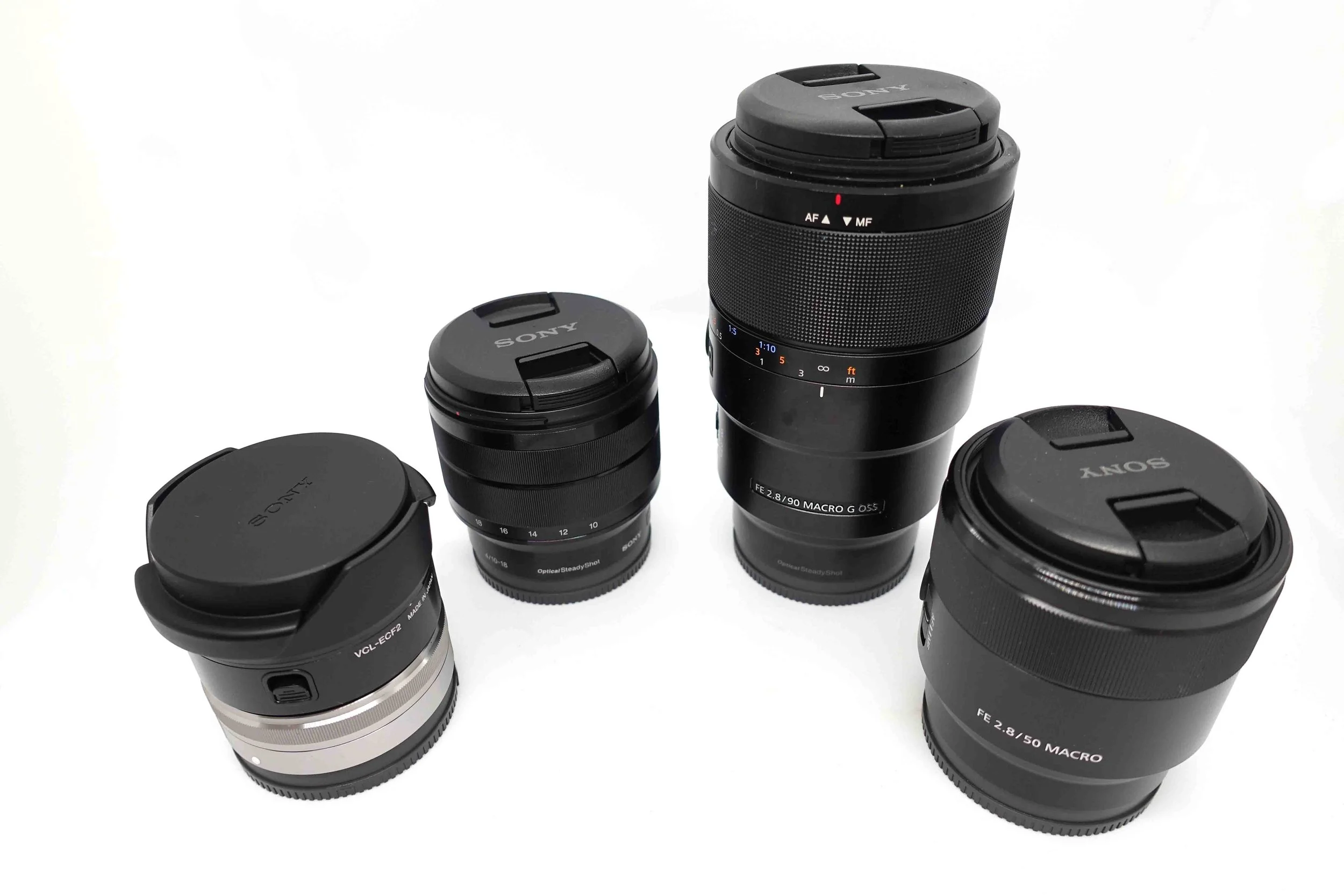
Macro lenses can come in focal lengths of 50mm (far right) & 90mm (second right)
Macro Photography Gear Essentials
Macro photography setups tend to be compact and travel-friendly, making them ideal for destinations where critters and calm conditions are the primary focus. A dedicated macro lens is the foundation of any macro system, with 60mm and 100mm equivalents offering flexibility depending on subject size and working distance.
Wet diopters are especially valuable in Southeast Asia, where super-macro opportunities are common. They allow photographers to increase magnification without changing lenses, making them ideal for dives where subjects vary in size or conditions shift mid-trip.
Lighting is critical in macro photography, and precise strobe positioning helps control shadows, texture, and background exposure. Because macro subjects are shot at close range, photographers can produce excellent results even in lower visibility, making this setup reliable across a wide range of conditions.
Wide-Angle Photography Gear Essentials
Wide-angle underwater photography requires gear that can handle scale, movement, and water clarity. Fisheye or wide rectilinear lenses are essential for capturing large animals, reefscapes, and environmental scenes, while dome ports help maintain sharpness and minimize distortion across the frame.
Strobes for wide-angle photography are typically positioned farther apart to evenly light large subjects and reduce backscatter in clear water. In Southeast Asia, where current often brings life to the reef, a reef hook — used responsibly and where permitted — can help photographers stabilize themselves while composing wide-angle shots in high-flow environments.
Because wide-angle setups are often larger and heavier, careful packing and protection become especially important when traveling between islands or boarding smaller dive boats.
Traveling With Underwater Photography Gear in Southeast Asia
Traveling with underwater photography gear in Southeast Asia requires strategic packing and realistic expectations. Many divers rely on carry-on luggage for camera bodies, lenses, and strobes, while checking housings, arms, and less fragile components. Choosing modular systems that can be broken down easily helps manage weight and space limitations.
It’s also worth considering the type of diving your itinerary emphasizes. Trips focused primarily on macro photography allow for lighter, more compact setups, while wide-angle–heavy itineraries may require additional ports and accessories. Some photographers choose to prioritize one style and supplement with wet lenses to maintain flexibility without exceeding baggage limits.
Liveaboards often provide more space for gear setup and storage, while land-based trips with frequent transfers may favor simpler configurations. Planning your gear around both photographic goals and travel logistics is key to avoiding stress and protecting equipment.
Practical Takeaway for Traveling Photographers
The most effective underwater photography gear for Southeast Asia is not the most complex setup, but the one that offers the greatest adaptability. Whether you’re shooting macro, wide-angle, or both, prioritizing flexibility, protection, and smart packing will allow you to focus on making images rather than managing equipment.
By aligning your gear choices with your destinations, conditions, and travel style, you’ll be better prepared to capture everything from tiny critters to sweeping reef scenes — often on the same trip.
✨ Final Thoughts
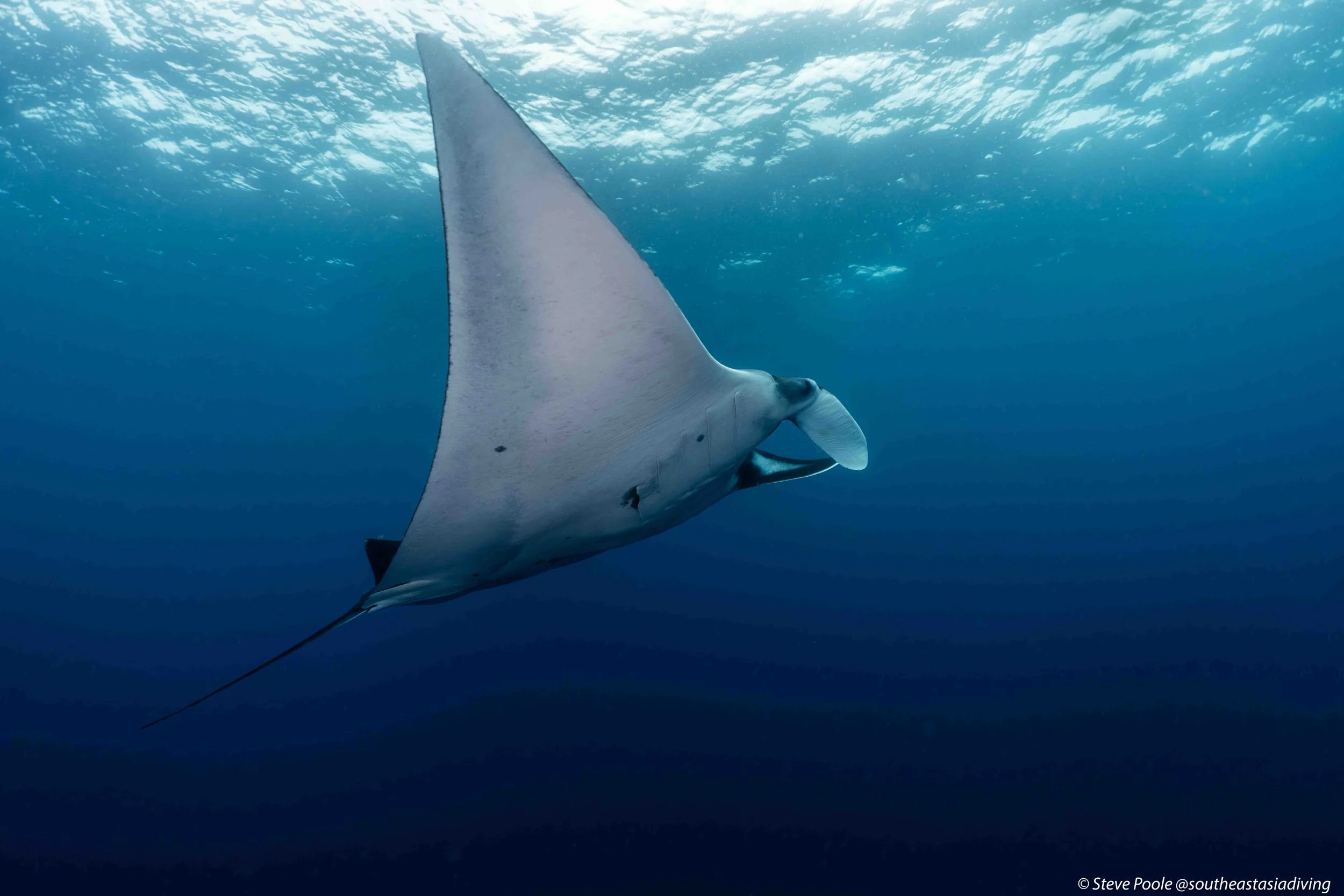
Manta Rays are popular Wide Angle subjects
Southeast Asia doesn’t force underwater photographers to choose between macro and wide-angle photography — it rewards those who understand when each approach works best. The region’s unmatched diversity means success underwater is rarely about committing to a single style, but about adapting your photography to the environment in front of you.
By aligning your photography approach with the destination, dive conditions, and expected subjects, you dramatically increase your chances of capturing strong, meaningful images. Calm muck dives and sheltered bays lend themselves to macro photography, where patience and precision reveal hidden details. Current-swept reefs and open-water sites, on the other hand, create the scale, motion, and drama that wide-angle photography is designed to capture.
One of the greatest advantages of diving in Southeast Asia is how often both styles can be combined within a single trip. Many itineraries naturally balance critter-focused dives with big-animal encounters and reef scenes, allowing photographers to experience the full spectrum of underwater life. With thoughtful planning — and flexibility when conditions change — it’s possible to return home with a portfolio that reflects just how varied the region truly is.
Whether you’re searching for rare critters buried in volcanic sand or framing manta rays against vibrant coral reefs, Southeast Asia offers world-class opportunities for underwater photography. Understanding how and when to use macro and wide-angle techniques transforms those opportunities into lasting images — and turns a good dive trip into a truly memorable photographic experience.
❓ Frequently Asked Questions About Macro & Wide-Angle Underwater Photography
What is the difference between macro and wide-angle underwater photography?
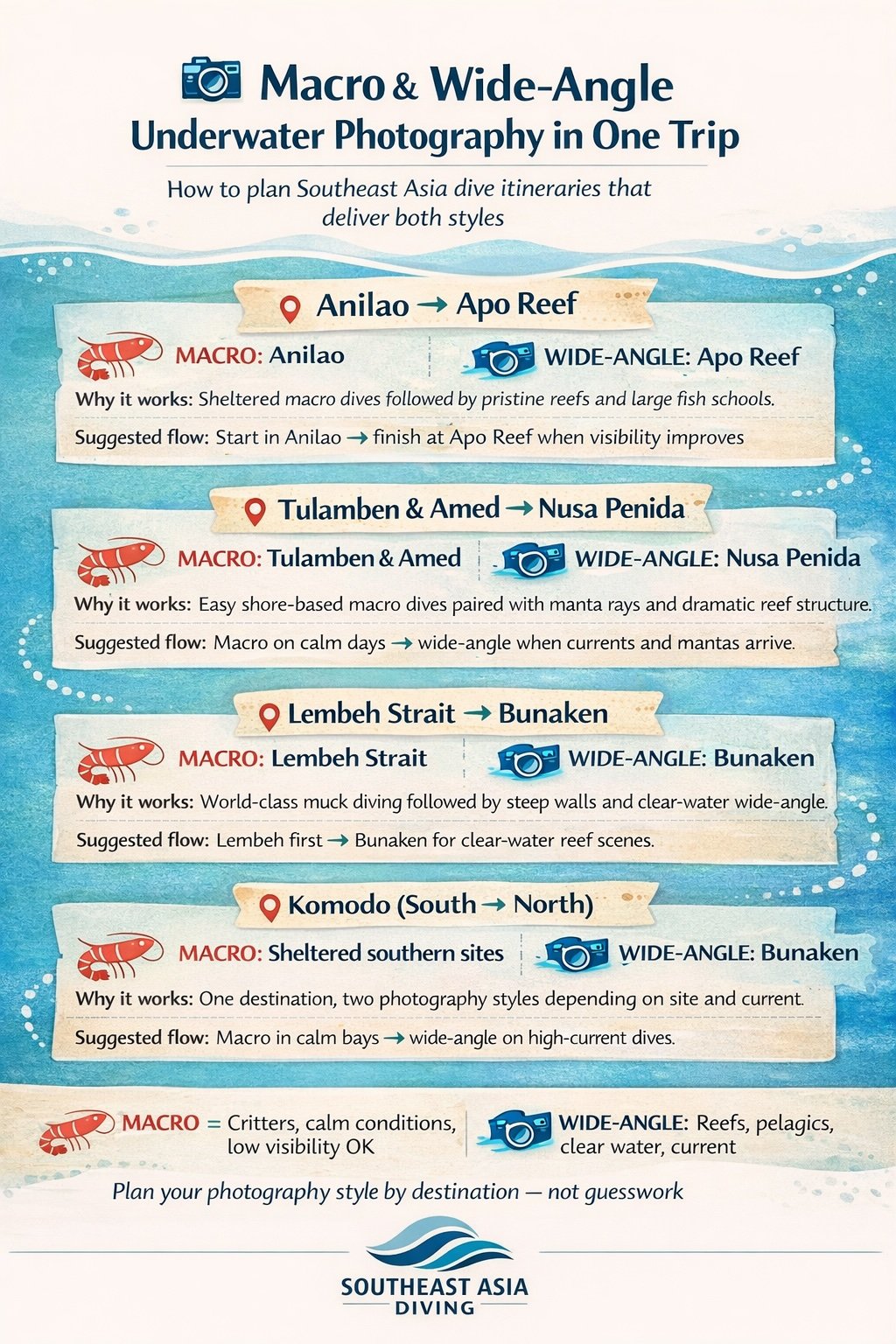
The main difference lies in subject size and shooting distance. Macro underwater photography focuses on small subjects photographed at very close range, highlighting fine details such as textures, patterns, and behavior. Wide-angle underwater photography captures large subjects or expansive scenes, emphasizing scale, environment, and movement. In Southeast Asia, both styles are commonly used due to the region’s diverse dive conditions.
Which type of underwater photography is better for beginners?
Macro photography is often easier for beginners because it works well in calm conditions and lower visibility, and subjects tend to move less. Wide-angle photography can be more challenging, as it often involves stronger currents, moving animals, and more complex composition. However, beginners can succeed with either style by choosing appropriate destinations and conditions.
Can you do both macro and wide-angle photography on the same dive trip?
Yes — Southeast Asia is one of the best regions in the world to combine macro and wide-angle photography on a single trip. Many itineraries include sheltered critter dives alongside current-rich reef or pelagic sites. Some photographers bring both setups, while others plan dive days around conditions to maximize success with one style at a time.
Is macro photography better in low visibility?
Macro photography performs very well in low to moderate visibility because subjects are photographed at close range, reducing the amount of water between the lens and the subject. This makes macro a reliable option in areas with plankton, sediment, or volcanic sand, which are common at many Southeast Asia dive sites.
When is wide-angle underwater photography the best choice?
Wide-angle photography works best when visibility is good, currents are present, and large marine life or reef structures dominate the dive. These conditions are often responsible for schooling fish, manta rays, sharks, and dramatic reef scenes, making wide-angle lenses ideal for capturing scale and context.
What lens should I bring for a Southeast Asia dive trip?
The best lens depends on your itinerary and photography goals. Critter-focused destinations favor macro lenses, while reef and pelagic destinations favor wide-angle lenses. If space allows, bringing both provides maximum flexibility. If not, many photographers choose one primary lens and supplement with wet lenses to adapt to changing conditions.
Is Southeast Asia better for macro or wide-angle photography?
Southeast Asia excels at both macro and wide-angle underwater photography, which is what makes it unique. Some regions are world-famous for critters, while others are known for reefs and pelagics. The key advantage is not choosing one style over the other, but learning how to match each approach to the destination and conditions.
Do I need special gear to photograph macro or wide-angle subjects?
Both styles require different gear considerations. Macro photography benefits from dedicated macro lenses, wet diopters, and precise lighting. Wide-angle photography typically requires fisheye or wide lenses, dome ports, and careful strobe positioning. Traveling photographers often prioritize flexible systems that can adapt without exceeding baggage limits.