Deep Dive Series: Atauro Island, Timor-Leste
Southeast Asia’s Quiet Biodiversity Powerhouse
Far from Southeast Asia’s busy dive circuits lies a destination that feels almost forgotten by time — yet scientifically, it’s anything but insignificant. Atauro Island, a small and rugged island just north of Timor-Leste’s capital, Dili, offers some of the most biodiverse reefs ever recorded, wrapped in an atmosphere of quiet, low-impact exploration.
At first glance, Atauro gives little away. Life moves slowly along its coastline, shaped by fishing villages, steep hills, and an ocean that still dictates the rhythm of daily life. But beneath the surface, the story changes completely. Here, deep ocean currents flowing through the Ombai Strait fuel an exceptionally productive marine ecosystem — one that has drawn the attention of marine scientists and experienced regional divers alike.
This is not a place of crowded boats or ticking off famous dive sites. There are no tightly scheduled itineraries or race-to-the-highlight dives. Instead, Atauro rewards divers who value pristine reefs, subtle encounters, and the rare feeling of discovering somewhere that still operates on the ocean’s terms.
What makes Atauro truly special isn’t just how healthy the reefs look — it’s how alive they feel. Fish schools move freely across intact coral systems, predators appear without fanfare, and even the smallest interactions unfold naturally, uninterrupted by constant dive traffic. The experience is immersive rather than performative, exploratory rather than curated.
In a region increasingly defined by popularity and pressure, Atauro stands quietly apart. It doesn’t compete with Southeast Asia’s famous dive destinations — it complements them, offering a glimpse of what the region’s reefs can look like when geography, restraint, and community stewardship are allowed to work together.
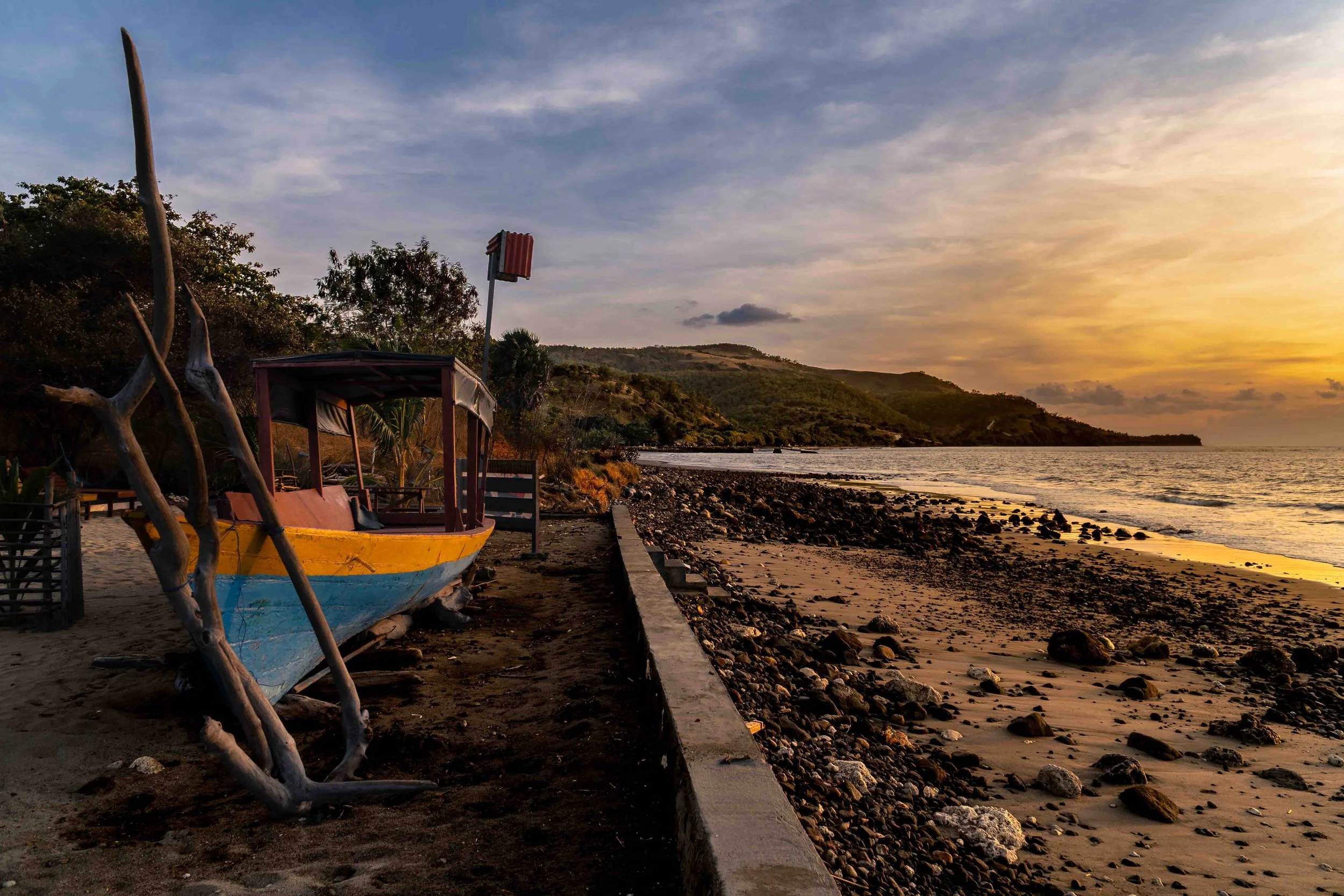
Sunset over Atauro Island, Timor-Leste
Where Is Atauro Island?
Atauro Island lies in the Ombai Strait, a deep-water channel linking the Banda Sea to the Savu Sea and forming part of a major oceanic passage between the Pacific and Indian Oceans. This is not a marginal body of water — it’s a dynamic, high-energy corridor where deep ocean currents move vast volumes of water through the region.
Although Atauro sits just 25 kilometers north of Dili, Timor-Leste’s capital, it feels worlds away. That sense of remoteness isn’t created by distance, but by intention. Development here remains limited, tourism is small-scale, and the island has largely stayed outside the mainstream Southeast Asia travel circuit.
What makes this location so important for diving is what happens beneath the surface. Deep ocean water rises unusually close to shore, delivering nutrient-rich currents directly onto Atauro’s reefs. This constant exchange fuels plankton growth, which in turn supports dense reef fish populations and higher-level predators. Few Southeast Asian destinations enjoy such direct and continuous connection to the open ocean.
From a diver’s perspective, this geography translates into reefs that feel alive and ocean-facing rather than enclosed. Fish movement is constant, productivity is visible, and even shallow dives carry a sense of depth and scale.
Access to Atauro reflects this slower, more deliberate rhythm. Most visitors arrive by ferry or small boat from Dili, with schedules shaped by weather and sea conditions rather than rigid timetables. The journey itself acts as a transition — leaving behind urban life and arriving somewhere governed by tides, light, and local routine.
From the moment you step ashore, the pace shifts. There are no crowds, no urgency, and no pressure to rush. Atauro feels remote not because it’s hard to reach, but because it has chosen to remain quietly disconnected from mass-tourism expectations — a rare quality in modern Southeast Asia.
Why Atauro’s Reefs Are So Special
In 2016, scientific reef surveys conducted around Atauro Island recorded something unprecedented: the highest average reef fish diversity ever documented at a single location. This wasn’t a statistical outlier or the result of one exceptional dive site. Instead, it reflected consistent findings across multiple reefs around the island — a strong indication that Atauro’s entire reef system is operating at an unusually high ecological level.
What makes this result especially significant is that diversity here isn’t concentrated in small pockets. Fish life is spread evenly across reef slopes, drop-offs, and shallow coral gardens, suggesting long-term stability rather than short-lived abundance.
Deep Water Close to Shore
One of the most important factors shaping Atauro’s reefs is how quickly deep water rises toward the island. In many areas, reefs transition rapidly from shallow coral slopes into steep drop-offs and open blue water.
This proximity allows cold, nutrient-rich water from depth to influence nearshore environments directly. These nutrients fuel plankton growth, forming the base of a highly productive food chain that supports everything from small reef fish to larger predators.
Unlike enclosed reef systems that rely on limited nutrient recycling, Atauro’s reefs are continuously refreshed by the open ocean.
The Power of the Ombai Strait
Atauro sits within the Ombai Strait, one of the region’s most important deep-ocean channels linking the Pacific and Indian Oceans. Strong, persistent currents move through the strait, driving water exchange on a massive scale.
For the reefs, this means:
constant delivery of nutrients
high oxygenation
regular turnover that prevents stagnation
Rather than stressing the reef, these currents energize it. Fish populations thrive in this environment, and reef structures remain productive and resilient over time.
Low Fishing Pressure, Naturally Regulated
Another critical factor is what hasn’t happened at Atauro.
Compared to many Southeast Asian hotspots, fishing pressure here remains relatively low. Traditional, small-scale fishing methods dominate, and industrial exploitation has largely bypassed the island.
This allows:
predator populations to persist
natural trophic relationships to remain intact
reef balance to regulate itself
When predators remain part of the system, reefs function differently — more dynamically, more predictably, and with fewer signs of ecological imbalance.
Minimal Development, High Water Quality
Atauro has avoided large-scale coastal development, and the benefits underwater are immediately visible.
With limited construction and low runoff:
sedimentation is minimal
coral structures remain intact
water clarity and quality stay high
Hard corals dominate many reef areas, forming complex structures that provide shelter, feeding grounds, and breeding space for a wide range of species. These intact coral frameworks are essential for sustaining the diversity observed in scientific surveys.
A Reef System in Balance
The combined result of these factors is a reef system that feels cohesive rather than fragmented.
Fish life is dense but not chaotic. Coral growth appears stable rather than stressed. Interactions — cleaning behavior, schooling, predation — unfold naturally and predictably.
Rather than relying on spectacle or isolated highlights, Atauro’s reefs impress through consistency and integrity. Every dive reinforces the same impression: this is an ecosystem still functioning close to its natural baseline.
In a region where many reefs are shaped by compromise and pressure, Atauro stands out not because it is dramatic — but because it is whole.
What Diving at Atauro Island Is Like
Diving at Atauro Island is best described as unrushed, immersive, and quietly powerful. In a region where many dive sites are shaped by tight schedules and heavy traffic, Atauro Island diving still feels exploratory — closer to discovery than consumption.
From the outset, there’s a strong sense that this is untouched diving. Boats are few, dive groups are small, and there’s no sense of urgency to beat other operators to the water. Instead of planning dives around peak moments, diving Atauro is shaped by light, current, and whatever the reef happens to offer that day.
That feeling was especially clear when I dived Atauro in 2019. We entered the water from a small local boat fitted with traditional outriggers, carefully timing our roll-ins, protecting our heads, and making sure we didn’t clip the wooden beams as we descended. It wasn’t inconvenient — it set the tone. This was Timor-Leste diving stripped back to its essentials, where you adapt to the environment rather than expecting the environment to adapt to you.
Once underwater, the reefs immediately reinforce that sense of authenticity. Dive sites around Atauro typically begin with broad coral slopes, rich in hard corals and reef structure, before gradually transitioning into steeper drop-offs and open blue water. These aren’t narrow channels or isolated bommies — they’re expansive reef faces that invite slow, lateral exploration rather than point-to-point diving.
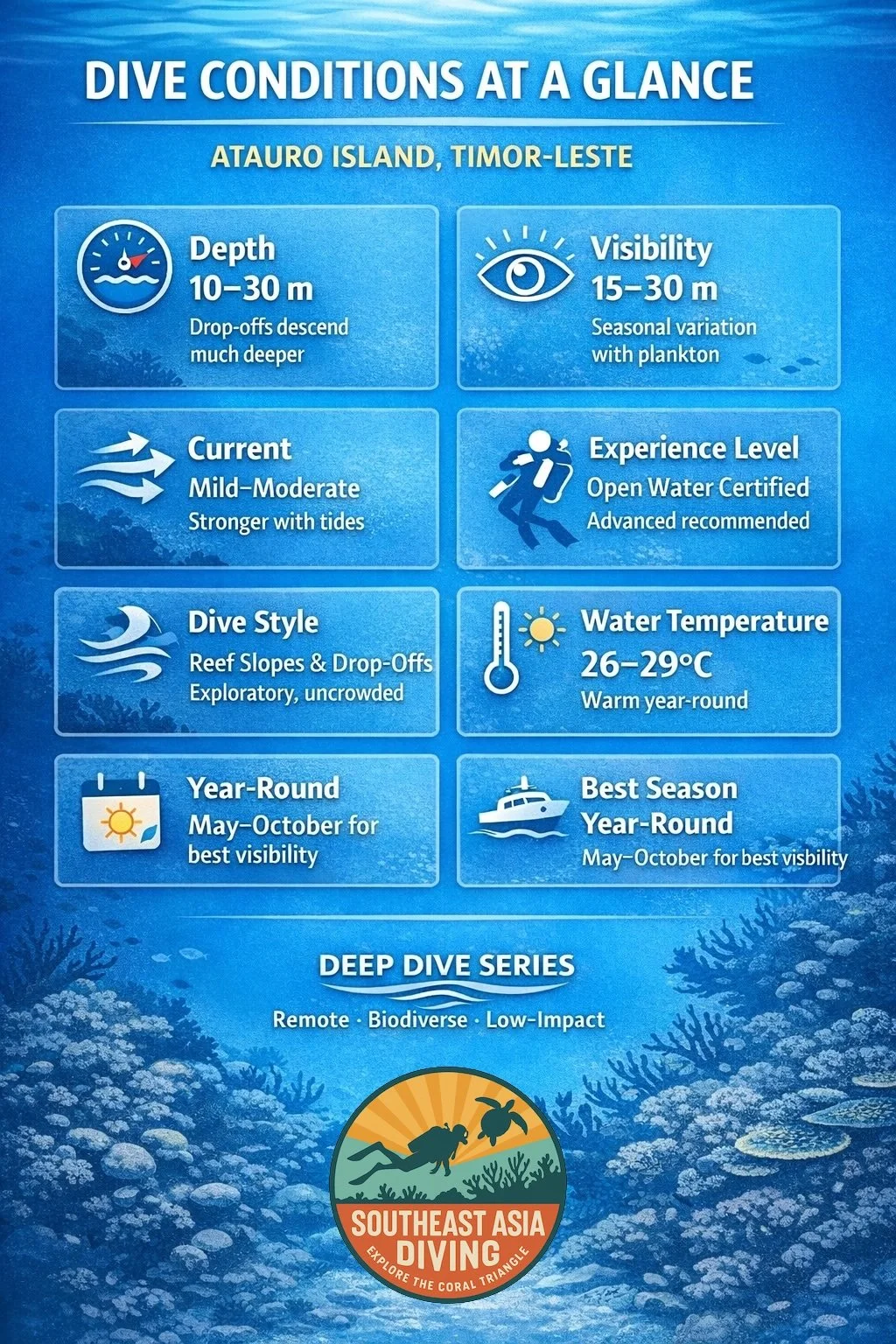
Most dives unfold naturally between 10 and 25 meters, where coral health, light, and fish density come together. Reef fish move continuously across the slope rather than clustering in small areas, and there’s a constant feeling of motion as schools pass through and reform. Because deep water lies close to shore, even relatively shallow dives carry a strong sense of connection to the open ocean.
Conditions for Atauro Island diving are generally forgiving, but never sterile. Visibility is often good to excellent, though plankton-rich days occasionally soften the water — usually accompanied by a noticeable increase in fish activity. Water temperatures remain warm year-round, supporting long, relaxed dives, while currents are typically mild to moderate, adding energy to the reef without dictating the dive plan.
What stands out most is how natural everything feels. Fish aren’t conditioned to divers. Cleaning stations operate without interruption. Predators appear briefly, then fade back into the blue. There’s no sense that the reef is performing — it simply exists, functioning as it should.
Without crowds or time pressure, dives take on a different rhythm. You find yourself slowing down, hovering longer, watching patterns emerge rather than chasing sightings. It’s the kind of diving where awareness sharpens and small details become as rewarding as larger encounters.
For experienced divers, Atauro Island often evokes a familiar but increasingly rare sensation — the feeling that diving is still an adventure, not a managed experience. It’s diving that asks for patience and attention, and in return offers something deeply satisfying: reefs that feel whole, alive, and genuinely wild.
Marine Life Highlights
Marine life at Atauro Island is best described through ecosystem-level health rather than individual flagship species. Divers encounter consistently high reef fish density, broad species diversity, and largely unaltered animal behavior across multiple sites and depth ranges.
This reflects a combination of strong oceanic influence, low coastal development, and relatively light fishing and dive pressure.
Reef Fish Diversity and Biomass
Reef fish diversity is the most immediately noticeable feature of Atauro Island diving. Large schools of fusiliers, snappers, and surgeonfish are common along reef slopes and mid-water zones, often moving continuously across wide sections of reef rather than forming isolated aggregations. Anthias are abundant above coral heads, particularly where current brings plankton onto the reef.
Supporting species are present in high numbers and across all habitat types, including butterflyfish, angelfish, wrasse, parrotfish, triggerfish, and damselfish. The presence of grazing species such as parrotfish and surgeonfish plays a visible role in reef maintenance, helping limit algal growth and preserve coral dominance.
Fish life is evenly distributed rather than concentrated at a few sites, suggesting long-term habitat stability and consistent food availability.
Sharks, Predators, and Trophic Balance
Predatory species form an important — though understated — part of Atauro’s reef systems. Divers may encounter whitetip reef sharks resting near ledges and drop-offs, blacktip reef sharks cruising open reef edges, and occasional grey reef sharks where depth and current increase.
Large predatory fish are more consistently observed, including giant trevallies, bluefin trevallies, dogtooth tuna, and sizeable groupers holding territory near reef structure. These species are typically encountered briefly and move naturally through the environment rather than remaining in one area.
The continued presence of both mid-level and apex predators suggests intact trophic relationships and a reef system that remains largely self-regulating.
Turtles, Rays, and Larger Reef Visitors
Green turtles and hawksbill turtles are seen intermittently, usually grazing on reef slopes or passing through between feeding areas. Sightings are not guaranteed on every dive but are frequent enough to be considered a regular part of the ecosystem rather than a rare event.
Rays such as eagle rays and stingrays are occasionally encountered, particularly along sandy transitions near reef edges. As with most large animals at Atauro, encounters tend to be brief and incidental rather than staged or predictable.
Pelagic Species and Offshore Influence
Atauro Island lies along deep-water migration routes within the Ombai Strait, giving the area genuine pelagic influence. Dolphins are occasionally observed offshore, and migrating whales pass through the region seasonally. There are also sporadic reports of mola mola in deeper, cooler water during certain periods.
Pelagic encounters remain opportunistic rather than expected and should be viewed as a potential bonus rather than a defining feature of Atauro Island diving.
Macro, Cryptic, and Juvenile Life
Although Atauro is not classified as a muck-diving destination, smaller marine life is present throughout the reef system. Divers who slow down and observe reef structure closely will find nudibranchs, flatworms, shrimp, crabs, and a variety of juvenile reef fish using coral heads and sheltered areas as nursery habitat.
Macro opportunities tend to complement wide-angle diving rather than replace it, reinforcing the reef-based nature of most sites.
Natural Behavior and Low Conditioning
One of the most telling indicators of reef health at Atauro is animal behavior. Fish do not congregate around divers, cleaning stations operate without interruption, and schooling patterns respond primarily to current, light, and reef structure rather than human presence.
This lack of conditioning suggests relatively low dive pressure and supports the impression of a reef system operating close to its natural baseline — a key reason Atauro is often cited for its unusually high biodiversity.
Best Time to Dive Atauro Island
Atauro Island is diveable year-round, with seasonal changes that tend to be gradual rather than extreme. Unlike parts of Southeast Asia that experience strong monsoon shifts, Atauro’s location in the Ombai Strait results in relatively stable diving conditions, with subtle variations in sea state, visibility, and marine activity across the year.
Rather than a narrow “best season,” the timing of a visit to Atauro Island is best determined by what kind of diving experience you value most.
May to October: Dry Season
The period from May to October is generally considered the most straightforward time for diving Atauro Island. Weather conditions are more settled, seas are typically calmer, and underwater visibility is often at its best.
During these months, divers can expect:
consistently good to excellent visibility
calmer surface conditions, making boat travel easier
predictable diving well suited to longer reef explorations
This season is particularly well suited to wide-angle and natural-light photography, where clear water and stable conditions allow for reef-scale compositions. It’s also an ideal time for first-time visitors to Atauro, as logistics and dive planning tend to be simpler.
November to April: Wet Season
From November to April, Atauro experiences warmer water temperatures and increased rainfall, though conditions rarely deteriorate to the point of preventing diving. Seas can be more variable, and visibility may occasionally decrease due to higher plankton levels in the water.
These plankton-rich conditions often bring:
increased reef fish activity
higher overall biomass
improved chances of encountering pelagic species offshore
For experienced divers, this season can be particularly rewarding if marine life density is a higher priority than maximum visibility. Underwater scenes may appear slightly greener at times, but reefs often feel more active and productive.
Currents and Water Movement
Currents at Atauro Island are influenced more by tidal flow and offshore conditions in the Ombai Strait than by strict seasonal patterns. Most dives experience mild to moderate current, with occasional stronger flows that enhance fish activity without dominating dive profiles.
This variability contributes to reef productivity while keeping diving accessible to a broad range of certified divers.
Water Temperature and Exposure Protection
Water temperatures remain warm throughout the year, generally comfortable for diving in a standard wetsuit. During plankton-rich periods, thermoclines may be more noticeable on deeper dives, particularly near drop-offs and blue-water transitions.
So, When Is the Best Time to Dive Atauro Island?
There is no single “best” month for Atauro Island diving.
Visit during the dry season if you prioritise calm seas, high visibility, and photography conditions.
Visit during the wet season if you prefer richer water, increased marine activity, and a greater chance of pelagic encounters.
Atauro rewards divers who align their timing with their expectations rather than chasing a perfect seasonal window.
Diving Logistics & What to Expect
Diving at Atauro Island is intentionally low-key. Logistics are straightforward but deliberately simple, reinforcing the island’s identity as a destination shaped by conditions, community, and conservation rather than convenience tourism.
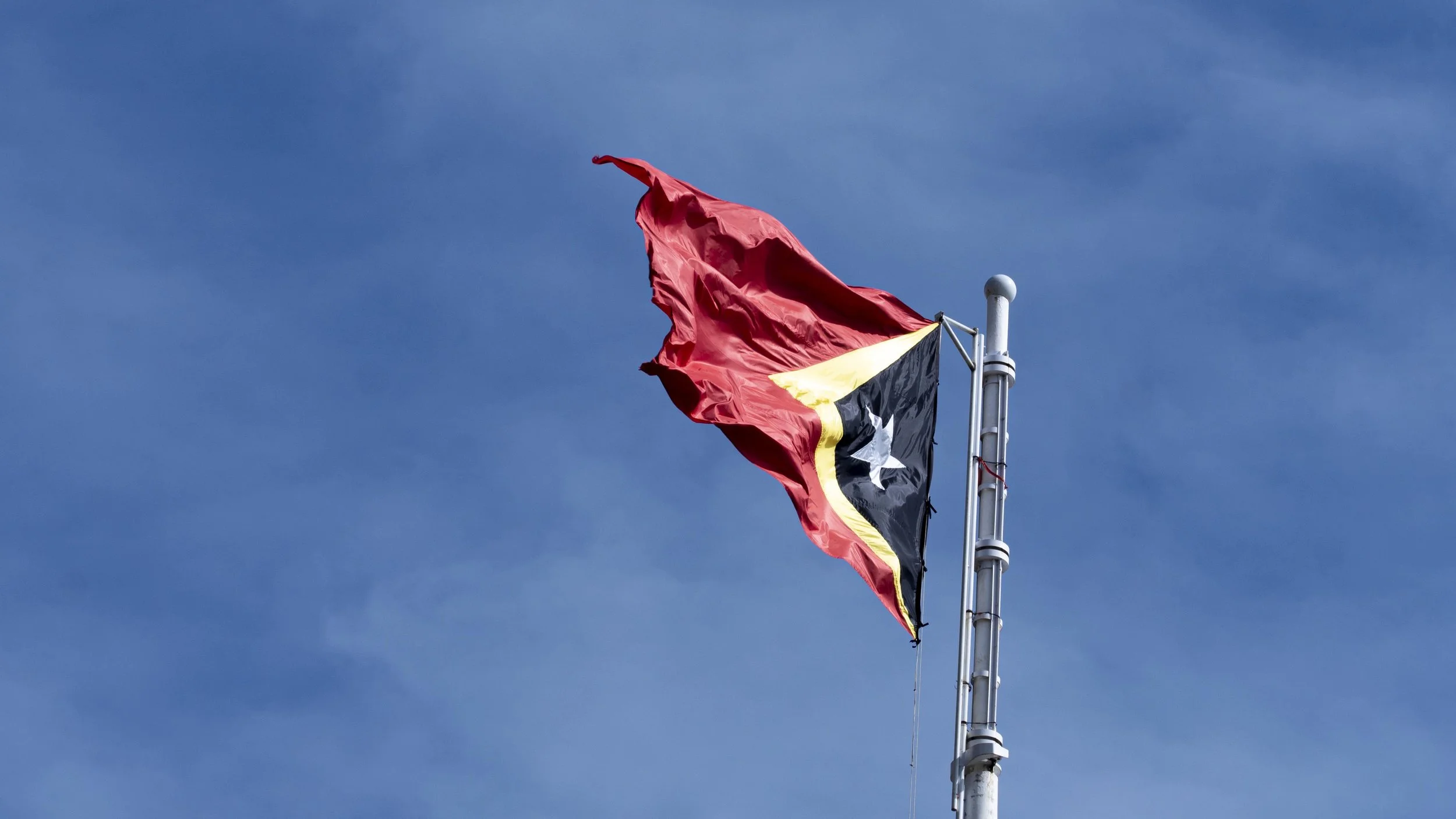
Timor Leste Flag
This is not a place built for volume — and that’s precisely its appeal.
Getting to Atauro Island
Most journeys to Atauro begin in Dili, Timor-Leste’s capital and main international gateway. From Dili, access to Atauro Island is via:
public ferry, operating on scheduled days
small boat transfers, depending on weather and availability
The crossing is relatively short, but schedules are influenced by sea conditions rather than fixed timetables. Flexibility is important, and visitors are best served by allowing buffer days rather than planning tight onward connections.
The journey itself acts as a transition. Leaving Dili behind, the pace slows quickly, and arrival on Atauro feels like stepping into a quieter, more deliberate rhythm.
Dive Operations: Small and Community-Connected
Dive operations on Atauro Island are small-scale and locally connected. Expect limited group sizes, simple setups, and a strong emphasis on safety and reef protection.
Dive planning is flexible and responsive to:
weather and sea state
currents and visibility
diver experience and comfort
Atauro Island is remote and logistically simple — but not centrally supported.
Atauro lies off the north coast of Timor-Leste, with access dependent on ferry or small boat transfers from Dili. While diving is world-class and generally safe, medical facilities and evacuation resources near the island are limited compared to major dive hubs. Dive operations are small-scale and flexible, and travel plans can be affected by weather and sea conditions.
For remote dive destinations like Atauro Island, comprehensive travel insurance is strongly advisable. On previous trips across remote regions, we’ve used World Nomads , as their policies are designed with adventure travel and scuba diving activities in mind.
Disclosure: The link above is an affiliate link, meaning we may earn a small commission if you choose to purchase — at no additional cost to you. We only recommend services we have personally used or researched carefully.
Always review policy wording carefully to confirm depth limits, evacuation coverage, and dive-specific provisions.
Rather than running fixed schedules to maximize volume, operators adapt plans to conditions on the day. This approach supports safer diving and minimizes pressure on individual reef sites.
For divers used to large resort operations, the experience can feel refreshingly personal and unhurried.
Accommodation and On-Island Life
Accommodation on Atauro Island is centered around:
eco-lodges
small guesthouses
locally owned stays
Facilities are generally comfortable but simple. Power, internet, and amenities may be limited at times, and this should be viewed as part of the experience rather than a drawback.
There are no large resorts, no nightlife scene, and few distractions beyond the island itself. Evenings are quiet, meals are often locally sourced, and daily schedules tend to revolve around diving, weather, and light rather than entertainment.
Luxury on Atauro is defined by space, silence, and time — not services or excess.
What to Expect as a Visitor
Diving Atauro suits travelers who are comfortable with:
simple logistics
flexible schedules
low-impact travel
It is particularly well suited to experienced divers, underwater photographers, and travelers who value conservation, authenticity, and uncrowded reefs over convenience and amenities.
Those seeking high-end resorts, nightlife, or guaranteed wildlife encounters may find Atauro challenging. For divers willing to slow down and adapt, it is deeply rewarding.
A Destination That Rewards Patience
Atauro Island is not difficult to reach — but it does require intention. By keeping tourism small-scale and community-focused, the island has preserved the conditions that make its reefs exceptional.
The trade-off for limited infrastructure is access to one of Southeast Asia’s most intact reef systems — a balance many divers consider well worth making.
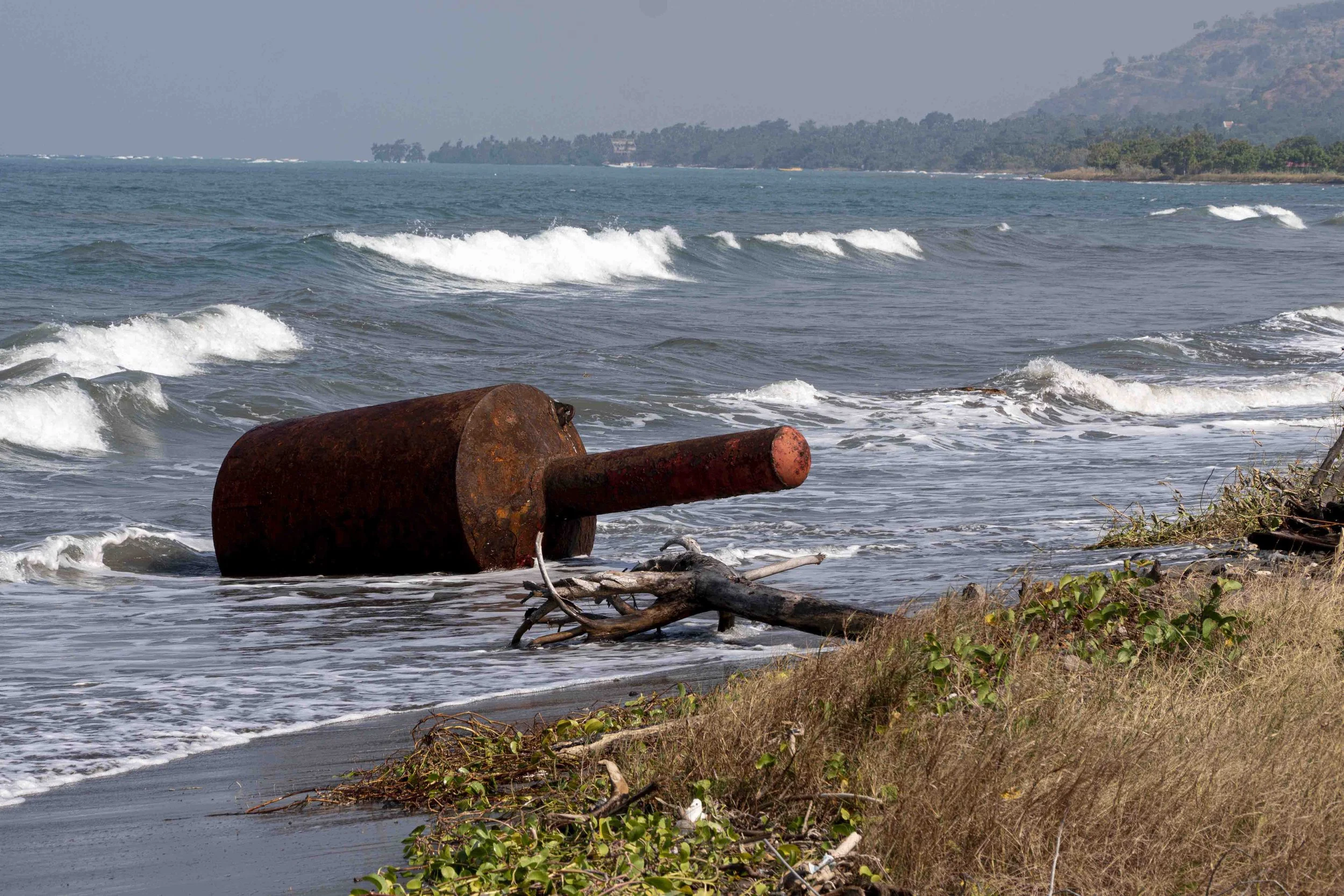
The sea around Atauro can be pretty rough at times
Underwater Photography at Atauro
Underwater photography at Atauro Island is best approached with a wide-angle, environmental mindset. Rather than chasing individual subjects, Atauro rewards photographers who focus on reef structure, fish density, and the relationship between light, water, and movement.
This is a destination where the strongest images are built slowly, through observation rather than pursuit.
A Wide-Angle–First Destination
Healthy coral cover, intact reef structure, and consistently high fish biomass make Atauro Island diving particularly well suited to wide-angle photography. Reef slopes are broad rather than compressed, allowing photographers to compose layered scenes that include coral foregrounds, schooling fish, and open blue water.
Fisheye and wide rectilinear lenses both work well here, especially when paired with patient positioning rather than constant movement. Because fish life is evenly distributed, photographers are not limited to a handful of “iconic” spots — strong compositions can emerge across many sites.
Natural Light and Ambient Conditions
Atauro’s clear water and gently sloping reefs lend themselves to natural-light and ambient-light photography, particularly in shallower depth ranges. Early morning and late afternoon dives often produce softer, angled light that adds depth and contrast without heavy strobe use.
These conditions suit photographers who prefer a minimalist setup or who want to preserve a sense of scale and atmosphere in their images. Natural light scenes tend to reflect the true character of the reef rather than isolating small details.
Strobe Use: Less Is More
Strobes are effective at Atauro when used subtly. Their primary role is to:
restore color to coral foregrounds
balance exposure between reef and blue water
add texture without overpowering the scene
Over-lighting can flatten images and reduce the sense of depth that makes Atauro’s reefs distinctive. Many photographers find that lower strobe power and wider spacing produce more natural results.
Macro as a Secondary Focus
While Atauro is not a dedicated macro destination, smaller subjects are present throughout the reef system. Nudibranchs, crustaceans, and juvenile reef fish can be found within coral heads, rubble areas, and sheltered zones.
Macro photography works best here as a secondary focus, often at the end of wide-angle dives or on dives specifically slowed down for close observation. Success comes from patience rather than targeted hunting, and photographers who resist rushing are usually rewarded.
A Photography Mindset That Fits Atauro
Photographers tend to get the most from Atauro Island when they:
slow their pace
allow scenes to develop naturally
focus on behavior and balance rather than rare species
Fish are less habituated to divers, meaning they may initially keep their distance but settle quickly if given space. This creates opportunities for images that feel authentic rather than staged.
Photographing a Functioning Reef
Atauro Island is not about collecting dramatic single-frame moments. It’s about documenting a reef system that still functions as a whole — with structure, flow, and interaction intact.
For underwater photographers interested in environmental storytelling and honest reef imagery, Atauro offers conditions that are increasingly rare in Southeast Asia.
Conservation & Community: Why Atauro Still Feels Different
The condition of the reefs around Atauro Island is not accidental. They persist largely because large-scale coastal development never arrived — and because local communities have remained closely connected to the sea that surrounds them.
For generations, Atauro’s coastal villages have relied on the marine environment for food, transport, and daily life. Fishing has traditionally been small-scale and nearshore, using methods that place relatively low pressure on reef systems when compared to industrial or commercial operations found elsewhere in Southeast Asia.
Small-Scale Use, Long-Term Stability
The absence of industrial fishing and large tourism infrastructure has allowed Atauro’s reefs to function with minimal disruption. Predator populations remain present, coral structures are intact, and sediment runoff from land is limited.
This balance has been reinforced by:
low coastal construction
limited road and resort development
continued reliance on local marine resources rather than export-driven exploitation
As a result, reef systems have retained their structural complexity and resilience, allowing natural recovery processes to operate without constant stress.
Tourism Developing With Restraint
Tourism at Atauro Island has developed slowly and cautiously, primarily through community-led initiatives and small, conservation-minded operators. Dive operations are locally connected, group sizes are limited, and dive planning prioritises safety and reef protection over volume.
There is no push to scale rapidly, and no infrastructure designed to accommodate mass tourism. This restraint reduces cumulative pressure on dive sites and allows marine life to behave naturally, without the conditioning often seen at heavily visited locations.
Diving as a Participatory Activity
Diving at Atauro is not extractive. There are no feeding programs, no artificial attractions, and no attempt to manipulate marine life for guaranteed encounters. Instead, divers enter an existing system and adapt to it.
Visitors are expected to:
dive conservatively
maintain buoyancy control
respect local practices and guidance
accept variability rather than certainty
In doing so, divers become part of a feedback loop where tourism reinforces protection rather than undermining it.
Infrastructure as a Conservation Tool
Limited infrastructure is often viewed as a challenge, but at Atauro it plays a protective role. Reduced construction means lower sedimentation, fewer pollutants, and better water quality — all critical factors in coral health.
This simplicity supports reef resilience and helps explain why Atauro’s reefs remain productive even as many others in the region struggle under cumulative pressure.
A Practical Model, Not an Idealised One
Atauro Island does not present itself as a showcase or a model to be replicated everywhere. Instead, it demonstrates what is possible when development is restrained, communities remain engaged, and tourism grows at a pace aligned with local capacity.
For divers, this translates into access to reefs that feel stable, balanced, and largely unaffected by the demands of mass tourism — a condition that is becoming increasingly rare across Southeast Asia.
Final Thoughts: Why Atauro Island Matters
Atauro Island doesn’t compete with Southeast Asia’s most famous dive destinations — it complements them.
Where Sipadan is defined by intensity and iconic encounters, Komodo by current-driven spectacle, and Anilao by technical precision and macro focus, Atauro provides something different: context. It shows what reef systems can look like when geography, low development pressure, and community stewardship align over time.
This is diving without performance or orchestration. Marine life behaves naturally, predator–prey relationships remain intact, and reefs feel continuous rather than fragmented. Instead of chasing highlights, divers experience an ecosystem functioning as a whole.
In a region increasingly shaped by popularity, infrastructure, and volume, Atauro stands apart as a reminder that world-class diving doesn’t always announce itself loudly. Sometimes it reveals itself slowly — through balance, consistency, and restraint.
For experienced divers, Atauro is less about ticking boxes and more about reconnecting with why diving matters in the first place. It’s not a replacement for Southeast Asia’s icons, but an essential counterpoint to them.
❓ Frequently Asked Questions About Diving Atauro Island
❓ Is Atauro Island good for beginner divers?
Atauro Island is best suited to confident, certified divers rather than brand-new beginners. While conditions are generally forgiving, the island’s small-scale operations, flexible dive planning, and limited infrastructure mean it’s better suited to divers who are comfortable in open-water environments and adaptable settings.
❓ What marine life can I realistically expect to see?
Divers can expect high reef fish diversity, healthy coral systems, and a regular presence of predators such as trevallies, groupers, and reef sharks. Pelagic species — including dolphins, whales, and occasional mola mola — are possible but not guaranteed. Atauro’s strength lies in ecosystem health rather than predictable headline encounters.
❓ Is Atauro Island good for underwater photography?
Yes. Atauro is particularly well suited to wide-angle and natural-light underwater photography. Healthy coral cover, open reef faces, and consistent fish density support environmental compositions. Macro photography is possible but secondary to reef-based shooting.
❓ When is the best time to dive Atauro Island?
Atauro Island is diveable year-round.
May to October (dry season): better visibility, calmer seas, easier logistics
November to April (wet season): warmer water, higher plankton levels, increased marine activity
There is no single “best” month — timing depends on whether you prioritise visibility or biological productivity.
❓ How do you get to Atauro Island?
Most visitors fly into Dili, the capital of Timor-Leste, and then travel to Atauro Island by ferry or small boat. Schedules are influenced by weather and sea conditions, so flexible travel plans are recommended.
❓ Are there liveaboards diving Atauro Island?
No. Atauro Island is primarily a land-based diving destination. The absence of liveaboards and large-scale dive infrastructure helps keep dive pressure low and supports the island’s conservation-focused approach.