🦈 Types of Sharks Found in Southeast Asia
Southeast Asia is one of the most diverse marine regions on the planet, and sharks are an essential part of its underwater ecosystems. From shallow coral reefs and current-swept pinnacles to offshore seamounts and deep channels, the region supports a wide variety of shark species — many of which are regularly encountered by recreational divers.
While Southeast Asia is often celebrated for its vibrant coral reefs and extraordinary macro life, it is also home to an impressive range of sharks, from small reef-associated species to iconic pelagic visitors. These sharks play a vital role in maintaining healthy reef systems, helping regulate fish populations and supporting overall biodiversity.
Unlike the dramatic portrayals often seen in popular media, most sharks found in Southeast Asia are calm, curious, and largely uninterested in divers. Encounters are typically brief and peaceful, offering a powerful glimpse into healthy ocean systems rather than moments of fear or danger. For many divers, seeing a shark glide past effortlessly is one of the most memorable and humbling experiences a dive can offer.
What makes Southeast Asia particularly special is the range of shark encounters available without extreme or technical diving. Reef-associated species such as whitetip, blacktip, and grey reef sharks are commonly seen on everyday dives, while iconic pelagic species — including hammerheads, thresher sharks, and even whale sharks — appear at specific sites and seasons. In rarer cases, large predators such as tiger sharks may also pass through deeper or offshore areas.
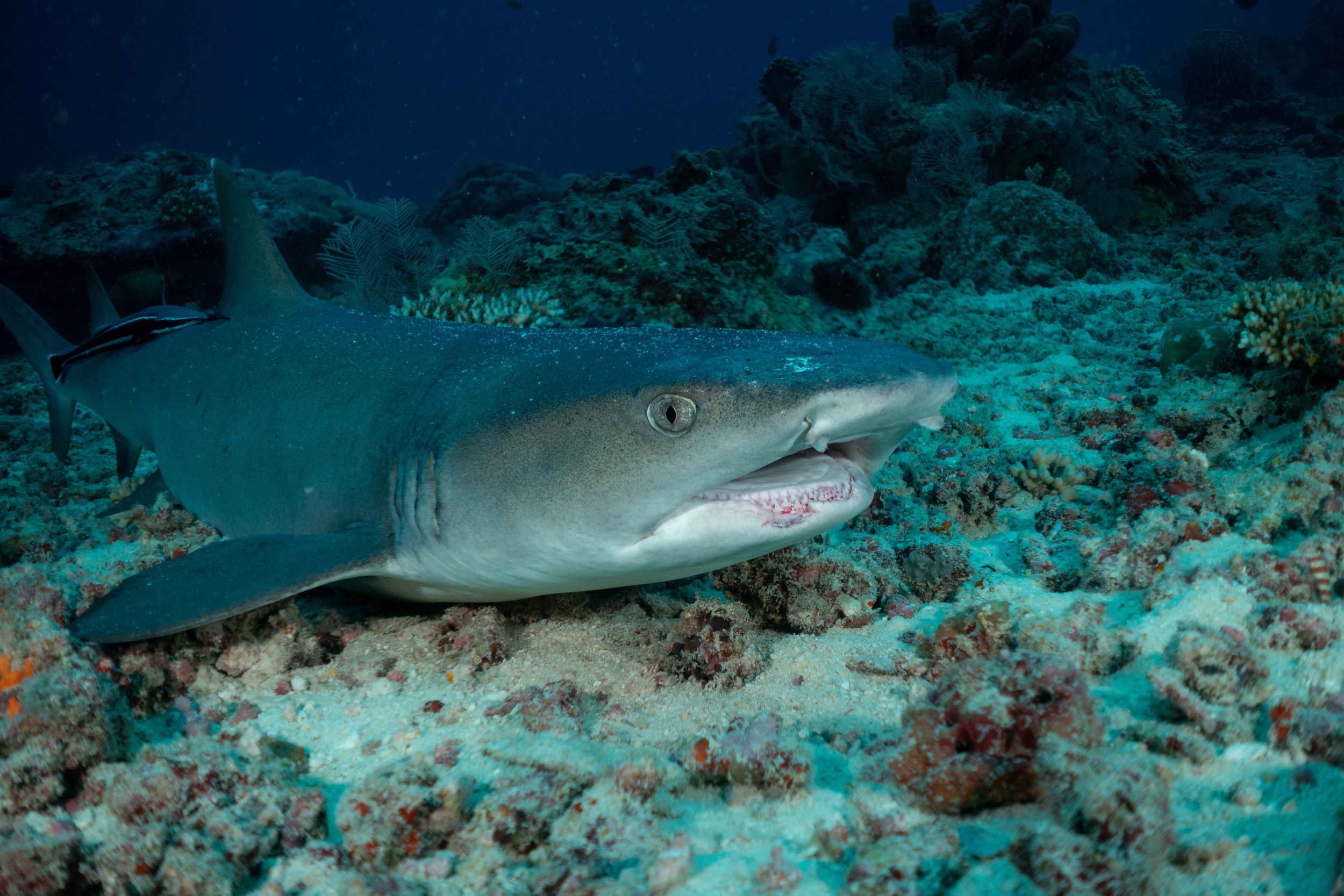
A Whitetip Reef Shark resting on the seabed at Sipadan, Malaysia
This guide explores the types of sharks found in Southeast Asia, how to identify them, where divers are most likely to see them, and how to interact with them safely and responsibly. Whether you’re new to diving, building confidence around sharks, or simply want to better understand the species you’re encountering underwater, this overview highlights why sharks deserve respect, appreciation, and protection — not fear.
Understanding which sharks you’re likely to see — and how to identify them — helps divers feel more confident underwater and appreciate these animals for what they truly are: essential, generally calm, and misunderstood guardians of reef health.
Below is an overview of the most common sharks found in Southeast Asia, along with identification tips, behavior insights, and where divers are most likely to encounter them.
🦈 Shark Species Found in Southeast Asia
Southeast Asia is home to a remarkably diverse range of shark species, thanks to its mix of coral reefs, deep channels, offshore seamounts, and nutrient-rich currents. For divers, this means encounters can range from small, reef-associated sharks seen on everyday dives to large, wide-ranging pelagic species that appear only at specific sites, depths, or seasons.
The sharks of Southeast Asia broadly fall into three main categories:
Reef-associated sharks are the species divers encounter most often. These sharks, such as whitetip, blacktip, and grey reef sharks, spend much of their time around coral reefs, walls, and drop-offs. They are commonly seen cruising reef edges, resting under ledges, or patrolling current-swept pinnacles, and are a familiar sight at destinations like Sipadan, Komodo, Raja Ampat, and parts of Thailand and the Philippines.
Pelagic and semi-pelagic sharks are less frequently encountered but are often the most iconic. Species such as scalloped hammerheads, thresher sharks, and whale sharks move over large distances and tend to appear at deeper sites, offshore reefs, or seasonal aggregation points. Sightings are less predictable, but when they happen, they are often among a diver’s most memorable experiences.
Finally, Southeast Asia is also home to a number of rare, cryptic, or lesser-known shark species. These include small, bottom-dwelling sharks like bamboo sharks, well-camouflaged wobbegongs, and unique walking sharks found in parts of eastern Indonesia. While not always the focus of dive trips, these species highlight just how biologically rich the region truly is.
In the sections below, we’ll look at the most notable shark species found in Southeast Asia one by one, focusing on how to identify them, where divers are most likely to see them, and what to expect during an encounter — from commonly seen reef sharks to rare and exceptional sightings.
🦈 Whitetip Reef Shark (Triaenodon obesus)
Whitetip reef sharks are one of the most commonly encountered sharks in Southeast Asia and are often the first shark species many divers see. They are relatively small, slender sharks with a distinctive white tip on the dorsal fin and an elongated body adapted for maneuvering through reef structures.
Unlike many other sharks, whitetip reef sharks are often inactive during the day, resting under ledges, inside caves, or on sandy patches near the reef. At night, they become active hunters, making night dives one of the best times to observe their behavior.
Where divers see them:
Sipadan, Thailand, Indonesia, Philippines, Raja Ampat, Komodo
Typical behavior:
Resting under ledges during the day
Slow, relaxed swimming
Very tolerant of divers at a respectful distance
Whitetips are calm, non-aggressive, and an excellent example of how sharks are usually uninterested in human presence.
🦈 Blacktip Reef Shark (Carcharhinus melanopterus)
Blacktip reef sharks are easily identified by the distinct black markings on the tips of their fins, particularly the dorsal fin. They are fast, alert swimmers and are most often seen in shallow reef environments, lagoons, and along reef flats.
These sharks are more active than whitetips and tend to make brief appearances, often cruising past before disappearing into the blue. They are sometimes seen in very shallow water, including areas snorkelers frequent.
Where divers see them:
Indonesia, Philippines, Thailand, Malaysia
Typical behavior:
Quick, confident swimming
Passing encounters rather than lingering
Often seen alone or in small numbers
Blacktip reef sharks are a classic sighting on tropical reef dives and are a strong indicator of healthy reef systems.
🦈 Grey Reef Shark (Carcharhinus amblyrhynchos)
Grey reef sharks are larger, more powerful sharks that are strongly associated with current-swept reefs, drop-offs, and pinnacles. They are one of the most iconic shark species for divers in Southeast Asia and are frequently seen at sites known for strong currents.
They have a robust, streamlined body, grey coloration, and a confident presence in the water. Grey reef sharks are often seen cruising reef edges or hovering in the current, sometimes circling at a distance.
Where divers see them:
Sipadan, Komodo, Raja Ampat, Banda Sea
Typical behavior:
Actively swimming into current
Curious but cautious circling
Often seen in groups at high-energy sites
While they command respect due to their size and confidence, grey reef sharks are not aggressive toward calm, controlled divers.
🦈 Scalloped Hammerhead Shark (Sphyrna lewini)
The scalloped hammerhead is the primary hammerhead species found in Southeast Asia and one of the region’s most sought-after shark sightings. Recognizable by the distinctive scalloped shape of the head, these sharks are often encountered in schools, particularly at depth.
Sightings are typically seasonal and depth-dependent, often occurring early in the morning or along deep drop-offs. Encounters are usually brief, with hammerheads cruising just beyond recreational depth limits.
Where divers see them:
Sipadan, Banda Sea, parts of Indonesia
Typical behavior:
Schooling in open water
Shy and easily disturbed
Usually remain at a distance
Seeing scalloped hammerheads is considered a bucket-list experience for many divers.
🦈 Tiger Shark (Galeocerdo cuvier) — Rare Encounter
Tiger sharks are present in parts of Southeast Asia but are rarely encountered by recreational divers. They are large, powerful sharks with distinctive vertical striping, particularly visible in younger individuals.
Most sightings occur in deeper or offshore environments and are exceptional rather than expected. While tiger sharks have a fearsome reputation, encounters in Southeast Asia are extremely uncommon.
Where divers may see them:
Parts of Indonesia (rare, offshore)
Typical behavior:
Solitary
Wide-ranging
Rarely encountered on standard dive itineraries
🦈 Bamboo Sharks & Walking Sharks (Rare but Fascinating)
Southeast Asia is also home to small, bottom-dwelling sharks that many divers overlook:
Bamboo sharks are small, nocturnal sharks often seen resting on reefs or sandy bottoms
Walking sharks (found in parts of eastern Indonesia) use their fins to “walk” across the reef
These species are harmless, slow-moving, and a reminder of the region’s incredible shark diversity beyond the more famous species.
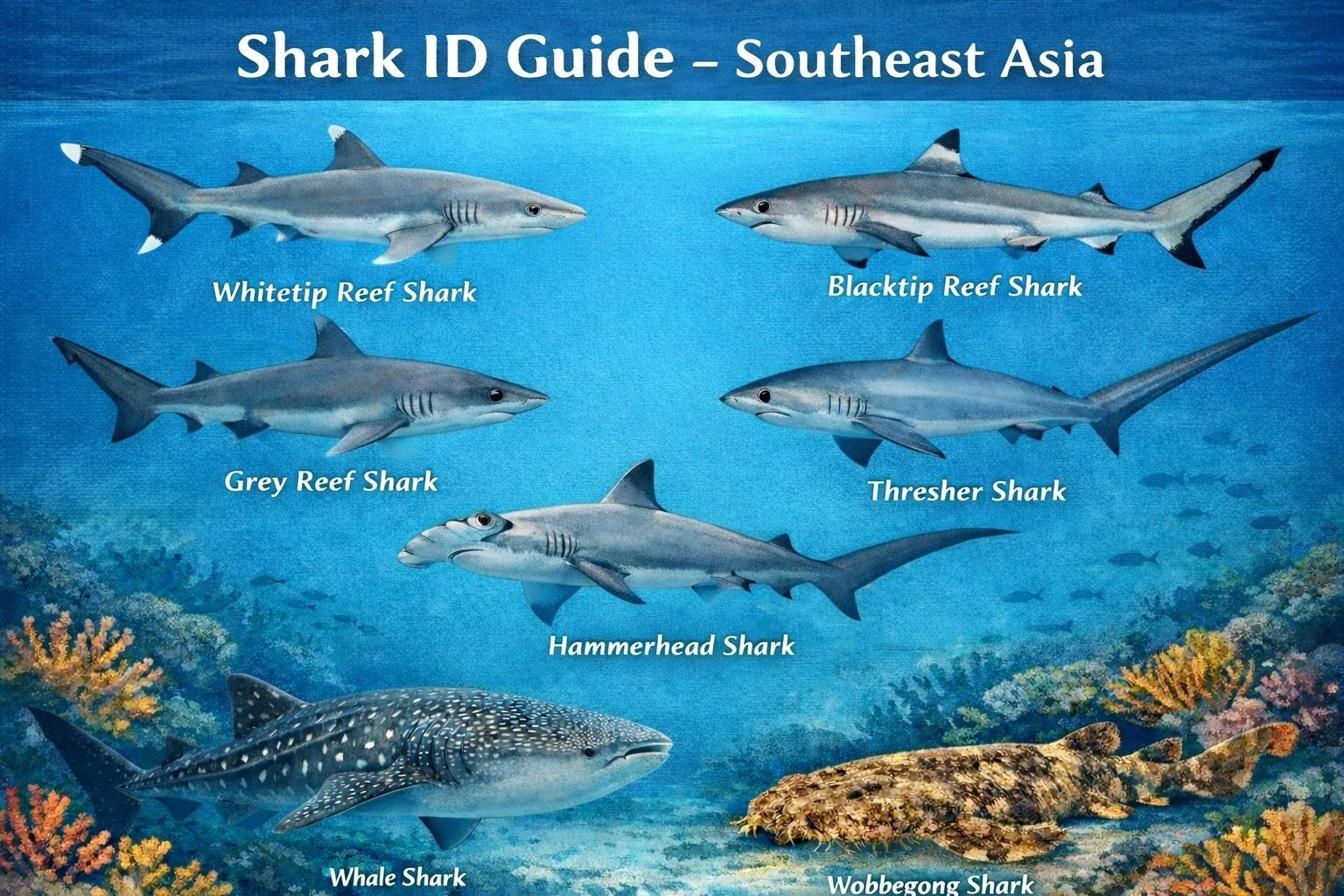
🌊 Why Sharks Are Important to Southeast Asia’s Reefs
Sharks play a crucial role in maintaining healthy marine ecosystems, particularly in a biodiverse region like Southeast Asia. As apex and mesopredators, they help regulate fish populations, influence animal behavior, and maintain balance across coral reef systems.
By preying on weaker, sick, or slower individuals, sharks help keep prey populations healthy and resilient. This natural selection process prevents overpopulation of certain species, reducing pressure on reefs and allowing coral and seagrass ecosystems to thrive.
Sharks also shape reef ecosystems through what is known as “behavioral control.” The mere presence of sharks influences where and how other marine animals feed and move. This helps prevent overgrazing in sensitive areas and encourages a more even distribution of marine life across the reef.
In Southeast Asia — home to the Coral Triangle, the world’s epicenter of marine biodiversity — sharks are a key indicator of reef health. Sites where reef sharks are commonly seen, such as Sipadan, Komodo, and Raja Ampat, are often among the most vibrant and intact marine environments in the region.
Beyond their ecological role, sharks also support sustainable marine tourism. Shark encounters are a major draw for divers, contributing long-term economic value to coastal communities when sharks are protected rather than exploited.
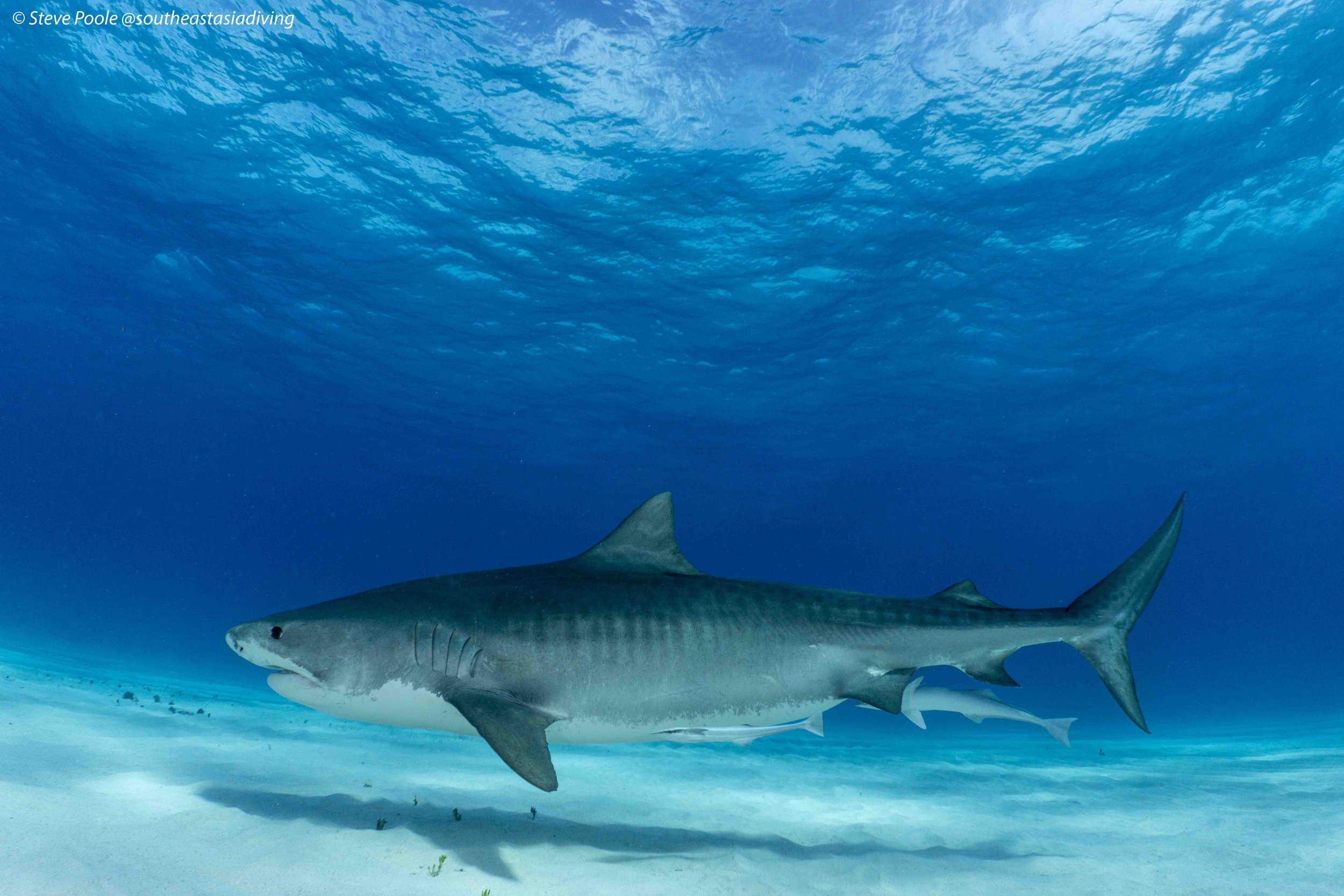
It is possible to see Tiger Sharks in Southeast Asia, but very rare
Protecting sharks in Southeast Asia is therefore not just about preserving individual species — it’s about protecting entire reef systems, the livelihoods that depend on them, and the future of diving in the region.
🛡️ Conservation Status: What Can We Do to Help?
Despite their importance to ocean health, many shark species found in Southeast Asia are under significant pressure. Overfishing, habitat degradation, and demand for shark products have led to population declines across much of the region, even in areas where divers still encounter sharks regularly.
Some species, such as scalloped hammerhead sharks, are now classified as Endangered globally, while others, including reef sharks, are considered Vulnerable or Near Threatened depending on location and fishing pressure. Declines often happen gradually and out of sight, making them easy to overlook until populations are severely reduced.
Why Southeast Asia Matters
Southeast Asia sits at the heart of global marine biodiversity, but it is also one of the regions where sharks face the greatest human pressure. Coastal development, fishing intensity, and limited enforcement in some areas all contribute to challenges for shark conservation.
At the same time, the region also demonstrates why protection works. Marine protected areas such as Sipadan, parts of Raja Ampat, and select sites in Indonesia and the Philippines consistently show higher shark abundance compared to unprotected reefs. These areas highlight the positive impact of regulation, enforcement, and responsible tourism.
How Divers Can Make a Difference
While individual divers can’t solve shark conservation alone, our choices do matter. Simple, consistent actions help support healthier shark populations:
Choose responsible dive operators that respect marine life and follow local regulations
Avoid activities that involve feeding, baiting, or harassing sharks
Support marine protected areas, both through visiting them and respecting their rules
Never purchase shark products, including souvenirs made from teeth, jaws, or fins
Share accurate information, helping to counter fear-based myths about sharks
For many coastal communities, shark diving tourism provides long-term economic value that far outweighs short-term exploitation. Divers play a key role in demonstrating that sharks are worth far more alive than removed from the ocean.
A Shared Responsibility
Shark conservation in Southeast Asia is not just about saving individual species — it’s about maintaining balanced, resilient reef systems. Healthy shark populations indicate healthy oceans, and their continued presence benefits everything from coral reefs to the communities that rely on them.
By diving responsibly, supporting conservation-focused operators, and advocating for protection rather than fear, divers help ensure that sharks remain a visible and vital part of Southeast Asia’s underwater world for generations to come.
🧠 Shark Behaviors in Southeast Asia
Understanding shark behavior is key to enjoying calm, respectful, and safe encounters underwater. In Southeast Asia, most shark interactions are predictable and non-aggressive, especially when divers remain calm and observant.
Sharks are highly evolved animals that rely on sensory awareness, body language, and environmental cues, and their behavior often reflects feeding patterns, habitat preferences, and comfort levels rather than aggression.
Common Shark Behaviors Divers Encounter
Cruising
The most common behavior divers see. Sharks move steadily along reef edges, walls, or current lines, often without changing speed or direction. This usually indicates a relaxed animal simply passing through its territory.
Resting
Some species, particularly whitetip reef sharks and bamboo sharks, are frequently seen resting on the seabed or under ledges during the day. This is normal behavior and does not indicate illness or distress.
Circling at a Distance
Species such as grey reef sharks may circle slowly when curious, especially in current-swept areas. This behavior is usually exploratory rather than confrontational and often ends once the shark decides the diver is not of interest.
Schooling (Seasonal / Site-Specific)
Certain species, most notably scalloped hammerhead sharks, may form schools at specific locations and times. These encounters are often brief, distant, and highly dependent on conditions such as temperature, depth, and current.
Species-Specific Behavioral Traits
Whitetip Reef Sharks
Nocturnal hunters, often resting during the day
Comfortable around divers
Frequently seen tucked under coral ledges
Blacktip Reef Sharks
Alert, fast-moving, and often seen in shallow water
Tend to flee quickly if approached
Often seen cruising reef flats and lagoon edges
Grey Reef Sharks
Strong swimmers associated with current
Confident body language
May display curiosity but typically maintain distance
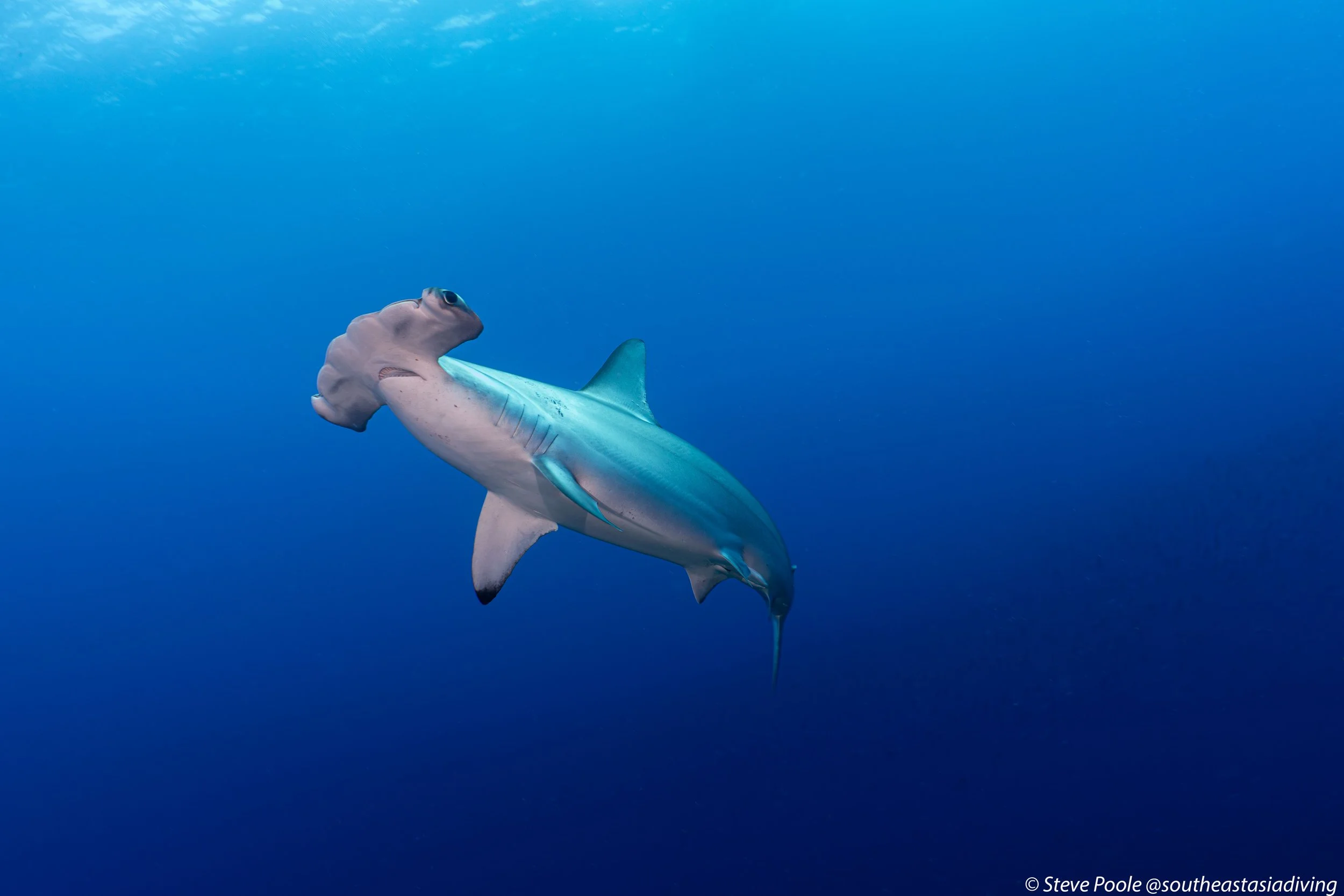
You can see Hammerhead Sharks occasionally at Sipdan, Malaysia or in the Banda Sea, Indonesia
Scalloped Hammerhead Sharks
Prefer deeper water and cooler temperatures
Often seen early morning or at depth
Schooling behavior is seasonal and site-specific
Thresher Sharks
Shy and elusive
Usually encountered at cleaning stations
Sensitive to bubbles and sudden movement
Whale Sharks
Slow-moving filter feeders
Often ignore divers entirely
Behavior is calm and predictable when undisturbed
Bamboo & Walking Sharks
Bottom-dwelling and slow-moving
Active mostly at night
Completely non-aggressive
Tiger Sharks (Rare Encounters)
Solitary and wide-ranging
Sightings are exceptional and usually brief
Not a common recreational dive encounter in Southeast Asia
Signs a Shark Is Uncomfortable
While rare, it’s useful for divers to recognize signs that a shark may be stressed:
Sudden changes in direction
Rapid tail movements
Tight circling combined with lowered pectoral fins
Quick retreats into deeper water
If these occur, calmly increase distance and follow your guide’s lead.
Why Behavior Awareness Matters
Understanding shark behavior allows divers to:
Anticipate movements
Avoid accidental stress or disturbance
Improve photography opportunities
Enjoy encounters more confidently
In Southeast Asia, sharks are not apex predators “on the hunt” — they are integral parts of functioning reef systems, going about their daily routines. Most encounters end exactly as they begin: with the shark gliding calmly away.
🤿 How to Dive With Sharks: What to Do (and What Not to Do)
Diving with sharks in Southeast Asia is generally a safe and rewarding experience, especially when divers follow good underwater etiquette and understand basic shark behavior. Most sharks encountered on recreational dives are not interested in humans and will simply pass by or keep their distance. Your behavior, however, plays an important role in ensuring encounters remain calm and respectful.
What to Do When Diving With Sharks
Stay calm and controlled
Sharks are highly sensitive to movement. Slow, deliberate actions help communicate that you are not prey and not a threat. Calm divers are far more likely to enjoy relaxed, close-but-comfortable encounters.
Maintain good buoyancy and positioning
Hovering neutrally above the reef or holding position in the current (without grabbing coral) allows you to observe sharks naturally as they cruise by. On current-swept sites, staying slightly below the reef crest often results in better sightings.
Face the shark, don’t chase it
Sharks prefer awareness and predictability. Turning to face a shark calmly is fine, but actively swimming toward one usually causes it to move away. Let the encounter come to you.
Follow your guide’s instructions
Local dive guides understand site-specific shark behavior, current patterns, and optimal positioning. Staying close and following guidance improves both safety and sighting quality.
What Not to Do
Do not chase or block a shark’s path
Pursuing sharks almost always ends the encounter and can cause unnecessary stress to the animal. Sharks should always have a clear escape route.
Avoid sudden movements or erratic finning
Fast kicks, arm movements, or rapid ascents can attract unwanted attention or signal distress — something sharks are naturally curious about.
Do not touch sharks
Even species that appear relaxed should never be touched. Touching can damage their protective skin layer and provoke defensive reactions.
Avoid wearing highly reflective or dangling gear
Shiny objects, loose hoses, or excessive accessories can draw curiosity. Keep gear streamlined and secure.
Special Considerations for Southeast Asia
Reef sharks (whitetip, blacktip, grey reef) are typically predictable and calm, especially when divers remain stationary.
Pelagic sharks (hammerheads, threshers) are more sensitive and usually seen briefly — patience and stillness are key.
Whale sharks require strict adherence to local regulations: maintain distance, avoid flash photography near the head, and never block their movement.
Diving with sharks is not about adrenaline or confrontation — it’s about awareness, respect, and observation. When divers behave responsibly, shark encounters become one of the most awe-inspiring and memorable experiences underwater, offering a powerful reminder of what healthy ocean ecosystems look like.
📸 Tips for Photographing Sharks
Photographing sharks is one of the most rewarding experiences in underwater photography, but it requires a slightly different mindset from reef or macro shooting. The goal isn’t to chase the perfect close-up, but to anticipate movement, respect space, and capture sharks as part of their environment.
Choose the Right Lens & Setup
Sharks are best photographed with a wide-angle or fisheye lens, allowing you to capture both the animal and its surroundings. Even reef sharks that come relatively close often look more powerful and natural when framed with reef structure, blue water, or other divers for scale.
Wide-angle lenses (10–17mm, fisheye) work best
Dome ports help maintain sharpness and perspective
Avoid switching to macro — shark encounters are often unexpected
Use Natural Light Whenever Possible
In many shark encounters, ambient light produces the most natural and flattering results. Sharks often cruise just below the surface or along drop-offs where light penetration is strong.
Position yourself with the sun behind you when possible
Increase ISO slightly to maintain fast shutter speeds
Use strobes cautiously and sparingly
Bright strobes can create harsh reflections on a shark’s white belly, blowing highlights and flattening detail. If strobes are used, keep them pulled back and angled outward to avoid hotspots.
Mind the White Bellies
Many shark species — including reef sharks, tiger sharks, and whale sharks — have light or white undersides that reflect light easily. Overexposure is one of the most common mistakes in shark photography.
To manage this:
Slightly underexpose your shot and recover shadows later
Watch your histogram carefully
Avoid firing strobes directly at the underside of the shark
A well-exposed shark image preserves texture and contrast without washing out the belly.
Anticipate Movement, Don’t Chase
Sharks are smooth, efficient swimmers that follow predictable paths. Instead of swimming toward them:
Position yourself calmly
Let the shark approach or pass naturally
Watch for repeated circuits around reefs or pinnacles
Chasing sharks often results in missed shots, stirred-up water, and stressed animals.
Focus on Shape, Motion & Context
Some of the strongest shark images emphasize silhouette, motion, and environment, rather than facial detail.
Consider:
Side profiles showing body shape
Sharks moving through schools of fish
Negative space with blue water
Eye-level perspectives rather than top-down angles
These approaches often convey power and grace better than close-ups.
Stay Calm & Aware
Good shark photography starts with good diving. Maintain excellent buoyancy, stay aware of your surroundings, and keep an eye on other divers and current changes.
Calm, confident divers tend to get closer, longer encounters — and better images.
When approached with patience and respect, shark photography becomes less about getting the shot and more about documenting a moment in a healthy ocean ecosystem. Some of the most powerful images aren’t the closest ones, but those that show sharks exactly as they are — wild, free-moving, and perfectly adapted to their environment.
🌊 Final Thoughts
Sharks are an essential and often misunderstood part of Southeast Asia’s underwater world. Far from the dramatic portrayals seen in popular media, most shark encounters in this region are calm, brief, and deeply memorable — a quiet reminder that you’re diving in a healthy, functioning ecosystem.
What makes Southeast Asia so special is the variety and accessibility of its shark encounters. From whitetip and blacktip reef sharks patrolling coral walls, to grey reef sharks thriving in current-swept channels, and rarer sightings of scalloped hammerheads, threshers, or even tiger sharks, the region offers remarkable diversity without requiring extreme or technical diving.
For divers, learning to identify different species, understand their behavior, and interact responsibly transforms shark encounters from moments of uncertainty into experiences of respect and appreciation. For the ocean, protecting sharks means protecting reefs, biodiversity, and the balance that supports all marine life.
Whether you’re spotting your first reef shark or hoping for a once-in-a-lifetime pelagic encounter, sharks are not something to fear — they are something to value. Diving with sharks is one of the clearest signs that you’re witnessing the ocean at its best.
❓ Frequently Asked Questions (FAQ)
Are sharks dangerous to divers in Southeast Asia?
Shark attacks on scuba divers are extremely rare, particularly in Southeast Asia. Most sharks encountered by divers are uninterested in humans and will simply pass by or keep their distance. Calm behavior, good buoyancy, and following your guide’s instructions make encounters safe and predictable.
What is the most common shark divers see in Southeast Asia?
The most commonly encountered sharks are whitetip reef sharks, blacktip reef sharks, and grey reef sharks. These species are regularly seen on reef dives across Indonesia, the Philippines, Malaysia, and Thailand.
What type of hammerhead is found in Southeast Asia?
The most commonly encountered hammerhead species in Southeast Asia is the scalloped hammerhead. Sightings are typically seasonal, deeper, and often occur early in the morning at specific sites such as Sipadan or parts of eastern Indonesia.
Are whale sharks aggressive?
No. Whale sharks are gentle filter feeders and pose no threat to divers. Encounters should always be conducted responsibly, maintaining distance and avoiding contact to protect the animal.
Can beginner divers see sharks?
Yes. Many reef sharks are encountered on dives suitable for Open Water certified divers, especially at destinations like Sipadan, Komodo, and Raja Ampat. Strong currents or deeper sites may require more experience, but many shark encounters occur on standard recreational dives.
Is it ethical to dive with sharks?
Yes — when done responsibly. Shark diving that follows local regulations, avoids feeding or baiting, and respects animal behavior supports conservation by demonstrating the value of sharks alive rather than exploited.
Why are sharks important to reef health?
Sharks are apex predators that help regulate fish populations and maintain balance within reef ecosystems. Their presence is often a sign of a healthy, well-protected marine environment.
What should I do if a shark approaches me?
Stay calm, maintain eye contact without staring aggressively, keep your movements slow, and remain aware of your surroundings. Sharks are curious but cautious — calm divers are rarely of interest to them.