Hair & Skin Care for Divers

Tropical diving can play havoc with divers skin and hair
How to Protect Yourself from Salt, Sun & Repeated Dive Days
Introduction
Most divers don’t think about hair or skin care until a few days into a dive trip — when hair feels brittle, skin feels tight, and lips are already cracked from sun and salt.
This isn’t about vanity. Diving places real, repeated stress on the body. Saltwater strips moisture. Sun exposure between dives adds cumulative damage. Frequent showers and rinse tanks don’t always help as much as we think they do.
In tropical regions like Southeast Asia, where dive days often involve multiple dives, strong sun, and long surface intervals on boats, these effects build quickly. By day three or four, it’s common to feel the impact — even for experienced divers.
The good news is that protecting your hair and skin while diving doesn’t require complicated routines or a bag full of products. A few simple habits, applied consistently, can make a noticeable difference — especially on liveaboards and multi-day dive trips.
Why Diving Is So Hard on Hair & Skin
Diving creates a unique combination of stressors that most people don’t experience in daily life. It’s not just saltwater — it’s repeated exposure, often without enough recovery time.
What diving does to your hair
Saltwater draws moisture out of hair strands, leaving them dry and rough. Each time hair gets wet and then dries again, the outer cuticle layer lifts slightly. Over multiple dives per day, this repeated wet-dry cycle weakens the hair structure and increases breakage.
Add sun exposure, wind on the boat, and occasional chlorine from pools or rinse tanks, and the damage compounds quickly. Hair that normally feels manageable can become tangled, brittle, or frizzy after just a few days of diving.
What diving does to your skin
Skin faces a similar challenge. Saltwater removes natural oils that help maintain the skin barrier, while sun exposure between dives accelerates moisture loss. Frequent showers — often necessary on dive trips — can strip away what little protection remains.
Dehydration plays a role as well. Long days on boats, warm climates, and repetitive immersion all contribute to skin feeling tight, dry, or irritated by the end of the day.
Why multi-day dive trips make it worse
The biggest issue isn’t a single dive — it’s accumulation. On liveaboards or dive-intensive itineraries, hair and skin rarely get enough time to fully recover between exposures. What starts as mild dryness on day one can turn into persistent irritation by day four or five.
Understanding this cumulative effect is key. Once you recognize why diving takes such a toll, it becomes much easier to protect against it — without overthinking your routine.
Saltwater vs Chlorine vs Sun
What Actually Causes the Damage

Saltwater and Sun are a killer combination!
Not all exposure affects hair and skin in the same way. On dive trips, three main factors work together — and understanding their differences makes prevention much easier.
Saltwater
Saltwater is the most constant stressor for divers. Its high salinity pulls moisture out of both hair and skin through osmosis, leaving them dry and depleted after repeated exposure.
For hair, saltwater causes the outer cuticle to lift, making strands feel rough and more prone to tangling and breakage. Once hair dries, the lost moisture isn’t easily replaced — especially when the cycle repeats multiple times per day.
For skin, salt residue left behind after dives continues to draw moisture away even after you’re out of the water. Without proper rinsing and hydration, skin can feel tight or irritated by the end of the day.
Chlorine
Chlorine exposure is less obvious but still relevant. Many dive trips involve swimming pools, and some rinse tanks may contain trace amounts of chlorine or other disinfectants.
Chlorine is more chemically aggressive than saltwater. It strips natural oils from hair and skin quickly, leaving them feeling “squeaky clean” — a sensation that often signals over-drying rather than cleanliness. For hair, chlorine can weaken the cuticle and fade color-treated or chemically processed hair faster than saltwater alone.
While chlorine exposure is usually brief on dive trips, it adds another drying layer to an already stressed system.
Sun exposure
Sun damage is often underestimated because it happens between dives rather than underwater. Strong tropical sunlight breaks down protein in hair and collagen in skin, accelerating dryness and long-term damage.
On boats, reflection from the water intensifies UV exposure, especially during surface intervals. Wind further dries exposed areas, compounding the effects of salt and sun together.
Unlike saltwater, sun damage continues even when hair and skin feel dry — making protection between dives just as important as care after diving.
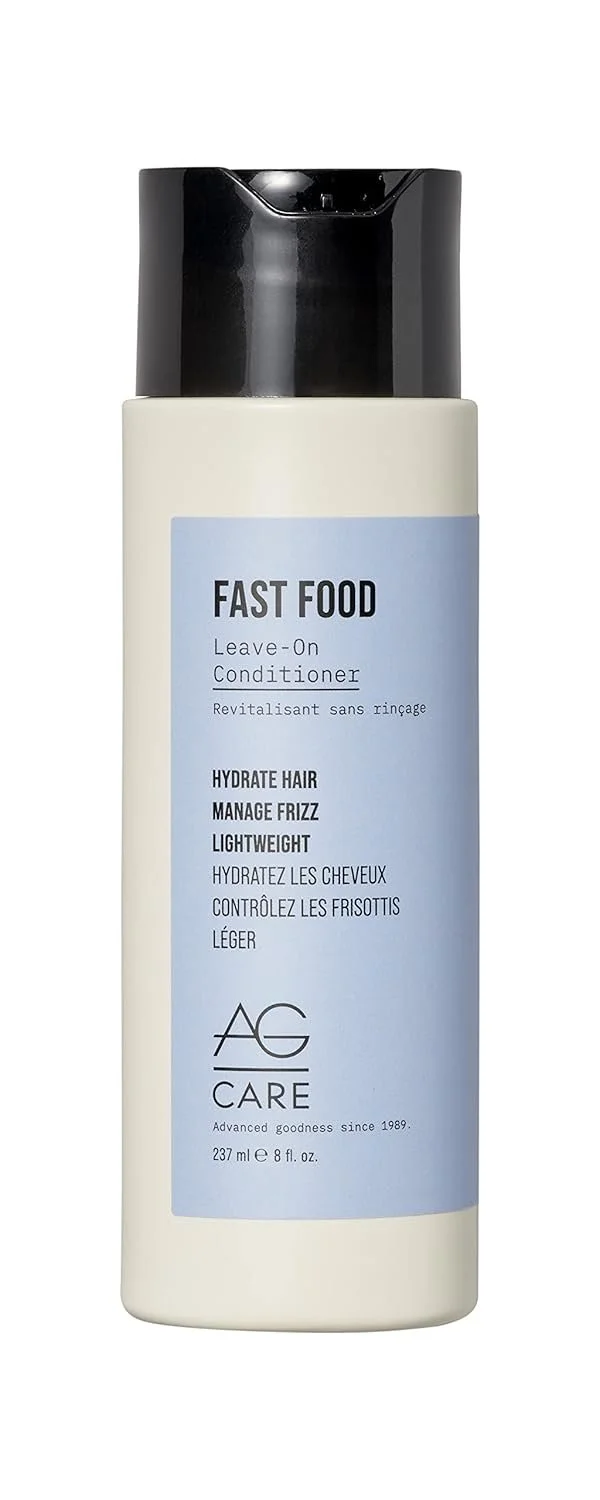
Click to purchase on Amazon
Why these factors work together
The real challenge for divers isn’t any single element — it’s how saltwater, chlorine, and sun stack on top of each other. Salt strips moisture, chlorine removes protective oils, and sun breaks down structure. With limited recovery time, especially on multi-day trips, hair and skin can’t fully repair between exposures.
Once you understand how each factor contributes, protecting your hair and skin becomes less about products and more about timing, habits, and minimizing unnecessary damage.
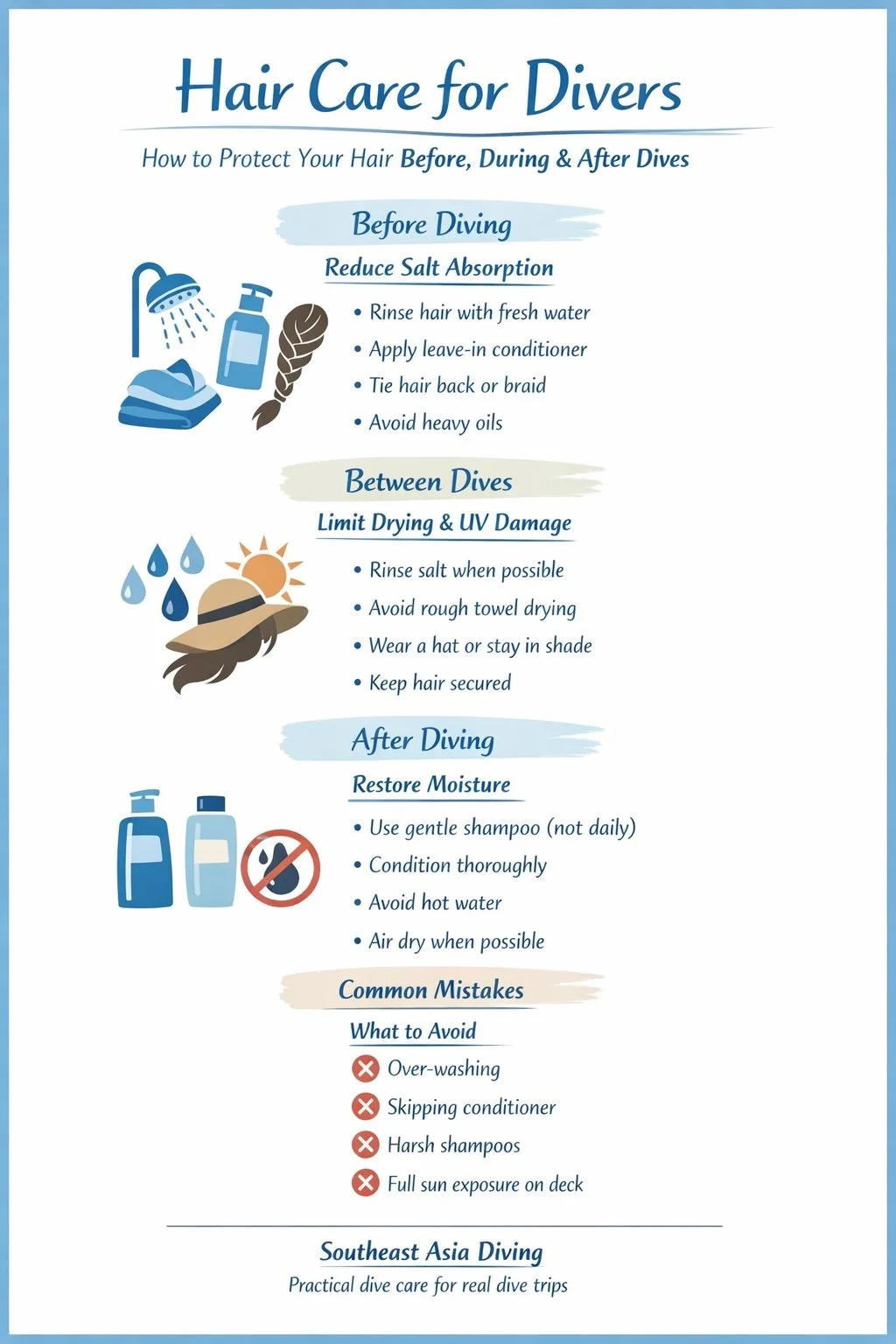
Hair Care for Divers
What to Do Before, During & After Dives
Protecting your hair while diving isn’t about fixing damage afterward — it’s about reducing how much damage happens in the first place. Small steps taken before and between dives make a much bigger difference than aggressive washing at the end of the day.
Before Diving: Reduce Salt Absorption
Hair absorbs water quickly. If it’s already saturated with freshwater, it takes in less saltwater — which means less dehydration and less cuticle damage.
Rinse hair with fresh water before the first dive of the day when possible
Apply a light leave-in conditioner to act as a protective barrier
Secure long hair in braids or a low bun to reduce tangling and breakage
Avoid heavy oils, which can increase sun damage and attract grit
These steps take minutes and are especially helpful on multi-dive days.
During Surface Intervals: Limit Drying & UV Exposure
The time between dives is when a lot of hair damage actually happens. Saltwater residue, wind, and direct sun combine to dry hair rapidly.
Rinse salt from hair when freshwater is available
Avoid aggressive towel drying — gently squeeze instead
Use a hat, buff, or shade during surface intervals
Keep hair tied back to reduce wind exposure
Even simple shade can dramatically slow moisture loss.
After Diving: Clean Gently, Condition Well
At the end of the day, the goal isn’t to strip hair completely clean — it’s to restore moisture and calm the cuticle.
Use gentle shampoo, and don’t feel obligated to wash daily if hair isn’t heavily soiled
Focus on conditioning, especially the mid-lengths and ends
Avoid hot water, which increases dryness
Let hair air-dry when possible
If hair feels brittle or tangled, it’s often a sign of over-cleansing rather than neglect.
Common Hair Care Mistakes Divers Make
Over-washing after every dive day
Skipping conditioner to feel “clean”
Using harsh or clarifying shampoos mid-trip
Leaving hair fully exposed to sun and wind between dives
Most damage happens gradually — and most of it is preventable with small adjustments.
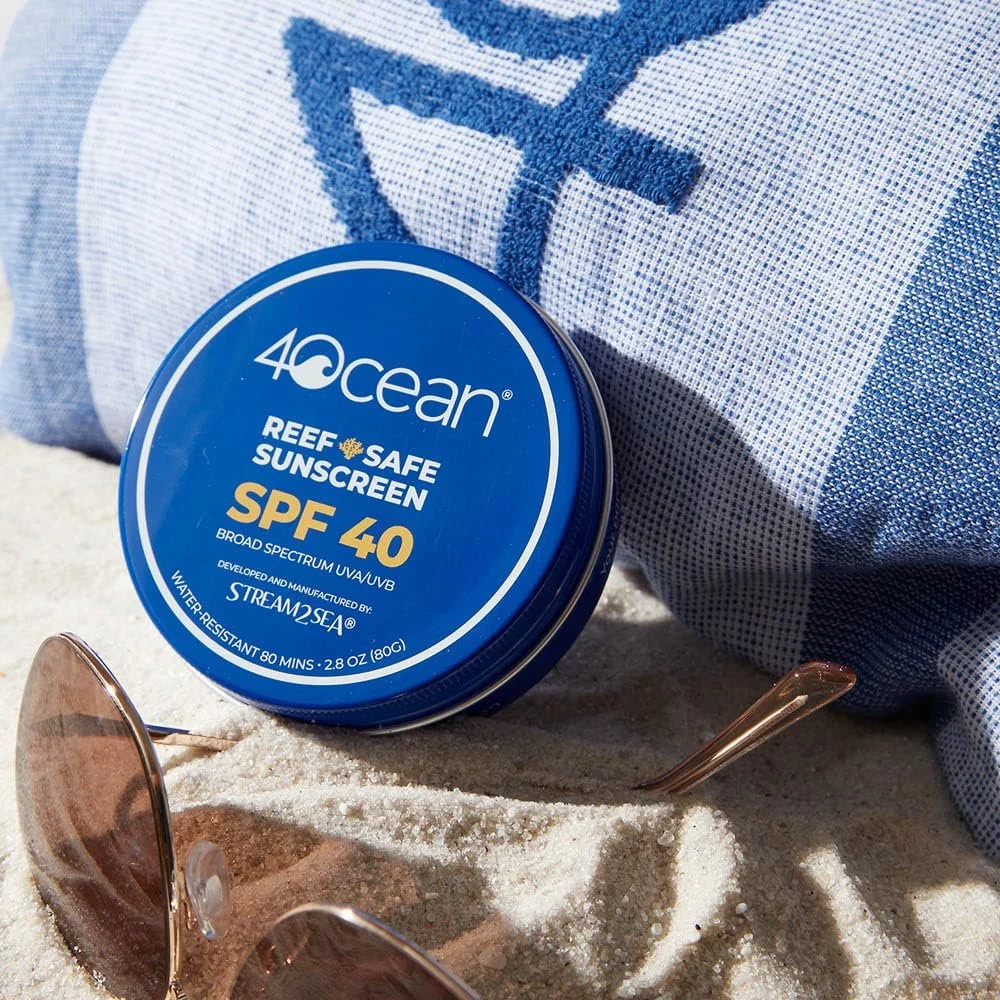
Click here to purchase on Amazon
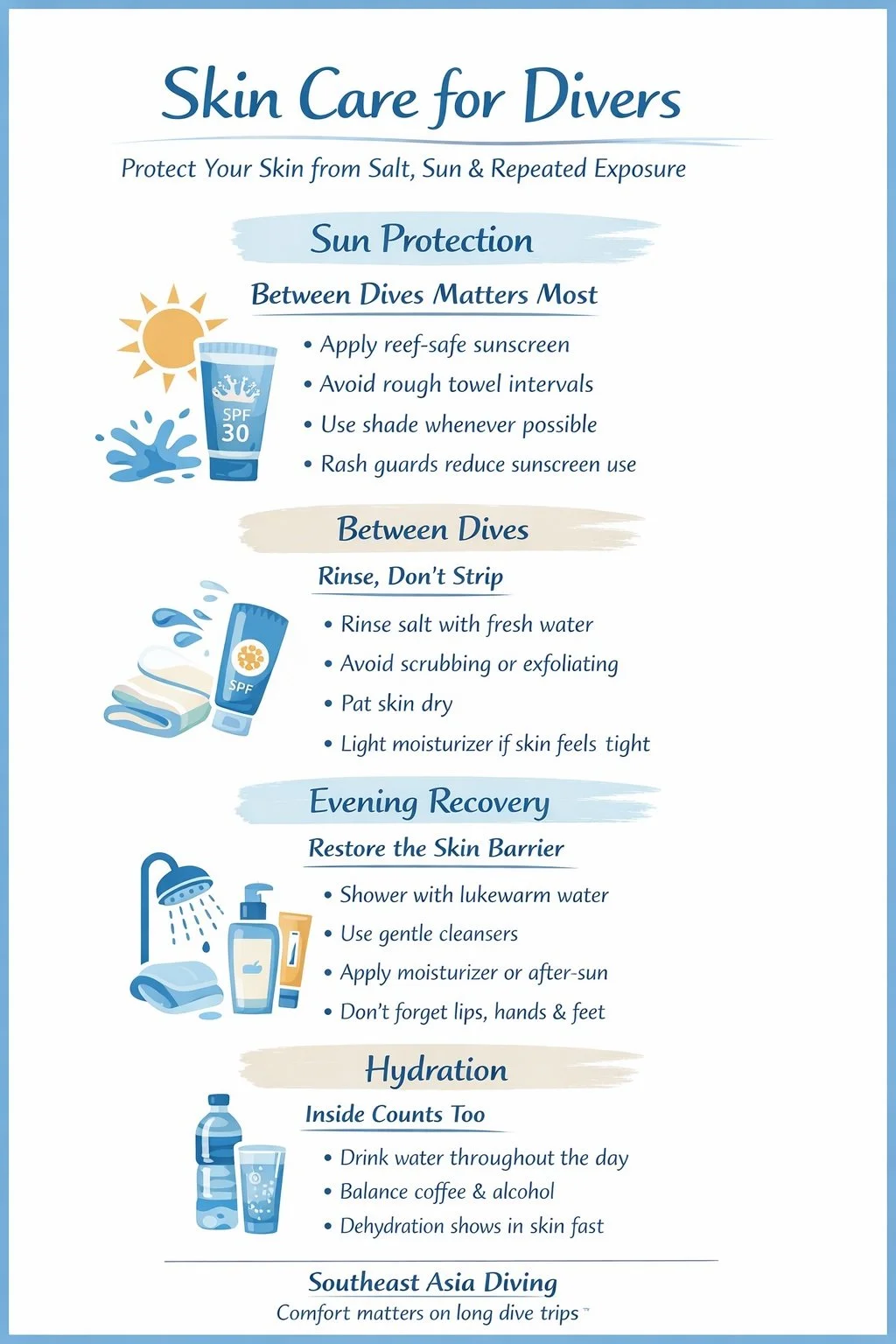
Skin Care for Divers
Protection & Recovery Without Overdoing It
Like hair, skin damage during dive trips is less about a single exposure and more about repetition. Saltwater, sun, and frequent rinsing slowly weaken the skin’s protective barrier — especially in tropical environments.
The goal isn’t to build a complicated skincare routine. It’s to protect first, then recover gently.
Sun Protection Between Dives
Most sun damage happens on the boat, not underwater. Surface intervals, gearing up, and post-dive relaxation all add up to significant UV exposure.
Apply reef-safe sunscreen to exposed skin before the first dive
Reapply during long surface intervals, especially on the face, neck, and hands
Use physical shade whenever possible — hats, towels, or boat cover
Remember reflective exposure from the water intensifies UV
Clothing-based protection (rash guards, long sleeves) often works better than relying on sunscreen alone.
Between Dives: Rinse, Don’t Strip
Salt residue continues to dry skin after you leave the water. Rinsing helps — but overdoing it can cause more harm than good.
Rinse salt from skin using fresh water when available
Avoid scrubbing or exfoliating mid-day
Pat skin dry instead of rubbing
Apply light moisturizer to exposed areas if skin feels tight
The aim is balance: remove salt without stripping natural oils.
Evening Recovery: Restore the Skin Barrier
After the final dive of the day, recovery matters most.
Shower with lukewarm water rather than hot
Use mild, non-drying cleansers
Apply a richer moisturizer or after-sun product
Pay attention to lips, hands, and feet — often the first areas to crack
If skin feels irritated, stinging, or itchy, it’s usually a sign it needs hydration, not more cleansing.
Hydration Matters More Than Products
Long dive days, warm climates, and repeated immersion all contribute to dehydration — and skin shows it quickly.
Drink water consistently throughout the day
Don’t rely solely on post-dive hydration
Balance coffee and alcohol intake, especially on liveaboards
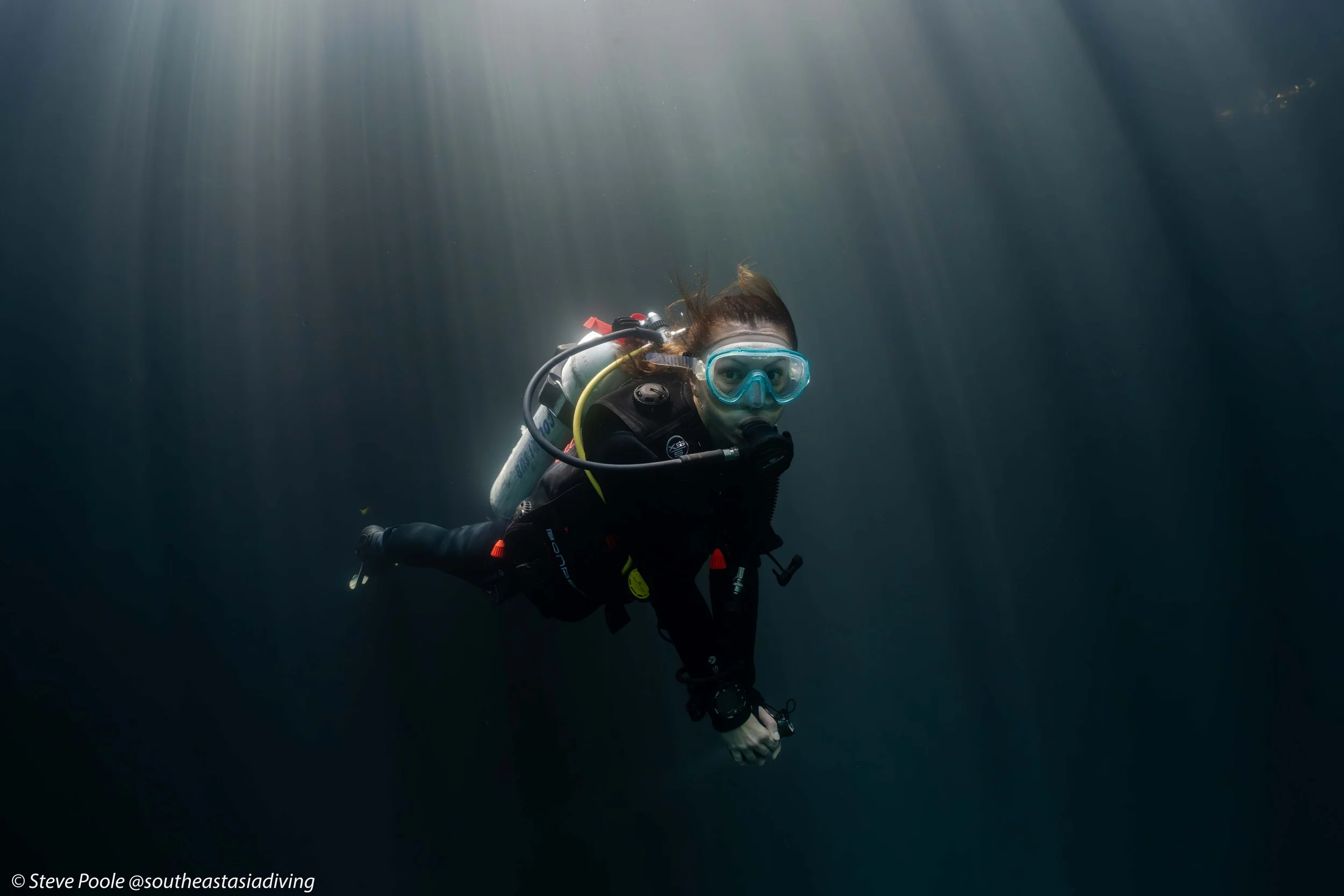
Healthy skin recovery starts from the inside.
Liveaboards & Multi-Day Dive Trips
Where Hair & Skin Take the Biggest Hit
Liveaboards and dive-intensive itineraries are where hair and skin care matter most. When you’re diving three to five times a day for several days in a row, the usual recovery time simply doesn’t exist.
Freshwater is limited, sun exposure is constant, and routines become compressed. Even good habits can start to slip — and that’s when dryness and irritation escalate quickly.
Limited Freshwater, Limited Recovery
On many liveaboards, freshwater is rationed. Short showers and shared rinse facilities mean hair and skin often stay partially coated in salt longer than ideal.
Salt residue builds up over consecutive days
Quick rinses replace thorough cleansing
Conditioner and moisturizer become more important than frequent washing
Trying to “wash everything clean” each day often backfires, leading to dryness and irritation.
Repeated Exposure Without Repair Time
On land-based trips, hair and skin usually get overnight recovery. On liveaboards, that recovery window shrinks.
Early mornings and late dives reduce rest time
Air-conditioned cabins dry skin further
Sun decks and surface intervals extend UV exposure
What feels manageable on day one can become uncomfortable by mid-trip if habits don’t adjust.
Practical Adjustments That Actually Help
Small changes make a noticeable difference on multi-day trips:
Wash hair less often; condition more consistently
Use freshwater strategically — quick salt removal over full showers
Prioritize shade during surface intervals
Moisturize lightly but regularly rather than heavily once
Consistency matters more than intensity.
The Mental Side of Comfort
Dry skin, tangled hair, and sunburn don’t just affect appearance — they affect comfort, sleep quality, and overall enjoyment of the trip.
When hair and skin feel better, divers tend to:
rest more comfortably between dives
sleep better at night
feel more energized on later dive days
On longer trips, that comfort can make the difference between feeling worn down and fully enjoying each dive.
Reef-Safe Hair & Skin Care
What Divers Should Actually Look For
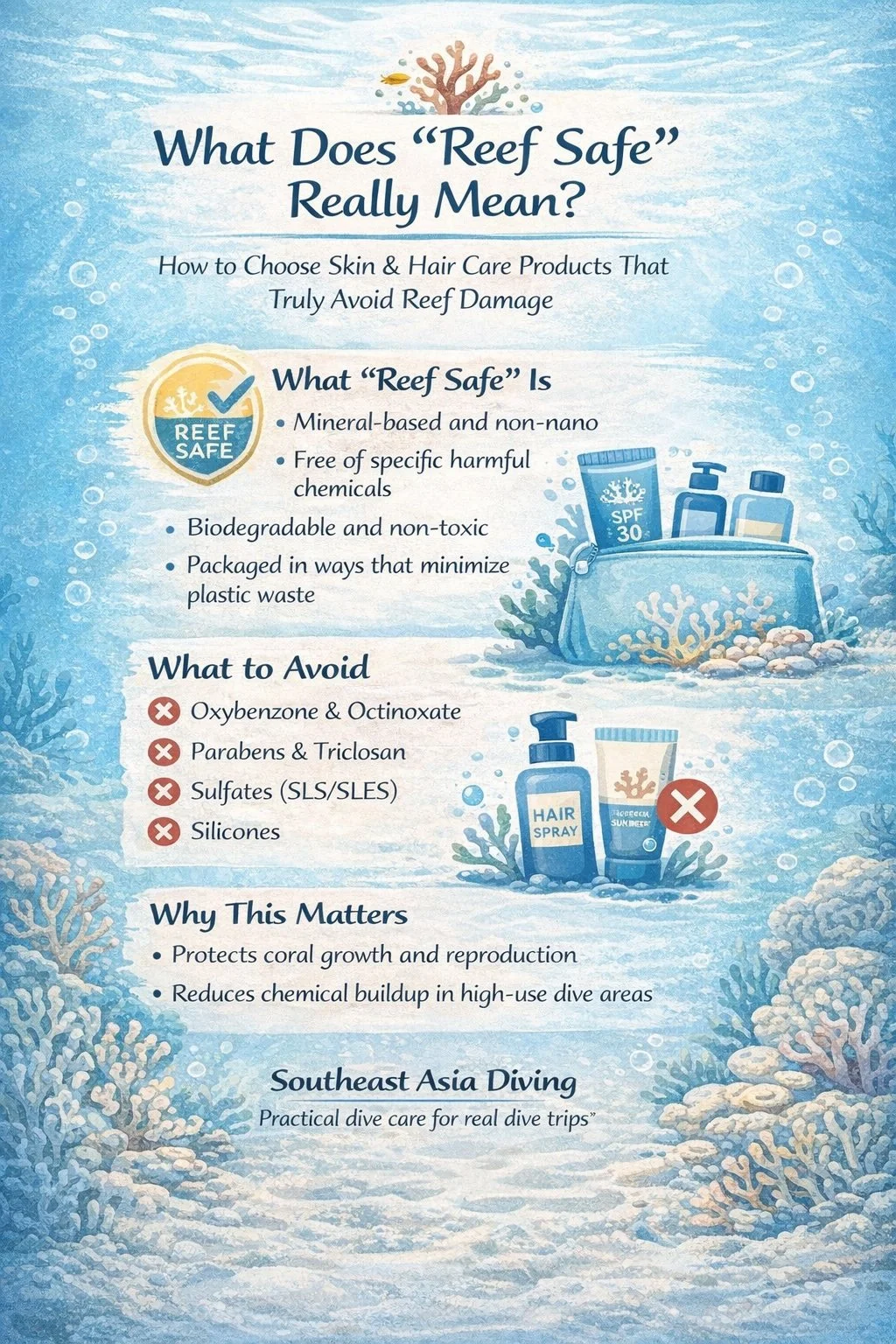
“Reef-safe” is a term that gets used a lot — and often loosely. For divers, the goal isn’t perfection, but reducing unnecessary impact while still protecting yourself effectively.
Understanding what actually matters makes it much easier to choose products that work for both you and the environment.
What “Reef-Safe” Really Means
At its core, reef-safe products aim to avoid ingredients shown to harm coral, fish, and marine ecosystems — particularly in shallow, high-use areas where divers and snorkelers concentrate.
The biggest concern is chemical sunscreen ingredients that have been linked to coral bleaching and reef stress. These compounds can accumulate in popular dive locations, especially in calm bays and lagoons.
That said, no product is completely impact-free. The goal is minimizing harm, not achieving zero footprint.
Ingredients Divers Should Avoid
When possible, avoid products containing:
Oxybenzone
Octinoxate
Octocrylene
Homosalate
These are commonly found in conventional sunscreens and some skincare products. Many destinations in Southeast Asia now actively encourage — or require — alternatives.
What Works Better for Divers
For sun protection, mineral-based sunscreens using zinc oxide or titanium dioxide are generally considered safer for reefs when properly formulated.
For hair and skin care:
Simple formulas with fewer additives tend to rinse away more cleanly
Products designed for frequent rinsing perform better than heavy, occlusive ones
Unscented or lightly scented options are often less irritating after repeated exposure
As with everything on a dive trip, functionality matters more than branding.
Clothing Is Often the Best Reef-Safe Option
One of the most overlooked reef-safe strategies is reducing how much product you need in the first place.
Rash guards and long-sleeve tops reduce sunscreen reliance
Wide-brim hats and buffs protect hair and scalp between dives
Light cover-ups limit sun exposure during surface intervals
Less product in the water means less impact — and less effort for you.
Balancing Reef Care With Personal Care
Divers sometimes swing too far in one direction — either ignoring reef impact entirely or sacrificing personal protection in the name of being eco-friendly.
Neither extreme works well.
Healthy skin and hair are part of enjoying multi-day dive trips, and divers who are uncomfortable, burned, or irritated are less likely to dive safely or responsibly. Choosing smarter products, using them thoughtfully, and relying on physical protection whenever possible is a practical middle ground.
A Simple Dive-Day Routine
Practical Hair & Skin Care That Fits Real Dive Schedules
This routine isn’t about perfection. It’s about reducing cumulative damage over multiple dive days while keeping things easy to maintain — even on liveaboards.
Morning: Prepare, Don’t Overload
Rinse hair with fresh water if available
Apply a light leave-in conditioner
Apply reef-safe sunscreen to exposed skin
Use clothing-based sun protection where possible
Starting the day protected reduces how much recovery you’ll need later.
Between Dives: Shade & Maintenance
Rinse salt from hair and skin when fresh water is available
Pat dry rather than rubbing
Reapply sunscreen to exposed areas during long surface intervals
Wear a hat or buff on deck
Most damage happens here — small habits make a big difference.
Evening: Recover & Reset
Shower using lukewarm water
Cleanse gently; avoid aggressive scrubbing
Condition hair thoroughly
Apply moisturizer or after-sun to restore hydration
This is the reset that makes the next day more comfortable.
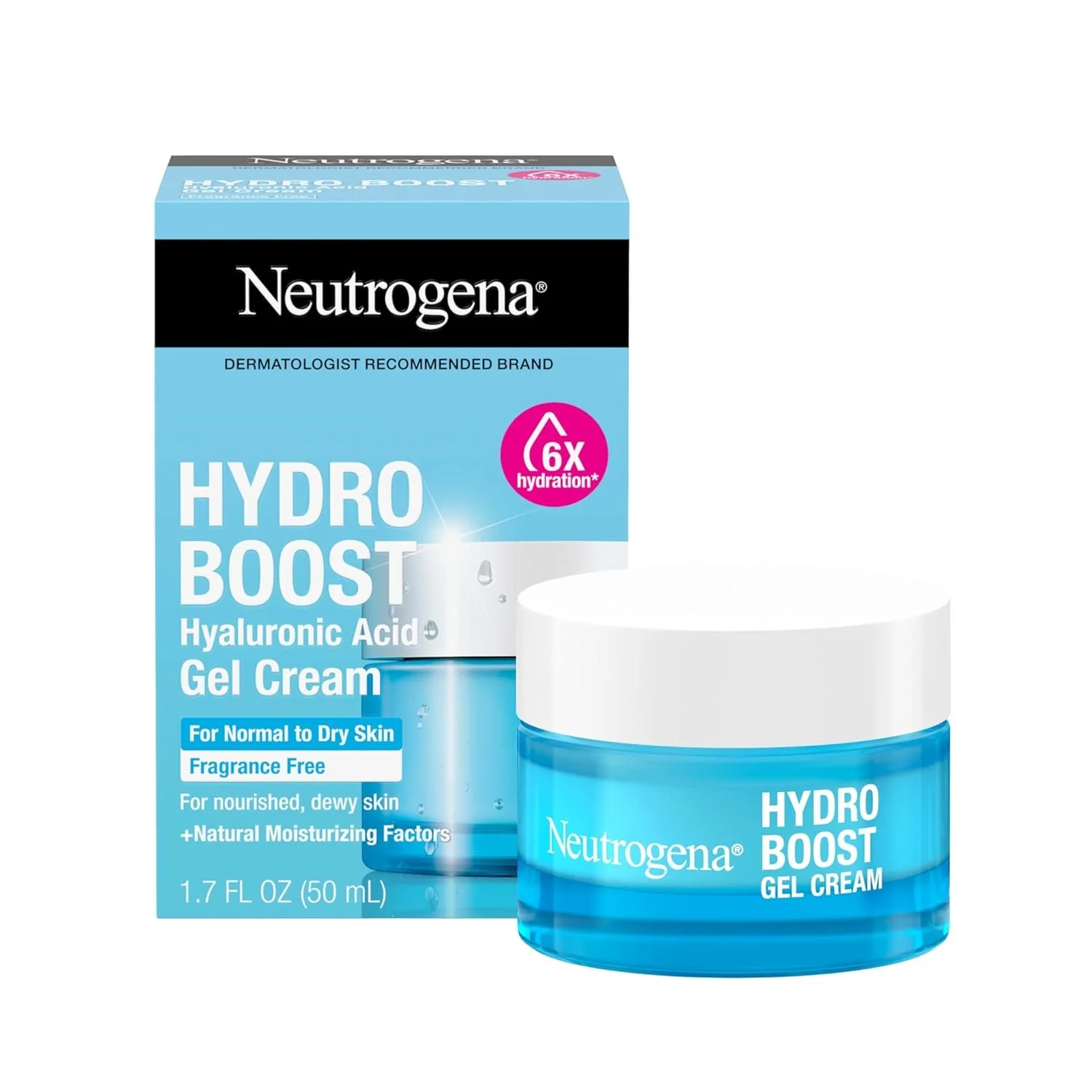
Click here to purchase on Amazon
On Liveaboards: Adjust Expectations
Wash hair less frequently; condition more
Moisturize lightly but consistently
Use freshwater strategically
Prioritize shade over sunscreen when possible
Consistency beats intensity over multi-day trips.
Hair Care Essentials
These few items cover most dive-related hair issues:
Gentle shampoo
Useful for removing salt buildup without stripping moisture. You won’t need it every day, but it’s important when you do.Conditioner
Often more important than shampoo on dive trips. Focus on restoring moisture rather than deep cleansing.Leave-in conditioner or detangler
Helps reduce salt absorption before dives and makes post-dive hair easier to manage.Hair ties or braids
Simple tools that prevent tangling, breakage, and regulator interference.
Optional extras for longer trips:
Wide-tooth comb
Lightweight hair mask (used sparingly)
Skin Care Essentials
Dive-friendly skin care is about protecting exposed areas and helping skin recover between days.
Reef-safe sunscreen
Essential for surface intervals and time on deck. Choose one you’re comfortable reapplying.Moisturizer or after-sun lotion
Helps restore hydration after repeated salt exposure.Lip balm with sun protection
Lips are often the first area to crack on dive trips.Hand cream
Especially useful on liveaboards where hands are constantly wet.
Optional extras:
Small face moisturizer for evenings
Foot cream for long days in wet gear
Clothing That Reduces Product Use
Some of the most effective “products” aren’t products at all.
Rash guards or long-sleeve tops
Reduce the need for sunscreen on arms and shoulders.Wide-brim hat or cap
Protects face and scalp during surface intervals.Light cover-up or towel
Useful for shade and wind protection on deck.
Using clothing strategically means less sunscreen in the water — and less effort overall.
What to Skip
Many items sound helpful but add little value on dive trips:
Heavy styling products
Strong exfoliants
Harsh or clarifying shampoos
Highly scented products that irritate sun-exposed skin
If it doesn’t support protection or recovery, it probably isn’t worth packing.
Final Thoughts
Caring for Yourself So You Can Enjoy the Diving
Hair and skin care on dive trips isn’t about looking polished — it’s about comfort, recovery, and enjoying long days in the water without unnecessary irritation.
Salt, sun, and repeated exposure are part of diving, especially in tropical regions like Southeast Asia. The effects build gradually, which is why small, consistent habits matter far more than products or routines.
By rinsing thoughtfully, protecting yourself between dives, and focusing on recovery rather than over-cleansing, you can reduce dryness, irritation, and fatigue over multi-day trips. The result is simple: you feel better, rest better, and enjoy each dive more.
Good dive trips take care of the reef — and good dive trips also take care of the diver.
Frequently Asked Questions ❓
Does saltwater permanently damage hair?
Saltwater doesn’t cause permanent damage on its own, but repeated exposure without proper care can weaken hair over time. Dryness, breakage, and tangling are usually signs of cumulative moisture loss rather than irreversible damage.
Should I wash my hair every day when diving?
Not necessarily. On multi-day dive trips, washing hair every day can increase dryness. Many divers benefit from washing less frequently and conditioning more consistently instead.
Is reef-safe sunscreen really necessary for divers?
In high-use dive areas, chemical sunscreen ingredients can accumulate and stress reef systems. Reef-safe alternatives and sun-protective clothing reduce environmental impact while still offering effective protection.
How can I protect dyed or treated hair while diving?
Freshwater rinsing before dives, regular conditioning, and limiting sun exposure help slow color fading. Avoid harsh or clarifying shampoos during dive trips.
Why does my skin feel worse on liveaboards?
Limited freshwater, repeated exposure, air conditioning, and sun all contribute to dehydration. Skin often doesn’t get enough recovery time on liveaboards, which is why gentle care and consistent hydration matter more.
Are rinse tanks bad for hair and skin?
Rinse tanks are useful but imperfect. Mixed salinity, residue, and occasional disinfectants can contribute to dryness. Use them for quick salt removal, but rely on gentle cleansing and conditioning later in the day.
What’s the easiest way to reduce damage without products?
Shade and clothing. Rash guards, hats, and cover-ups reduce sun exposure and limit how much product you need in the first place — benefiting both you and the reef.