Raja Ampat Packing List for Divers (Liveaboard & Resort Guide)

Raja Ampat is a remote scuba diving destination
Packing for Raja Ampat diving is not the same as packing for a typical tropical vacation.
This is one of the most remote and biologically rich dive regions on Earth. Reaching Raja Ampat often involves multiple international and domestic flights, strict baggage limits on smaller Indonesian carriers, humid equatorial conditions, and very limited access to replacement dive gear once you arrive. Whether you’re boarding a liveaboard in Sorong or heading to a Dampier Strait resort, preparation isn’t optional — it’s part of the experience.
Raja Ampat is expedition-style scuba diving. You’ll likely complete three to four dives per day. Currents can be strong. Charging stations are shared. Cabins are compact. And if something small fails — an O-ring, fiber optic cable, or mask strap — there isn’t a convenient dive shop nearby to solve it.
This packing list focuses on practicality, reliability, and efficiency. Not just what to bring — but what you don’t want to forget when you’re hundreds of miles from the nearest major city.
Think of it less as a beach holiday checklist and more as preparation for a remote marine expedition.
This post may contain affiliate links. As an Amazon Associate, I earn from qualifying purchases at no extra cost to you.
🐠 Essential Dive Gear
Raja Ampat is not the place to discover your rental mask leaks halfway through dive two of the day.
While most Raja Ampat liveaboards and resorts provide quality rental equipment, this is a remote dive destination. If something doesn’t fit properly or fails mid-trip, replacement options are limited — and sometimes unavailable. Bringing your core personal scuba diving gear ensures comfort, familiarity, and consistency across repetitive multi-dive days.
When you’re diving three to four times a day in warm water and current, small comfort issues quickly become big frustrations.
Mask (Bring a Backup)
Your mask is the most personal piece of scuba diving equipment you own. Fit becomes critical when you’re diving multiple times a day in humid tropical conditions.
I once dropped my primary mask onto a concrete jetty while diving Atauro Island in Timor-Leste. The lens shattered instantly. Because I had packed a spare, I didn’t miss a single dive. In a remote destination like Raja Ampat, that kind of redundancy removes real risk.
Bring your primary mask — and a lightweight backup mask packed in your luggage. It takes almost no space, but it can save your entire Raja Ampat dive trip.
Dive Computer (Nitrox Compatible)
Most Raja Ampat liveaboards operate on Nitrox as standard. With repetitive dive schedules and strong currents, a reliable dive computer becomes essential for both safety and surface interval management.
Before traveling, make sure your dive computer:
Supports Nitrox
Has a fresh battery or full charge
Is configured and tested
Remote dive trips are not the place to learn a new interface or troubleshoot battery issues between dives.
SMB + Reel
Drift dives are common in Raja Ampat, particularly around the Dampier Strait. A surface marker buoy (SMB) adds safety, visibility, and redundancy — and is often required by operators.
Carrying your own SMB ensures you:
Are familiar with your equipment
Can deploy confidently in current
Are not relying solely on a guide
Practice deploying it before your trip, especially if you haven’t used it recently.
Reef-Safe Sunscreen
Raja Ampat lies within the Coral Triangle — the global epicenter of marine biodiversity. You’ll spend significant time exposed on deck between dives, so reef-safe sunscreen protects both your skin and the fragile reef ecosystems you’re there to explore.
Choose non-nano zinc formulations that are biodegradable and coral-safe.
Save-a-Dive Kit
In remote dive regions, small mechanical failures cause outsized frustration.
A compact save-a-dive kit with spare O-rings, silicone grease, zip ties, a regulator mouthpiece, and a small multi-tool can prevent a minor issue from ending a dive day. These items weigh almost nothing, but in a remote Raja Ampat liveaboard setting, they’re invaluable.
| Essential Gear | Why It Matters in Raja Ampat | Recommended Type | |
|---|---|---|---|
| Dive Mask | Comfort and seal matter when diving 3–4 times per day. Rental masks may leak or fit poorly. | Low-volume silicone mask | View on Amazon |
| Backup Mask | Prevents trip-ending issues if your primary mask breaks or strap snaps. | Compact lightweight backup mask | View on Amazon |
| Nitrox Dive Computer | Essential for repetitive Nitrox diving on Raja Ampat liveaboards. | Nitrox-compatible wrist computer | View on Amazon |
| SMB + Reel | Important for drift dives in Dampier Strait and current-prone sites. | Compact DSMB + finger spool | View on Amazon |
| Reef-Safe Sunscreen | Protects your skin while preserving Coral Triangle reef ecosystems. | Non-nano zinc mineral sunscreen | View on Amazon |
| Save-a-Dive Kit | Prevents minor mechanical issues from ending a dive day. | O-rings, silicone grease, zip ties, small tool kit | View on Amazon |
Disclosure: This article may contain affiliate links. If you purchase through these links, I may earn a small commission at no extra cost to you. I only recommend gear appropriate for remote dive destinations like Raja Ampat.
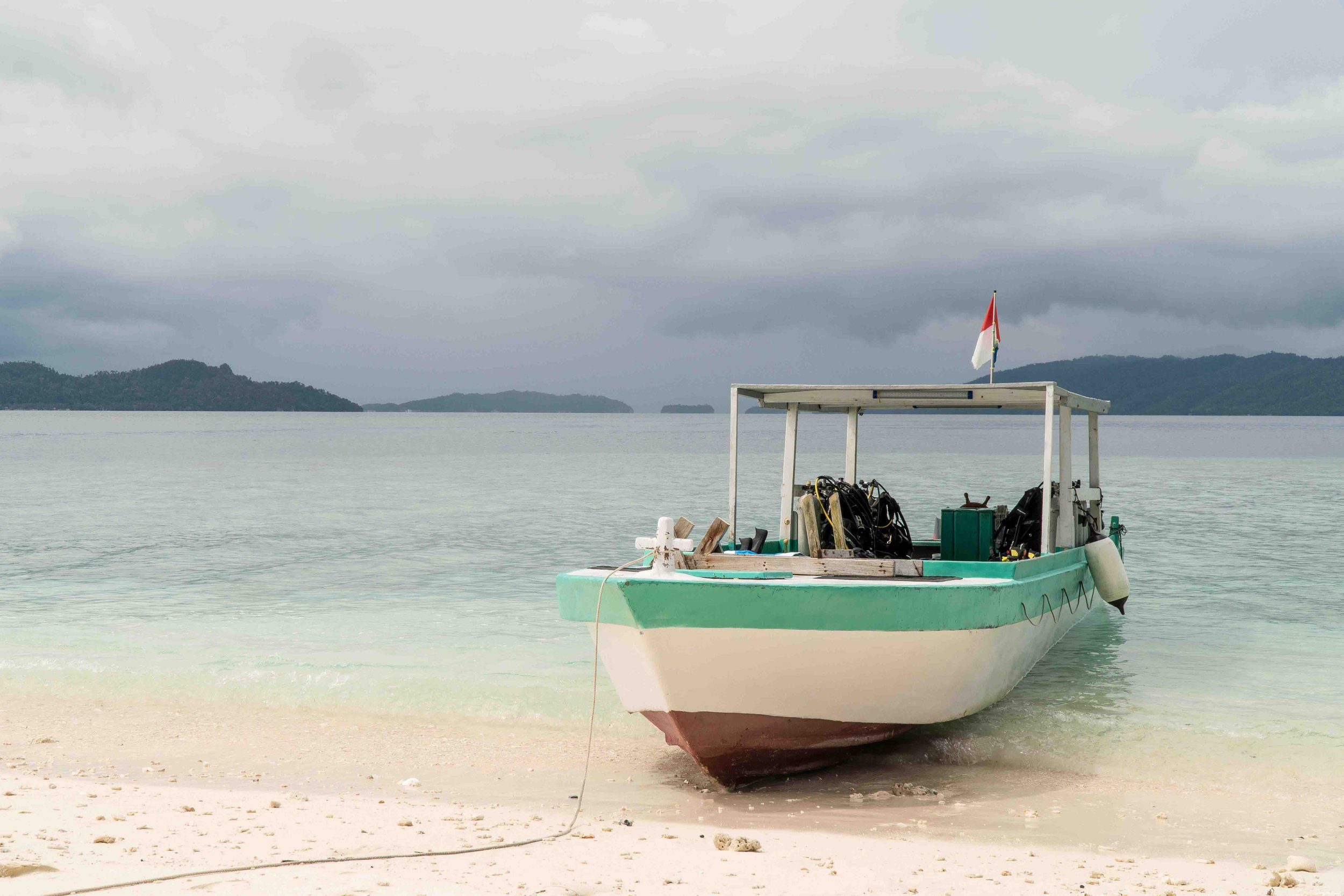
A dive boat in Raja Ampat
Preparation isn’t overpacking — it’s protection against avoidable disruption.
📸 Underwater Photography Packing Essentials for Raja Ampat
Raja Ampat is world-class wide-angle diving — reef density, schooling fish, shark silhouettes, manta cleaning stations, and layered coral slopes that demand perspective. For many divers, this is a bucket-list underwater photography destination.
But in remote locations like Raja Ampat, reliability and logistics matter just as much as image quality.
Three to four dives per day on a liveaboard means small oversights compound quickly. A forgotten cable, a cracked dome port, or poor battery planning can sideline your entire camera system for days.
When packing underwater photography gear for Raja Ampat, think beyond lenses and megapixels. Think durability, transport strategy, charging efficiency, and handling in current.
Protecting Your Underwater Camera Gear in Transit
Reaching Raja Ampat usually involves multiple international and domestic flight segments, tight baggage allowances on Indonesian carriers, and unpredictable luggage handling.
For underwater camera systems, protection strategy is critical.
Use a padded carry-on insert or hard case for camera bodies and lenses. Dome ports should always travel with a dedicated dome cover — never loose inside a bag. Add soft neoprene wraps for ports and strobes, and include silica gel packs to reduce humidity exposure during transit.
Dome ports are especially vulnerable. A crack during travel can end wide-angle shooting for your entire Raja Ampat dive trip — and replacements are nearly impossible to source locally.
Whenever possible, carry critical camera components in hand luggage:
Camera body
Primary lenses
Dome port
Essential electronics
Checked luggage is a risk. Plan accordingly.
Charging Strategy on Raja Ampat Liveaboards
Liveaboard diving in Raja Ampat means shared charging stations, limited outlets, and constant humidity.
Power management is one of the most common failure points for underwater photographers.
Bring:
A compact power strip
A universal travel adapter (Indonesia uses Type C and F plugs)
Spare camera batteries
Spare strobe batteries
Extra memory cards
A small power strip is one of the highest-value photography items you can pack. It keeps your footprint organised and ensures you’re not competing for outlets between dives.
Raja Ampat is not the place to realise you only brought one battery or one charging cable.
Plan for redundancy.
Small Accessories That Save Underwater Photography Trips
The most commonly forgotten items are often the most critical.
A spare fiber optic cable weighs almost nothing but can restore full strobe functionality if one fails. Microfiber cloths help manage condensation and salt spray. Anti-fog inserts or desiccant packs reduce housing humidity issues when opening between dives. A headlamp simplifies early-morning setup and night dive preparation in low light.
Humidity is constant in Raja Ampat. Housings can fog if opened carelessly in damp air. Desiccant packs and disciplined handling make a real difference.
These small accessories rarely feel important when packing — but they become invaluable when needed.
Weight & Handling in Current
Raja Ampat currents are usually manageable, but Dampier Strait sites can move. Large reef scenes often require positioning in current while maintaining stable composition.
Oversized camera rigs with extended strobe arms create drag and fatigue. Long dives in moving water magnify poor trim and imbalance.
A slightly smaller, well-balanced underwater camera system often produces better images because you’re:
More stable
Less fatigued
Better positioned
More responsive to subject movement
Underwater photography isn’t just about sensor size or megapixels. It’s about trim, buoyancy control, and how confidently you can hold position in current.
In Raja Ampat, control equals composition.
| Photography Essential | Why It Matters on a Raja Ampat Liveaboard | Recommended Type | |
|---|---|---|---|
| Compact Power Strip | Shared charging stations mean limited outlets. Keeps your setup organised between 3–4 daily dives. | Small travel power strip (3–4 outlets) | View on Amazon |
| Universal Travel Adapter | Indonesia uses Type C & F plugs. Essential for charging on liveaboards and in Sorong. | Compact multi-country adapter | View on Amazon |
| Extra Memory Cards | Three to four dives per day fills cards quickly. Avoid deleting files in humid environments. | High-speed SD card (UHS-II preferred) | View on Amazon |
| Spare Fiber Optic Cable | If one cable fails, your strobes stop firing. Lightweight but trip-saving. | Sea & Sea / compatible optical cable | View on Amazon |
| Microfiber Cloth Pack | Essential for managing condensation, salt spray, and housing prep. | Lint-free microfiber cloths | View on Amazon |
| Desiccant / Anti-Fog Inserts | Reduces housing fogging in constant tropical humidity. | Camera housing moisture absorbers | View on Amazon |
| Headlamp | Simplifies early-morning setup and night dive preparation in low light. | Compact waterproof headlamp | View on Amazon |
Disclosure: This article may contain affiliate links. If you purchase through these links, I may earn a small commission at no extra cost to you. I only recommend practical gear for remote dive destinations like Raja Ampat.
👕 Clothing & Comfort for Raja Ampat Diving
Raja Ampat is hot, humid, and physically demanding — especially on a multi-day liveaboard itinerary. Most divers underestimate how repetitive three to four dives per day can feel by day four or five.
You’ll spend most of your time in swimsuits, rash guards, and quick-dry clothing. Heavy cotton rarely dries fully in tropical humidity and quickly becomes uncomfortable. Breathable, lightweight fabrics are far more practical, and two or three simple outfits are usually enough for an entire Raja Ampat dive trip.
On a liveaboard, secure deck sandals are safer than loose flip-flops. Wet decks, rolling crossings, and camera handling make grip important. A thin, packable rain shell is also worth bringing — Sorong transfers and open boat crossings can be unexpectedly wet, and evenings on deck can feel breezy after multiple dives.
Even if you don’t normally get seasick, motion sickness prevention is wise. Conditions in Indonesia can change quickly, particularly during repositioning or Dampier Strait crossings.
Multi-dive days also stress your ears and hydration levels. Preventative ear drops help reduce irritation across repetitive descents, while electrolyte tablets and a reusable water bottle support recovery. Small habits compound over a week.
A compact microfiber towel is useful beyond showers — for camera drying, quick deck use, zodiac transfers, and backup redundancy.
Comfort isn’t luxury on a Raja Ampat liveaboard — it’s sustainability.
🩺 Health & Practical Essentials
Raja Ampat is remote, and that remoteness is part of its appeal. But it also means self-sufficiency matters more than on most dive trips.
Bring a small personal first aid kit with blister plasters, pain relief, antihistamines, anti-inflammatories, and any prescription medication you require. Even minor coral scrapes or fin blisters can become uncomfortable in humid conditions, so address small issues early.
Electrolytes take up almost no space but make a noticeable difference in energy levels over repetitive dive schedules. Hydration affects equalisation, fatigue, and overall comfort.
Keep travel documents, dive insurance details, and emergency contacts in a waterproof pouch. Dock crossings and zodiac transfers expose bags to spray and sudden rain. A waterproof phone pouch is inexpensive protection against accidental drops or splashes.
If you’re staying at a land-based Raja Ampat resort, lightweight insect repellent is useful in the evenings, particularly near mangroves.
Preparation reduces stress — and stress reduction improves the entire dive experience.
🚫 What NOT to Overpack for Raja Ampat
Packing for Raja Ampat is as much about restraint as preparation.
Domestic baggage limits to Sorong can be strict, and liveaboard cabins are compact with limited storage. Once you settle into the rhythm of diving, you’ll quickly realise how little you actually use.
Avoid:
Excess clothing (you’ll live in quick-dry basics)
Heavy books or unnecessary electronics
Redundant dive gear “just in case”
Oversized camera rigs without a clear plan
Multiple pairs of shoes
For most divers, travel shoes and secure deck sandals are enough.
Every kilogram matters on Indonesian domestic flights. A streamlined packing strategy reduces stress, improves mobility, and makes transfers easier.
Pack intentionally. Travel lighter. Dive better.
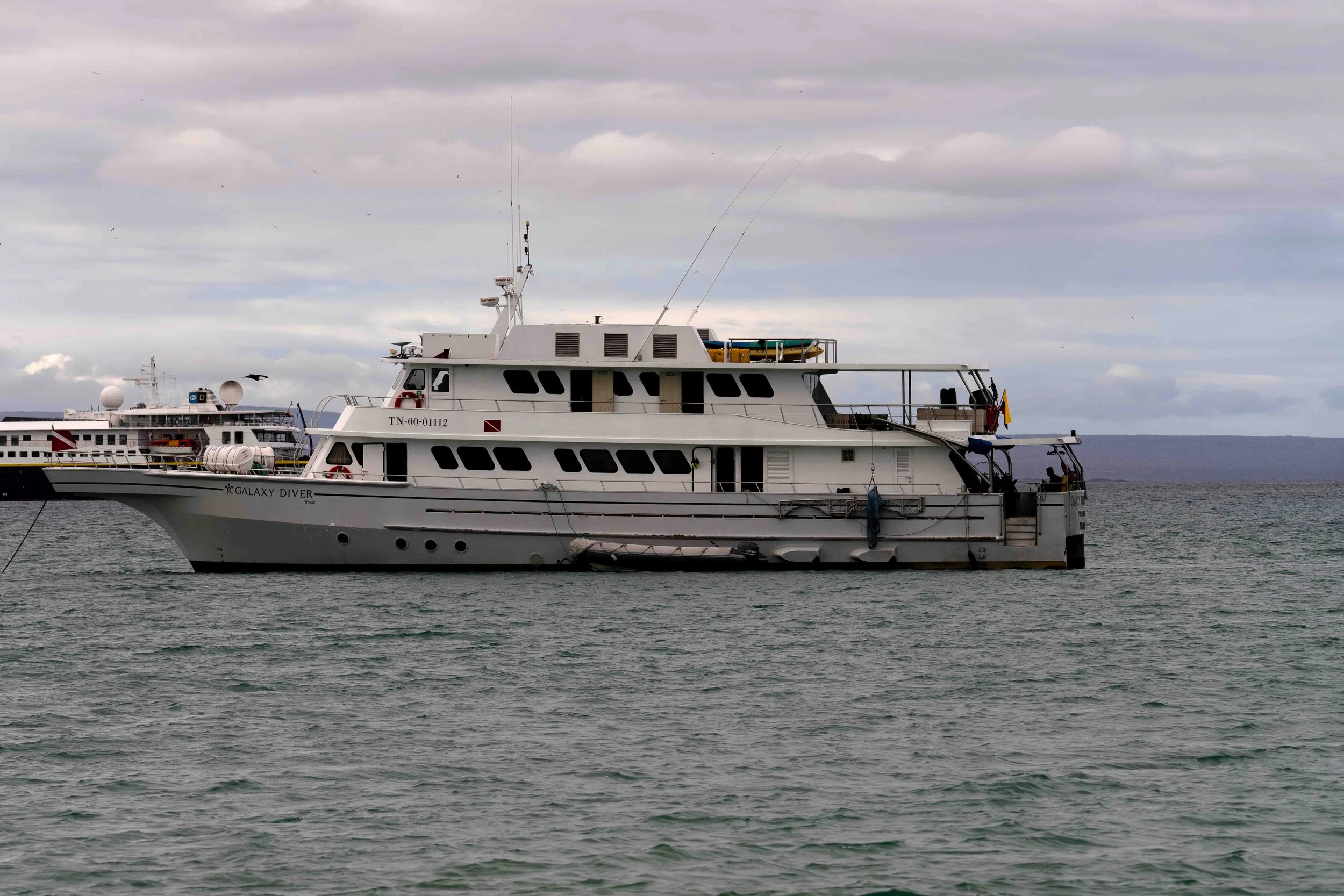
Liveaboard trips call for creative packing strategies
🚢 Liveaboard-Specific Packing Strategy for Raja Ampat
Liveaboard diving in Raja Ampat follows a rhythm: early wake-up, first dive, breakfast, surface interval, repeat. Over the course of a 7–10 day itinerary, efficiency matters more than you expect.
Space onboard is limited. Cabins are compact. Charging areas are shared. Salt spray and humidity are constant. A small amount of organisation early in the trip makes the entire week smoother.
Protect critical camera gear during dock and zodiac transfers — these are the moments when accidents happen. Keep essential equipment in padded carry-on luggage where possible, and use a lightweight dry bag to shield valuables from spray and sudden tropical rain.
Consolidate chargers using a compact power strip and clearly label batteries. Liveaboards operate on shared charging stations, and staying organised prevents unnecessary stress between dives. Humidity management is equally important: use desiccant packs inside housings and allow equipment to acclimatise before resealing after dives.
Small comfort items also make a noticeable difference across repetitive dive schedules. Earplugs reduce engine noise at night. A sleep mask improves rest during early departures. A light long-sleeve layer keeps you comfortable on breezy crossings or during night dives.
On a Raja Ampat liveaboard, organisation isn’t about perfection — it’s about conserving energy for the diving.
🌍 Protect Your Raja Ampat Dive Trip with World Nomads
Diving remote regions like Raja Ampat is an unforgettable experience — but it also means being far from home and medical infrastructure. This makes travel insurance not just useful, but essential. World Nomads offers flexible plans that include emergency medical coverage, evacuation and trip cancellation protection
For multi-flight itineraries, liveaboard schedules, and international travel, a robust policy gives you peace of mind so you can focus on the reefs, not what could go wrong.
Get World Nomads Travel Insurance
Disclosure: I may earn a small commission if you purchase travel insurance through this link at no additional cost to you. I only recommend providers appropriate for remote dive travel like Raja Ampat.
Efficiency improves recovery. Recovery improves focus. Focus improves your diving.
🎯 Final Thoughts
Raja Ampat is one of the most extraordinary dive regions on Earth — biologically rich, visually overwhelming, and logistically remote. It rewards preparation.
You don’t need to overpack. You need to pack intentionally.
Prioritise:
Personal comfort and fit
Safety redundancy
Power and charging management
Humidity control for camera systems
Small accessories that prevent avoidable disruptions
When logistics fade into the background, your attention shifts fully to the reef — the schooling fusiliers, layered coral slopes, and passing sharks that define Raja Ampat diving.
Preparation isn’t about fear of failure. It’s about removing friction.
And when friction disappears, the experience deepens.
That’s the goal.
❓ FAQ: Raja Ampat Packing List for Divers
Do I need to bring my own dive gear?
You can rent most equipment, but bringing personal-critical items like your mask, dive computer, and SMB is strongly recommended.
Is a backup mask really necessary?
Yes. Masks break and straps snap. In remote regions, a spare can save your trip.
Do I need an SMB in Raja Ampat?
Often yes. Many dives are drift dives and some operators require divers to carry one.
What’s the most useful photography item to bring?
A compact power strip and spare batteries. Charging logistics are the most common failure point on liveaboards.
How do I prevent housing fogging?
Use desiccant inserts, avoid opening housings in humid air, dry seals carefully, and allow the housing to acclimatise before resealing.
Are domestic baggage limits strict flying to Sorong?
They can be. Plan weight carefully and carry critical camera components in hand luggage.
Is motion sickness common?
It can be, particularly on longer crossings. Bringing prevention is a smart precaution.