🤿 10 Must-Have Dive Accessories Every Traveling Diver Should Carry
The Small Dive Accessories That Save Dive Trips
When divers prepare for a trip, most of the attention goes to the big equipment — regulators, BCDs, wetsuits, and cameras. But in reality, it’s often the small dive accessories that determine whether your dive day runs smoothly or falls apart.
Masks break. Straps snap. O-rings disappear. Boat decks get crowded and gear gets knocked around. In tropical environments, saltwater, sun exposure, and constant use can quickly wear down even reliable equipment.
In many of the world’s best dive destinations — places like Raja Ampat, Komodo, and Tubbataha Reefs Natural Park — replacing even simple scuba diving accessories can be surprisingly difficult. Remote islands often have limited dive shops, restricted supplies, and long travel distances to the nearest replacement gear.
That’s why experienced traveling divers almost always carry a small collection of essential dive accessories in their luggage. These items weigh almost nothing, cost very little, and take up minimal space — but they can prevent equipment failures, improve safety during drift dives, and make scuba diving travel far smoother.
In this guide, we’ll cover 10 must-have dive accessories every traveling diver should carry, especially when heading to remote diving regions across Southeast Asia and beyond.
This post may contain affiliate links. As an Amazon Associate, I earn from qualifying purchases at no extra cost to you.
Quick List: Essential Dive Accessories
Before we dive into the details, here’s a quick overview of the 10 must-have dive accessories every traveling diver should carry:
Spare mask
Surface marker buoy (SMB)
Reef hook
Spare mask strap
Bolt snaps
Line cutter or trilobite
Save-a-dive kit
Microfiber gear towel
Compact dry bag
Compact power strip
These small pieces of scuba diving travel gear take up very little space in your luggage but can solve some of the most common problems divers encounter on dive boats and remote dive trips.
Affiliate Disclosure: This article may contain affiliate links. If you purchase through these links, we may earn a small commission at no additional cost to you.
| Accessory | Best For | Why Carry It | Recommended |
|---|---|---|---|
| Spare Mask | Backup core gear | Prevents a broken strap or cracked lens from ending your dive day. | View on Amazon |
| Surface Marker Buoy (SMB) | Drift dives & safety | Makes you visible to boats and is often required in current-prone destinations. | View on Amazon |
| Reef Hook | High-current sites | Helps you stay in position safely while watching pelagic life pass by. | View on Amazon |
| Mask Strap Replacement | Quick fixes | A tiny spare part that can save a dive before you even enter the water. | View on Amazon |
| Bolt Snaps | Gear organization | Keeps accessories clipped, streamlined, and off the reef. | View on Amazon |
| Line Cutter / Trilobite | Emergency safety | Allows you to quickly cut fishing line or rope if needed. | View on Amazon |
| Save-A-Dive Kit | Repairs & spares | Fixes common equipment problems before they cost you a dive. | View on Amazon |
| Microfiber Gear Towel | Cameras & electronics | Useful for drying masks, housings, and hands between dives. | View on Amazon |
| Compact Dry Bag | Boat travel | Protects phones, passports, and valuables from spray. | View on Amazon |
| Compact Power Strip | Liveaboards & resorts | Lets you charge multiple devices when outlets are limited. | View on Amazon |

Places such as Komodo are remote, its worth carrying a spare
1️⃣ Spare Mask
A broken mask can instantly end a dive day — especially in remote dive destinations where replacements are difficult to find.
A spare mask is one of the most underrated pieces of scuba diving travel gear. Mask straps break surprisingly often, and lenses can occasionally crack if gear gets knocked around on busy boat decks.
If it happens on a remote dive trip — somewhere like Raja Ampat or Komodo — finding a replacement mask quickly may not be possible.
Carrying a simple backup mask ensures you can continue diving without missing the trip you travelled halfway around the world for.
Why carry one
✔ Mask straps snap unexpectedly
✔ Mask lenses can crack in transit
✔ Rental masks rarely fit properly
Travel tip
Pack your spare mask in your carry-on bag, not in your main dive bag. If checked luggage is delayed, you’ll still have one of the most critical pieces of dive gear with you.
2️⃣ Surface Marker Buoy (SMB)
Strong currents and drift dives are common in many of the world’s best dive destinations — making a surface marker buoy (SMB) one of the most important dive safety accessories you can carry.
In regions like Komodo and Raja Ampat, divers frequently surface far from the boat after a drift dive. An SMB allows you to signal your position clearly to the crew, especially during blue-water ascents or when surfacing in choppy seas.
Many dive operators now require divers to carry their own SMB, particularly on advanced dive sites where currents can be unpredictable.
Compact, lightweight, and easy to pack, an SMB is one of the most valuable pieces of scuba diving safety gear for traveling divers.
Why carry one
✔ Improves safety during drift dives
✔ Makes you visible to boat crews from a distance
✔ Often required by dive operators
Travel tip
Practice deploying your SMB before your trip. In strong currents or open water, being able to deploy it quickly and confidently can make a huge difference.
3️⃣ Reef Hook
Strong currents are part of what makes some dive sites so spectacular — but they can also make it difficult to stay in position while watching passing marine life.
A reef hook allows divers to clip securely onto a rock or dead substrate during high-current dives. Instead of constantly finning against the current, you can remain stationary while schools of fish, sharks, and other pelagic species move past.
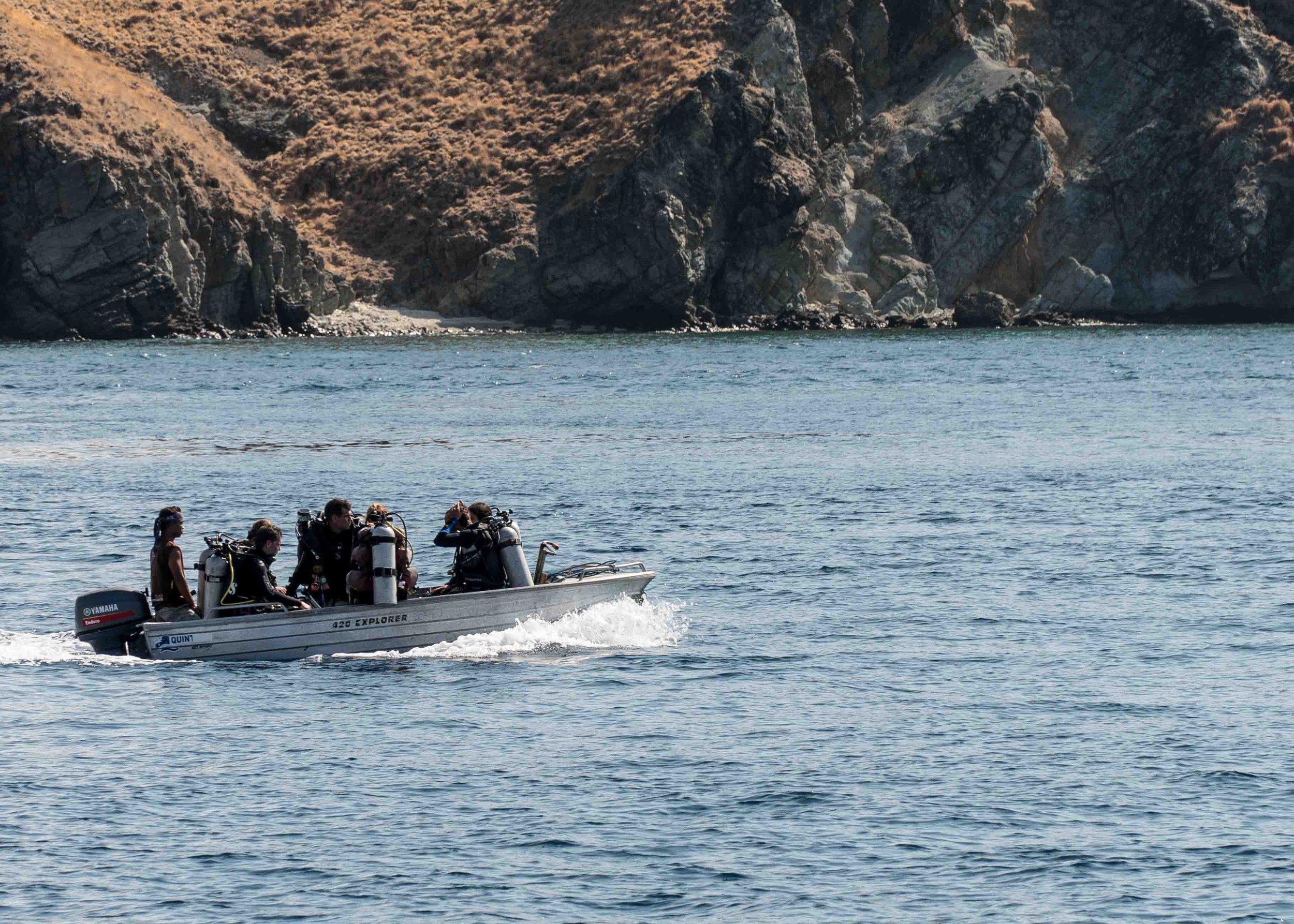
Reef hooks are commonly used on exposed dive sites in places like Komodo and Palau, where currents bring nutrient-rich water and attract large marine life.
When used correctly, reef hooks can actually help protect the reef, preventing divers from accidentally grabbing coral or making uncontrolled contact while fighting strong currents.
It’s important, however, to place reef hooks carefully on bare rock or dead substrate only. Never hook into living coral, and always ensure the hook is secure before letting the current take your body position.
Best for
✔ High-current dive sites
✔ Watching pelagic life without exhausting finning
✔ Drift dive environments like Komodo and Palau
Travel tip
Choose a reef hook with a sturdy line and a bolt snap attachment so it can clip easily onto a BCD D-ring when not in use.
4️⃣ Mask Strap Replacement
Few things are more frustrating than a mask strap snapping just as you’re about to roll into the water.
Scuba Choice Silicone Mask Strap
Mask strap failures are one of the most common scuba diving gear problems, especially on busy dive boats where equipment is handled frequently and exposed to sun, saltwater, and repeated stretching.
When a strap breaks, your dive may be over before it even begins — particularly in remote dive destinations where spare parts are limited. Carrying a simple replacement strap allows you to fix the issue in seconds and get back in the water.
A spare strap weighs almost nothing and is one of the easiest pieces of dive gear insurance you can pack.
Why carry one
✔ Mask straps can snap without warning
✔ Sun exposure weakens silicone over time
✔ Replacement parts may not be available on remote dive trips
Travel tip
Store a spare mask strap inside your save-a-dive kit or BCD pocket so it’s always accessible if your primary strap fails on the boat.
5️⃣ Bolt Snaps
Keeping gear organized underwater makes dives safer, more streamlined, and far more enjoyable.
Bolt snaps are small but incredibly useful pieces of scuba diving hardware that allow divers to clip accessories securely onto their BCD D-rings. This keeps equipment close at hand while preventing items from dangling or dragging across the reef.
They’re commonly used to secure accessories such as:
Dive lights
Surface marker buoys (SMBs)
Underwater cameras
Pointer sticks
Having a few spare bolt snaps in your dive kit allows you to quickly attach new gear, replace damaged clips, or improve your setup on a dive trip.
Experienced divers often travel with several extras because these small accessories are incredibly versatile.
Why carry them
✔ Keeps dive gear streamlined and secure
✔ Prevents accessories from dragging on reefs
✔ Allows quick attachment of lights, SMBs, and other tools
Travel tip
Choose stainless steel bolt snaps rather than brass versions. Stainless steel resists corrosion better in saltwater and tends to last much longer.
6️⃣ Line Cutter or Trilobite
Entanglement hazards are an often-overlooked risk in scuba diving, even on otherwise pristine reefs.
Fishing line, rope, and discarded nets occasionally appear on dive sites around the world. In some areas, particularly near reefs or popular fishing grounds, stray line can pose a real hazard for divers and marine life alike.
A compact line cutter or trilobite allows you to quickly cut through fishing line, monofilament, or thin rope if you become entangled. It can also be used to assist another diver or free trapped marine animals when safe to do so.
Unlike traditional dive knives, trilobite-style cutters are small, streamlined, and easy to mount on a BCD or hose, making them one of the most practical pieces of scuba diving safety gear to carry.
Why carry one
✔ Helps free divers from fishing line or rope
✔ Can assist another diver in an emergency
✔ Small, lightweight, and easy to carry
Travel tip
Mount your line cutter somewhere easy to reach with either hand, such as on a shoulder strap or inflator hose, so you can access it quickly if needed.
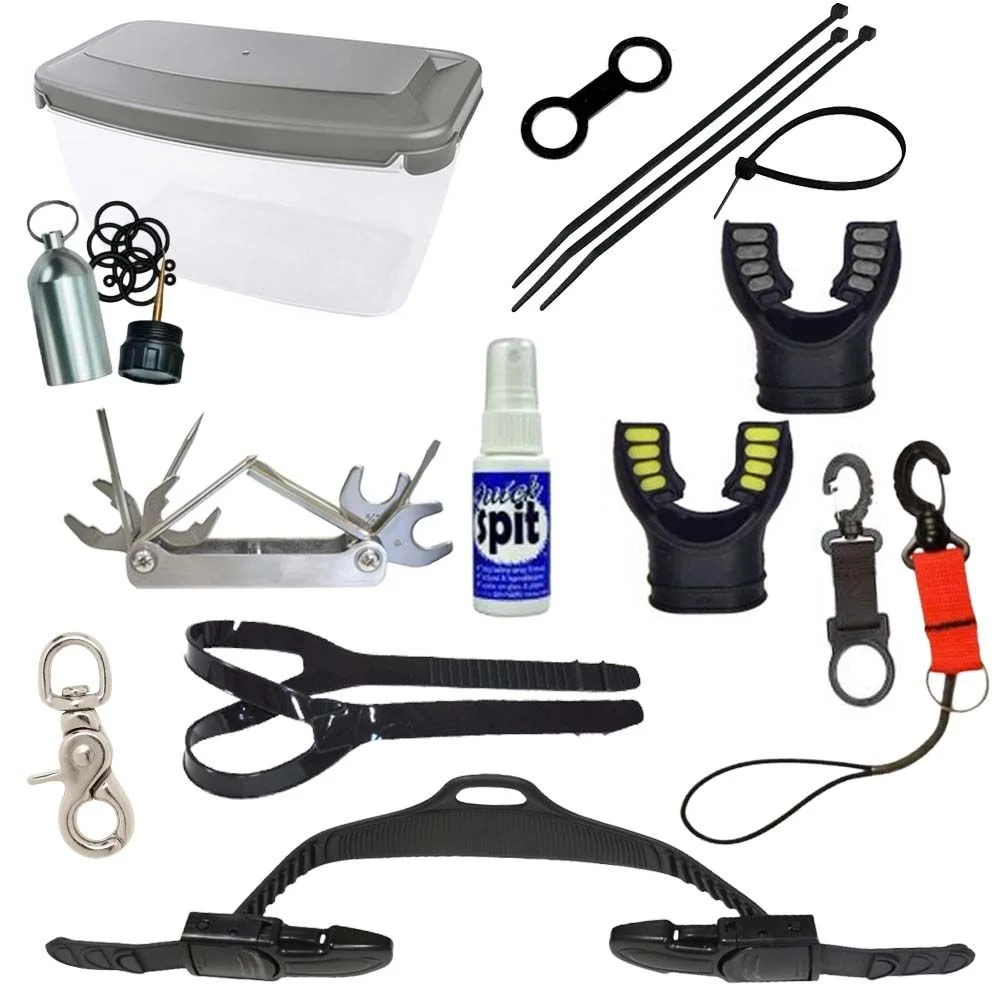
7️⃣ Save-A-Dive Kit
Small equipment failures are one of the most common reasons divers miss dives on a trip.
A save-a-dive kit is a compact collection of tools and spare parts designed to fix the most common scuba gear problems. From leaking O-rings to loose bolts or broken mouthpieces, these small issues can quickly stop a dive before it even begins.
Having a few basic repair components on hand allows you to fix problems immediately rather than waiting for a dive shop or borrowing parts from other divers.
Most kits include useful items such as:
O-rings
Zip ties
Regulator mouthpieces
Spare fin straps
Hex keys and small tools
These tiny components take up very little space in your luggage, but they can prevent minor gear failures from ending an entire dive day.
Why carry one
✔ Quickly fixes common scuba gear problems
✔ Prevents missed dives due to minor equipment failures
✔ Useful on liveaboards and remote dive trips
Travel tip
Keep your save-a-dive kit in your dive bag or camera case, not packed away in your suitcase, so you can access it quickly on a dive boat if something needs a quick fix.
8️⃣ Microfiber Gear Towel
Keeping sensitive dive gear dry is an often-overlooked part of protecting equipment on dive trips.

A compact microfiber towel is extremely useful for travel diving, especially when handling masks, cameras, and electronics on busy dive boats.
It can be used to dry:
Masks
Camera housings
Hands before opening camera housings
Dive computers
Microfiber towels absorb water quickly and dry much faster than traditional towels, which makes them ideal in humid tropical environments where gear rarely fully dries between dives.
For underwater photographers, they are particularly useful for drying hands before opening a housing or changing batteries between dives.
Why carry one
✔ Helps protect cameras and electronics from water exposure
✔ Dries quickly in humid environments
✔ Lightweight and easy to pack
Travel tip
Keep a microfiber towel clipped to your camera bucket or gear bag so it’s always available when you need to dry your hands or equipment quickly.
9️⃣ Compact Dry Bag
Dive boats are rarely dry environments, which makes protecting personal items a constant challenge.
A compact dry bag is one of the most useful pieces of travel diving gear, keeping valuables protected from salt spray, wet decks, and unexpected rain during boat rides.
It’s perfect for storing items such as:
Phones
Wallets
Passports
Camera batteries
Logbooks
On longer trips, a dry bag is also useful for separating wet gear from dry clothing when packing between dive destinations.
Lightweight and easy to fold when empty, a small dry bag takes up very little space but provides valuable protection for electronics and travel documents.
Why carry one
✔ Protects valuables from saltwater and spray
✔ Keeps electronics and documents dry on dive boats
✔ Helps separate wet and dry gear during travel
Travel tip
Choose a 10–20L dry bag for dive trips. It’s large enough for essentials but still compact enough to store easily on crowded dive boats.
🔟 Compact Power Strip
Power outlets are often limited on dive boats and in remote dive resorts — especially when multiple divers are trying to charge cameras, lights, and electronics at the same time.
A compact power strip allows you to charge multiple devices from a single outlet, making it much easier to keep all your equipment powered throughout a dive trip.
This is particularly useful for underwater photographers and traveling divers who may need to charge several items overnight.
Common devices include:
Camera batteries
Strobes or video lights
Dive computers
Phones
Laptops
A small travel power strip with built-in USB ports can dramatically simplify charging setups on liveaboards or in remote dive resorts where outlets are limited.
Why carry one
✔ Charge multiple devices from a single outlet
✔ Extremely useful on liveaboards and dive resorts
✔ Keeps camera and dive electronics powered between dives
Travel tip
Bring a short extension-style power strip with USB ports so you can charge both standard plugs and USB devices without needing extra adapters.
🌏 Why These Accessories Matter in Remote Dive Destinations
Many of the world’s most spectacular dive locations are far from major cities or well-stocked dive shops. Remote regions such as Raja Ampat, Komodo, Tubbataha Reefs Natural Park, and Alor offer extraordinary marine biodiversity and unforgettable diving — but they also come with logistical challenges.

In these destinations, replacement gear and spare parts can be surprisingly difficult to find. Local dive operations are often located on small islands, and supplies may be limited or require days of travel to reach. If a mask strap breaks, an O-ring fails, or a piece of equipment goes missing, there may not be an easy way to replace it during your trip.
That’s why experienced traveling divers pack a few key dive accessories and spare parts before heading to remote dive destinations. Small items like a spare mask strap, a save-a-dive kit, or a compact line cutter take up almost no space in your luggage — but they can prevent minor equipment problems from interrupting a dive day or cutting a trip short.
When you’re traveling halfway around the world for a diving adventure, a handful of simple accessories can make the difference between missing dives and staying in the water where you belong.
Final Thoughts
When divers think about preparing for a trip, most of the focus goes to major equipment — regulators, BCDs, wetsuits, and cameras. But in reality, it’s often the small dive accessories that make the biggest difference once you arrive at the destination.
Items like a spare mask strap, an SMB, or a simple save-a-dive kit can prevent minor gear problems from turning into missed dives. These accessories are inexpensive, lightweight, and easy to pack, yet they provide a surprising amount of reliability and peace of mind when traveling.
This is especially true in remote dive regions such as Raja Ampat, Komodo, or Tubbataha Reefs Natural Park, where replacement gear may not be readily available. Bringing a few carefully chosen accessories helps ensure that small equipment failures don’t interrupt your dive trip.
For traveling divers, these items are some of the most valuable pieces of scuba diving travel gear you can carry. They take up very little space in your luggage — but they can save dives, protect your equipment, and help you make the most of every dive day.
🧳 Related Guide
Before your next trip, you may also want to read:
👉 Raja Ampat Packing List for Divers
❓ FAQ
Do I really need a save-a-dive kit?
Yes. Small equipment failures are surprisingly common during dive trips, especially when gear is used repeatedly over several days. A save-a-dive kit contains simple spare parts such as O-rings, zip ties, mouthpieces, and small tools that can fix many of the most common problems divers encounter.
On remote dive trips or liveaboards, replacement parts may not be readily available. Having a save-a-dive kit allows you to quickly fix minor issues and avoid missing dives due to simple equipment failures.
Are SMBs required in Southeast Asia?
In many dive destinations across Southeast Asia, carrying a surface marker buoy (SMB) is strongly recommended and sometimes required by dive operators.
Locations such as Komodo and Raja Ampat are known for their strong currents and drift dives. Divers may surface far from the boat after completing a dive, and deploying an SMB helps the crew locate you quickly and safely.
Many experienced divers now consider an SMB to be an essential piece of scuba diving safety equipment, particularly when diving in open water or current-prone environments.
Should I bring spare mask straps?
Yes. Mask strap failures are one of the most common gear issues divers experience. Straps can weaken over time due to sun exposure, saltwater, and repeated stretching.
If a strap snaps just before a dive, having a spare allows you to replace it in seconds and continue diving. Replacement straps are inexpensive, lightweight, and take up almost no space in your dive bag, making them one of the easiest pieces of backup dive gear to carry on a trip.
What small dive accessories should I always pack for travel?
Many experienced divers travel with a small set of essential accessories that can prevent common equipment problems. These typically include a spare mask, SMB, reef hook, bolt snaps, a line cutter, and a save-a-dive kit.
These items are compact and easy to pack, but they can make a big difference when diving in remote destinations where replacement gear may not be available.
Are these accessories useful on liveaboards?
Yes. Liveaboard trips often involve multiple dives per day over several days, which increases the chances of small equipment issues appearing. In addition, access to replacement parts may be limited once the boat leaves port.
Bringing a few essential dive accessories helps ensure you can quickly fix small problems and continue enjoying the trip without interruption.