Choosing the right underwater camera can completely change how you experience diving.
Whether it’s capturing your first turtle encounter or dialing in the perfect wide-angle reef shot in Komodo, the right setup helps you bring those moments back to the surface.
But with so many options—from compact action cameras to advanced mirrorless systems with strobes—it’s easy to feel overwhelmed.
After diving across Southeast Asia—from Sipadan’s legendary walls to Raja Ampat’s reefs—and shooting with everything from travel-friendly compacts to a full-frame system, one thing becomes clear:
You don’t need the most expensive camera—you need the right camera for how you dive.
Some setups are perfect for casual travel and video. Others are built for macro photography, wide-angle reef scenes, or professional-quality images. The key is understanding what actually matters underwater—not just what looks good on paper.
In this guide, we’ll break down the best underwater cameras for scuba diving in 2026, from beginner-friendly setups to professional rigs, along with what each type is best for, how much you should realistically spend, and how to choose a setup you’ll actually enjoy diving with.
Before diving into specific cameras, it helps to understand the different types of underwater setups and what they’re actually best at.
Each category comes with its own strengths, trade-offs, and ideal use cases—so choosing the right one is less about specs, and more about how you plan to dive and shoot.
Here’s a quick breakdown to help you compare your options.
| Camera Type | Best For | Image Quality | Ease of Use | Travel Friendly | Macro | Wide-Angle | Cost |
|---|---|---|---|---|---|---|---|
| Action Camera | Beginners, video, travel | ⭐⭐ | ⭐⭐⭐⭐⭐ | ⭐⭐⭐⭐⭐ | ❌ | ⭐⭐⭐⭐ | $ |
| Compact Camera | Travel + macro photography | ⭐⭐⭐⭐ | ⭐⭐⭐⭐ | ⭐⭐⭐⭐ | ⭐⭐⭐⭐ | ⭐⭐⭐ | $$ |
| Mirrorless | Serious photography | ⭐⭐⭐⭐⭐ | ⭐⭐ | ⭐⭐ | ⭐⭐⭐⭐⭐ | ⭐⭐⭐⭐⭐ | $$$ |
👉 If you’re just getting started, an action camera is more than enough.
👉 If you want creative control, look at compacts or mirrorless.
Now that you’ve seen how the main camera types compare, let’s break each one down in more detail.
Below, we’ll look at what each setup is best for, where it works well underwater, and who it’s really suited to—so you can confidently choose the right option for your diving style.
| Category | Camera | Why It’s a Good Choice | |
|---|---|---|---|
| Beginner | GoPro Hero 13 Black | Best for video, simple to use, and ultra travel-friendly | Check Price on Amazon |
| Beginner Alt | DJI Osmo Action 6 | Excellent stabilization and strong video performance | Check Price on Amazon |
| Compact | Sony RX100 VII | Excellent image quality with strong macro flexibility | Check Price on Amazon |
| Compact Alt | OM System TG-7 | Easy to use with fantastic macro capability | Check Price on Amazon |
| Mirrorless | Sony a7R V | Professional image quality with industry-leading autofocus | Check Price on Amazon |
| Mirrorless Alt | Nikon Z8 | Outstanding performance with excellent image quality and video capabilities | Check Price on Amazon |
| High-End Pro | Sony a1 II | Flagship performance with top-tier autofocus, speed, and image quality | Check Price on Amazon |
Disclosure: This article contains affiliate links. If you purchase through these links, I may earn a commission at no extra cost to you. I personally use Sony cameras and prefer their system, but I am not sponsored by Sony or any camera brand—these recommendations are based purely on real-world diving experience.
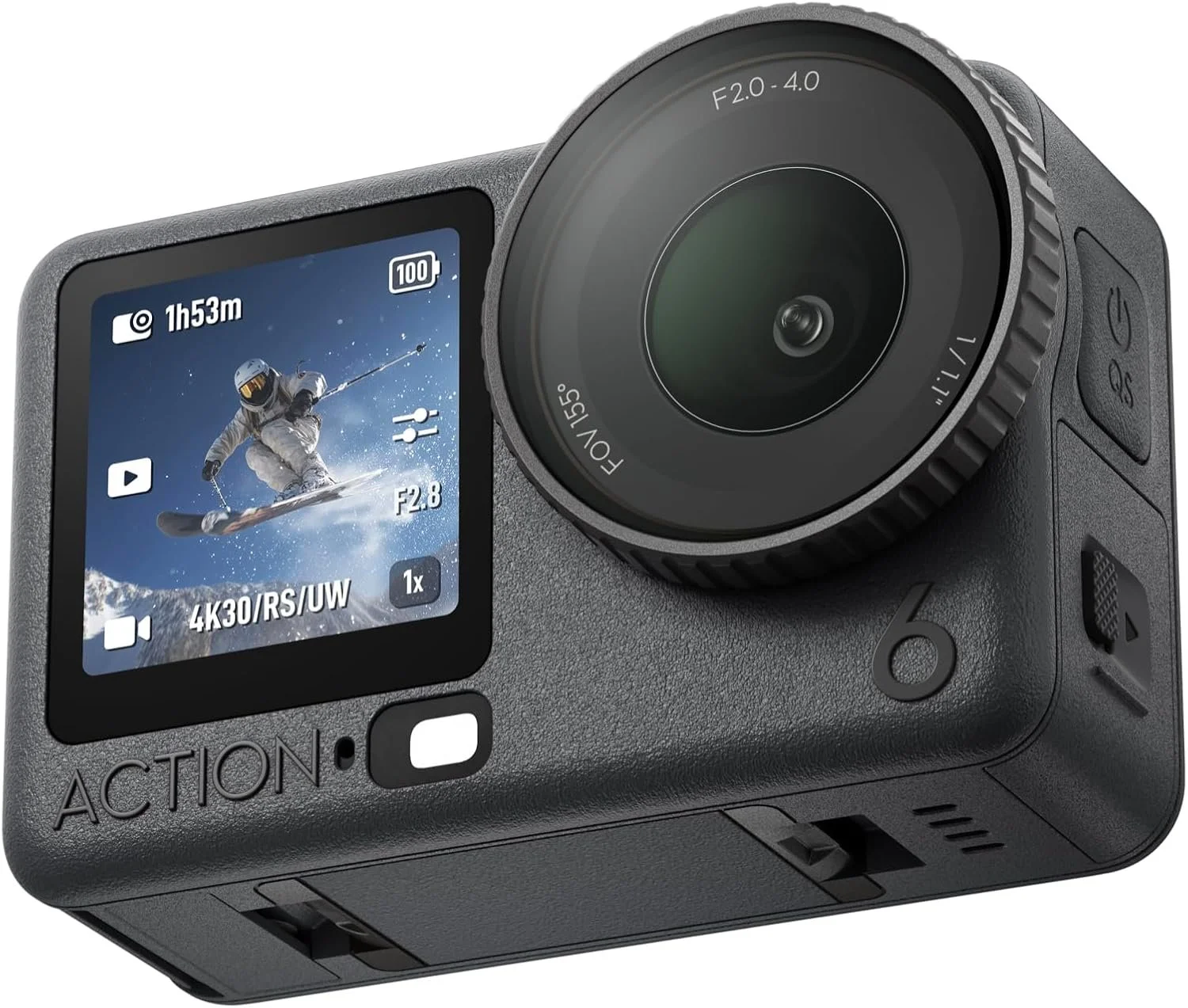
Action cameras such as the DJI Osmo Action 6 are a great entry point
🎥 Best Action Cameras for Diving
For most divers, action cameras are the easiest and most practical entry point into underwater photography.
They’re compact, travel-friendly, and incredibly simple to use—making them ideal for capturing dives without worrying about settings or bulky gear. If you’re diving in places like Komodo or the Maldives, where conditions can be fast-moving and unpredictable, having a small, grab-and-go setup is a huge advantage.
The latest models, like the GoPro Hero 13 Black and DJI Osmo Action 6, deliver impressive video quality straight out of the box, with strong stabilization and wide-angle coverage that works perfectly for reef scenes, drift dives, and big marine life encounters.
Where action cameras really shine is in their simplicity. You can clip one onto a tray or hold it in one hand and focus on the dive itself, rather than managing a complex setup. For many divers—especially those traveling or diving on liveaboards—that ease of use makes a big difference.
That said, there are limitations. Action cameras struggle in low light, offer very limited manual control, and aren’t designed for true macro photography. If you’re trying to shoot small critters or want more creative flexibility, you’ll quickly start to feel those constraints.
💡 Reality check:
If your goal is social media, travel memories, or capturing your dives on video, an action camera is more than enough—and often the most enjoyable option to use underwater.
📷 Best Compact Cameras (Travel + Macro Sweet Spot)
If you want to step up your underwater photography without committing to a full professional setup, compact cameras are the ideal middle ground.
They offer a noticeable jump in image quality over action cameras, while still remaining relatively small and travel-friendly—making them a favorite for divers who want better results without carrying a full rig.
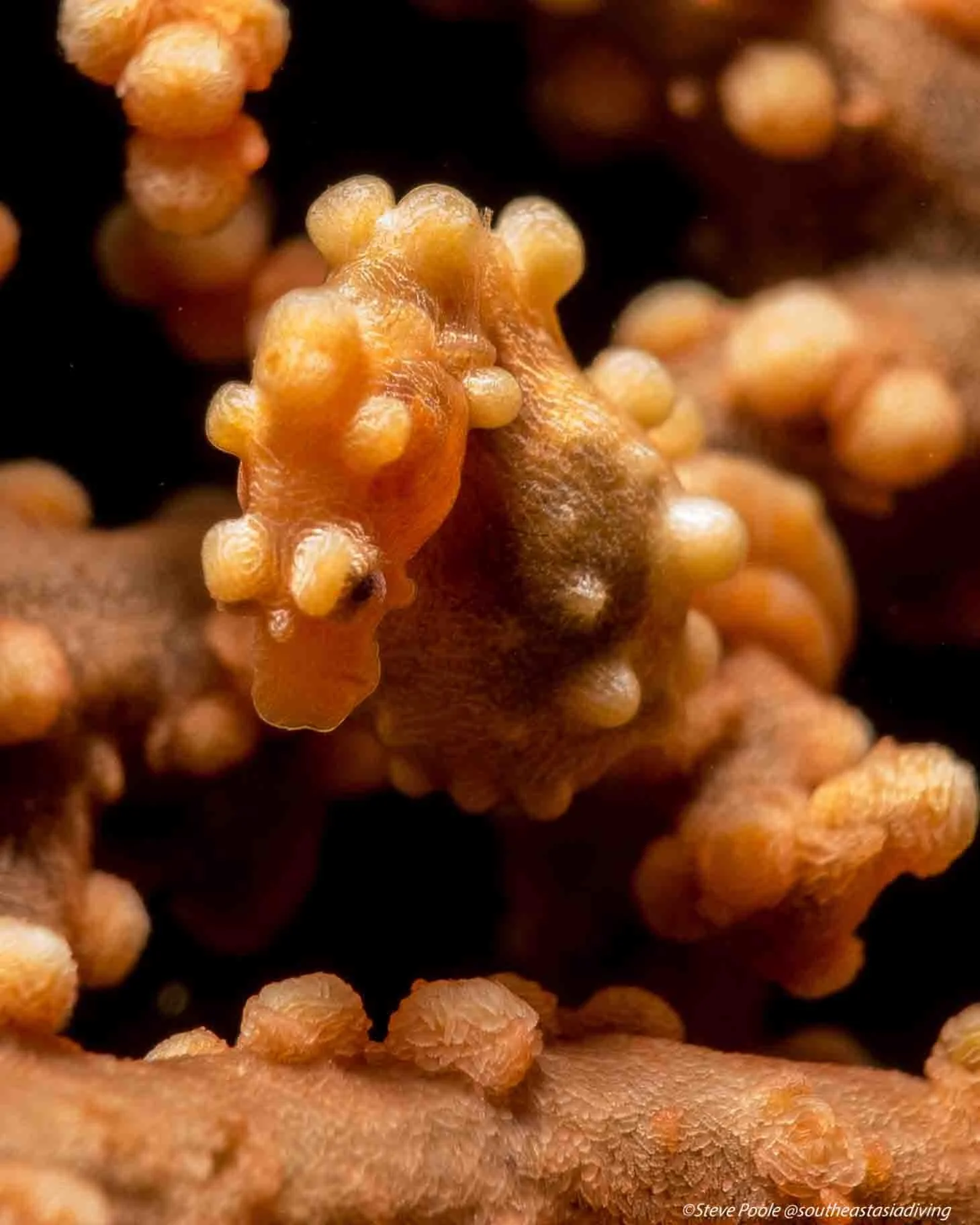
This picture of a Pygmy Seahorse was taken with a compact camera
Where compact cameras really stand out is in macro photography. In destinations like Anilao, Lembeh, or parts of Raja Ampat, where tiny critters like nudibranchs, shrimp, and frogfish steal the show, a compact setup can produce excellent results without the complexity of a larger system.
Two of the most popular options are the Sony RX100 VII and Canon G7X Mark III, both of which offer strong image quality and the flexibility to shoot both photo and video. These cameras become especially powerful when paired with underwater housings and wet lenses, allowing you to switch between wide-angle and macro during the same dive.
It’s also worth mentioning the OM System TG series (like the TG-7), which has built a huge following among divers. While it doesn’t match the image quality of larger-sensor compacts, it excels in macro, is incredibly easy to use, and is one of the most forgiving setups underwater—making it a fantastic option for beginners or dedicated macro shooters.
Compared to action cameras, compacts give you far more control and creative flexibility. And compared to mirrorless systems, they remain much easier to travel with and manage underwater.
👉 Verdict:
For most traveling divers—especially those exploring Southeast Asia—compact cameras offer the best balance of image quality, versatility, and portability.
🤿 Best Mirrorless Cameras (Serious Underwater Photography)
If you’re looking to take your underwater photography to the next level, mirrorless systems are where things really open up.
This is where you move beyond simple setups and into a fully configurable system—camera, housing, ports, strobes, and lenses all working together to produce professional-quality results.
Mirrorless cameras have also largely replaced DSLR systems in underwater photography. They’re smaller, faster, and offer better autofocus and video performance—making them the clear choice for most serious photographers today.
There are strong options across multiple brands. Sony remains a popular choice (and my personal preference), with cameras like the a7R V, A7 IV, and the flagship a1 II offering exceptional image quality and autofocus performance. But brands like Canon (R5, R6 Mark II) and Nikon (Z8, Z6 II) also produce outstanding systems that are widely used underwater.
One of the biggest decisions at this level is APS-C vs full-frame.
Full-frame cameras deliver the best image quality, dynamic range, and low-light performance—particularly useful for wide-angle scenes and deeper dives. APS-C systems, on the other hand, are smaller, more affordable, and offer extra reach for macro photography, making them a strong option for divers who want a lighter setup without sacrificing too much quality.
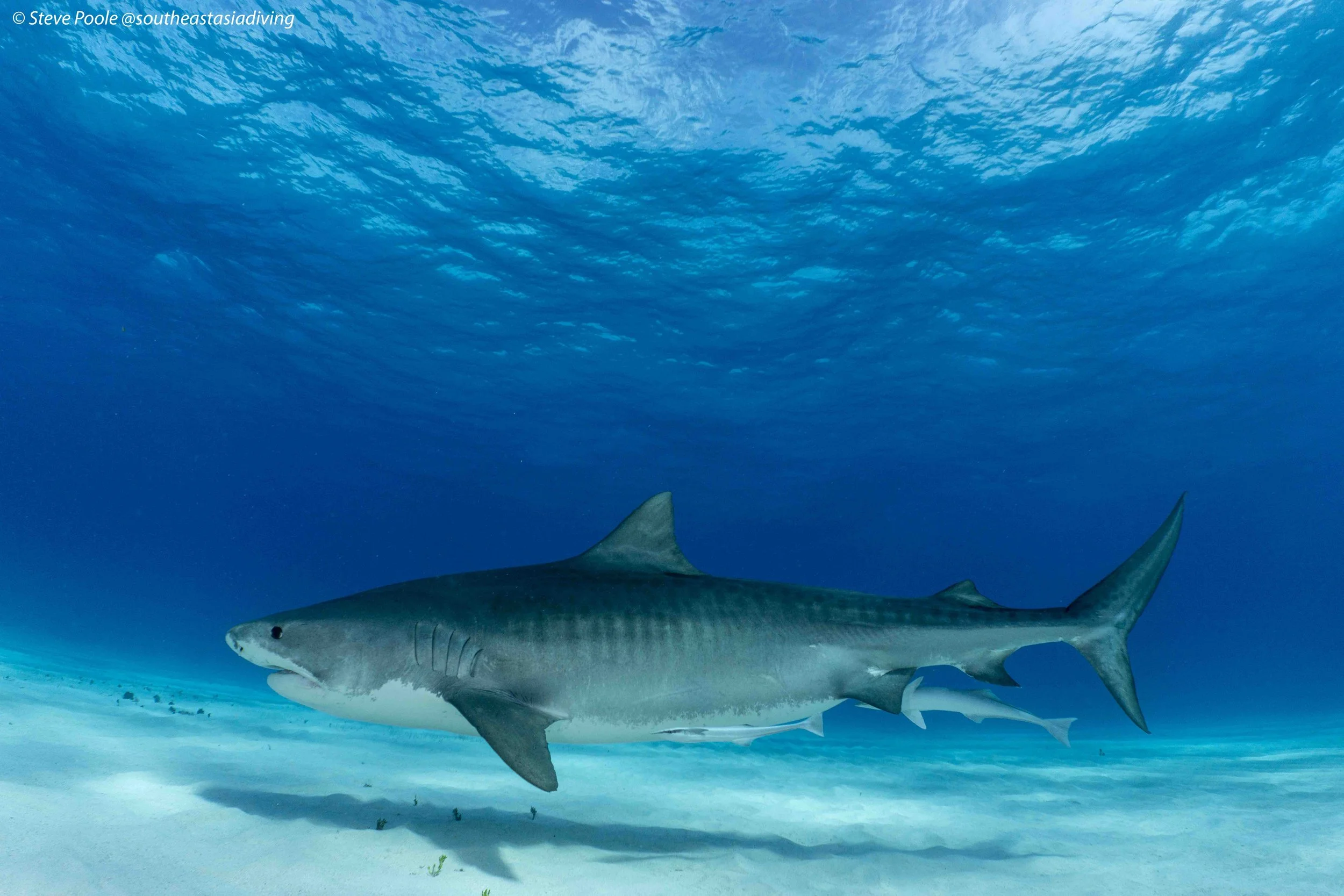
This tiger shark picture was taken using a full frame mirrorless Sony a7 RV
Where mirrorless systems really shine is flexibility. You can build a setup specifically for wide-angle reef scenes, big animals, or macro photography—and achieve results that simply aren’t possible with smaller cameras.
But that flexibility comes with trade-offs.
Mirrorless systems require significantly more gear: a dedicated housing, ports matched to each lens, strobe arms, lighting, and accessories. They’re more expensive, take longer to set up, and add noticeable bulk when traveling—especially on liveaboards or multi-stop dive trips.
👉 My setup:
Sony a7R V
Nauticam housing
Wide-angle wet lens + macro lens
Dual strobes
This kind of setup delivers incredible image quality and versatility—but it’s also something you grow into over time, rather than start with.
👉 Verdict:
If you’re serious about underwater photography and want the best possible results, a mirrorless system is the ultimate choice—but it requires commitment, both in cost and in learning how to use it effectively.
🌍 What Camera Should You Choose for Your Destination?
This is where most underwater camera guides fall short—but it’s one of the most important factors.
Choosing the right setup isn’t just about budget or experience level—it’s about what you’re actually going to shoot underwater.
Broadly speaking, underwater photography falls into two main styles:
Wide-angle: reefs, sharks, manta rays, big scenes
Macro: nudibranchs, shrimp, frogfish, small critters
Some destinations are dominated by one style, while others offer a mix of both. And this has a huge impact on the type of camera setup that will work best.
If you bring the wrong setup for the conditions, even the most expensive camera won’t deliver great results.
Here’s how that plays out across some of the best dive destinations in Southeast Asia:
🇮🇩 Komodo
Strong currents, dramatic reef structures, and big marine life define Komodo.
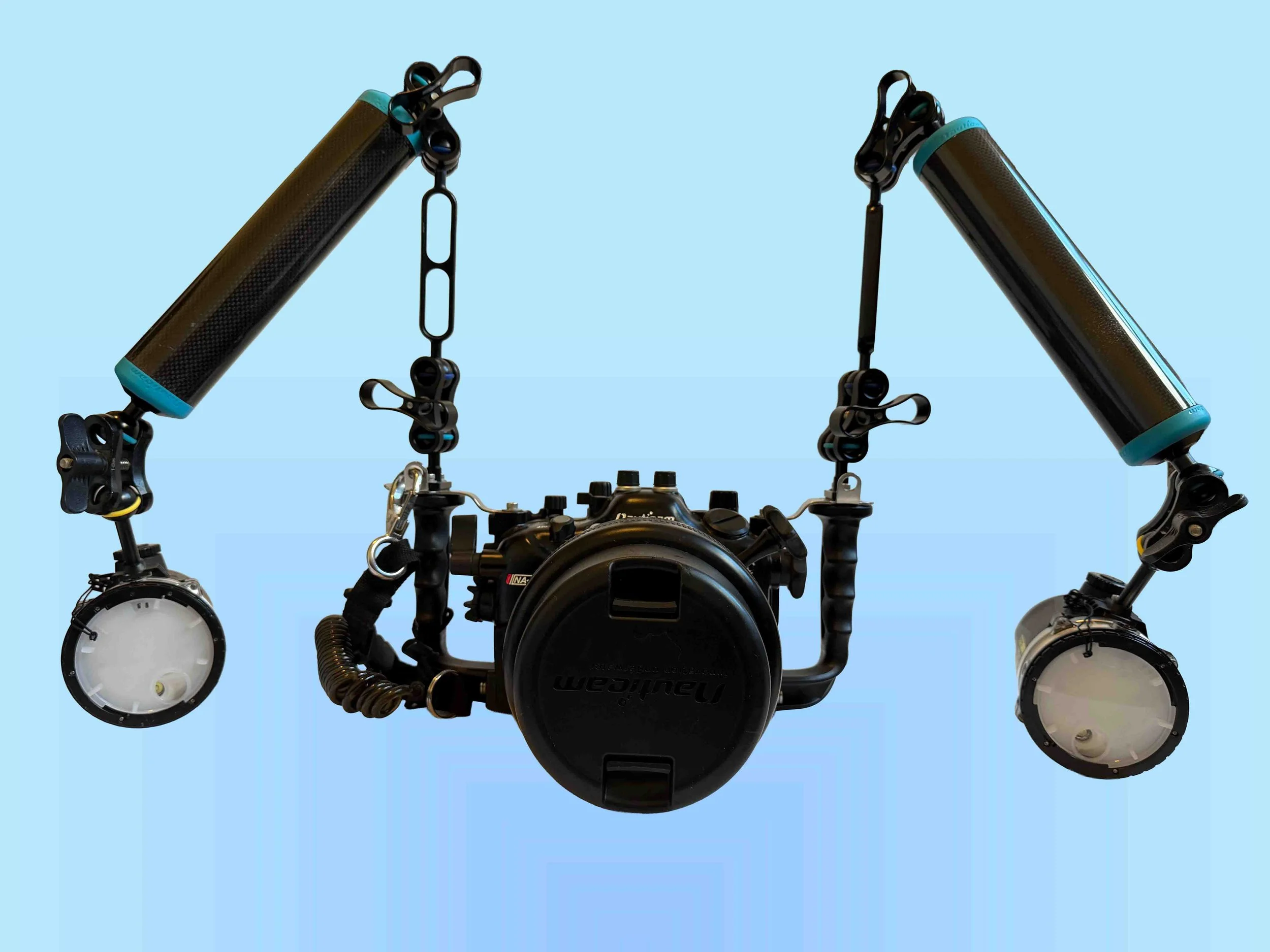
My personal full rig
This is classic wide-angle territory, where you’ll be shooting fast-moving scenes in challenging conditions. Simpler setups often work better here, especially when you’re focusing on the dive itself as much as the photography.
👉 Best choice: Action camera or wide-angle mirrorless setup
🇮🇩 Raja Ampat
Raja Ampat offers one of the most diverse underwater environments in the world.
On one dive, you might be shooting manta rays and reefscapes. On the next, you’re focused on pygmy seahorses or tiny nudibranchs. This mix of wide-angle and macro makes flexibility key.
👉 Best choice: Compact camera with wet lenses or a mirrorless system
🇵🇭 Anilao
Anilao is widely considered one of the best macro diving destinations in the world.
Here, it’s all about the small stuff—critters, textures, and detail. Wide-angle opportunities are limited, so bringing a setup optimized for macro will give you far better results.
👉 Best choice: Compact camera (especially TG series or RX100) or macro-focused mirrorless setup
🇹🇭 Thailand (Similan Islands / Richelieu Rock)
Thailand’s top dive sites are known for pelagic encounters and open-water action.
This is another wide-angle-focused destination, where visibility, schooling fish, and larger marine life take priority over macro.
👉 Best choice: Action camera, compact with wide lens, or wide-angle mirrorless
👉 Key takeaway:
Choosing your camera based on what you’ll actually be shooting—macro or wide-angle—will improve your results far more than simply buying a more expensive setup.
🎒 Travel Considerations (Often Overlooked)
Before investing in an underwater camera, it’s worth thinking beyond image quality and specs—because how your setup travels and performs on a dive trip matters just as much.
This is something many divers only realize after their first trip with a full rig.
✈️ Weight & Space
Underwater camera systems add up quickly.
A full mirrorless setup—with housing, ports, strobes, arms, and accessories—can take up a significant portion of your luggage allowance. It often means carrying delicate gear in hand luggage, carefully packing domes, and making trade-offs with the rest of your dive kit.
In contrast, action cameras and compact setups have almost no impact on your travel plans. They’re easy to pack, quick to access, and far less stressful to move between destinations.
👉 Many divers end up downsizing their setup after their first liveaboard—bulk and complexity matter more than you think.
🔋 Batteries & Charging
Charging logistics are often overlooked—but they can become a real constraint, especially on liveaboards.
Most boats have limited charging space, shared outlets, and set charging hours. Larger setups mean more batteries—camera, strobes, focus lights—which all need to be managed between dives.
Smaller systems are much easier to keep powered and ready without adding extra hassle to your routine.
🧳 Ease of Setup
There’s also the time factor.
Complex camera rigs take time to assemble, maintain, and check before every dive. That includes setting up strobes, checking O-rings, managing ports, and making sure everything is sealed correctly.
Simpler setups, on the other hand, let you gear up quickly and focus on the dive itself.
👉 And on trips where you’re doing 3–4 dives a day, that difference adds up fast.
📸 My Underwater Camera Setup
After diving across Southeast Asia—from Sipadan to Raja Ampat—this is the setup I personally use underwater:
- Camera: Sony a7R V
- Housing: Nauticam NA-A7RV
- Wide-Angle: WWL-1B wet lens
- Macro: Sony 90mm macro lens
- Lighting: Dual Sea & Sea YS-D3 strobes
- Trigger: Optical flash trigger + fiber optics
👉 Why this setup works:
It gives me the flexibility to shoot both wide-angle reef scenes and detailed macro subjects, with excellent image quality and reliable performance in challenging conditions.
👉 Important:
This is a full professional system—and not where most divers should start. A compact setup will deliver excellent results with far less cost and complexity.
👉 Bottom line:
The best underwater camera isn’t just the one that produces the best images—it’s the one you can travel with easily, set up quickly, and enjoy using on every dive.
🧠 How to Choose the Right Camera (Simple Rule)
At this point, it’s easy to get caught up comparing specs—but choosing the right underwater camera is actually much simpler than it seems.
Ask yourself these three questions:
Do I want simplicity or control?
Am I shooting video or photography?
How much gear do I realistically want to travel with?
Your answers will quickly point you toward the right type of setup.
If you value ease, portability, and just capturing the moment, a simpler system will serve you far better. If you’re chasing image quality and creative control, you’ll naturally lean toward more advanced gear.
👉 Simple rule:
Choose the simplest setup that meets your needs—not the most advanced one you can afford.
Because in underwater photography, the best camera isn’t the most powerful—it’s the one you actually enjoy diving with and use consistently.
💰 How Much Should You Spend on an Underwater Camera?
One of the most common questions divers ask is: how much do I actually need to spend to get good results underwater?
The answer depends less on budget—and more on the type of setup you choose.
| Level | Typical Cost |
|---|---|
| Beginner | $300–$600 |
| Compact | $800–$1,500 |
| Enthusiast | $2,000–$4,000 |
| Professional | $6,000–$12,000+ |
At the beginner level, a simple action camera setup is more than enough to capture your dives and share them. As you move into compact cameras, you’ll see a noticeable jump in image quality—especially for macro photography—without a huge increase in complexity.
Once you step into mirrorless systems, costs rise quickly. Not just because of the camera itself, but because of everything that comes with it.
👉 Important:
Underwater photography is a system—not just a camera.
Housings, ports, strobes, arms, and accessories often cost as much (or more) than the camera body itself. And as your setup grows, so does the investment.
That’s why many divers find the “enthusiast” compact category to be the sweet spot—offering excellent results without the cost and complexity of a full professional rig.
👉 Practical advice:
Start with a setup that matches your current experience and upgrade over time. It’s far better to fully understand a simpler system than to struggle with a complex one from day one.
👉 Recommended Starting Points
Just getting started / travel + video: Action camera
Best balance of quality + portability: Compact camera (RX100 or TG series)
Serious photography: Mirrorless system
👉 Check current prices, bundles, and housing options from trusted retailers before you buy.
🌊 Final Thoughts
The best underwater camera isn’t the most expensive one—it’s the one you’ll actually use.
It’s easy to get caught up in specs, upgrades, and what other photographers are shooting. But underwater photography is as much about your comfort, your diving style, and your consistency as it is about the gear itself.
A simple setup you bring on every dive will always outperform a complex one that stays in your bag.
Start with something that fits how you dive today. Learn how light works underwater. Get comfortable with your setup. And as your skills grow, upgrade with purpose—not just because you can.
Because at the end of the day, underwater photography isn’t just about better images…
It’s about noticing more, slowing down, and experiencing your dives in a completely different way.
❓ FAQ: Underwater Cameras
Is a GoPro good enough for scuba diving?
Yes—more than enough for most divers, especially for video and travel content.
Action cameras are simple, reliable, and perform well in a wide range of conditions. While they’re limited for macro photography and manual control, they’re often the most enjoyable option for capturing dives without distraction.
What’s the best beginner underwater camera?
An action camera like the GoPro Hero 13 Black is the easiest starting point.
If you’re more interested in photography—especially macro—a compact camera like the TG series is also a great beginner-friendly option.
Do I need strobes for underwater photography?
Not at the beginner level—but they make a huge difference as you progress.
Strobes restore color, improve sharpness, and are essential for high-quality wide-angle and macro photography. Most divers start without them and add lighting as their skills develop.
What’s better: macro or wide-angle underwater photography?
It depends on where you’re diving.
Wide-angle is best for reefs, sharks, and big scenes, while macro focuses on small critters like nudibranchs and shrimp. In regions like Southeast Asia, many dive sites are actually better suited to macro photography.
Why are underwater cameras so expensive?
Because you’re not just buying a camera—you’re buying a complete system.
Underwater housings, ports, strobes, and accessories are all precision-engineered to work under pressure, and they often cost as much as (or more than) the camera itself.
Should I bring my camera on every dive?
Not always.
In challenging conditions—strong currents, deep dives, or unfamiliar sites—it’s often better to skip the camera and focus on the dive. You’ll enjoy it more and be safer.