Blue Heron Bridge Dive Review: My First Dive in 18 Months
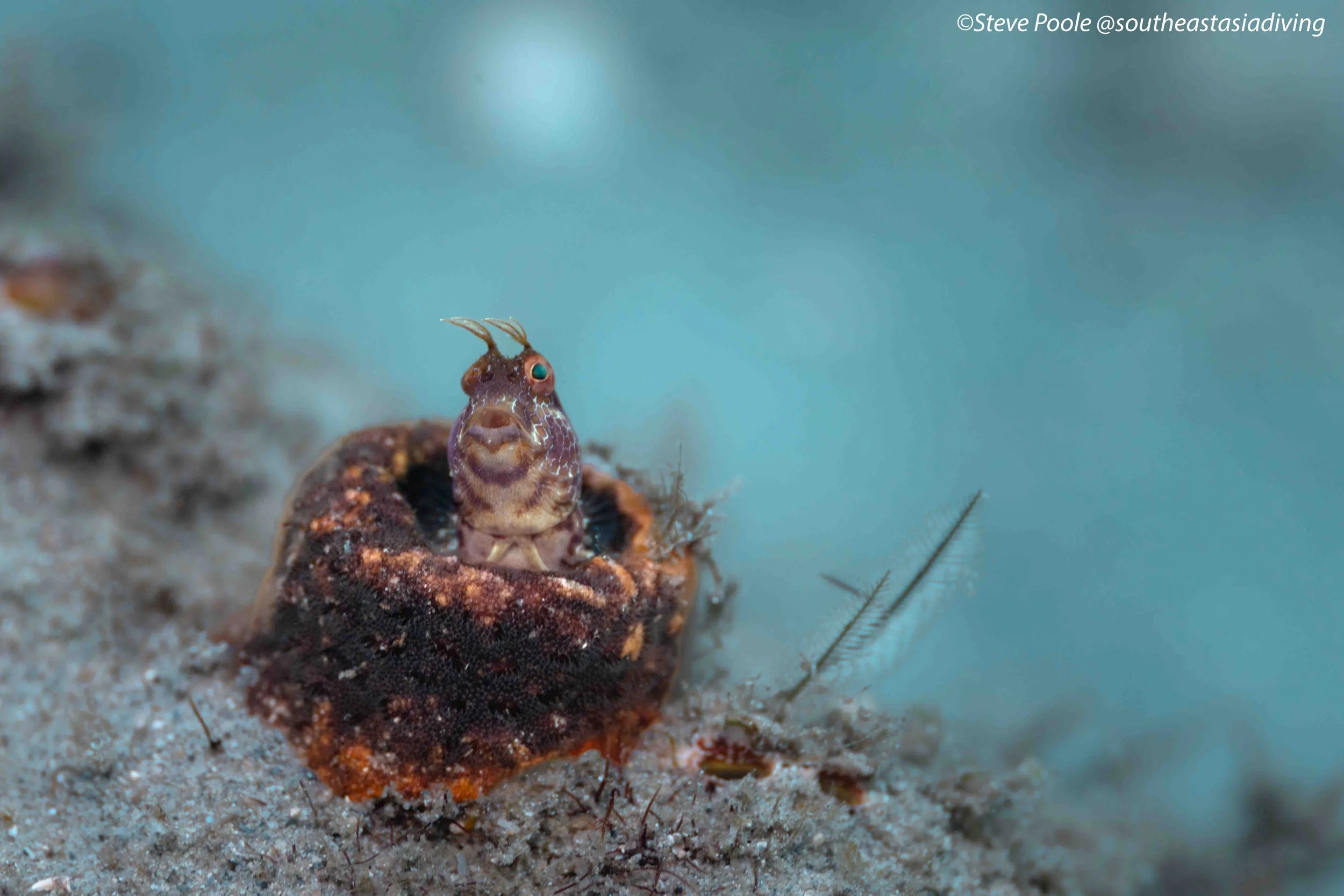
A small Blenny peers out from its hiding place at Blue Heron Bridge
Blue Heron Bridge is widely regarded as one of the best shore dives in Florida and one of the premier macro diving destinations in the United States. Located in Riviera Beach, just north of West Palm Beach, the site has earned a cult following among scuba divers and underwater photographers thanks to its easy shore access, shallow depths, long bottom times, and an astonishing variety of marine life.
From frogfish and octopuses to seahorses, blennies, jawfish and countless other critters, Blue Heron Bridge has become a bucket-list destination for macro photographers looking to explore one of North America's most productive shore dives.
For me, however, this trip was about more than simply visiting a famous dive site.
This was my first dive in 18 months.
After undergoing leukemia treatment in 2025, I received medical clearance to dive again in December. Although I had been eager to get back underwater, life had other plans. Between recovery, returning to normal life, and more recently recovering from a fractured ankle, the months passed by without a single dive.
With a trip to Hawaii on the horizon, I decided it was finally time to dust off the camera gear, test some new underwater photography equipment, and see how much of my diving confidence remained. Blue Heron Bridge seemed like the ideal place to return—shallow, accessible, packed with marine life, and offering the kind of relaxed diving environment that allows you to take things at your own pace.
What followed was a two-hour dive filled with nerves, surprises, curious octopuses, a nurse shark, plenty of macro subjects, and a frogfish waiting right at the end when I thought the dive was almost over.
Getting There
The journey was not exactly ideal preparation for a dive.
Flying from Albany via Baltimore, my connecting flight was delayed, turning what should have been a straightforward travel day into a very long one. By the time I finally arrived in Florida, it was close to 5 a.m. Not exactly the well-rested start I had envisioned for my first dive in 18 months.
One of the challenges of travelling as an underwater photographer is deciding what gear makes the cut. For this trip, I travelled with only carry-on luggage, which meant prioritising my camera equipment over my dive gear. My Sony A7R V, Nauticam housing, strobes, ports and accessories all made the journey, but there simply wasn't room for my BCD, regulators, wetsuit and the rest of my dive kit.
After grabbing a few hours of sleep, I headed to Pura Vida Divers in Riviera Beach to collect rental gear. Pura Vida is one of the most established operators diving Blue Heron Bridge and offers both guided dives and equipment rental, making it a convenient option for travelling divers.
Protect Your Dive Trip with Travel Insurance
Dive trips can be expensive and unexpected cancellations, medical emergencies, lost baggage or dive-related incidents can quickly add up. World Nomads offers travel insurance designed for adventurous travellers and divers.
Affiliate Disclosure: This article contains affiliate links. If you purchase travel insurance through the link above, I may earn a small commission at no additional cost to you. I only recommend products and services that I believe may be useful to divers and travellers.
At the shop, I met my guide, Rick, who helped me get fitted with rental equipment and made the process quick and straightforward. Before long, the paperwork was completed, the gear was loaded into the car and I was making the short drive to Phil Foster Park, home of the famous Blue Heron Bridge dive site.
With limited sleep, unfamiliar rental gear and my first dive in a year and a half only a few hours away, the nerves were definitely starting to build. At the same time, I was excited. After 18 months away from diving, I was finally about to get back underwater.
Back Underwater
After meeting Rick at Pura Vida Divers, we made the short drive to Phil Foster Park, home of the famous Blue Heron Bridge dive site. With the late afternoon sun beginning to soften, we unloaded our gear, assembled equipment and prepared for the dive.
One of the unique aspects of diving Blue Heron Bridge is that conditions are heavily influenced by the tides. The best visibility is typically found around slack tide, when the current slows and the water clears. After setting up our gear, Rick walked me through a briefing covering the route, conditions and some of the marine life we might encounter. Frogfish, octopuses, jawfish and a variety of other macro subjects were all possibilities, which only added to the anticipation.
With everything ready, there was little left to do except wait for slack tide.
That gave me plenty of time to think.
Despite receiving medical clearance to dive several months earlier, I was definitely nervous.
Eighteen months is a long time away from the water.
My last dive had been in the U.S. Virgin Islands and, since then, life had changed considerably. There had been leukemia treatment, recovery, returning to work, getting back into running, and more recently recovering from a fractured ankle. Diving had gradually moved from being a regular part of my life to something I hadn't done in a year and a half.
As the dive approached, I found myself asking questions that would probably sound familiar to anyone returning to the sport after a long break.
Would I still feel comfortable underwater? Would buoyancy control come naturally? Would I remember all the small details that eventually become second nature after years of diving?
As an underwater photographer, there were additional concerns. Managing a camera system underwater adds another layer of complexity, particularly when you haven't touched the equipment for months. Would underwater photography still feel intuitive, or would I spend the entire dive fumbling with settings and forgetting the basics?
There was also a question I hadn't really expected to ask myself.
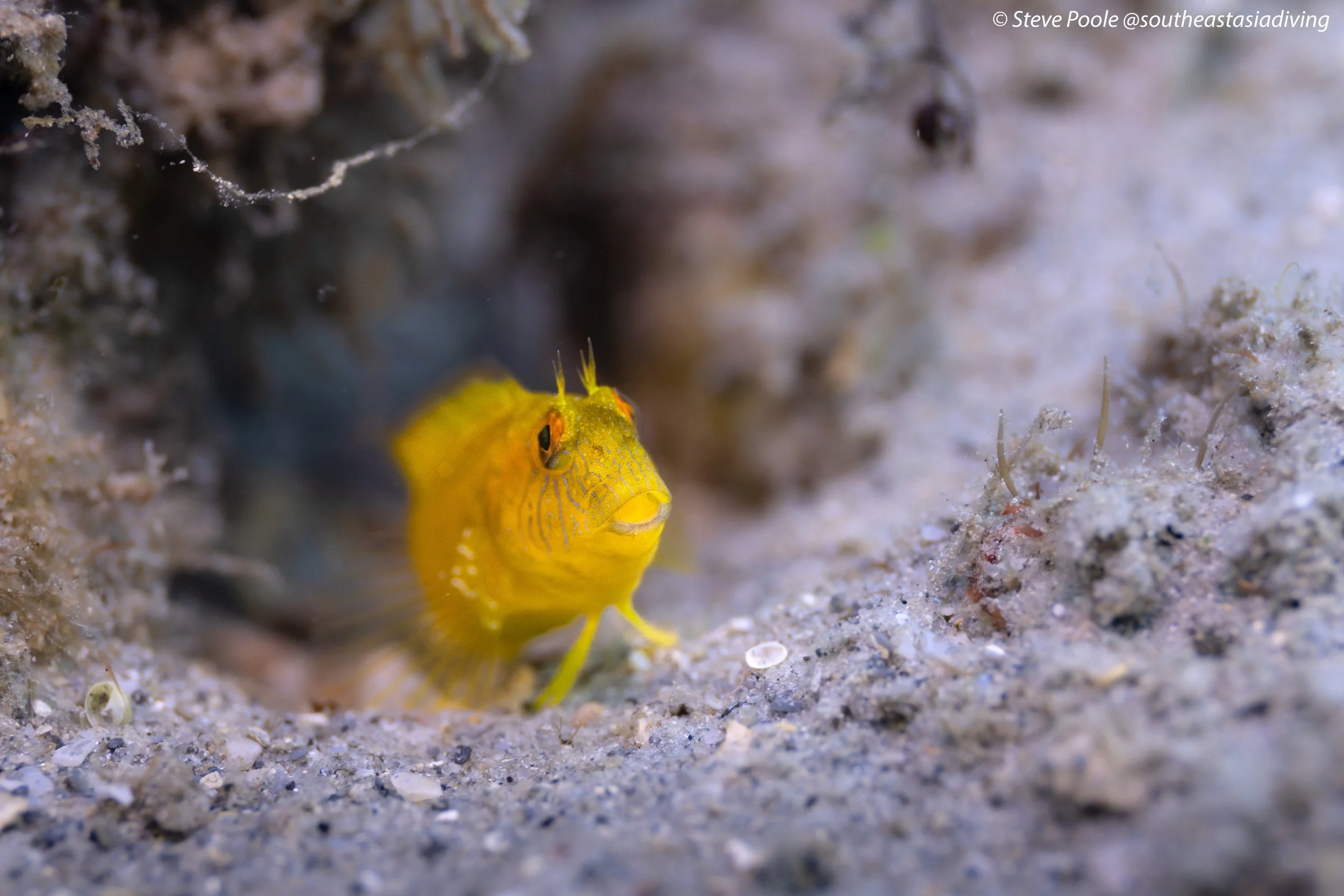
A bright yellow Blenny at Blue Heron Bridge
Would I still enjoy diving as much as I once did?
Over the previous eighteen months, so much had happened that I genuinely wasn't sure whether diving would still hold the same appeal. Had I simply moved on from this part of my life, or would getting back underwater remind me why I fell in love with diving in the first place?
Diving Blue Heron Bridge
We entered the water at around 6 p.m. and ultimately spent close to two hours underwater.
One of the biggest attractions of Blue Heron Bridge is the ability to enjoy exceptionally long dives. The site is shallow, with much of the dive taking place in less than 20 feet (6 metres) of water, allowing divers to spend extended periods searching for marine life without quickly running into no-decompression limits. For underwater photographers, it is the perfect environment to slow down and thoroughly explore the rubble, seagrass and artificial structures that make the site famous.
The start of the dive was not quite what I had expected.
Although we had timed our entry around slack tide, there was still a noticeable amount of current in places. Nothing particularly challenging, but after 18 months out of the water it was enough to keep me focused. Looking back, it was probably a good thing. Rather than easing straight back into perfect conditions, I had to work a little harder on buoyancy, positioning and general awareness.
As the dive progressed, I gradually settled in. My buoyancy became more natural, the camera started to feel less like an unfamiliar object in my hands and the confidence that had been missing on the surface slowly returned.
The marine life was also taking its time.
During the first hour, the dive felt relatively quiet. We spotted several rays gliding across the sand and found a nurse shark resting beneath a partially sunken boat. While Blue Heron Bridge is famous for its macro life, on this occasion it felt more like a slow treasure hunt than an instant critter bonanza.
One encounter, however, provided an important reminder.
While moving into position to get a closer look at a subject, I very nearly placed my hand on a well-camouflaged scorpionfish resting on the bottom. Thankfully, I spotted it just in time and quickly pulled my hand away.
Had I not seen it, the outcome could have been extremely painful.
It was one of those moments that immediately reminded me how easy it is to become complacent. After spending so long away from diving, I had allowed my situational awareness to slip slightly. Marine life is everywhere at Blue Heron Bridge and many species rely on camouflage as their primary defence. It was a timely reminder to slow down, check my surroundings carefully and be more deliberate with every movement underwater.
After thanking my luck and mentally chastising myself for the near miss, I spent the next few minutes photographing the scorpionfish instead.
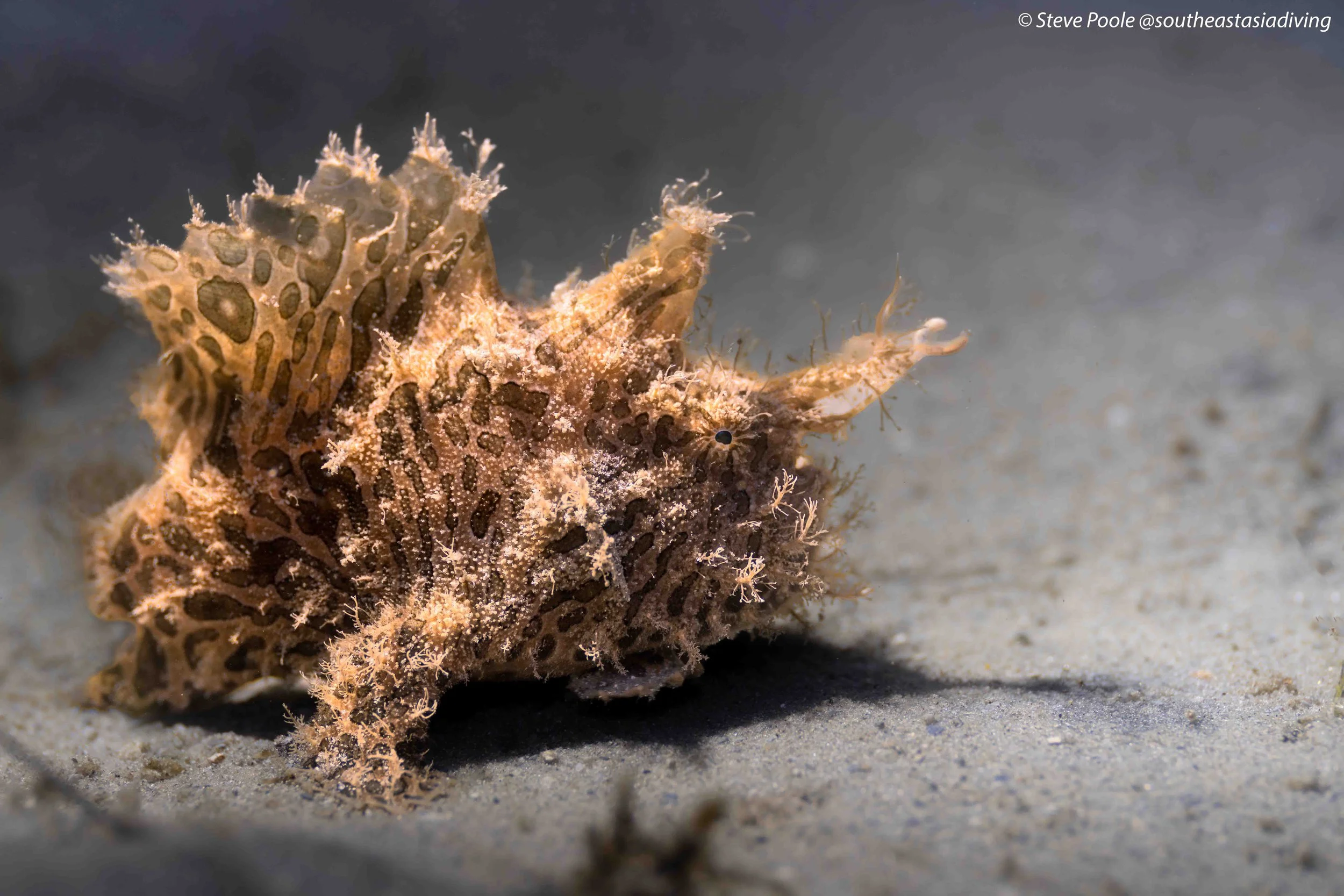
A Hairy Frogfish
In fairness, it made an excellent subject.
Perfectly camouflaged against the bottom, it demonstrated exactly why these fish are so easy to overlook and why photographers love them. Looking back through the images afterwards, I appreciated it far more than I would have if I had simply swum past.
We also found an octopus peering cautiously from deep inside a pipe, but overall the first hour wasn't quite the Blue Heron Bridge experience I had been expecting.
It was interesting and enjoyable, but if I am honest, it wasn't yet living up to the stories I had heard.
Then the site came alive.
As the light began to fade and the dive moved into its second half, the number of encounters increased dramatically. This is something many local divers had told me beforehand: be patient at Blue Heron Bridge. The dive often gets better as it progresses.
They were right.
When the Magic Started
The second half of the dive delivered exactly what Blue Heron Bridge is famous for and reminded me why the site has become one of the most celebrated shore dives in Florida.
Two common octopuses emerged into the open. One was actively feeding and completely engrossed in its hunt, allowing us to observe some fascinating natural behaviour. Compared to the shy octopus hidden inside a pipe earlier in the dive, these encounters felt entirely different.
We also found a jawfish, several incredibly photogenic blennies and a variety of smaller critters tucked amongst the rubble and seagrass. For underwater photographers, these are the moments that make Blue Heron Bridge so rewarding. Every patch of sand, discarded structure or piece of debris seems capable of hiding another subject.
By this point, I had stopped thinking about my buoyancy, my camera settings and whether I still "had it" as a diver. I was simply enjoying being underwater again. The nervousness I had felt while waiting for slack tide was long gone, replaced by the familiar excitement of searching for the next subject.
Then, right near the end of the dive, came the highlight.
A frogfish.
Like many underwater photographers, frogfish are one of those subjects I can never resist. This individual sat patiently enough for several photographs and instantly became the standout encounter of the dive. After spending much of the first hour wondering whether the famous Blue Heron Bridge macro life was going to appear, it felt like a fitting reward for sticking with it.
As if that wasn't enough, our final encounter was a long-arm octopus that seemed genuinely curious about us. Rather than retreating into cover, it approached, investigated and provided one of the most memorable interactions of the entire dive. For several minutes it appeared almost as interested in us as we were in it.
It was the perfect way to finish the dive.
By the time we surfaced, I had been underwater for almost two hours.
I had arrived at Blue Heron Bridge wondering whether I could still dive confidently, whether underwater photography would still feel natural and whether I would enjoy diving as much as I once had.
The answer to all three questions was yes.
Blue Heron Bridge had delivered rays, a nurse shark, a scorpionfish, multiple octopuses, a jawfish, blennies and, right at the end, a frogfish. But the marine life wasn't really the biggest takeaway from the dive.
After 18 months away from the water, simply being back underwater felt like a success.
The frogfish was just a bonus.
Water Temperature and Exposure Protection
One of the advantages of diving Blue Heron Bridge is the relatively warm water temperatures found throughout much of the year. During my visit, the water felt comfortably warm when we first entered and I opted for a fairly minimalist exposure setup: a Sharkskin top paired with board shorts.
For the majority of the dive, this combination worked perfectly well.
However, one thing that is easy to underestimate at Blue Heron Bridge is just how long you can stay underwater. Unlike many boat dives where bottom time is often limited by depth, Blue Heron Bridge's shallow profile allows divers to spend extended periods exploring the site. Our dive lasted almost two hours, and by the final stages I was definitely beginning to feel the cold.
This wasn't a criticism of the water temperature itself so much as a reminder that even warm water can start to feel surprisingly cool after spending nearly two hours submerged, particularly when you are moving slowly and concentrating on macro photography rather than actively swimming.
If I were repeating the dive tomorrow, I would probably add a little more thermal protection. A thin wetsuit, additional Sharkskin layer or similar setup would have made the final thirty minutes more comfortable without feeling excessive.
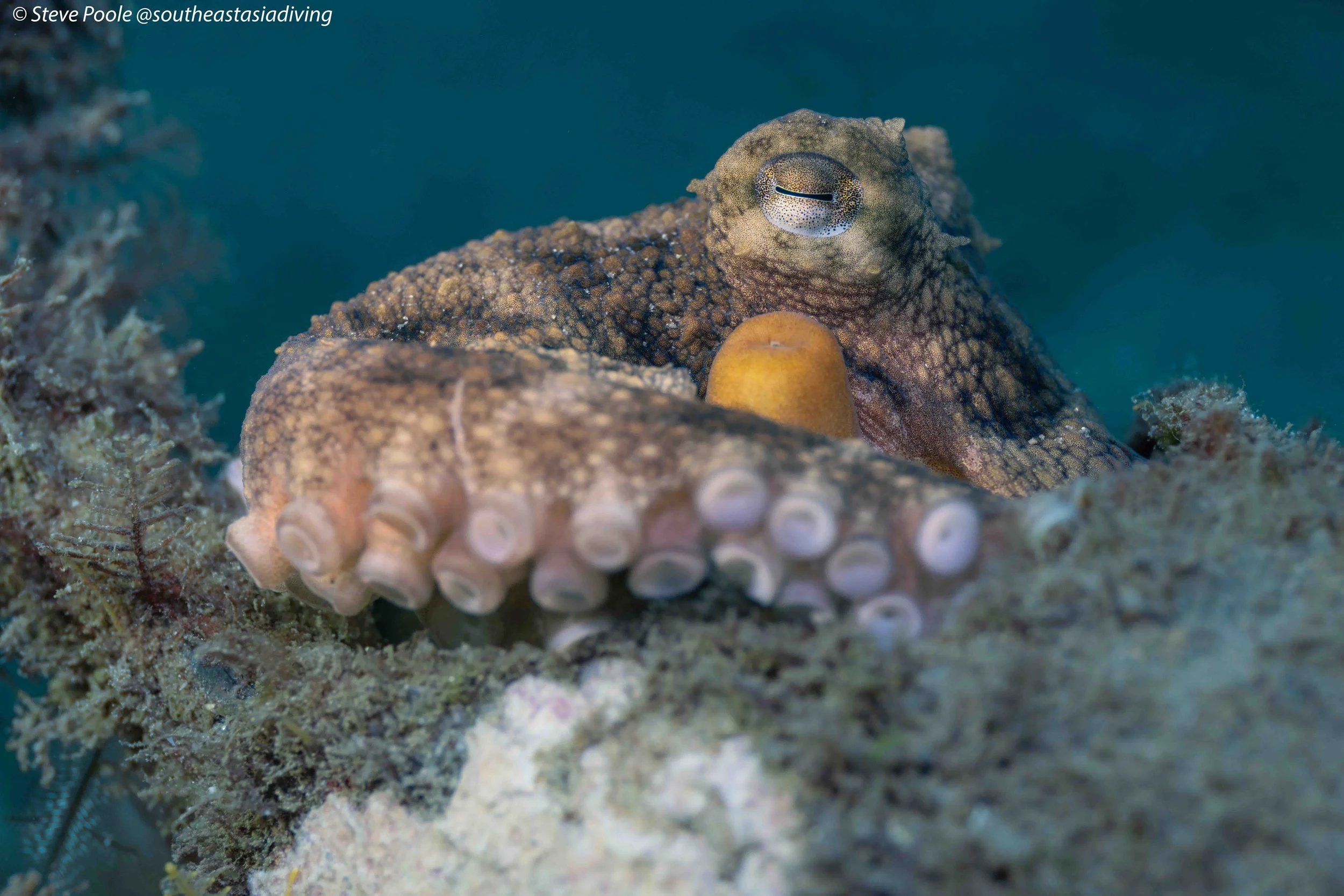
A common Octopus resting on the reef
For photographers in particular, it's worth remembering that Blue Heron Bridge is often a slow-paced dive. Spending long periods hovering motionless while photographing octopuses, frogfish, blennies and other macro subjects can leave you feeling noticeably colder than the water temperature alone might suggest.
For most divers, exposure protection is unlikely to be a major concern at Blue Heron Bridge. Just bear in mind that if you're planning the kind of 90- to 120-minute dive that the site is famous for, a little extra warmth can go a long way towards keeping you comfortable right through to the end.
Testing the Oceanic+ App on the Apple Watch
This trip also gave me an opportunity to test something new.
For the first time, I used the Oceanic+ app on my Apple Watch Ultra underwater, while also carrying my trusted Suunto D5 for comparison.
Like many divers, I have been curious about whether a smartwatch can genuinely replace a dedicated dive computer. The Apple Watch Ultra and Oceanic+ combination has generated a lot of interest since its release, but this was my first opportunity to use it on a real dive.
It's important to note that Blue Heron Bridge probably isn't the ideal environment for a comprehensive comparison. The dive was shallow, with no decompression obligations and little opportunity to compare dive algorithms, no-decompression limits or other advanced functions that become more relevant on deeper dives.
That said, my initial impressions were very positive.
The Oceanic+ interface was easy to read underwater, the display remained clear throughout the dive and I had no issues navigating the information I needed. Everything felt intuitive and I quickly forgot I was using a smartwatch rather than a traditional dive computer.
One interesting difference emerged when comparing the dive logs afterwards. The Suunto D5 recorded a slightly shorter dive time than the Oceanic+ app. My suspicion is that the Suunto was more responsive when we moved into very shallow water towards the end of the dive, ending the dive profile sooner than the Apple Watch. The difference wasn't significant, but it was noticeable and something I'll pay attention to on future dives.
Beyond the core dive functions, there were a few features that I genuinely enjoyed. As someone who tracks training, running and general fitness quite closely, I appreciated that the Apple Watch automatically recorded the dive as exercise and provided an estimate of calories burned. It's hardly a reason to buy a dive computer, but it was a nice bonus and something that traditional dive computers don't generally offer.
So, would I replace my dedicated dive computer with an Apple Watch Ultra running Oceanic+?
At this stage, probably not.
One shallow dive isn't enough to build complete confidence in any new piece of equipment, and I still have more testing to do before I would feel comfortable relying on it as my sole dive computer.
Would I happily use it as a backup computer? Absolutely.
In fact, after this dive I can see real value in carrying both systems. The Apple Watch Ultra performed well, was easy to use, integrated seamlessly with the rest of my fitness tracking and provided all the information I needed for a shallow recreational dive.
For now, the verdict is cautiously positive. The Oceanic+ app exceeded my expectations at Blue Heron Bridge, and I'm looking forward to seeing how it performs during future dives in Hawaii and beyond.
Underwater Photography Setup
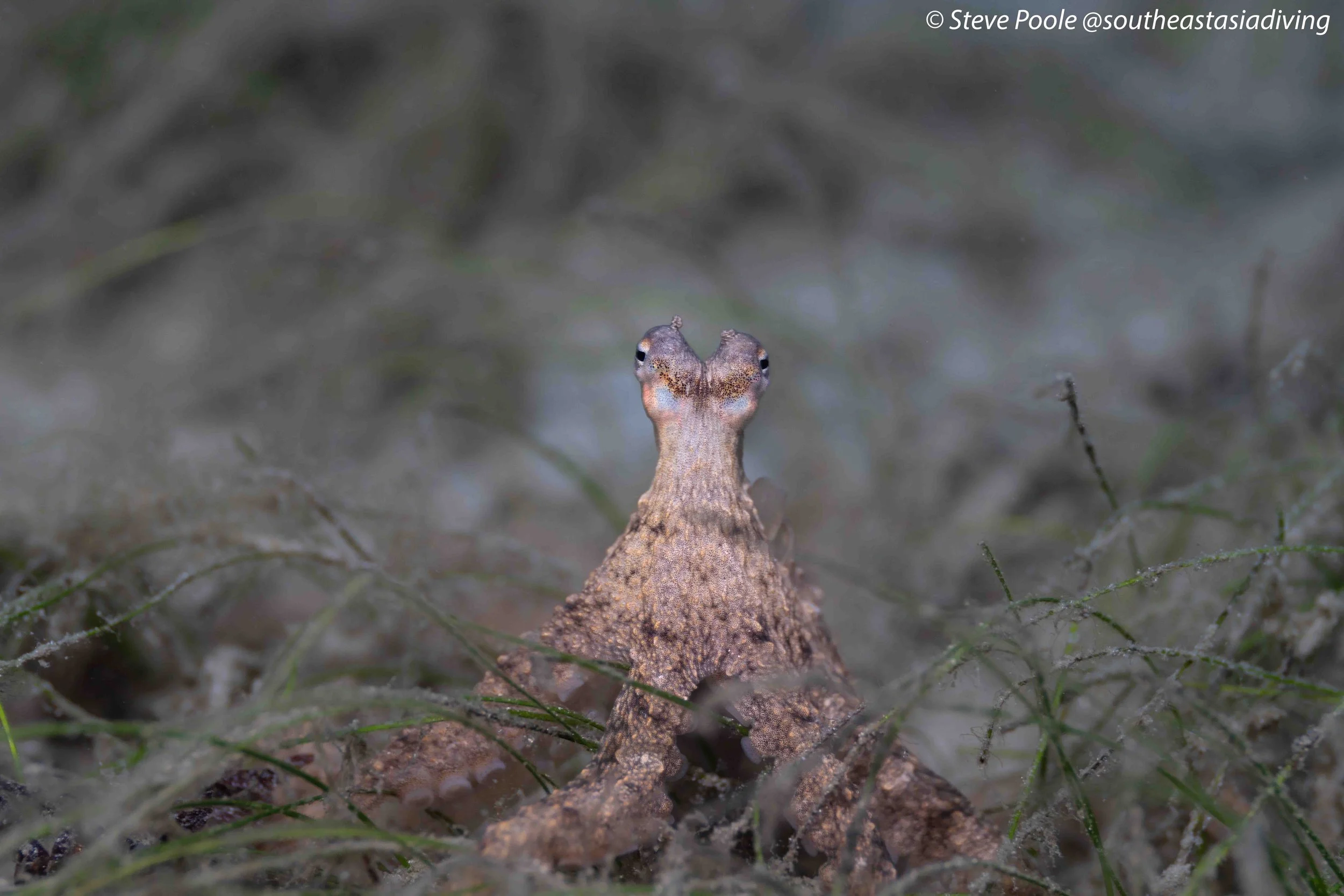
A long arm octopus inquisitively looking back at me
One of the main goals of this trip was to get back behind the camera and start rebuilding confidence with my underwater photography setup.
After 18 months out of the water, I knew my diving skills wouldn't be the only thing feeling rusty. Underwater photography is a discipline where small details matter, from buoyancy and positioning to strobe placement and camera settings. I fully expected there to be a learning curve on this first dive back.
My setup for the dive consisted of:
* Sony A7R V
* Nauticam housing
* Sony FE 100mm f/2.8 Macro GM OSS
* Nauticam MFO-1
* Nauticam MFO-3
* Single strobe positioned above the subject
Because Blue Heron Bridge is renowned for its macro life, I decided to keep things relatively simple and leave my usual dual-strobe configuration at home. Instead, I opted for a single-strobe setup, which helped reduce complexity and allowed me to focus on reacquainting myself with the basics of underwater photography.
The good news is that the equipment performed flawlessly.
Earlier in the year I had my housing and ports serviced, and everything worked exactly as it should. After such a long break, simply knowing that the camera system was functioning perfectly removed one potential source of stress and allowed me to concentrate on the dive itself.
The biggest unknown for me was the new Sony FE 100mm f/2.8 Macro GM lens.
This was its first real underwater outing and I was keen to see how it performed compared to my previous macro setup. While one dive is far too early to reach any definitive conclusions, my initial impressions were very positive.
The lens is exceptionally sharp and paired beautifully with the autofocus capabilities of the Sony A7R V. Subject acquisition was fast and reliable, and even after 18 months away from underwater photography I found it easy to lock onto subjects and achieve accurate focus. Several of the octopus, blenny and frogfish images demonstrated just how much detail the lens is capable of resolving.
Perhaps the biggest surprise of the trip, however, was the Nauticam MFO-1.
I started the dive experimenting with both the MFO-1 and MFO-3, expecting to switch between them regularly depending on the subject. As the dive progressed, I found myself leaving the MFO-1 in place more and more often. It proved to be an incredibly versatile addition to the setup, providing a useful balance between magnification, working distance and ease of use.
By the end of the dive, the MFO-1 had become my preferred configuration and was attached for much of the second half of the dive. For the type of subjects commonly encountered at Blue Heron Bridge—octopuses, blennies, jawfish and frogfish—it felt like an excellent match for the Sony 100mm GM.
Photography-wise, I was definitely rusty. My buoyancy wasn't always perfect, my strobe positioning occasionally needed adjustment and I spent more time checking settings than I normally would. None of that was surprising after such a long break. What did surprise me was how quickly things started to come back. As the dive progressed, the camera began to feel familiar again. I found myself thinking less about operating the equipment and more about composition, lighting and subject behaviour. By the final stages of the dive, I was beginning to feel comfortable once more and came away with several images that I was genuinely pleased with. Perhaps most importantly, the dive reminded me how much I enjoy underwater photography.
The Sony 100mm GM showed a great deal of promise, the MFO-1 exceeded my expectations and the combination of the Sony A7R V and Nauticam housing once again proved to be a fantastic system for macro photography.
I still have plenty to learn about the new lens and both Nauticam optics, but after this first outing I'm excited to continue experimenting with the setup in Hawaii and on future dive trips.
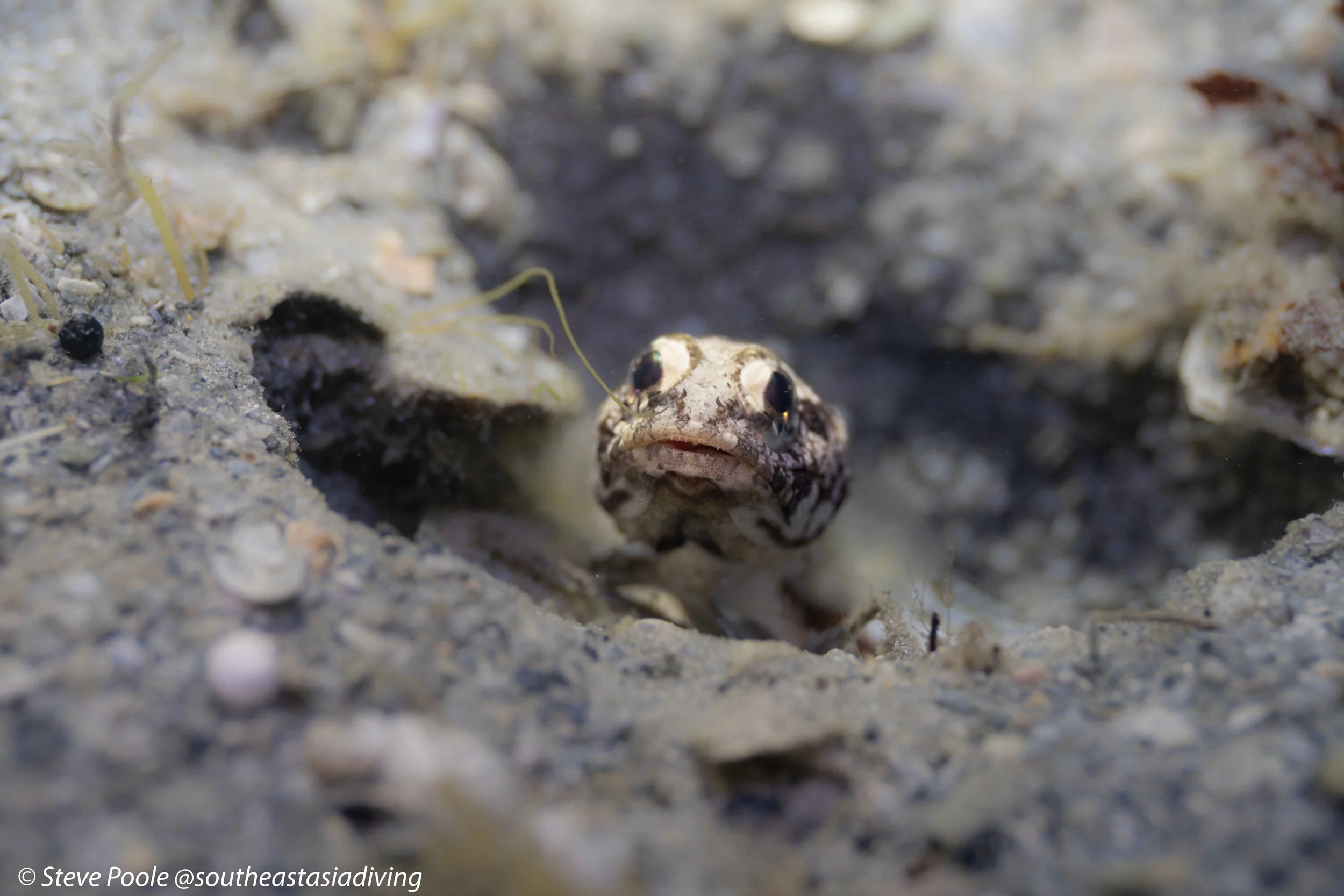
A jawfish looking back at me out of its hiding hole
Is Blue Heron Bridge Worth It?
Absolutely.
Blue Heron Bridge isn't about dramatic walls, big pelagics or crystal-clear tropical visibility.
Instead, it rewards patience.
Every patch of sand, rubble or seagrass has the potential to reveal something unexpected, making it one of the most rewarding shore dives in Florida and a paradise for underwater photographers and macro enthusiasts.
For me, though, the marine life wasn't the most important part of the dive.
After 18 months away from the water, Blue Heron Bridge reminded me why I fell in love with diving in the first place.
The octopuses, jawfish and frogfish were incredible.
But simply being back underwater was the real highlight.
The frogfish was just a bonus.
Frequently Asked Questions About Diving Blue Heron Bridge
Is Blue Heron Bridge worth diving?
Absolutely. Blue Heron Bridge is widely regarded as one of the best shore dives in Florida and one of the top macro diving sites in North America. While it lacks dramatic walls or large pelagic encounters, it more than makes up for it with incredible marine life diversity and exceptional underwater photography opportunities.
What marine life can you see at Blue Heron Bridge?
Blue Heron Bridge is famous for its macro life. Depending on conditions and a little luck, divers may encounter frogfish, octopuses, seahorses, jawfish, blennies, scorpionfish, rays, pipefish, shrimp, nudibranchs and countless other small critters. During my dive I saw multiple octopuses, a frogfish, jawfish, blennies, rays, a scorpionfish and a nurse shark.
What is the best time to dive Blue Heron Bridge?
The best time to dive Blue Heron Bridge is generally around slack tide. Visibility is typically at its best when the current slows between incoming and outgoing tides. Most local operators, including Pura Vida Divers, schedule dives around the tide tables.
How deep is Blue Heron Bridge?
Blue Heron Bridge is a shallow dive site, with most areas ranging between 5 and 25 feet (1.5 to 8 metres). The shallow depth allows for exceptionally long dive times, often exceeding 90 minutes and sometimes reaching two hours or more.
Is Blue Heron Bridge suitable for beginner divers?
Yes. The shallow depth and easy shore access make it suitable for beginner divers. However, divers should still pay attention to tides, currents and buoyancy control. A guided dive is highly recommended for first-time visitors to maximise the chances of finding marine life.
Is Blue Heron Bridge good for underwater photography?
Blue Heron Bridge is one of the best underwater photography sites in Florida, particularly for macro photography. The combination of shallow water, long dive times and abundant marine life makes it an excellent location for photographers looking to spend time with individual subjects.
What camera lens is best for Blue Heron Bridge?
Macro lenses are generally the best choice for Blue Heron Bridge. For this dive I used a Sony FE 100mm f/2.8 Macro GM lens and found it well suited to subjects such as octopuses, blennies, jawfish and frogfish. Depending on conditions and the subjects available, many photographers also use 60mm to 105mm macro lenses.
How long are dives at Blue Heron Bridge?
One of the unique features of Blue Heron Bridge is the ability to enjoy very long dives. Because the site is shallow, dives of 60 to 120 minutes are common. My dive lasted almost two hours.
What exposure protection do you need at Blue Heron Bridge?
Water temperatures vary throughout the year, but many divers are comfortable in a thin wetsuit, Sharkskin top or similar exposure protection. Keep in mind that long dive times and slow-paced macro photography can make you feel colder than expected, even in warm water.
Which dive operator should I use for Blue Heron Bridge?
Several operators dive Blue Heron Bridge, but I used Pura Vida Divers for this trip. They provided rental equipment, local knowledge and a guided dive, making the experience straightforward and stress-free for a returning diver visiting the site for the first time.