I'm a diver, not a doctor. This is my own account of returning to diving after acute myeloid leukemia (AML), along with what I found from people who do know. It is not medical advice. Everyone's diagnosis, treatment and recovery are different, and diving carries risk even for healthy people. Whether you're fit to dive is a question for your own medical team and a physician trained in dive medicine.
When I was diagnosed with AML in January 2025, one of the first things I wondered was whether I would ever dive again. When I finally went looking for answers, I found a few forum threads, some short Q&As and very little that spoke to my situation.
So this is the post on diving after cancer that I wish I'd been able to find. It covers how getting cleared worked for me, what my doctors told me, how I eased back into the water, and what the experts say about the risks. If you're in a similar position, I hope it gives you a better starting point than I had, and if it also shows that going back can be done, and that it can go well, then it's done its job.
Where I started
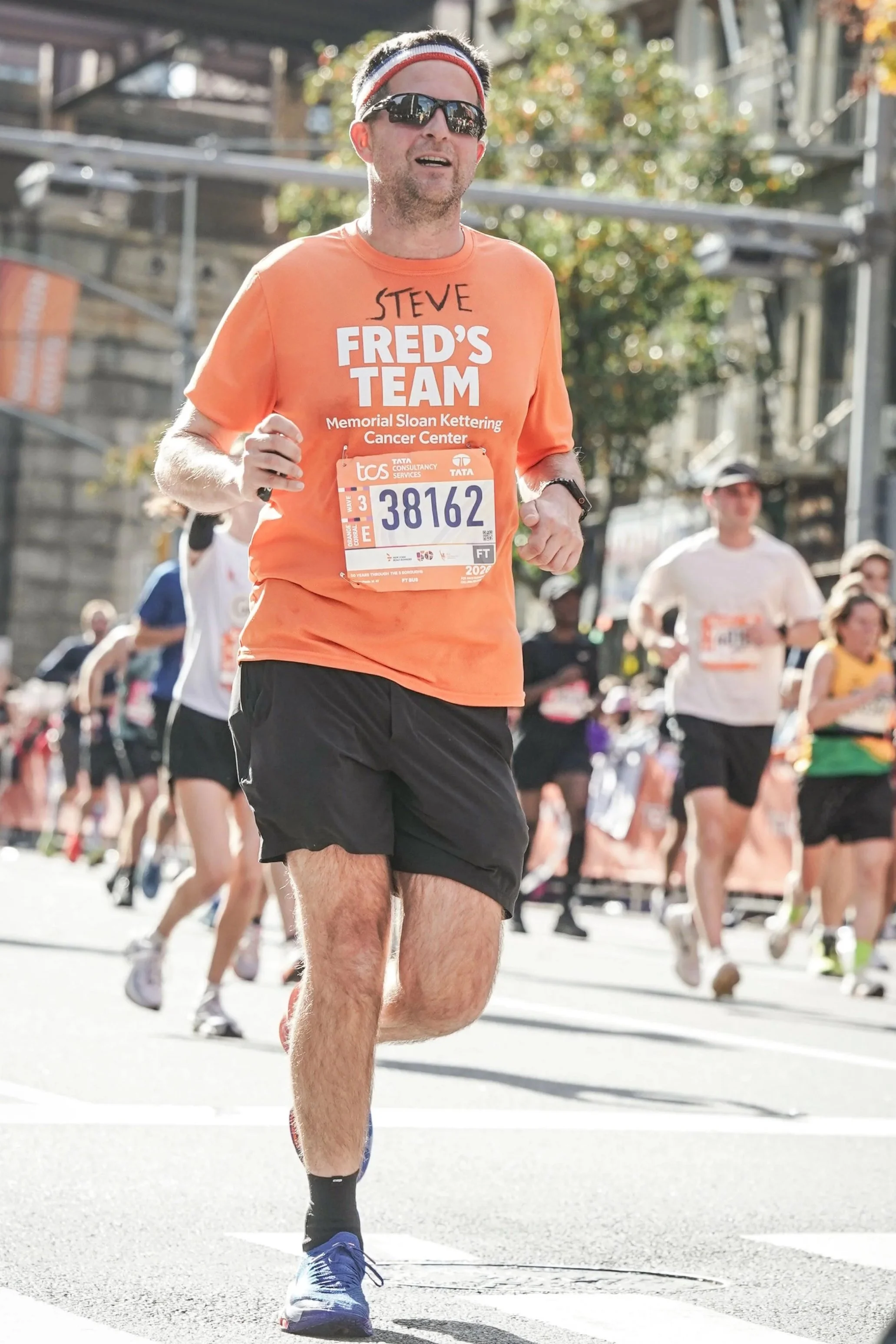
A few things about my situation matter, because I don't want anyone to read this as "if I can, you can."
I'm in remission and doing well. My haematologist cleared me to exercise in July 2025, once I'd finished all my consolidation therapy, and my exercise tolerance is good: I've run a half marathon, and Laura and I have since run the New York City Marathon together with Fred's Team.
My heart was the other thing I wanted checked. One of my chemotherapy drugs, daunorubicin, can be cardiotoxic, so I've been seeing a cardiologist, and my heart function has returned to baseline. I was fairly fit beforehand, and I've worked to stay in good shape since.
If you haven't been cleared for exercise, or you're still dealing with significant fatigue or symptoms, then in my view jumping back into diving probably isn't the next step yet. Diving can be demanding even on an easy day, because a surface swim against a current, carrying kit, or dealing with a problem underwater all draw on your reserves. It's worth building back up first with your medical team and letting diving come after, which is also what DAN's guidance on diving in remission points to: good exercise tolerance as well as good health.
Who I asked, and in what order
I started with my haematologist and my cardiologist. I spoke to both of them about diving, in July and November 2025, before my dive medical, and they said they could see no reason why not but were upfront that they weren't diving experts. That was an honest answer, and it told me where to go next. Since then, I've told my haematologist that I've been cleared and that I intend to dive.
Next I needed a dive doctor, which was harder than I expected. DAN (Divers Alert Network) was a great resource, and because I'm a member it was easy: I emailed them, they sent me a list of dive doctors in my area, and I contacted one. DAN couldn't tell me much about AML specifically or what diving might do, and nobody else I asked could either.
The dive medical
I wanted to be as transparent as possible, so I gave my dive doctor everything: my latest blood work, my haematologist's summary and medical notes, my cardiologist's report and a full list of my medications. He checked those medications for any recorded interactions at depth and found none, although that doesn't mean there was no risk, only that no incidents had been recorded, and I think that distinction is important.
He was excellent and genuinely supportive, but he didn't simply clear me and send me on my way. He made me think about whether I wanted to go back at all. My immune system was functioning but slightly suppressed by the medication I was on at the time, and he was direct that I needed to think about the risk of infection. His main worry was my platelets, in case I cut myself, but mine were fine, and he said I was OK to dive.
No specific conditions were attached to my clearance, and it has no time limit, although I plan to follow up with him later this year, by email at least, to see whether I need to repeat it. It was a real question rather than a formality: did I still want to dive? I said yes.
What dive medicine says about the risks
I'm not qualified to give you a list of risks, but it helps to know what the experts look at so you know what to ask. Dr Camilo Saraiva, a radiation oncologist and diving medicine specialist, wrote a good overview for InDEPTH, and the main areas he points to are:
The lungs. Some chemotherapy drugs (bleomycin is the classic example), chest radiation and some surgeries can leave lasting changes that matter under pressure.
The heart. Some drugs, including anthracyclines like the one I had, can affect the heart, and rhythm problems are especially dangerous underwater.
Blood counts. Anaemia reduces your exercise capacity, low platelets raise the risk of bleeding and low white cell counts raise the risk of infection.
Nerves, fatigue and thinking. Neuropathy can affect fin control and cold tolerance, fatigue eats into your reserves, and some people notice memory or concentration changes after chemotherapy.
Devices and healing. Surgical sites need to have healed, and ports or central lines are worth checking with your oncologist and the manufacturer.
There are two honest caveats. There's very little good data on cancer survivors who dive, and Saraiva describes his framework as expert opinion rather than formal guideline, written with technical divers in mind. DAN's own answer on diving in remission is brief, advising you to consider diving once you're in remission and free of disabling symptoms, and to confirm good exercise tolerance with your physician. That's a big part of why individual assessment matters so much.
How I eased back in
I've told the wider story in Back to the Ocean, so here I'll stick to the practical side: what I actually did, and why. None of it is medical guidance. It's what worked for me, with my doctor's clearance and my own sense of what felt manageable, and your own doctor may well advise something different for you.
My return-to-diving medical was in December 2025, and a broken ankle in January 2026 pushed things back by several months. By the time I was ready, I had a clear idea of how I wanted that first dive to go: shallow to start with, warm, simple, and with people around me who knew my history.
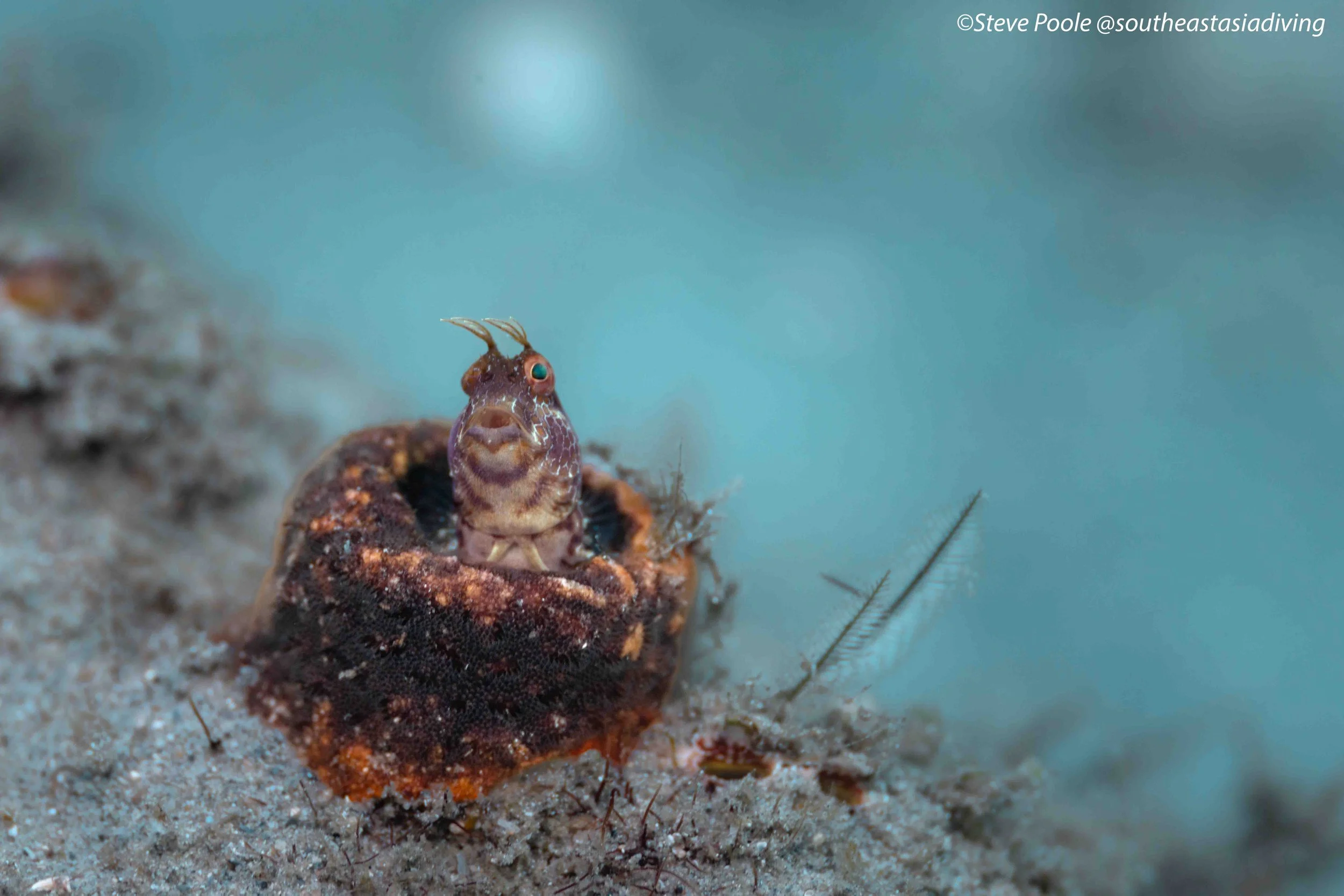
A Blenny peeps out of its home at Blue Heron Bridge
My first dive was at Blue Heron Bridge in Florida in June 2026, eighteen months after my last dive. I chose it deliberately, because it's a shallow, shore-based site where you can take your time and let the dive come to you. I told my guide about my history before we got in the water because I wanted to be transparent, and I carried a medical kit in case of any cuts, which thankfully I didn't need. Infection was the risk my doctor had been most direct about, and I was still on medication at that point, so I stayed careful and mindful throughout.
I only went to 6 metres (about 20 feet), as a way of managing risk, and that was my own decision. My doctor had made a point that surprised me, which is that for recreational diving, going shallower doesn't change the pressure as much as you'd expect, because the biggest proportional change happens in the first few metres, so I never thought of shallow as automatically "safe". What it does give you is a quick route to the surface if something goes wrong, and above all it let me rebuild my confidence without asking too much of myself on the first day.
Warm water was part of my thinking too, although that's my own view and not my doctor's, who didn't raise water temperature. I've done my ice diving certification, and I know how much strain cold puts on everything: your heart and breathing, your hands, your concentration, your air consumption, and your head as much as your body. If your body is already carrying the load of recovery, taking the cold out of the equation seemed sensible to me, and Saraiva lists warm water among the conditions that may suit a conditional return.
From Florida, Laura and I went on to Kauai, and this is where I built up in steps. We started with shore dives off the south of the island at about 12 to 15 metres, which was also the first time in a while that Laura had dived, so we were easing back in together, and over the following dives we worked down to around 20 metres. After that we moved on to boat dives off Kauai, and only then did we make the trip across to Niihau, where we dived to around 26 metres, stepping things up a little each time as my confidence grew. Laura knew my history and had told the dive shop, so the people we were diving with were aware without my having to raise it every time. I also made sure I had full dive accident insurance before we went.
I was still on medication through both trips, and I finished it in August 2026. Today my blood counts are within normal ranges, and I have routine blood work every couple of months, which I'll keep a close eye on.
What surprised me most through all of it was how ordinary it felt. I'd expected a huge moment, even euphoria, but it just felt good, and nothing more dramatic than that. Physically, being underwater felt no different from before, and psychologically it felt great. I started more or less where I'd left off, and the only real rust was in my photography skills.
I want to be clear that this is one person's experience. It shows that a careful, staged return worked for me, and I'm glad I took it slowly, but it isn't a recommendation for anyone else's body or situation.
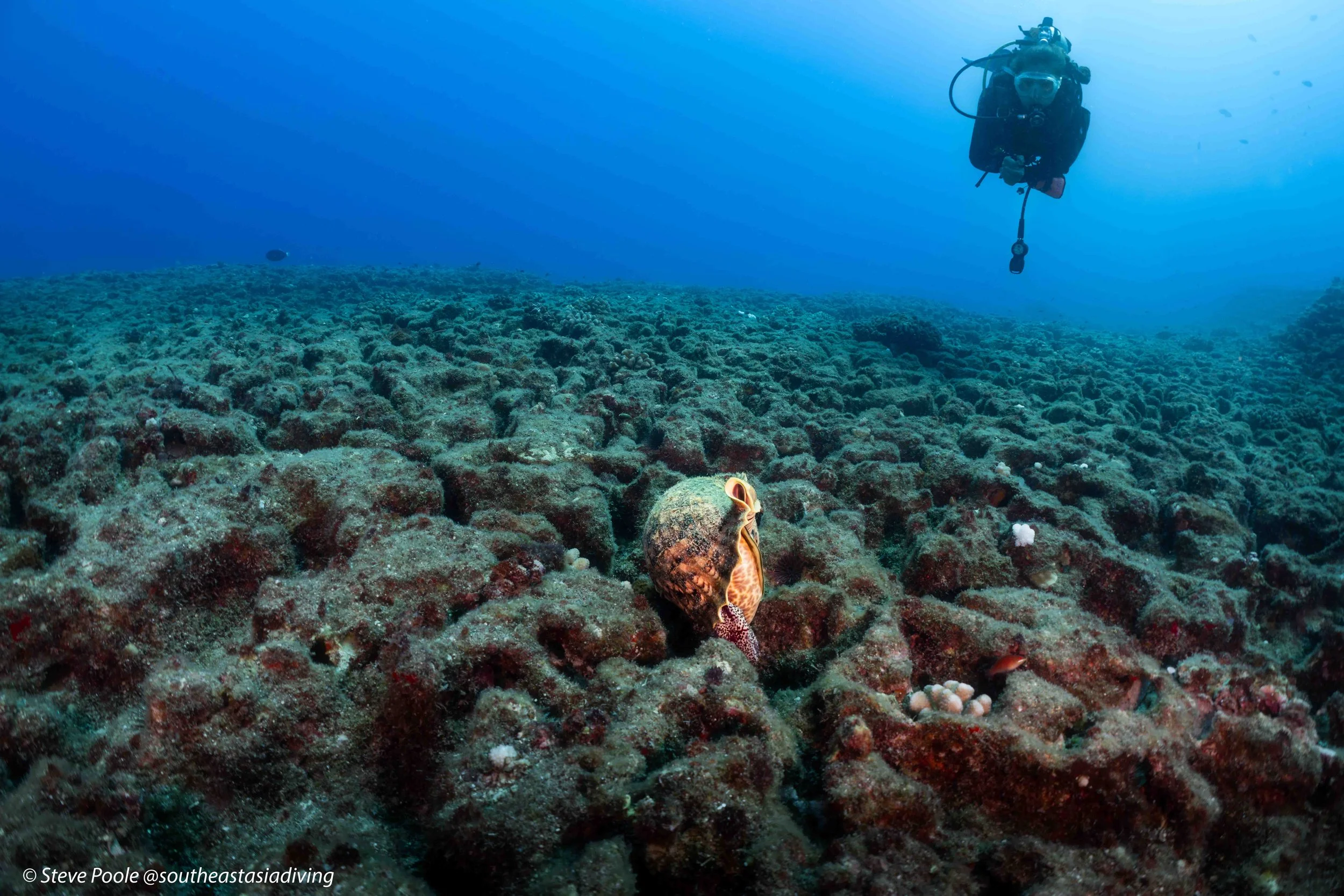
The underwater lava-scape at Ni’ihau, Hawaii
Warm water and remote places
Warm, calm water suits a conservative return, but warm and remote often go together. If infection is your concern, tropical water and distance from good medical care are worth discussing with your doctor, and DAN's guidance on travelling with an illness recommends talking to your doctor or a travel medicine clinic before going somewhere with limited medical care.
I plan to ask my doctor outright before Lembeh or Triton Bay next year. As mentioned, I also have routine blood work every couple of months, and if those results don't look good, I won't be going.
What I'd pass on
Start the conversation early, and don't wait until treatment ends to ask whether diving is something you can work towards.
Find a physician who understands dive medicine, not just anyone who'll sign a form, and be ready to bring full records and to be asked whether you really want this, which is a fair question.
Be honest about your fitness, because if you haven't been cleared for exercise, diving probably isn't your next step.
Ease back in somewhere calm, warm and familiar, with people who know your situation, because you don't need to prove anything on your first dive.
Be open with your buddy and your dive operator, and check your dive accident insurance before you go.
Give yourself time, because it's a rebuild in the water as well as out of it.
There's no definitive guideline for diving after AML, and my experience is one data point. If you're in a similar position and want to compare notes, I'd love to hear from you. You can email me at steve@southeastasiadiving.com.
Frequently asked questions
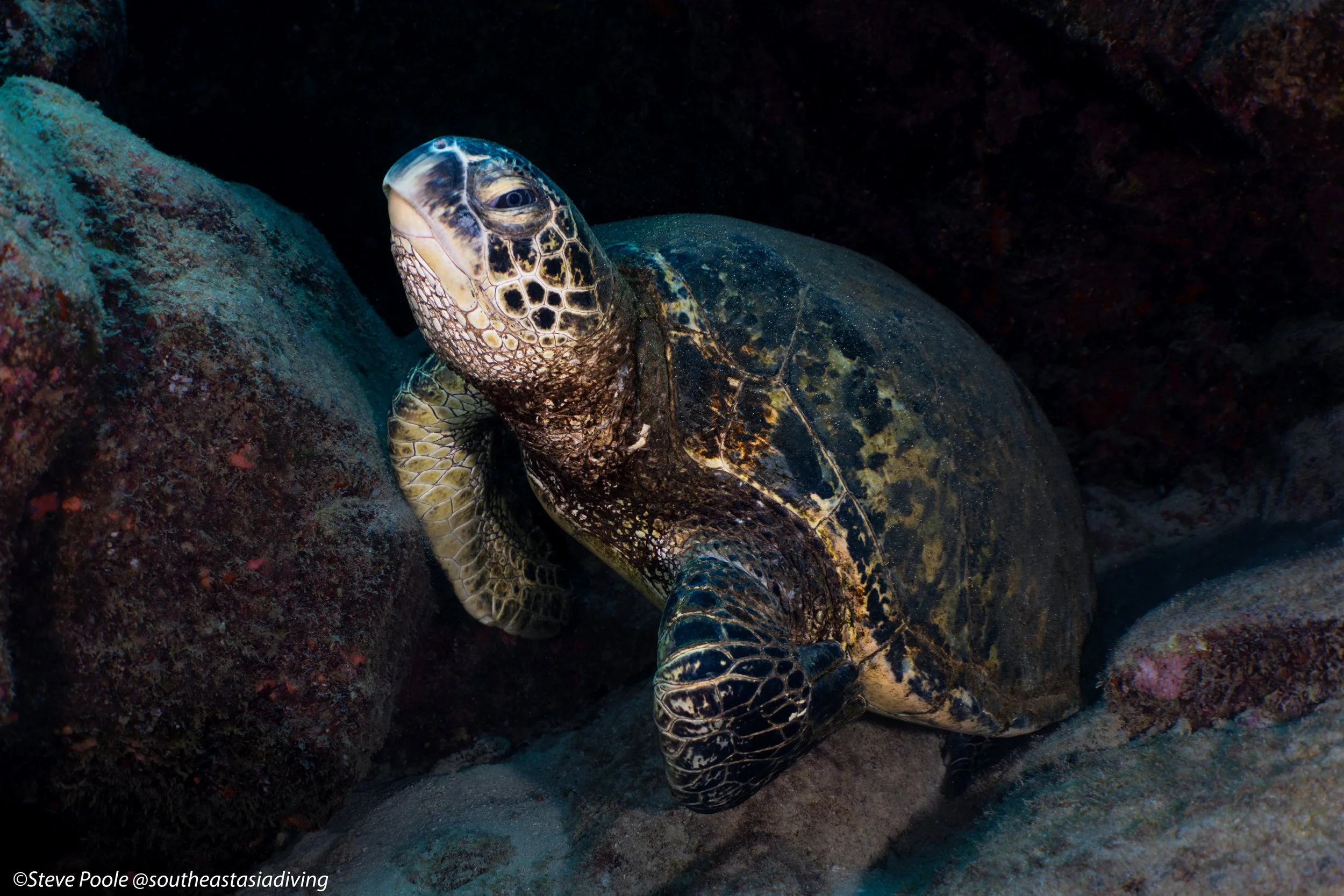
A resting turtle in Kauai, Hawaii
Can you scuba dive after cancer?
Many people do, but it depends on the type of cancer, the treatment and how you've recovered. There are no universal rules, and some situations, such as active lung inflammation or heart rhythm problems, are reasons not to dive yet. A physician trained in dive medicine should assess you individually.
How long should I wait after treatment before diving?
There's no single answer. DAN's guidance says to consider diving once in remission, free of disabling symptoms and with good exercise tolerance. For some specific treatments, such as bleomycin, authors have suggested several months to a year for recovery. Your own team will advise.
Do I need to be fit to dive after cancer?
Good exercise tolerance is one of the things DAN says to confirm with your physician. In my case I was in remission and had been cleared for full exercise. If you haven't been cleared yet, diving probably isn't the next step, but that's a question for your own medical team.
Does chemotherapy affect diving?
It can, depending on the drug. Dive medicine specialists raise concerns about the lungs and heart, blood counts, neuropathy and fatigue.
Is shallow diving safer after cancer?
It isn't a magic fix. My dive doctor pointed out that the biggest proportional pressure change happens in the first few metres. But staying shallow gives you a faster route to the surface in an emergency, which is why I kept my first dives shallow. Ask your own doctor what's right for you.
Is warm water better?
For me it made sense, because cold puts extra strain on the body. That's my view, not medical advice, and warm, remote destinations carry their own considerations, such as infection risk and distance from medical care.
How do I find a dive doctor?
DAN can help you find a physician trained in dive medicine. That's how I found mine.
Is this medical advice?
No. It's one diver's experience.
Sources
Saraiva C. After Cancer: Can We Safely Return to Diving? InDEPTH Magazine, 11 May 2026.
Diving When in Remission, DAN Southern Africa.
To Dive or Not to Dive with Bleomycin, Alert Diver.
Diving After Breast Cancer, Alert Diver (2010, small survey).
Navigating the Depths Post-Chemotherapy, Divernet.
The Risk of Diving with Leukemia, Divernet.