If you've followed Southeast Asia Diving for a while, you've probably noticed something odd over the past year. Posts about Sipadan and Raja Ampat gave way to posts about Florida and Hawaii. The site named after Southeast Asia stopped, for a while, being about Southeast Asia at all.
Here's why.
What diving meant
Living in Malaysia, diving wasn't a hobby I did — it was part of who I was. It shaped how I spent my weekends, who I knew, where I travelled and, in many ways, how I saw myself.
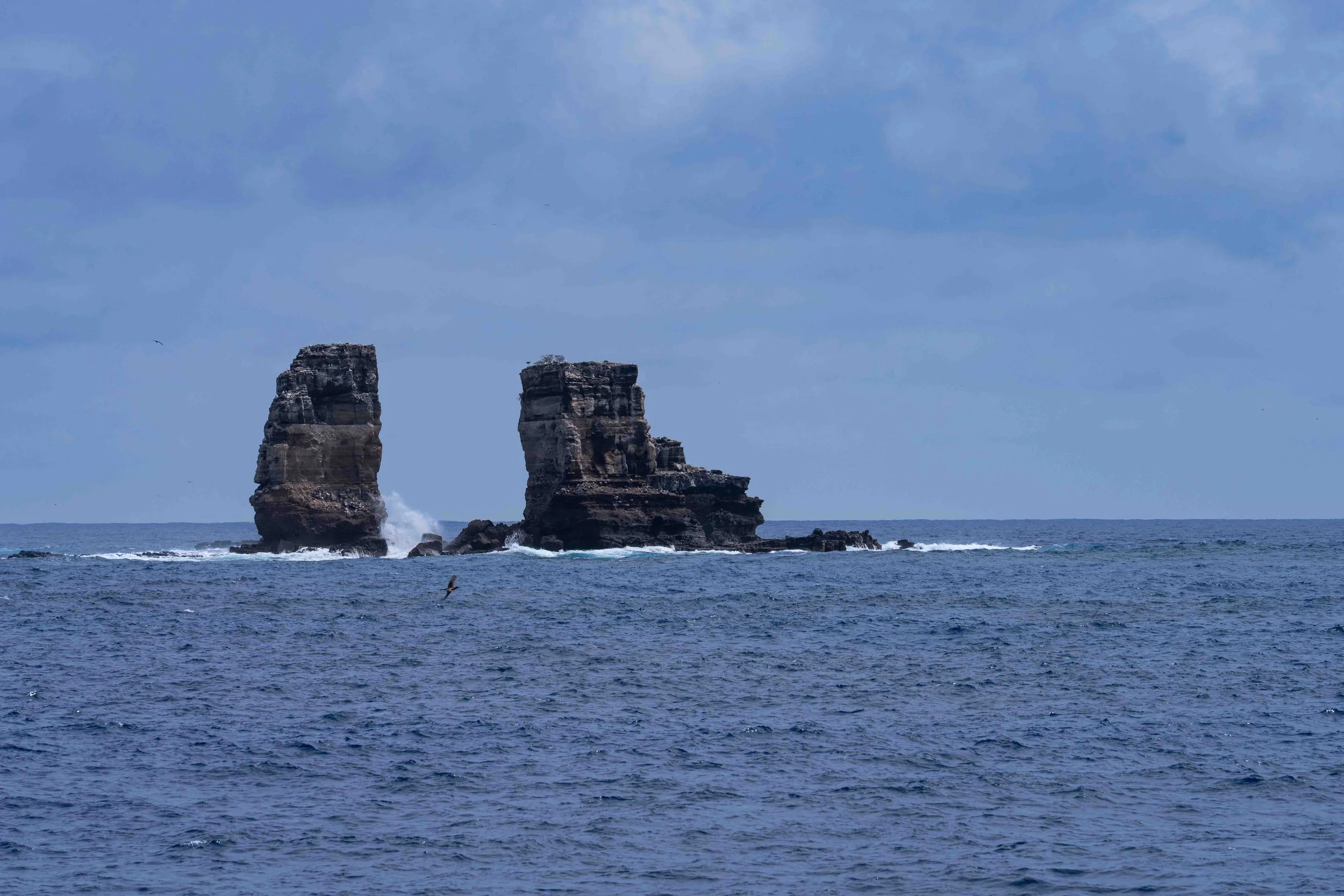
The iconic Darwin’s arches (Or now pillars?) in The Galapagos
When we moved to the US, the trips became less frequent but, in a way, more intense. Weekend dives gave way to bucket-list destinations: the Bahamas, the Galápagos, the cenotes of Mexico. Diving had shifted from an everyday part of my life to something rarer and more deliberately chosen, but it was still central to who I was.
I'm telling you this because you need to understand what was actually at stake in what comes next.
January 17, 2025
I'd been struggling for a few weeks — getting winded walking the dog, losing pace in my running group when I used to be able to keep up. I'd chalked it up to travelling for work and not training enough. My GP didn't think so, and sent me for tests. The results sent me to St Peter's, and then, within the same day, from St Peter's to Albany Med. It was a Friday afternoon.
I spent that night in the ER, waiting on a haematologist who wasn't available until the next day. Somewhere in the middle of it all, I also tested positive for COVID, which meant I couldn't go onto the oncology ward. Instead, I spent the next six weeks confined to a single room.
I had leukemia.
Honestly, the moment itself felt surreal more than devastating. Something welled up, but I don't think I really understood the implications yet — and maybe that was protective. I detached from it almost immediately and concentrated on getting through each day, breaking everything into small steps. Don't think about the whole mountain, just the next task in front of you.
The six weeks, and after
Isolated in that one room, I couldn't leave, but I could have visitors. My parents flew over from the UK. And Laura, my partner, came every single day, bringing a hot meal each evening that was, without fail, better than anything the hospital kitchen produced. Laura's been my dive buddy for ten years now — we travel and dive together, and share the same love of the ocean, which made her presence through all of this even more grounding. She was there through everything, and if I'm honest, I think she had it harder than I did. I was in the eye of the storm, my whole world shrunk down to one room and the next task in front of me. She was the one who had to hold everything else together around that. She was, and is, amazing.
Six weeks in one room was followed by consolidation therapy, a facial infection that complicated things further, and then three more rounds of consolidation. My last dive trip before all of this had been the US Virgin Islands, in December 2024 — I didn't know it at the time, but that was the last time I'd be in the water for a long while.
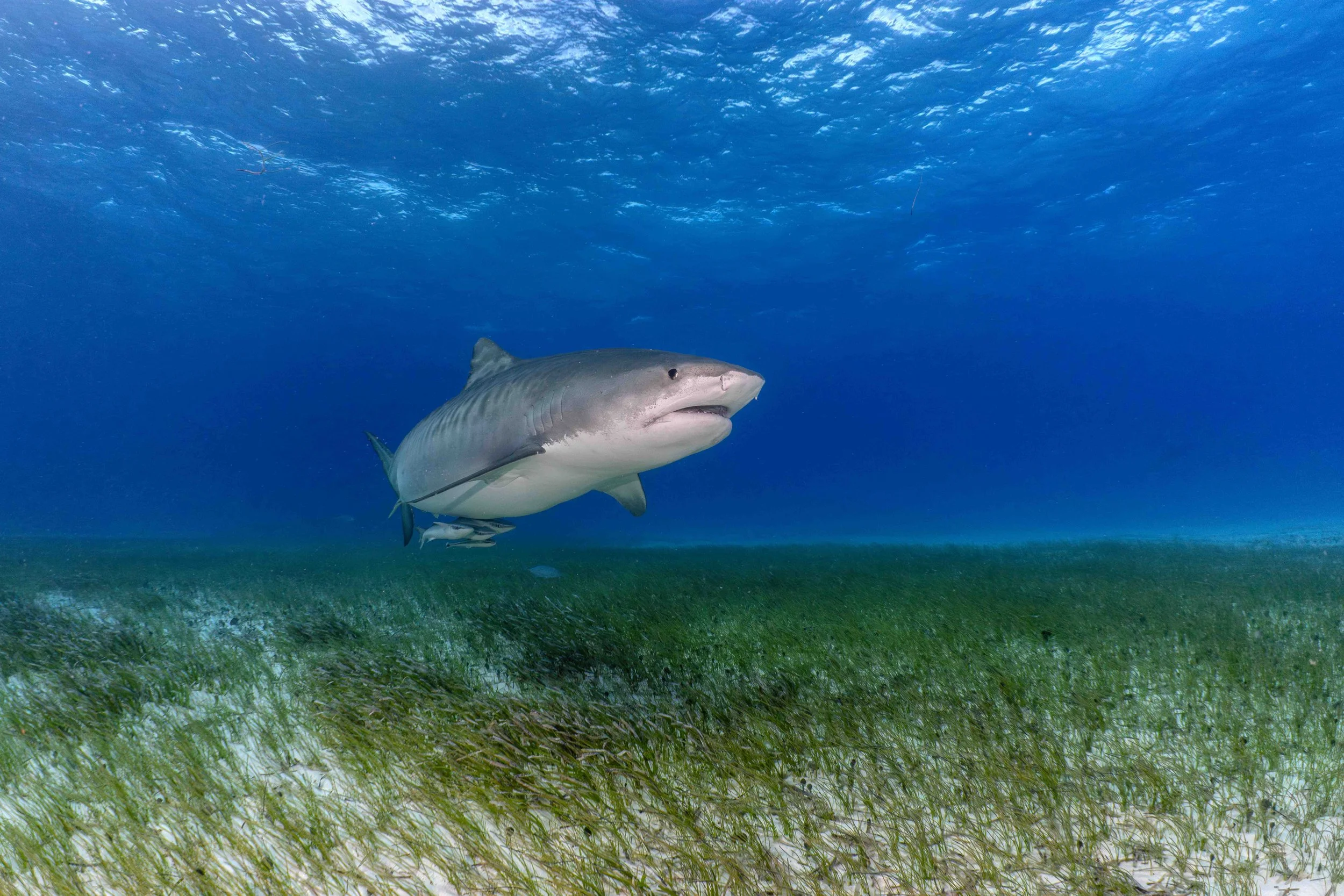
A Tiger Shark over seagrass in The Bahamas
A lot of that time, confined to one room, I found myself scrolling back through old photographs — Sipadan, Raja Ampat, the Bahamas, the cenotes in Mexico, trips Laura and I had done together over the years. I wasn't planning anything, just looking, remembering what the water felt like and what the light looked like forty feet down. It was strange how comforting that was. The ocean wasn't somewhere I could get to, but it was still somewhere I could go, in a way, just by looking.
When treatment ended, I started rebuilding, slowly. Fitness doesn't come back the way it leaves — it leaves all at once and comes back a percent at a time. I trained. I ran a half marathon. Laura and I are now running the New York City Marathon together with Fred's Team, raising money for Memorial Sloan Kettering. It's become two things at once: a way to give something back, and a genuinely good excuse to keep rebuilding fitness after everything. Things were, finally, starting to feel normal again.
Then I broke my ankle
Late one evening in January 2026, I took the dog out to pee. I slipped on a patch of ice and heard my ankle pop.
Strangely, this felt worse than the diagnosis in some ways — not physically, but psychologically. The leukemia was something that happened to me. The ankle felt completely avoidable. I was gutted. I'd just started to feel like myself again, and one wrong step on the ice seemed to take it all back.
So the rebuilding started again.
The medical that made me think
Before I could even book a medical, I had to work out who could give me one. I went looking for information about diving after AML — what other people had done, what the risks were, what the process might look like — and found very little. DAN (Divers Alert Network) was a great resource and put me in touch with a diving doctor, who went on to conduct my return-to-diving medical. But even DAN couldn't tell me much about AML specifically and what the impact of diving might be. There just wasn't much to go on.
By December 2025, I was ready — or thought I was — for a return-to-diving medical. It was nerve-wracking. The doctor was excellent and genuinely supportive, but he didn't simply clear me and send me on my way. He made me actually think about whether I wanted to go back at all. My blood counts were still suppressed from Rydapt, and he was direct about the infection risk — there were uncertainties nobody could completely remove. It wasn't a rubber stamp. It was a real question: did I still want to dive?
I said yes.
A strange discovery
Somewhere in the middle of treatment, I fell down a Wikipedia hole and discovered something that stopped me cold. One of the drugs I was receiving, cytarabine, had an unexpected connection to the ocean. It wasn't taken directly from a sea sponge, as the story is sometimes simplified — its development traces back to unusual nucleosides discovered in a Caribbean sponge, Tectitethya crypta, which helped inspire a class of drugs that eventually included cytarabine, one of the drugs used, decades later, to treat my leukemia.
The connection felt almost impossibly circular. Something discovered in a sponge living in Caribbean waters had helped lead to the treatment keeping me alive, while I was sitting in a hospital room scrolling through photographs of the ocean I desperately wanted to return to. It's made me even more determined, since, to highlight the ocean's beauty — and the threats it faces.
It's also given me a very specific goal: I want to find that sponge in the wild and photograph it myself. Not because the photograph will necessarily be spectacular — by all accounts it's an unassuming sponge, easily overlooked among everything else on a reef — but that's almost the point. I want to see, with my own eyes, the small and ordinary-looking creature whose biology helped set in motion discoveries that, decades later, helped save my life. It feels like its own kind of pilgrimage. That story — and hopefully that dive — deserves a chapter of its own. I'll come back to it.
Florida, June 2026
Eighteen months after my last dive, I finally got back in the water, at Blue Heron Bridge in Riviera Beach — a shallow, unglamorous shore dive site famous mostly for macro life and long bottom times. Not a dramatic wall or a bucket-list reef. Looking back, I think that was exactly the right place to return. Nothing about it demanded anything of me except patience.
Getting there wasn't the calm, meaningful lead-in I might have scripted for myself. A delayed connection turned a simple travel day into an almost sleepless one, and I landed in Florida at close to five in the morning. I'd left most of my dive kit at home to make room for camera gear in my carry-on, so I spent the next morning picking up rental equipment from Pura Vida Divers, where I met my guide for the day, Rick.
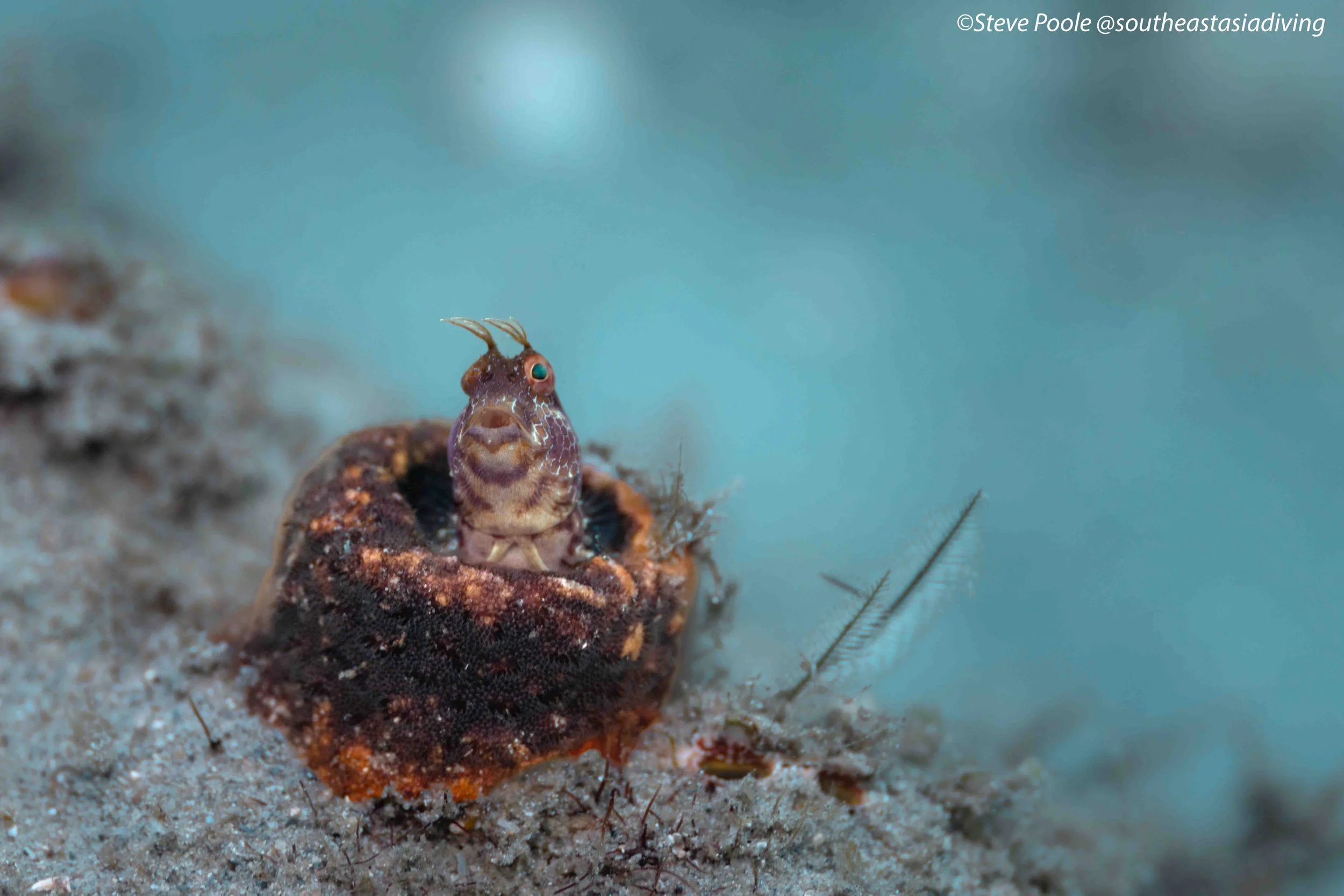
A Blenny at Blue Heron Bridge in Florida
By the time we were geared up at Phil Foster Park, waiting for slack tide, the nerves had properly set in. Eighteen months is a long time. I found myself running through the same questions I imagine anyone returning after a long break asks themselves. Would buoyancy come back automatically, or would I be fighting it the whole dive? Would the camera feel natural in my hands, or clumsy? And underneath those, a quieter question I hadn't expected to be asking at all: would I still enjoy this as much as I used to, or had the last year and a half changed that too?
The first half of the dive didn't answer much. There was more current than we'd planned for, even at slack tide, and the marine life was slow to show itself — a few rays, a nurse shark resting under a sunken boat. At one point, reaching for a better angle, I nearly rested my hand directly on a scorpionfish I hadn't seen. I pulled back just in time. It was a small, sharp reminder that I'd let my situational awareness slip over a year and a half away, and it was enough to make me slow down and pay proper attention again.
Then, as the light started to fade, the site came alive the way everyone had told me it would. Two octopuses emerged, one mid-hunt and completely unconcerned with us. A jawfish. A string of blennies I could have spent the whole dive on alone. And right near the end, when I'd more or less stopped waiting for it, a frogfish sat patiently enough for a handful of frames — followed by a long-arm octopus that seemed just as curious about us as we were about it, approaching rather than retreating.
By the time we surfaced, nearly two hours had passed. I hadn't had the cinematic, emotional moment I half expected walking in. It was quieter than that — more like the nervousness simply dissolved somewhere in the second hour, replaced by the ordinary, familiar pleasure of looking for the next thing to photograph. Routine, almost. Like I'd never been away.
I'm still not entirely sure what to make of that. Maybe that's the most honest part of this story — that getting your life back doesn't always announce itself with fireworks. Sometimes it just quietly resumes, one patient hour at a time, until you look up and realise you're simply diving again. I didn't need the dive to resolve everything that had happened over the previous eighteen months. I just needed to get back in the water and discover the answer to that quieter question was still yes. And it was.
Hawaii, and getting rusty
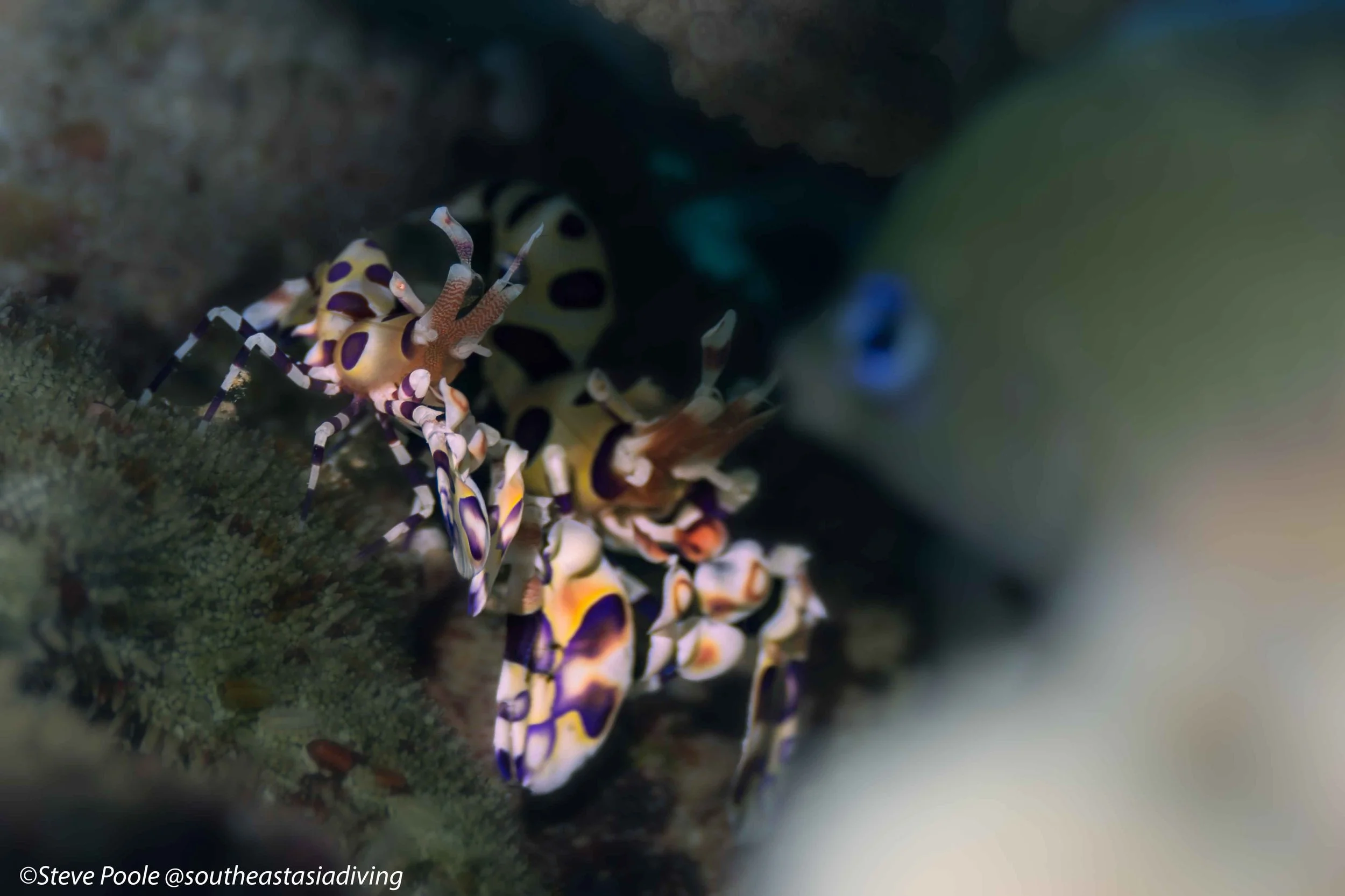
Harlequin Shrimp in Kauai, Hawaii
From Florida, Laura and I went on to Kauai — two weeks in Hawaii, diving around the south shore with Fathom Five Divers and eventually making the long trip across to Niihau. This was where the real rebuilding started, not just of my fitness for diving, but of my underwater photography.
I'd been shooting underwater for years, but a year and a half out of the water is a long time for muscle memory. Buoyancy, positioning, framing a shot while managing strobes, anticipating what an animal is going to do next — things that had once felt instinctive suddenly required thought again. Some of what I brought back from Kauai I'm genuinely unhappy with: missed exposures, poor positioning, photographs I know I would have nailed without thinking twice a couple of years ago. That was frustrating. But there were a handful of frames in there with real promise too, enough to tell me the skill isn't gone, just buried under rust. Perhaps I should have expected that — the photography is coming back in exactly the same way my fitness did: not all at once, but a bit at a time.
Where this is going
Florida was the first step. Hawaii was the next. Next year, I'm hoping to go further still — back to Southeast Asia, to Lembeh and Triton Bay, the part of the world that shaped me as a diver and underwater photographer long before any of this happened. That trip is the real destination of this story, and it's why I wanted to tell it here, on this site, rather than somewhere else. Southeast Asia Diving started because of what that part of the world meant to me — for years, it was where Laura and I travelled, where I learned to become a better diver, and where I really fell in love with underwater photography. Coming back to it, after everything, feels like the right place for this story to eventually arrive.
Over the next year, I'm going to build towards that return through this blog and through a documentary I'm putting together about the whole arc: the diagnosis, six weeks in one hospital room, rebuilding, breaking my ankle, the diving medical, that strangely quiet first dive back, learning to use a camera underwater again, the search for the sponge and, eventually, the full-circle return to Southeast Asia. Consider this the first thread. I'll be pulling on it all year.
There's a practical reason I want to document this, too. When I went looking for information about returning to diving after leukemia, I couldn't find much of it anywhere on the web. I'd like to show others that a return to diving can be done, and to leave behind the kind of account I wished I'd been able to read: what the process looked like, who I spoke to, what I was told, and how it actually felt. I hope it becomes a useful resource for someone in the future.
I want to be clear about what this is and isn't. It is not medical advice. It's my own journey, and it certainly isn't without risk. Everyone's diagnosis, treatment and recovery are different, and anyone in a similar position should talk to their own medical team and a physician trained in dive medicine before making any decisions about diving.
I'm also telling this story openly because I hope it might mean something to someone else going through their own version of it. It doesn't have to be leukemia. It doesn't even have to be illness. Sometimes something happens that separates you from a part of yourself you thought would always be there, and getting it back can seem impossibly far away. My version happens to involve the ocean. If telling that story helps even one person take their own first step towards whatever "getting back in the water" means for them, it's worth telling.
For now, this is where the story starts. The sponge, the rest of Hawaii, and eventually Southeast Asia are still ahead. I'll tell those parts as they happen.
Frequently Asked Questions
Why does a Southeast Asia diving site have posts about Florida and Hawaii?
Because that's where I've been diving since returning to the water. I'm no longer based in Southeast Asia, and the last eighteen months changed the shape of my diving. Florida and Hawaii are chapters in a longer story that I hope will end with a return to Southeast Asia, to Lembeh and Triton Bay, next year.
How long were you out of the water?
Eighteen months. My last dive before treatment was in the US Virgin Islands in December 2024, and my first dive back was at Blue Heron Bridge in Florida in June 2026.
Were you able to dive again after leukemia treatment?
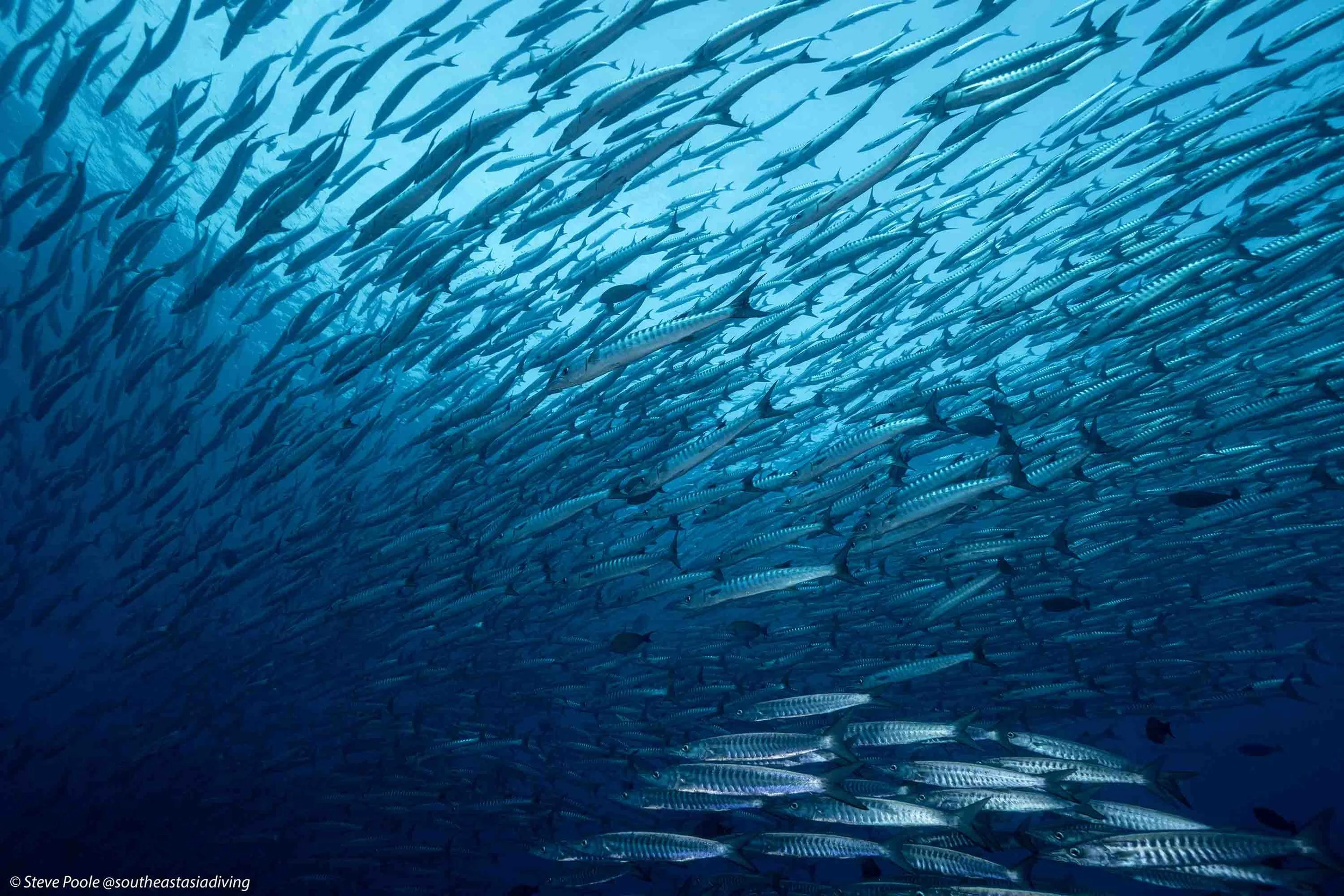
The famous Barracuda Tornado at Sipadan in Malaysia - I hope to be able to dive here again one day
In my case, yes. I was diagnosed with AML, and I had a return-to-diving medical in December 2025 and was cleared, although my doctor was candid about the infection risk because my blood counts were still suppressed by medication. A fractured ankle then delayed my return by several more months. This is my own experience, not medical advice, and diving after leukemia isn't without risk. Everyone's situation is different, so if you're in a similar position, speak to your own medical team and a physician who understands dive medicine.
How did you find a doctor to do your return-to-diving medical?
DAN (Divers Alert Network) put me in touch with a diving doctor, who conducted my medical. DAN was a great resource, but even they couldn't tell me much about AML specifically and the impact of diving, and I found very little information anywhere else. That's a big part of why I'm documenting my return.
Is this medical advice?
No. This is one person's journey, and it certainly isn't without risk. If you're considering diving after cancer treatment, talk to your own medical team and a dive medicine physician, and consider contacting DAN.
What is the connection between cytarabine and a sea sponge?
Cytarabine, one of the drugs used to treat leukemia, can be traced back to unusual nucleosides first discovered in a Caribbean sponge, Tectitethya crypta. The drug wasn't taken directly from the sponge, but its discovery helped inspire the class of drugs that cytarabine belongs to. I'd like to find that sponge in the wild and photograph it, and I'll write about that separately.
What is Fred's Team?
Fred's Team is the Memorial Sloan Kettering fundraising team for the New York City Marathon. Laura and I are running together, raising money for MSK, and using the training to keep rebuilding our fitness.
Where are you diving next?
I'm hoping to return to Southeast Asia next year, to Lembeh and Triton Bay in Indonesia. I'll be building towards that trip through this blog and a documentary about the whole journey.
Will you be writing more about this?
Yes. The sponge, the rest of Hawaii, the marathon and the return to Southeast Asia are all still to come.